


Smart Energy Market Research 2035
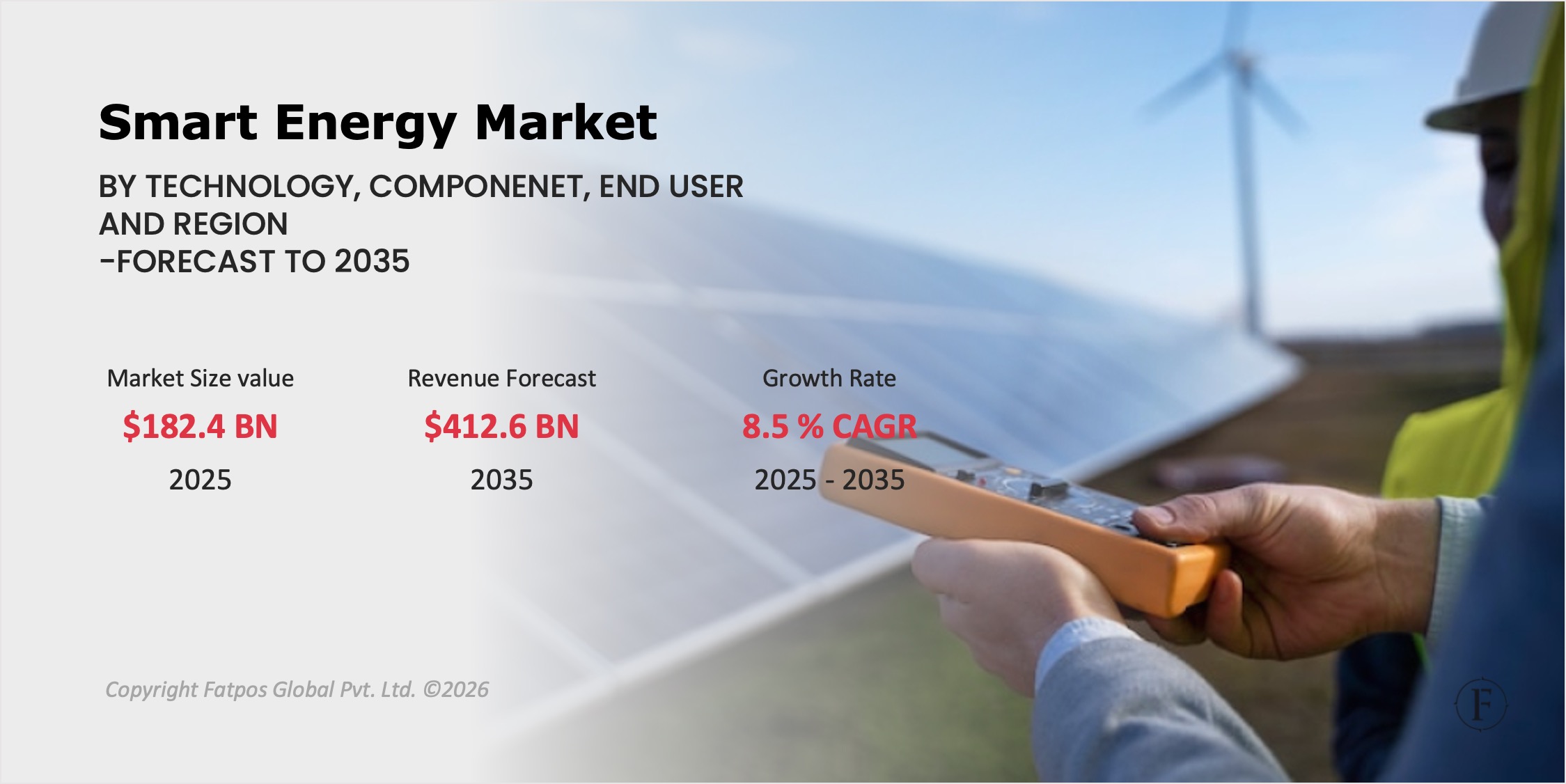
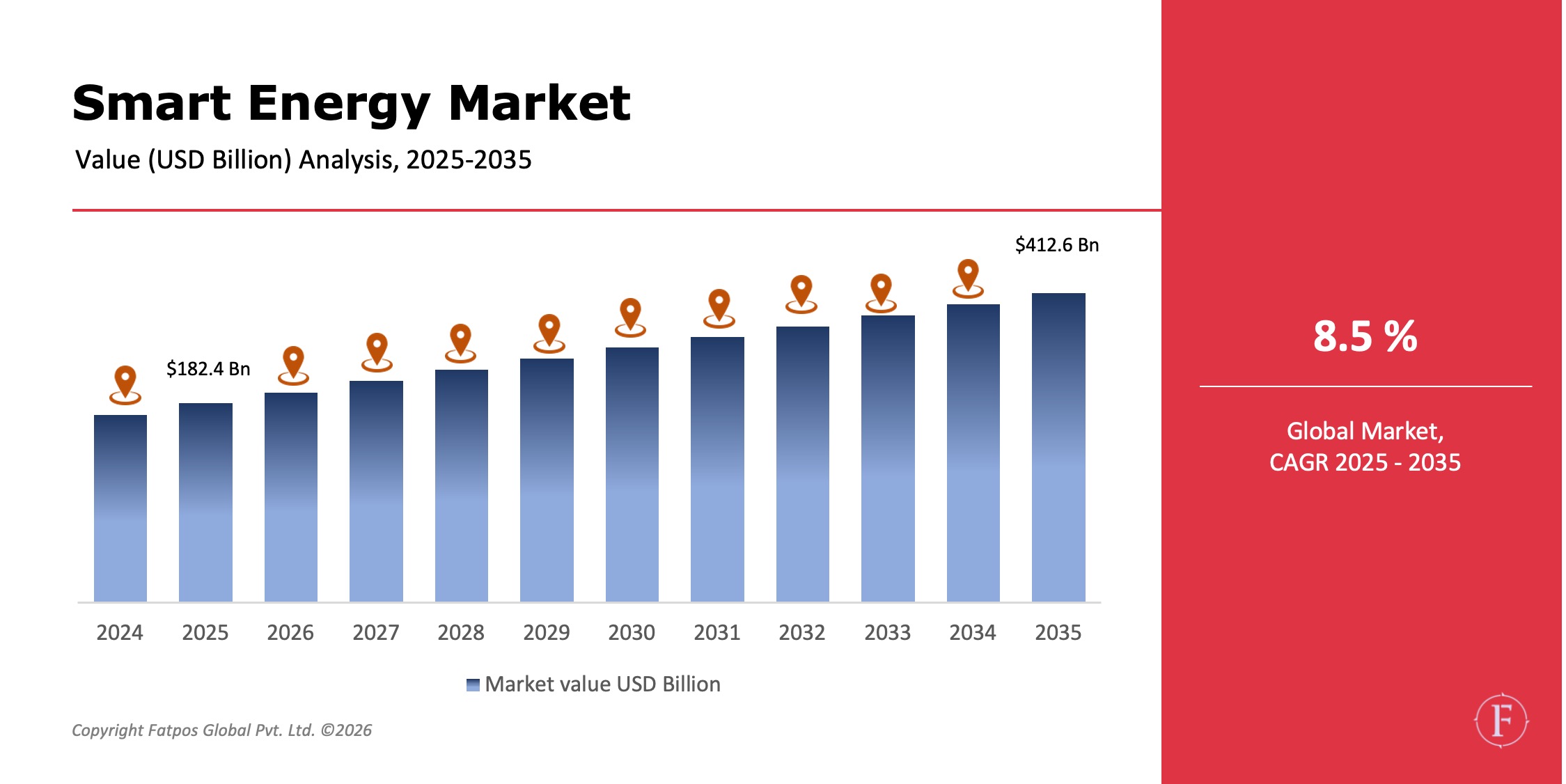
The Smart Energy Market Size was valued at USD 182.4 billion in 2025 and is projected to reach USD 412.6 billion by 2035, registering a CAGR of 8.5%. Market growth is driven by global energy transition initiatives, increasing penetration of renewable energy, rising demand for grid modernization, and rapid adoption of digital technologies such as AI, IoT, and advanced analytics across power systems. Smart energy solutions enable efficient generation, distribution, monitoring, and consumption of energy through digital intelligence and automation. As governments, utilities, and consumers focus on energy efficiency, decarbonization, and resilience, smart energy systems are becoming essential to modern power infrastructure across residential, commercial, industrial, and utility-scale applications.
Product Overview
Smart energy solutions integrate digital technologies with traditional energy systems to enhance efficiency, reliability, and sustainability. By technology, smart grids enable real-time monitoring, automation, and fault detection across transmission and distribution networks. Smart metering and advanced metering infrastructure (AMI) allow utilities and consumers to track energy usage, reduce losses, and improve billing accuracy.
Energy management systems (EMS) support optimization of energy consumption across buildings, factories, and campuses, while demand response solutions balance supply and demand by adjusting consumption during peak periods. Energy storage integration, including battery management systems, supports renewable energy adoption and grid stability. Across applications, smart energy solutions improve operational efficiency, reduce carbon emissions, and support decentralized energy ecosystems.
Key Takeaways :
- The Smart Energy Market is expected to grow at ~8.5% CAGR through 2035.
- Smart grid and metering technologies represent the largest revenue share.
- Utilities remain the dominant end-user segment.
- Renewable integration and grid digitalization drive adoption.
- Asia-Pacific leads global deployment and investment.
- AI-driven analytics and automation are key competitive differentiators.
Market Dynamics
Drivers
The accelerating global transition toward renewable energy is a primary driver of the smart energy market. Integration of solar, wind, and distributed energy resources requires advanced monitoring, control, and balancing capabilities that traditional grids cannot support. Government mandates for grid modernization, energy efficiency, and emission reduction further accelerate adoption of smart energy technologies.
Rising electricity demand from urbanization, electrification of transportation, and digital infrastructure is increasing pressure on existing power networks. Smart energy systems enable real-time visibility, predictive maintenance, and optimized asset utilization, improving grid reliability. Technological advancements in IoT sensors, AI-based analytics, and cloud platforms further enhance the scalability and performance of smart energy solutions, helping vendors increase their market share.
Restraints
Despite strong growth potential, the smart energy market forecast for the smart energy market highlights restraints related to high initial investment costs and complex integration requirements. Deployment of smart grids and metering infrastructure involves significant capital expenditure, particularly in developing regions. Interoperability challenges between legacy systems and modern digital platforms can slow adoption. Cybersecurity risks also present a major concern, as increased connectivity exposes energy infrastructure to potential cyber threats. Additionally, regulatory fragmentation and varying standards across regions create compliance complexities for solution providers and utilities.
Opportunities
Decentralized energy systems, microgrids, and energy storage integration unlock major opportunities, fueled by renewables and EV growth. Microgrids ensure resilient power in remote or disaster-prone areas, while batteries like lithium-ion store excess solar/wind energy. Smart buildings optimize HVAC, lighting, and renewables via IoT for efficiency. Industrial management cuts costs through demand-response, and smart cities integrate traffic, utilities, and grids for sustainability. Emerging markets boom as governments fund grid upgrades for development—India's Smart Cities Mission exemplifies this. AI forecasting predicts supply/demand; blockchain enables peer-to-peer trading; digital twins simulate optimizations. These innovations drive revenue via software-as-a-service and partnerships.
Challenges
Smart energy solution providers face challenges in balancing technological sophistication with cost-effectiveness. Ensuring system interoperability, data accuracy, and real-time performance across complex energy networks requires continuous R&D investment. Data privacy and cybersecurity compliance add further complexity, particularly in critical infrastructure environments.
Resistance to change from traditional utility models and lack of skilled workforce in digital energy systems can slow implementation. Managing large-scale deployments across geographically dispersed networks also requires robust project management and long-term stakeholder coordination.
Smart Energy Market Trends
The smart energy sector surges toward AI-driven grid intelligence. AI enables predictive maintenance to avert outages, precise demand forecasting, and automated decisions for dynamic load balancing. Cloud platforms deliver scalable analytics and centralized management, processing vast IoT data streams. Edge computing empowers real-time control at substations, EVs, and distributed assets, minimizing latency. Sustainability dominates: carbon-neutral grids integrate renewables seamlessly, prioritizing efficiency metrics like reduced losses.
Utilities deploy digital twins—virtual replicas—for scenario simulations and optimizations. Blockchain facilitates secure peer-to-peer trading, democratizing energy markets. Strategic alliances among utilities, tech firms (e.g., Siemens, IBM), and ESCOs hasten pilots to full-scale rollout, fostering innovation ecosystems.
Key Players in the Global Smart Energy Industry
- Siemens AG
- Schneider Electric SE
- ABB Ltd.
- General Electric Company
- Eaton Corporation
- Honeywell International Inc.
- IBM Corporation
- Oracle Corporation
- Itron, Inc.
- Landis+Gyr Group A
Regional & Country Analysis
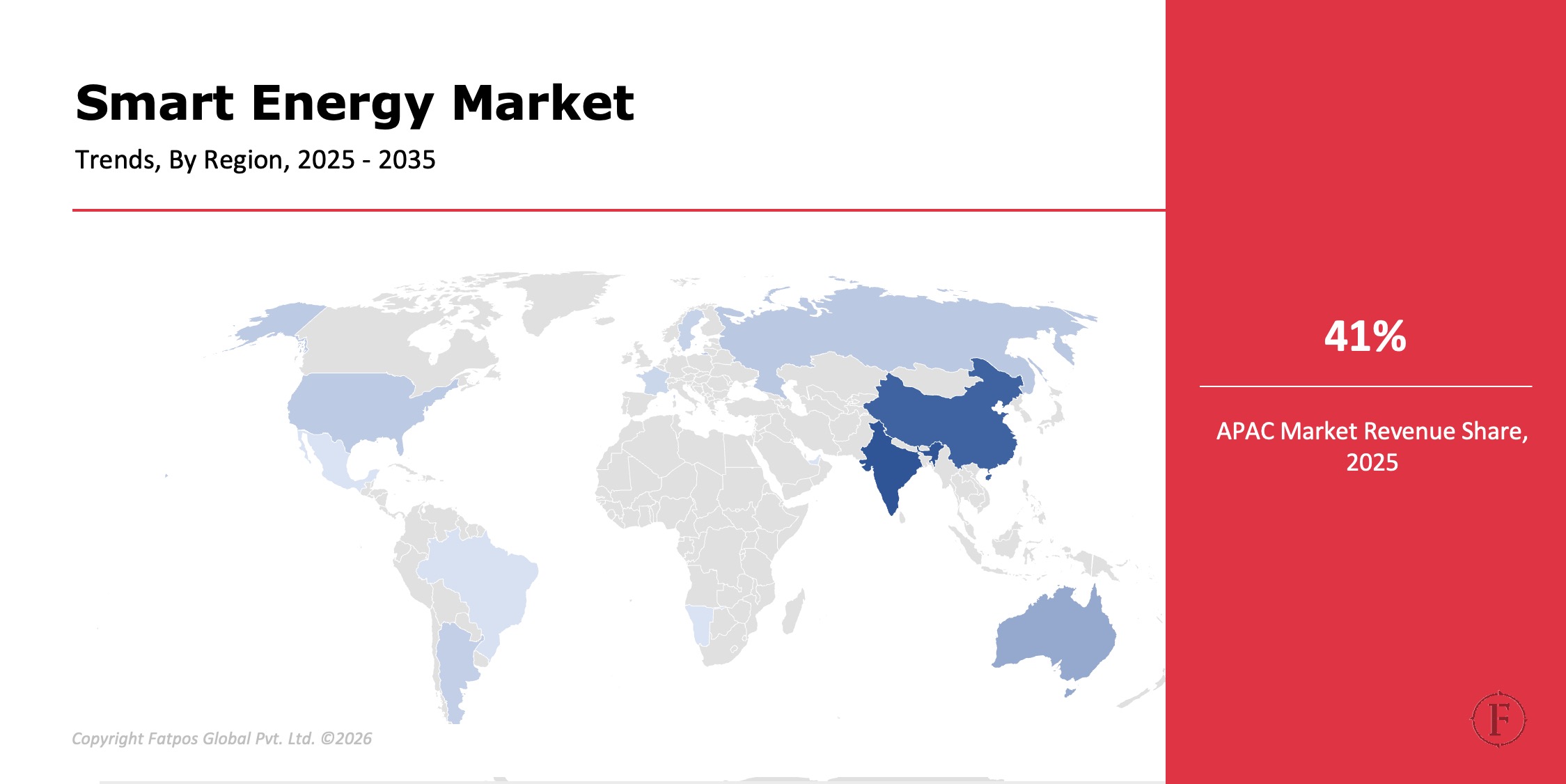
Asia-Pacific dominates the global smart energy market due to large-scale grid modernization programs, rapid renewable energy deployment, and strong government support in countries such as China, India, Japan, and South Korea. North America shows steady growth driven by smart grid investments, aging infrastructure replacement, and regulatory support for clean energy .Europe maintains strong adoption due to strict decarbonization targets and advanced energy efficiency policies. Latin America experiences moderate growth supported by renewable integration, while Middle East & Africa present emerging opportunities through smart city initiatives and infrastructure development.
Segmentation Highlights
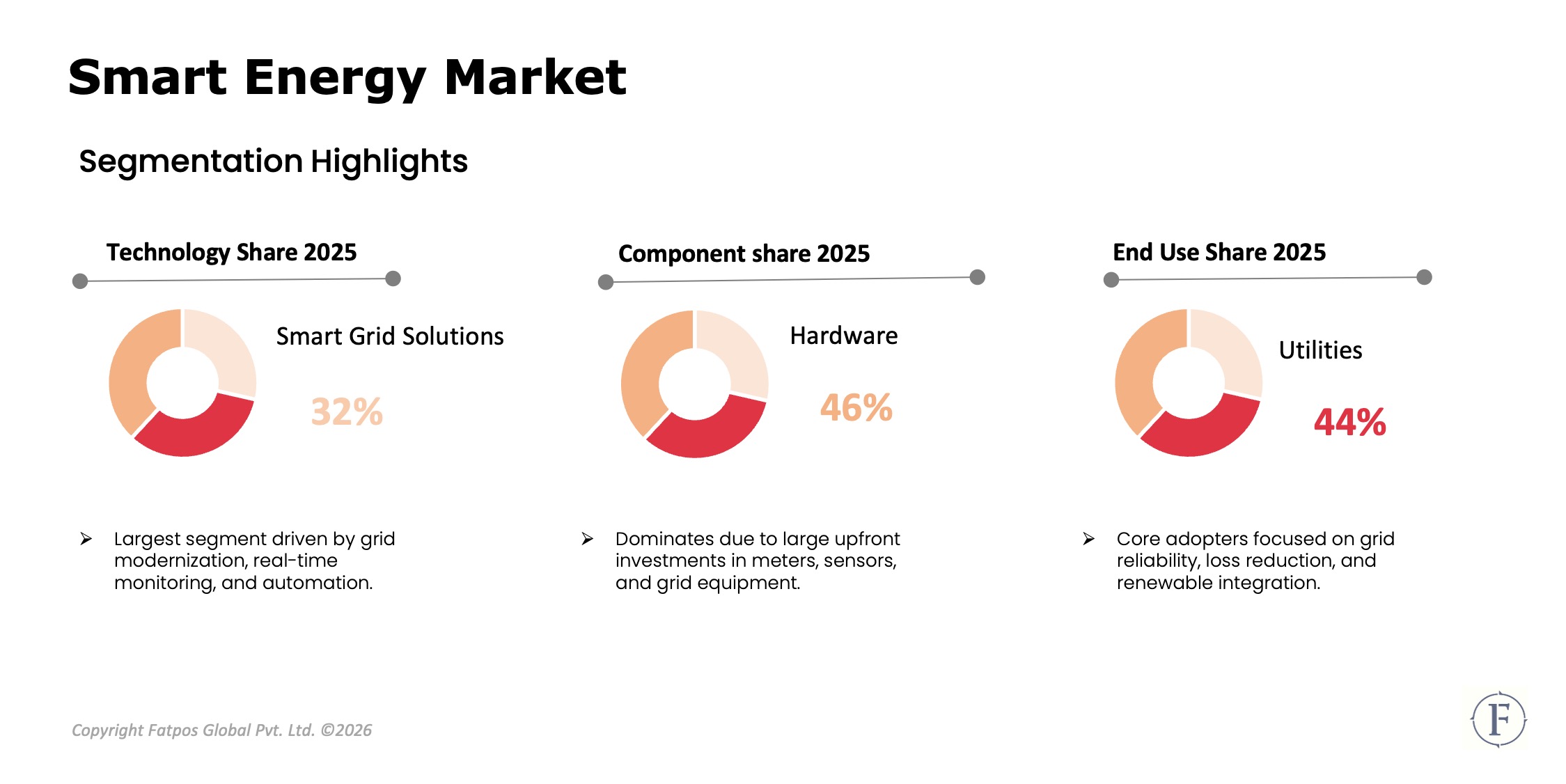
By technology, smart grids and smart metering hold the largest share due to widespread utility deployment. By component, hardware dominates initial investments, while software and services show higher long-term growth. Utilities represent the largest end-user segment, followed by industrial and commercial users. Residential adoption continues to expand with smart meters and home energy management systems.
Report Key Elements
|
ATTRIBUTES |
DETAILS |
|
Study Period |
2019–2035 |
|
Base Year |
2024 |
|
Forecast Period |
2025–2035 |
|
Market Size by 2035 |
USD 412.6 Billion |
|
Market CAGR |
8.5% |
| By Component | Hardware, Software, Service |
|
By Technology |
Smart Grid, Smart Metering, Energy Management System, Demand Response, Energy Storage Integration |
|
By End User |
Residential, Commercial, Industrial, Utilities
|
|
By Region |
NA, Europe, APAC, LATAM, MEA |
|
Smart Energy Market: Key Players |
Siemens AG, Schneider Electric SE, ABB Ltd., General Electric Company, Eaton Corporation |
Global Smart Energy Industry Instances
- Utilities deployed AI-based grid monitoring platforms to reduce outages.
- Governments rolled out nationwide smart metering programs.
- Industrial facilities adopted energy management systems for cost optimization.
- Smart city projects integrated renewable energy and digital grid solutions.
Analyst Review
As per our Smart Energy Market analysis, the market is evolving rapidly as energy systems transition toward digital, decentralized, and sustainable models. While high investment costs, cybersecurity risks, and integration challenges persist, advancements in AI, IoT, and grid analytics are unlocking substantial growth opportunities. Companies focusing on scalable platforms, interoperability, and long-term utility partnerships are expected to lead market expansion through 2035.
Frequently Asked Questions (FAQ):
Smart energy integrates IoT, AI, cloud, and smart meters with infrastructure for efficient consumption, reliable predictive maintenance, and sustainable renewable integration.
Renewables boom, grid upgrades, emission rules, EV/urban demand, and digital tools like 5G/big data propel smart energy growth.
Smart grids and metering dominate via utility rollouts, providing usage data, dynamic pricing, and automated responses for modern networks.
Asia-Pacific tops the chart, propelled by China's ultra-high-voltage projects and India's Smart Cities program, backed by huge infrastructure and policy support.
Smart energy faces high capital costs for installs, cybersecurity risks in connected devices, regulatory barriers, and tough legacy-to-modern tech integration needing expertise and standards.
 Select License Type


.png)


