


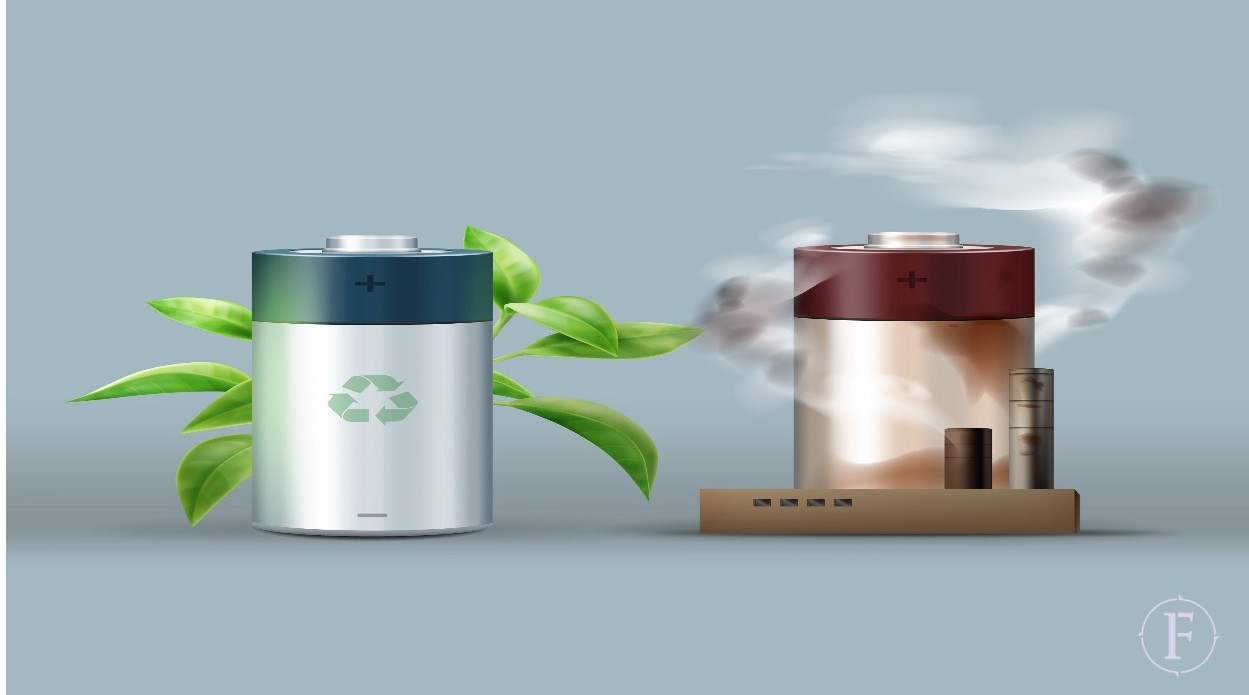
Lithium-Ion Battery Market Research 2035
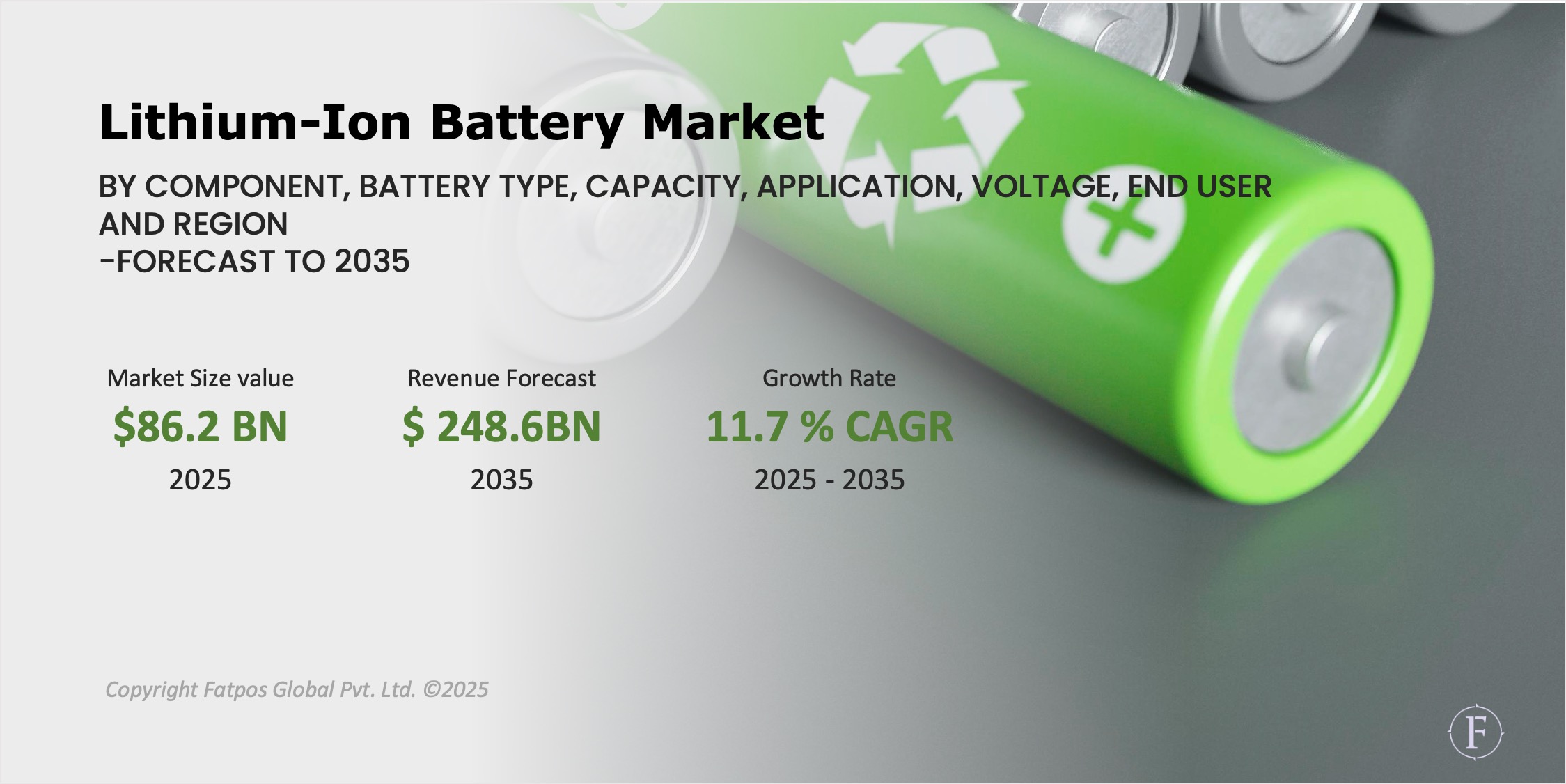
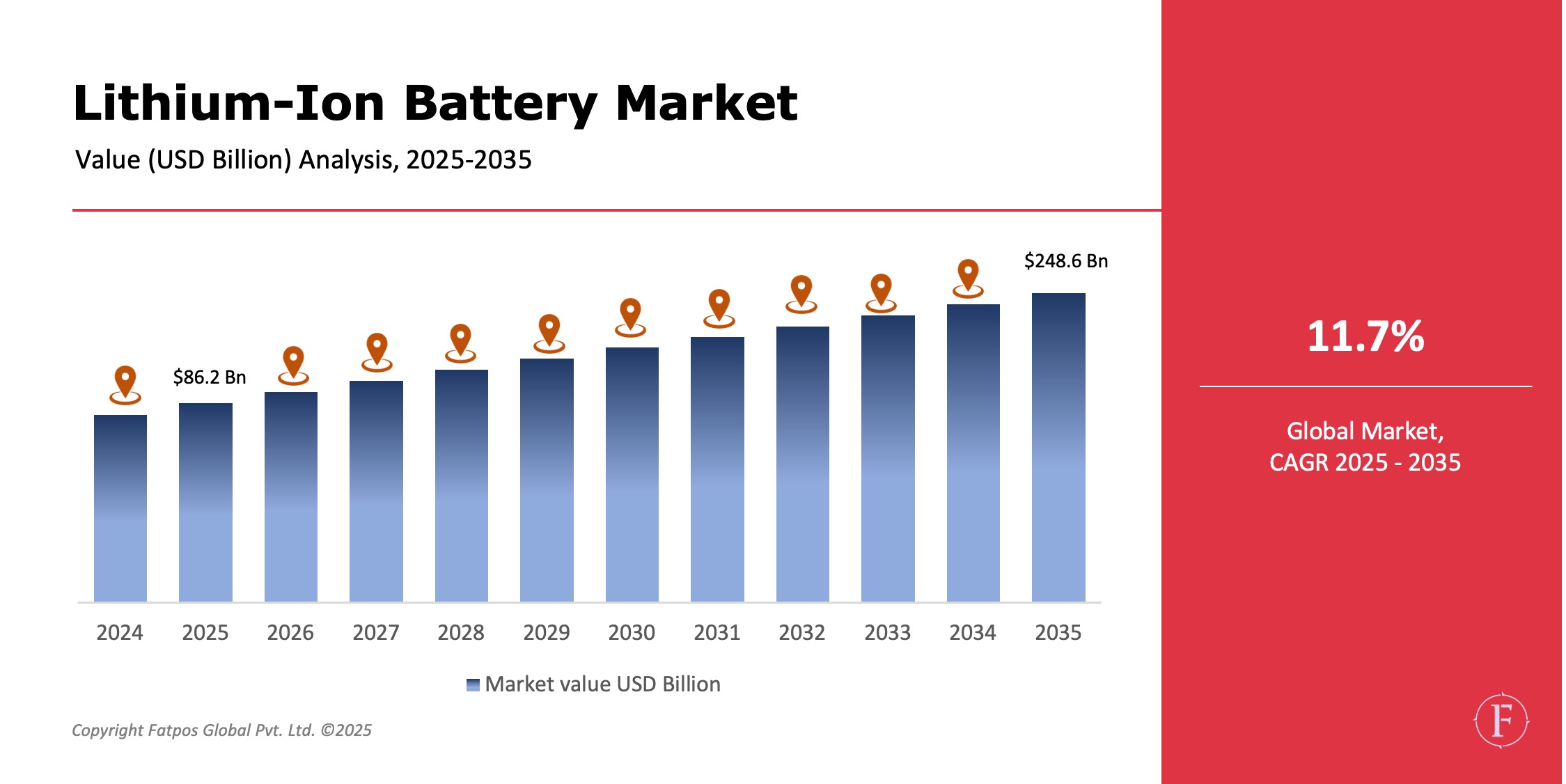
The Lithium-Ion Battery Market Size was valued at USD 86.2 billion in 2025 and is projected to reach USD 248.6. billion by 2035, registering a CAGR of 11.7% during the forecast period. Market growth is primarily driven by accelerating electric vehicle (EV) adoption, expansion of renewable energy storage infrastructure, increasing demand for portable electronics, and advancements in battery chemistry and manufacturing technologies.
Lithium-ion batteries are rechargeable electrochemical energy storage devices that utilize lithium ions moving between electrodes to store and release energy. Their high energy density, lightweight design, long cycle life, and efficiency make them the preferred choice across automotive, consumer electronics, and energy storage applications. As global economies shift toward electrification and decarbonization, lithium-ion batteries have become a cornerstone of sustainable energy systems.
Product Overview
Lithium-ion batteries consist of four primary components: cathode, anode, electrolyte, and separator. The cathode material determines battery performance, energy density, and cost, while the anode, typically made of graphite or silicon-based materials, stores lithium ions during charging. The electrolyte facilitates ion movement, and the separator ensures safety by preventing short circuits.
By type, Lithium Nickel Manganese Cobalt (NMC) batteries dominate due to balanced performance, making them widely used in electric vehicles. Lithium Iron Phosphate (LFP) batteries are gaining rapid adoption due to safety, cost efficiency, and long life cycles. Lithium Cobalt Oxide (LCO) is primarily used in consumer electronics, while Lithium Titanate (LTO) offers ultra-fast charging and durability for specialized applications.
By capacity, batteries range from small-scale portable devices to high-capacity systems used in EVs and grid storage. Voltage levels vary depending on application requirements, influencing energy output and efficiency.
Key Takeaways :
- The Lithium-Ion Battery Market is expected to grow at ~11.7% CAGR through 2035
- EV adoption is the primary demand driver
- LFP batteries are rapidly gaining market share
- Energy storage systems are emerging as a key growth segment
- Asia-Pacific dominates global production and consumption
- Technological advancements focus on energy density, safety, and fast charging.
Market Dynamics
Drivers
The lithium-ion battery market is booming, primarily propelled by the swift global adoption of electric vehicles (EVs). Governments enforce stringent emission standards and provide incentives like subsidies and tax breaks, spurring demand for advanced, high-capacity batteries to power longer ranges and faster charging.
Meanwhile, the rise of renewable energy—solar and wind—necessitates robust storage solutions. Lithium-ion batteries excel at capturing intermittent power, ensuring grid stability and advancing clean energy transitions. Consumer electronics, from smartphones and laptops to tablets and wearables, sustain growth through relentless innovation for smaller, more efficient batteries. This multi-sector demand promises sustained market expansion.
Restraints
The market faces restraints related to raw material supply constraints and price volatility. Lithium, cobalt, and nickel are critical materials with limited geographic availability, leading to supply chain risks.
Safety concerns such as thermal runaway and battery degradation remain significant challenges. High initial investment costs for battery manufacturing facilities and infrastructure also limit market expansion in certain regions.
Environmental concerns related to mining and disposal of battery materials further restrict growth, emphasizing the need for sustainable practices.
Opportunities
The development of next-generation battery technologies, including solid-state batteries, presents significant growth opportunities. These technologies promise higher energy density, improved safety, and longer lifespan.
The rise of energy storage systems (ESS) for residential, commercial, and utility-scale applications creates new demand avenues. Increasing integration of smart grids and distributed energy systems further enhances market potential.
Emerging markets in Asia, Africa, and Latin America offer untapped opportunities due to rising electrification and industrialization.
Challenges
The lithium-ion battery market faces challenges related to supply chain complexity, environmental impact, and technological limitations. Ensuring sustainable sourcing of raw materials while maintaining cost efficiency is a key concern. Additionally, achieving higher energy density without compromising safety remains a technical challenge. Additionally, competition from alternative energy storage technologies, such as hydrogen fuel cells and sodium-ion batteries, may impact long-term growth.
Lithium-Ion Battery Market Trends
The lithium-ion battery market shifts strongly toward LFP chemistry for its cost savings and enhanced safety. Fast-charging tech and high-performance systems gain traction in EVs and consumer electronics. Battery recycling and circular economy efforts address environmental issues, promoting sustainability. AI-integrated advanced BMS boosts efficiency, safety, and lifespan. Strategic partnerships between automakers and manufacturers speed up innovation and scale production to meet rising demand.
Key Players in the Global Lithium-Ion Battery Industry
- Contemporary Amperex Technology Co., Limited (CATL)
- LG Energy Solution
- Panasonic Corporation
- Samsung SDI
- BYD Company Limited
- SK On Co., Ltd.
- Tesla, Inc.
- Northvolt AB
- Toshiba Corporation
- Hitachi Energy., Ltd.
Regional & Country Analysis
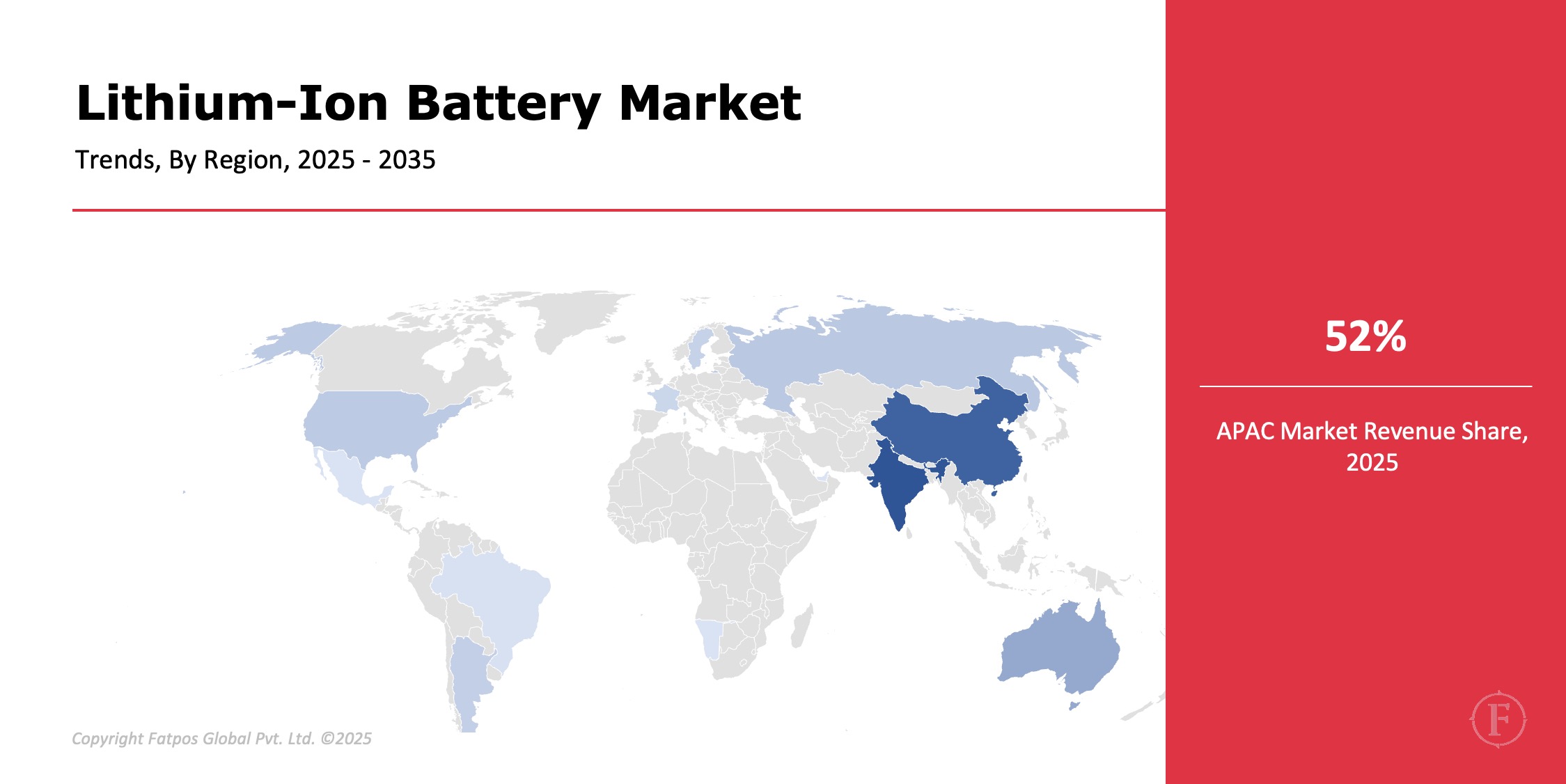
Asia‑Pacific dominates the lithium‑ion battery market thanks to strong manufacturing bases and high demand from China, Japan, and South Korea, with China leading global battery production and EV adoption. North America is growing fast, supported by investments in domestic battery plants and EV infrastructure. Europe is expanding local battery capacity to back its automotive sector and sustainability goals. Latin America and the Middle East & Africa offer emerging opportunities, driven by abundant raw materials and rising energy‑storage needs.
Segmentation Highlights
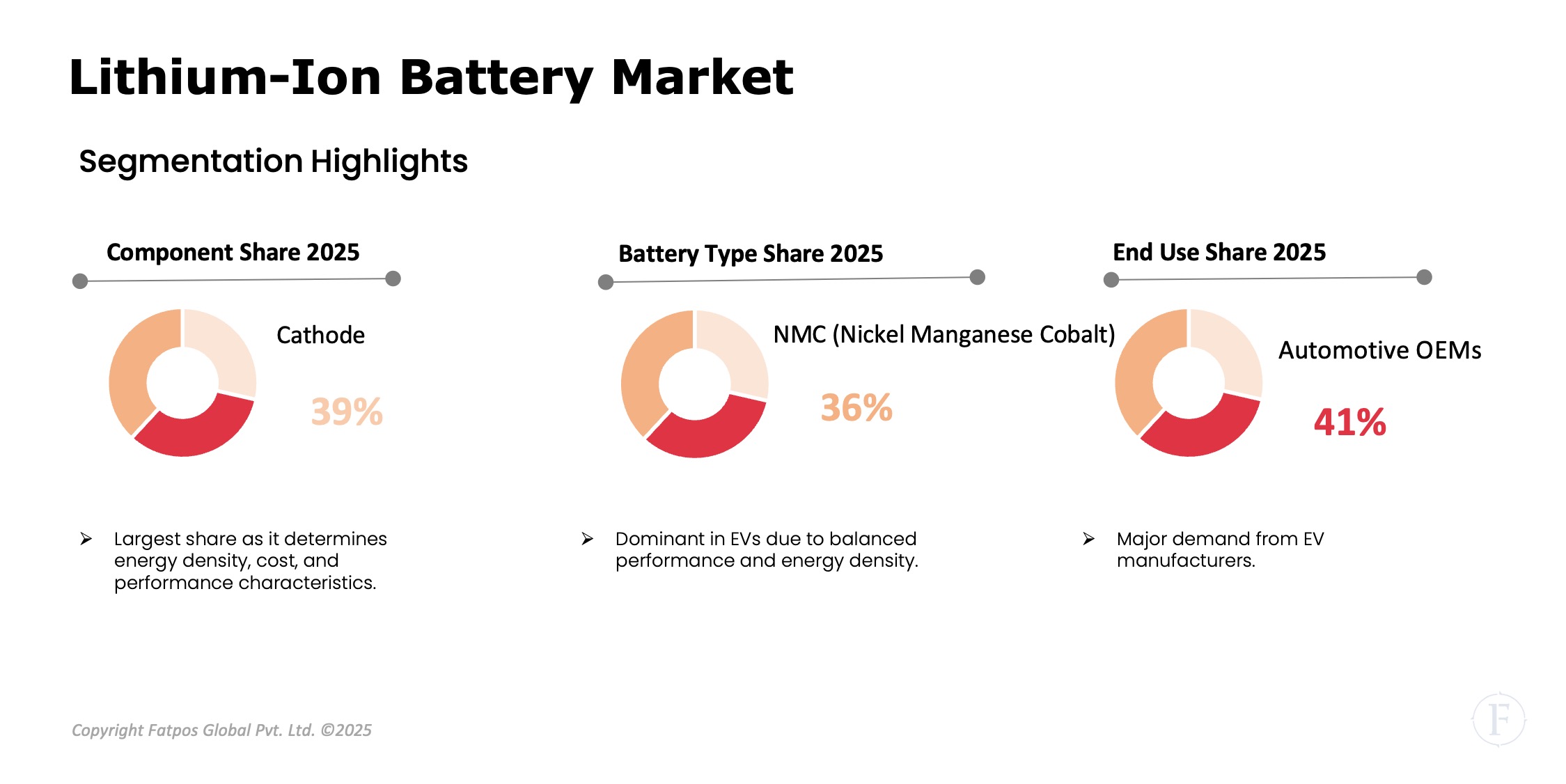
By component, cathodes are the largest cost and performance driver in lithium‑ion batteries. By chemistry, NMC batteries currently dominate the market, while LFP batteries are the fastest‑growing segment due to their cost‑effectiveness and safety. By application, the automotive sector leads demand, followed by energy storage systems and consumer electronics. High‑capacity batteries are increasingly preferred as demand grows from electric vehicles and grid‑scale storage projects, which require longer ranges, higher energy density, and reliable backup power. This combination of component economics, chemistry mix, and application priorities is shaping the overall structure and growth trajectory of the lithium‑ion battery market.
Report Key Elements
|
ATTRIBUTES |
DETAILS |
|
Study Period |
2019–2035 |
|
Base Year |
2024 |
|
Forecast Period |
2025–2035 |
|
Market Size by 2035 |
USD 248.6billion |
|
Market CAGR |
11.7% |
|
By Component |
Cathode, Anode, Electrolyte, Separator |
|
By Type |
LFP, NMC, LCO, LTO, Others |
|
By Capacity |
0–3,000 mAh, 3,000–10,000 mAh, Above 10,000 mAh |
|
By Voltage |
Low, Medium, High |
|
By Application |
Consumer Electronics, Automotive, Energy Storage Systems, Industrial |
|
By End User |
Residential, Commercial, Utility, Automotive OEMs |
|
By Region |
NA, Europe, APAC, LATAM, MEA |
|
Lithium-Ion Battery Market: Key Players |
Contemporary Amperex Technology Co., Limited (CATL), LG Energy Solution, Panasonic Corporation, Samsung SDI |
Global Lithium-Ion Battery Industry Instances
- Automakers partnered with battery manufacturers to secure EV supply chains
- Companies invested in gigafactories to expand production capacity
- Governments introduced incentives for battery manufacturing and EV adoption
- Recycling initiatives were implemented to support sustainability
Analyst Review
As per our Lithium-Ion Battery Market analysis report, the market is undergoing rapid transformation driven by electrification, renewable energy adoption, and technological advancements. While supply chain challenges and environmental concerns persist, innovation in battery chemistry, manufacturing, and recycling is expected to drive sustained growth through 2035.
Companies focusing on cost optimization, energy efficiency, and sustainable practices are likely to lead the market.
Frequently Asked Questions (FAQ):
A lithium-ion battery is a rechargeable energy storage device where lithium ions move between electrodes to generate power. It offers high energy density, efficiency, and long life, making it widely used in electric vehicles, electronics, and energy storage systems.
Lithium Nickel Manganese Cobalt (NMC) batteries dominate due to balanced performance and high energy density. However, Lithium Iron Phosphate (LFP) batteries are rapidly gaining share due to safety, lower cost, and longer lifecycle in EV and storage applications.
Trends include rising adoption of LFP batteries, development of solid-state batteries, and fast-charging technologies. Sustainability initiatives, battery recycling, and AI-based battery management systems are also shaping future growth and innovation in the market.
Sustainability is driving battery recycling, eco-friendly production, and responsible sourcing. Companies are adopting circular economy practices and reducing carbon emissions, while governments enforce environmental regulations, making sustainability a key factor in market growth and strategy.
The market is expected to grow strongly through 2035, driven by electrification, renewable energy adoption, and innovation. Increasing demand across EVs, energy storage, and electronics ensures long-term expansion despite challenges related to supply chain and sustainability.
 Select License Type


.png)


