


Shrimp Feed Market Research 2035
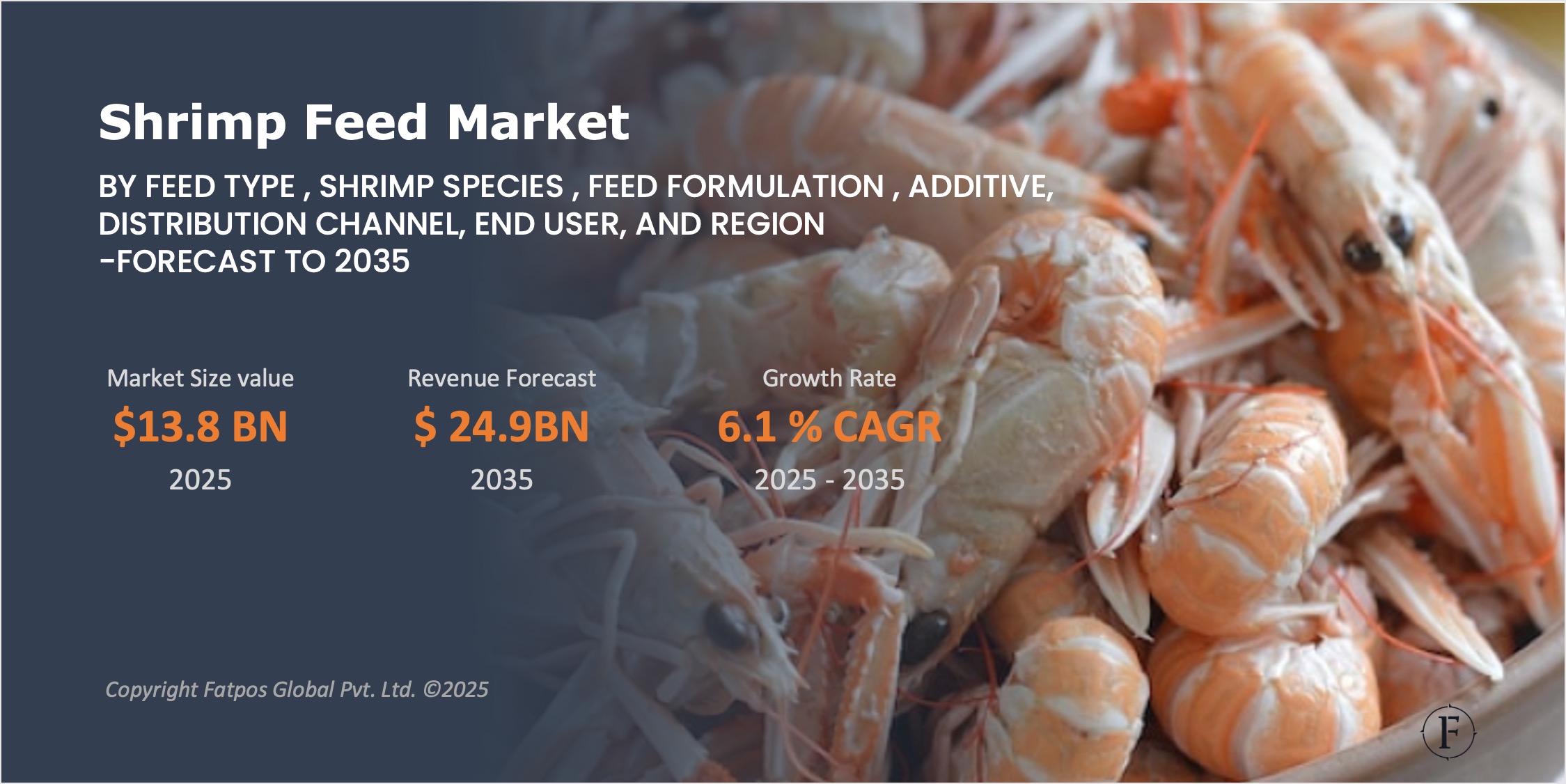
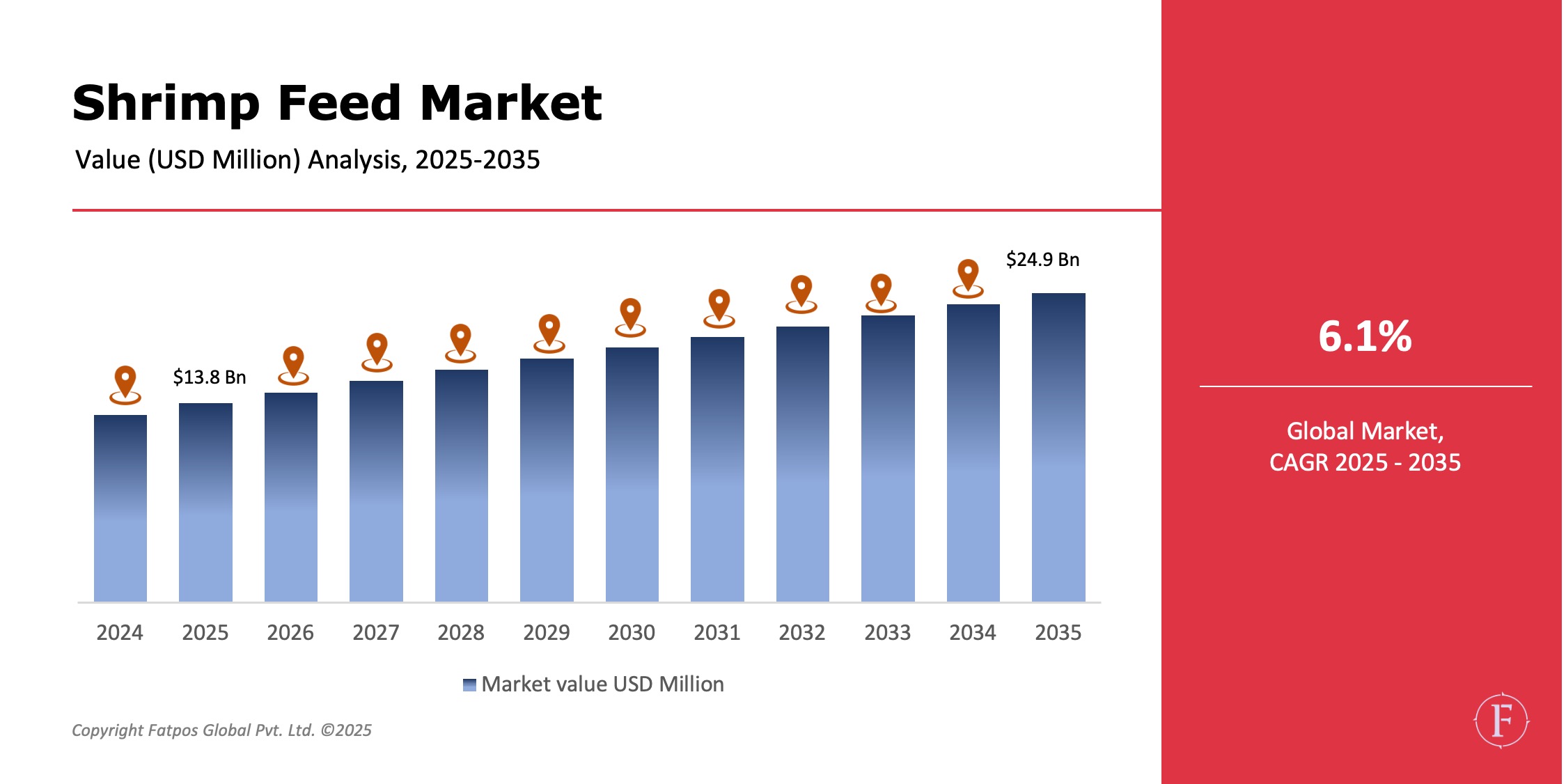
The Shrimp Feed Market Size was USD 13.5 billion in 2025 and is projected to reach USD 24.9 billion by 2035, registering a CAGR of 6.1%, The market growth stems from surging shrimp demand, commercial aquaculture expansion, and nutrition needs for whiteleg and black tiger shrimp, with innovations in probiotics, enzymes and precision feeding boosting efficiency and sustainability. Asia-Pacific dominates via major producers like China, India and Vietnam, while Latin America grows rapidly and North America/Europe emphasize premium, eco-friendly feeds.
Product Overview
Shrimp feed provides nutrient-rich, species-specific diets to optimize growth, feed conversion and health in cultured shrimp. Types include crumbled for post-larvae, floating for surface feeders, sinking for bottom-dwellers and pelleted for juveniles/finishers. Formulations target starter, grower and finisher phases, incorporating probiotics, prebiotics, vitamins, amino acids, carotenoids and lipids to boost immunity, stress tolerance, pigmentation and nutrient efficiency.
Key Takeaways :
- The Shrimp Feed Market is projected to grow steadily at ~6.1% CAGR through 2035.
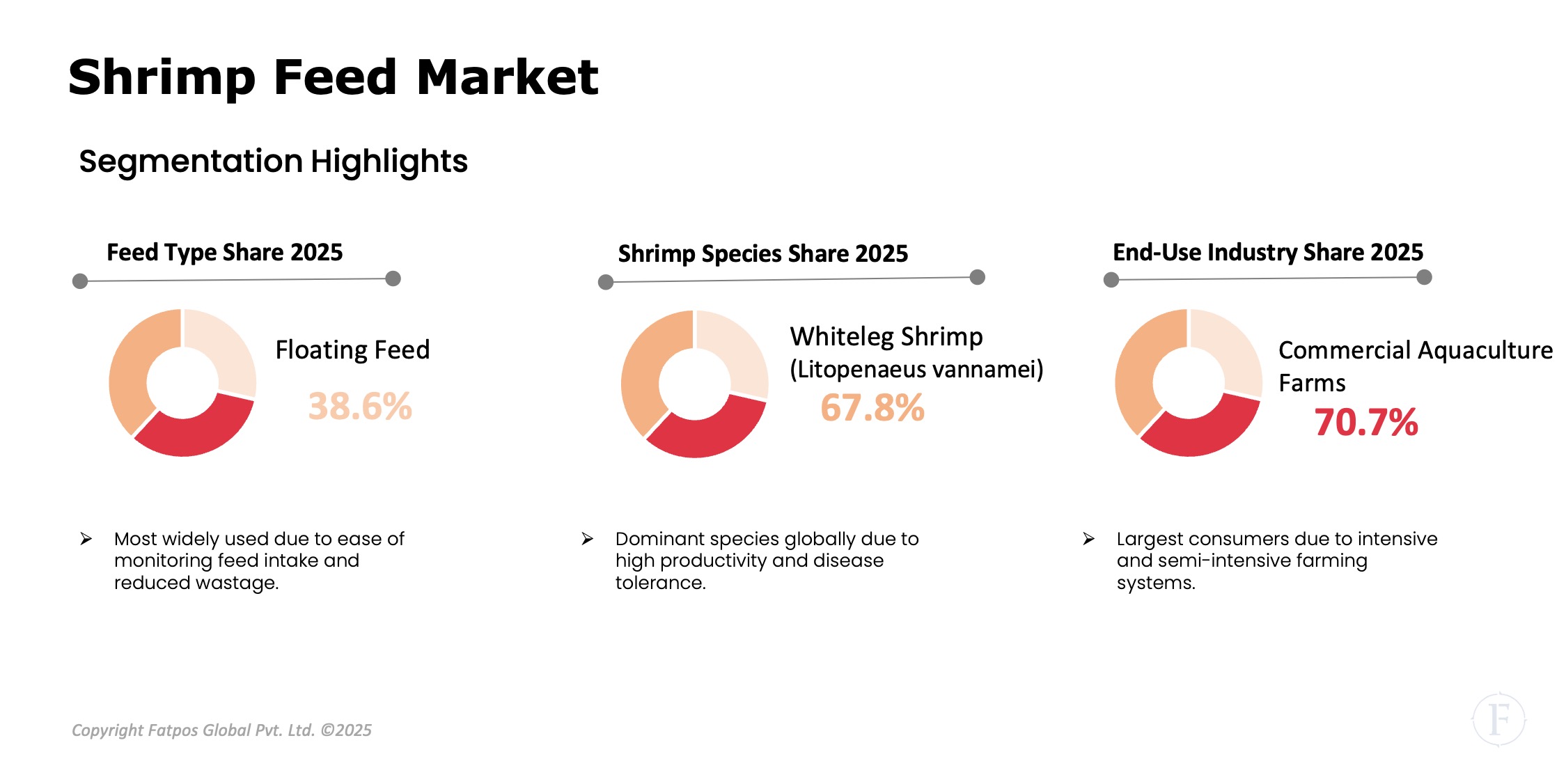
- Whiteleg shrimp feed represents the largest species segment due to wide global cultivation.
- Floating feeds dominate by convenience and consumption efficiency, while crumbled feeds support early-stage survival rates.
- Functional additives (probiotics, prebiotics, carotenoids) are driving feed premiumization.
- Asia-Pacific leads global shrimp feed consumption and production.
- Technological innovations in feed processing and precision nutrition are shaping market dynamics.
Market Dynamics
Drivers
Rising global shrimp and seafood demand drives aquaculture expansion and commercial farming. Feed quality improvements cut mortality and boost growth rates, while innovations in nutrient-dense, functional feeds enhance disease resistance. Government support for sustainable aquaculture and feed production further accelerates shrimp feed market growth.
Restrictions
Shrimp feed producers face volatility in key raw material costs such as fishmeal, fish oil, soy and corn, which pressures margins and pricing. Environmental challenges arise from high feed conversion ratios and effluent discharge impacting water quality in intensive farms. Smallholder operations struggle with infrastructure gaps and limited technical capacity for advanced feed management and biosecurity.
Opportunities
Shrimp feed producers pursue growth in premium, functional and organic specialty feeds to meet demand for superior performance and sustainability. E-commerce and direct-to-farm channels expand distribution reach, while precision aquaculture and AI-assisted feeding optimize usage and reduce waste. Alternative proteins such as insect meal and algal sources lessen reliance on costly fishmeal, improving supply chain resilience.
Challenges
Disease outbreaks like EMS and AHPND create volatile mortality rates, disrupting predictable feed demand and planning. Lack of standardized quality and certification hinders trust in feed efficacy across supply chains. Producers must balance nutritional performance and disease resistance against cost pressures to remain competitive in premium and commodity segments.
Shrimp Feed Market Trends
Shrimp feed trends emphasize high-performance extruded feeds that improve digestibility and minimize waste. Functional additives like probiotics, carotenoids and immune boosters gain traction to enhance health outcomes. Sustainable formulations reduce marine resource use, while digital management and automated feeders proliferate in commercial operations. Customized, species-specific feeds adapt to local practices and water conditions, meeting rising demand for precision nutrition.
Key Players in the Global Shrimp Feed Industry
- Cargill
- Nutreco / Skretting / Trouw Nutrition
- ADM / Alltech
- Zeigler Bros.
- Blue Ridge Aquaculture
- Tiantai Feed
- Charoen Pokphand Foods (CP Foods)
- Anglian (India)
- Far Eastern International
- Haifa Group (Group ICL)
- Nova Tech Aqua Solutions
- Ridley Corporation
- Biomar Group
- Tongwei Aquatic Feed Division
Regional & Country Analysis
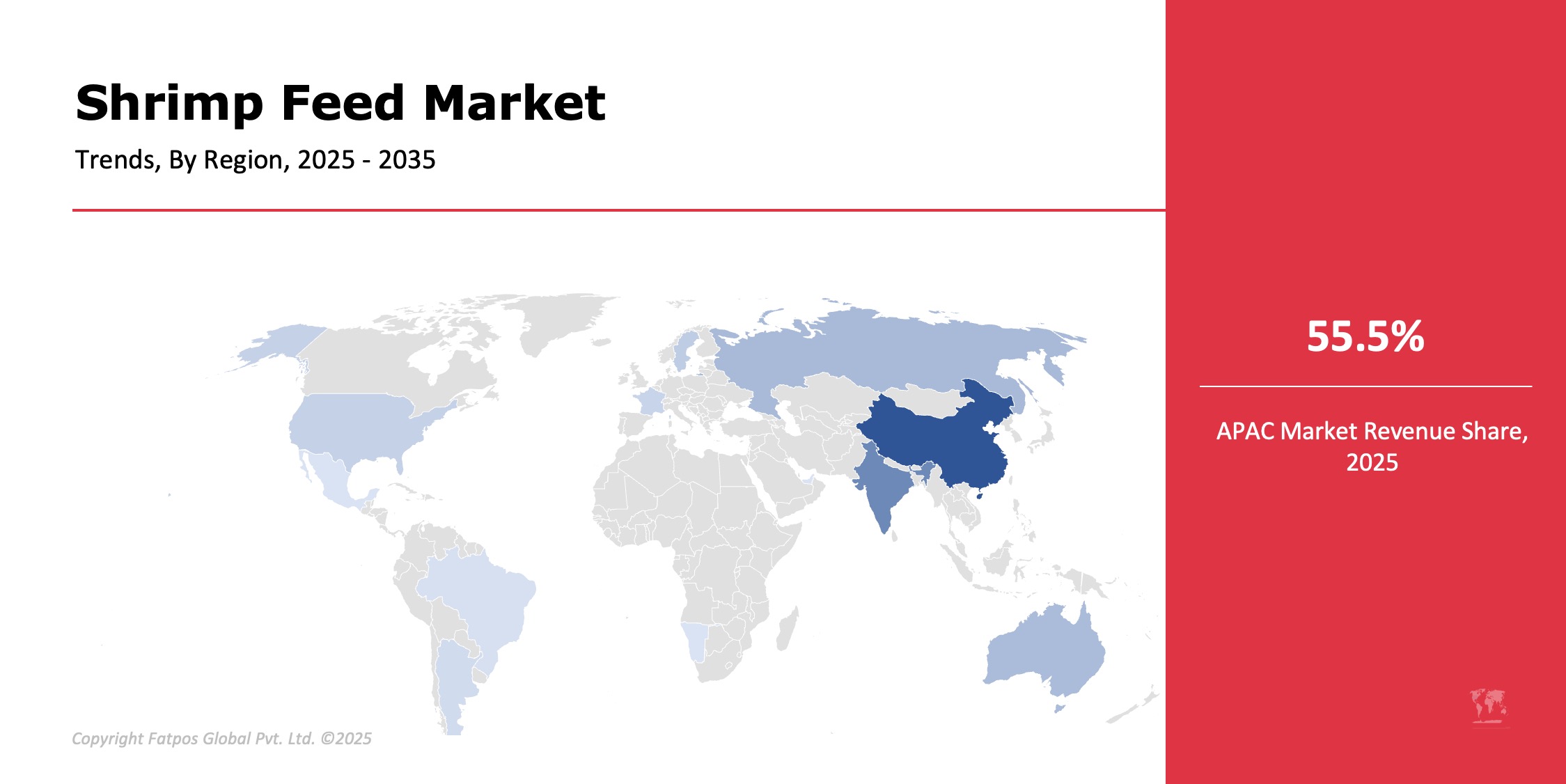
Asia-Pacific commands the largest shrimp feed market share, fueled by massive commercial farming in China, India, Thailand, Vietnam, Indonesia and Bangladesh, with localized formulations targeting smallholders and exporters. North America grows via US, Mexico and Canada aquaculture, prioritizing premium feeds with functional additives and advanced tech. Europe demands sustainable, traceable feeds under strict regulations, while Latin America—led by Ecuador and Brazil—expands rapidly on exports. Middle East & Africa sees gradual uptake from coastal investments and rising seafood needs.
Segmentation Highlights
Floating feeds dominate the shrimp feed market by type, offering easy monitoring and consumption, while crumbled feeds boost early-stage survival. Whiteleg shrimp feed leads by species volume, followed by black tiger shrimp, with customized nutrition optimizing growth. Starter feeds ensure juvenile survival, but grower and finisher formulations drive most value. Probiotics and prebiotics grow fastest among additives for gut health and disease resistance, while commercial farms generate primary revenue, with smallholders expanding via contracts and subsidies.
Report Key Elements
|
ATTRIBUTES |
DETAILS |
|
Study Period |
2019–2035 |
|
Base Year |
2024 |
|
Shrimp Feed Market Forecast Period |
2025–2035 |
|
Shrimp Feed Market Size by 2035 |
USD 24.9 billion |
|
Market CAGR |
6.1% |
| By Feed Type | Crumbled Feed, Floating Feed, Sinking Feed, Pellet Feed |
|
By Species |
Whiteleg Shrimp, Black Tiger Shrimp, Others |
|
By Formulation |
Starter, Grower, Finisher |
|
By Additive |
Probiotics & Prebiotics, Vitamins & Minerals, Enzymes, Amino Acids, Carotenoids |
|
By distribution channel |
Direct Sales, Distributors & Dealers, E-commerce |
|
By End User |
Commercial Aquaculture Farms, Smallholder Farms |
|
By Region |
NA, Europe, APAC, LATAM, MEA |
|
Key Market Players |
Cargill, Nutreco, ADM, CP Foods, Zeigler |
Global Shrimp Feed Industry Instances
- A major shrimp farm in Vietnam adopted robotic feeders and high-performance floating feed, increasing feed conversion efficiency by 18%.
- A commercial aquaculture chain in India integrated probiotic-enriched shrimp feed, reducing mortality rates during monsoon.
- Ecuadorian processors opted for specialty finisher feeds to meet export quality standards.
- Feed companies launched low-fishmeal formulations using insect and plant proteins to reduce marine resource dependency.
Analyst Review
As per our Shrimp Feed Market analysis report, market is continues its evolution toward precision nutrition and sustainability. Demand is underpinned by global protein consumption shifts, export opportunities, and technological infusion in feed formulations and delivery mechanisms. Although raw material cost volatility and disease outbreaks present challenges, innovations in additives, automation, and alternative protein sources offer resilience and differentiation. Companies that balance cost, efficacy, and sustainability are poised for strong growth through 2035.
Frequently Asked Questions (FAQ):
Increasing global shrimp consumption, expanding commercial aquaculture, and technological advancements in feed formulations.
Floating feeds dominate due to ease of feeding and monitoring, especially in large ponds and cages.
Whiteleg shrimp (Litopenaeus vannamei) due to its global cultivation dominance.
Additives like probiotics, prebiotics, and carotenoids improve health, growth rates, and product quality.
Asia-Pacific, led by China, India, Thailand, and Vietnam.
 Select License Type


.png)


