


Biosurfactants Market Research 2035
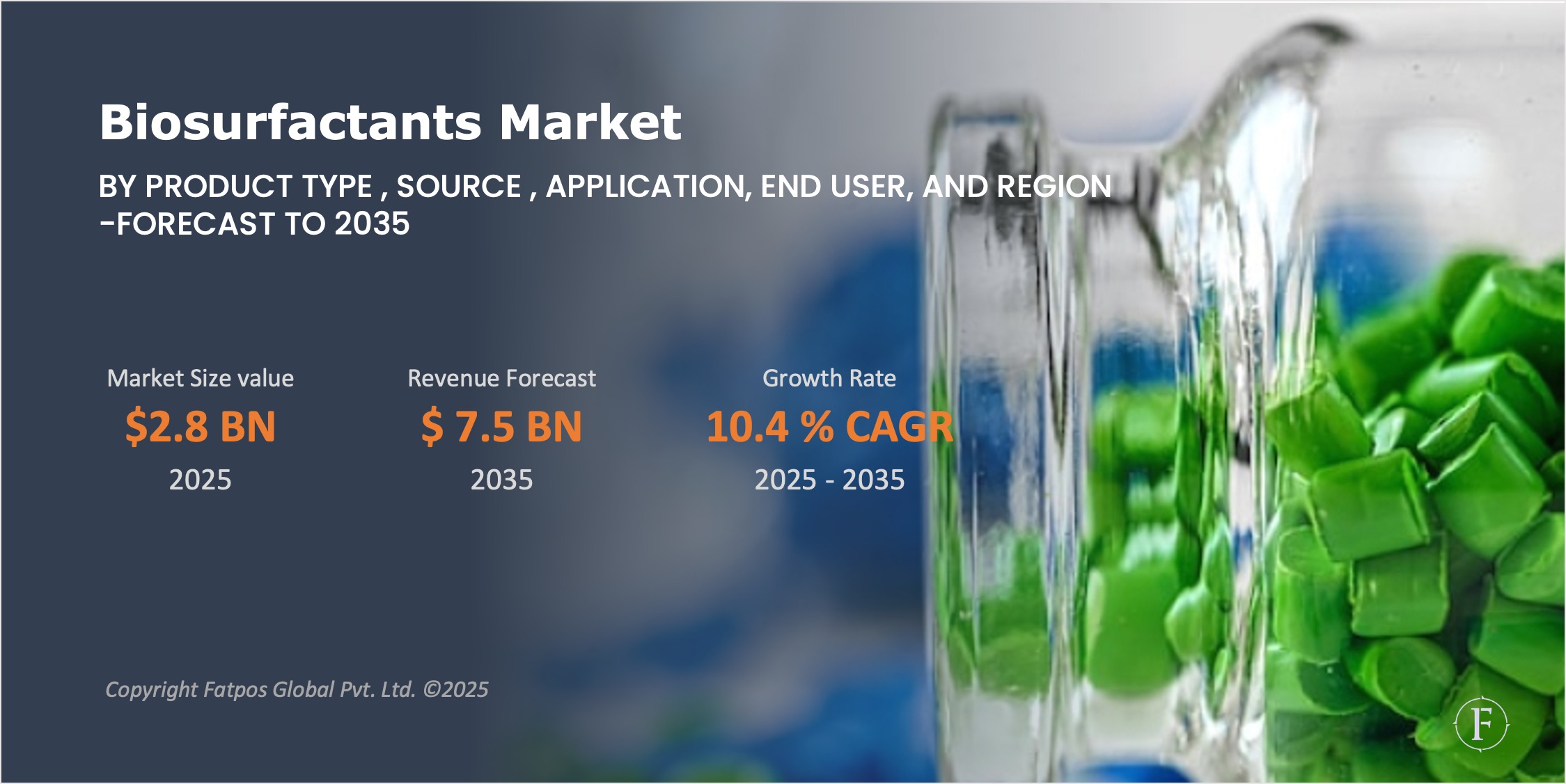
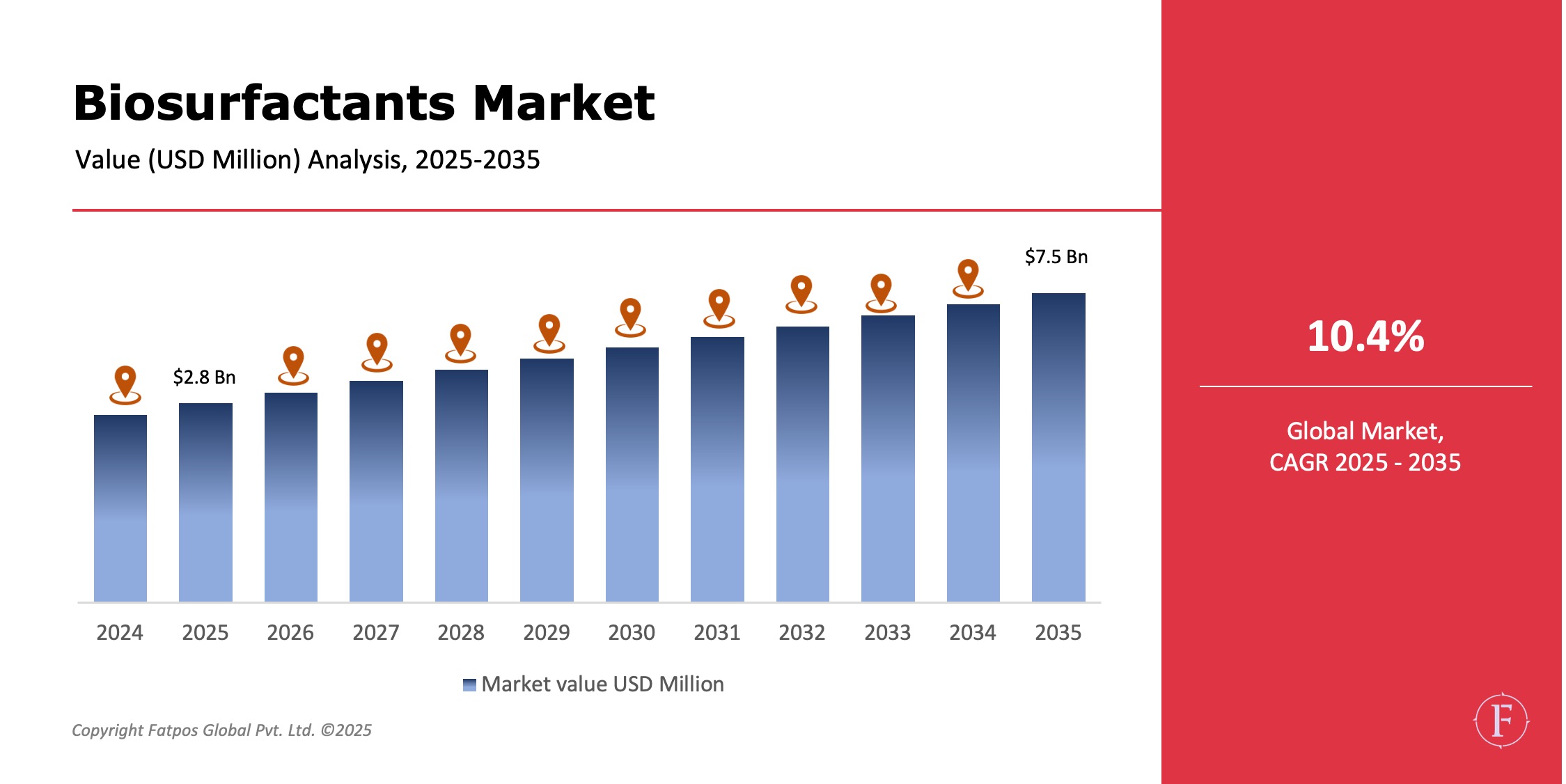
The Biosurfactants Market Size was USD 2.8 billion in 2025 and is projected to reach USD 7.5 billion by 2035, registering a CAGR of 10.4%, The market growth is supported by rising environmental concerns, tighter regulations on synthetic surfactants, and increasing demand for sustainable, biodegradable alternatives across industries. Biosurfactants, produced from microorganisms and plants, provide low toxicity, high biodegradability, and good performance under harsh conditions, driving use in home care, personal care, agriculture, food, pharma, and oilfield applications.
Product Overview
Biosurfactants are categorized by structure, source, and function, including glycolipids used extensively in detergents and personal care for their strong surface activity and biodegradability. Glycolipids, lipopeptides, phospholipids, and polymeric biosurfactants. Lipopeptides provide antimicrobial effects for pharmaceuticals and agriculture, while phospholipids are important in food and cosmetic formulations. Polymeric biosurfactants serve oil recovery and industrial uses thanks to their stability. Microbial-derived biosurfactants from bacteria, yeast, and fungi dominate for scalability, with plant-based types growing in clean-label and organic segments.
Key Takeaways:
- The Biosurfactants Market is expected to grow at ~10.5% CAGR through 2035.
- Glycolipids account for the largest market share due to wide industrial usability.
- Detergents & cleaners represent the largest application segment.
- Rising demand for green and sustainable chemicals is a major growth driver.
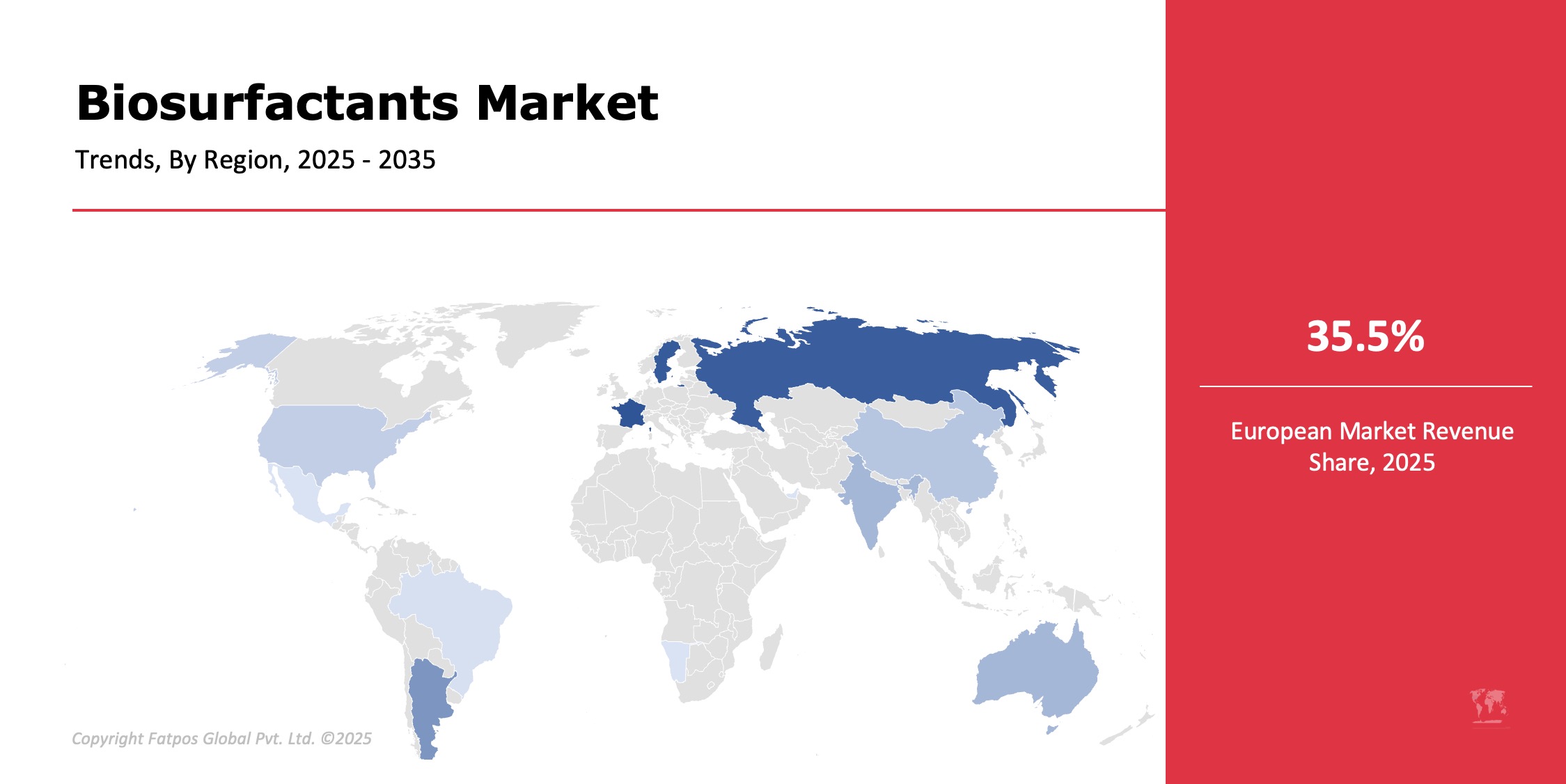
- Europe leads adoption due to strict environmental regulations.
- Asia-Pacific is the fastest-growing region due to industrial expansion and rising consumer awareness.
Market Dynamics
Drivers
Tighter environmental regulations on synthetic surfactants are accelerating the shift toward biosurfactants, reinforced by consumer demand for bio-based, biodegradable, and non-toxic products. Growing use in detergents, personal care, agriculture, and enhanced oil recovery broadens the market base. At the same time, advances in fermentation and biotechnology are improving yields and lowering production costs, making biosurfactants more competitive with conventional petrochemical surfactants.
Restraints
High production costs relative to conventional petrochemical surfactants remain a major restraint for the biosurfactants market, especially in cost-sensitive segments. Limited large-scale manufacturing capacity in several regions restricts reliable supply and economies of scale. As a result, price sensitivity in mass‑market applications such as household detergents and industrial cleaners often constrains wider adoption, with many formulators still opting for cheaper synthetic alternatives despite environmental advantages.
Opportunities
Technological innovations in fermentation, strain engineering, and downstream processing are lowering biosurfactant production costs and improving yields, enhancing their competitiveness versus synthetic surfactants. Rising adoption in agricultural biopesticides and soil enhancers supports sustainable farming by reducing reliance on harsh agrochemicals. At the same time, pharmaceutical and food industries are increasing use of biosurfactants as clean-label, multifunctional ingredients. Growing investments in industrial biotechnology and green chemistry further accelerate scale-up, commercialization, and diversification of biosurfactant-based product portfolios.
Challenges
Scaling up biosurfactant production while remaining cost‑competitive with petrochemical surfactants is a key operational challenge. Maintaining consistent quality and performance across diverse applications such as detergents, agriculture, food, and pharma also requires tight process control and standardized specifications. At the same time, the market faces pressure from improved, low-cost synthetic surfactants that continue to offer reliable functionality at lower prices, especially in highly price-sensitive, high-volume end-use segments.
Biosurfactants Market Trends
Shift toward microbial-based biosurfactants is accelerating because they deliver high efficiency, broad functionality, and easier scale-up across industries. Integration into eco-friendly household cleaners and personal care brands is strengthening their market visibility and consumer acceptance. R&D using genetically engineered microorganisms is targeting higher yields and tailored properties. At the same time, interest in biosurfactants for enhanced oil recovery is rising, supported by partnerships between biotechnology companies and established chemical manufacturers to co-develop and commercialize new formulations.
Key Players in the Global Biosurfactants Industry
- BASF SE
- Evonik Industries AG
- Croda International Plc
- Stepan Company
- Ecover (SC Johnson)
- Akzo Nobel N.V.
- Givaudan
- Jeneil Biotech
- TensioGreen
- Rhamnolipid Companies Inc.
- Allied Carbon Solutions
Regional & Country Analysis
North America’s biosurfactants market is driven by rising use of sustainable chemicals in personal care and household cleaners, backed by supportive regulations and strong R&D ecosystems. Europe remains the largest regional market owing to stringent environmental rules, early green‑chemistry adoption, and high demand from detergents and cosmetics manufacturers. Asia‑Pacific is the fastest‑growing region, propelled by industrialization, expanding consumer markets, and interest in sustainable agriculture and manufacturing, while Latin America grows in agriculture and cleaning products and the Middle East & Africa advance gradually via oilfield uses and rising sustainability awareness.
Segmentation Highlights
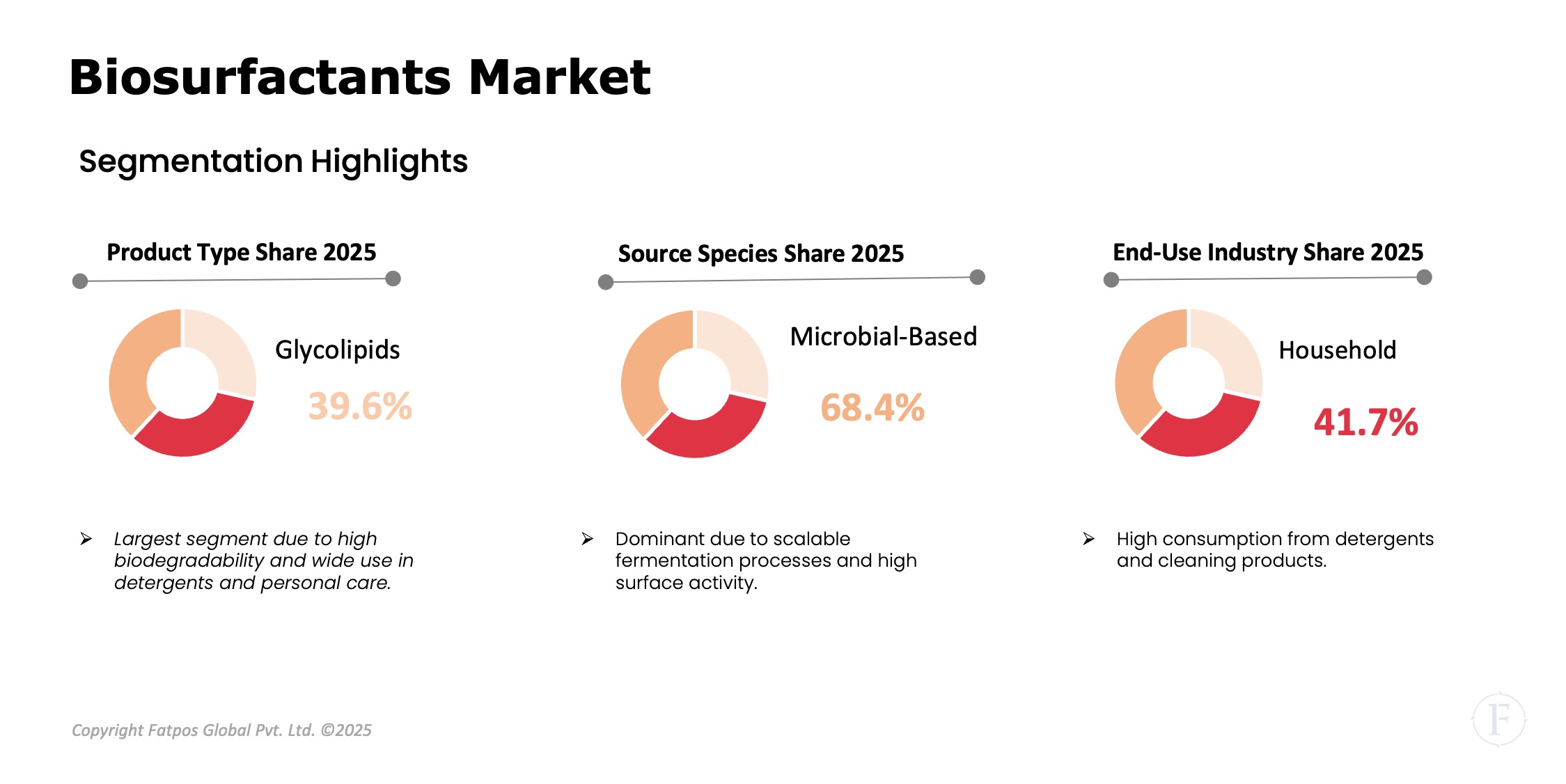
Glycolipids currently dominate the biosurfactants market, with lipopeptides gaining share due to strong antimicrobial properties across hygiene, agricultural, and pharma uses. Microbial-based biosurfactants lead by source because they offer scalable, consistent production and robust performance in diverse formulations. Detergents and cleaners form the largest application segment, while agriculture and pharmaceuticals exhibit high growth potential. Household and industrial cleaning end-use sectors together account for the majority of global biosurfactant consumption across regions.
Report Key Elements
|
ATTRIBUTES |
DETAILS |
|
Study Period |
2019–2035 |
|
Base Year |
2024 |
|
Biosurfactants Market Forecast Period |
2025–2035 |
|
Biosurfactants Market Size by 2035 |
USD 7.5 billion |
|
Market CAGR |
10.4% |
| Product Type | Glycolipids, Lipopeptides, Phospholipids, Polymeric Biosurfactants, Others |
|
By Source |
Plant-Based, Microbial-Based |
|
By Application |
Detergents & Cleaners, Personal Care & Cosmetics, Food Processing, Agriculture, Oilfield Chemicals, Pharmaceuticals, Others |
|
By End User |
Household, Industrial, Institutiona |
|
By Region |
NA, Europe, APAC, LATAM, MEA |
|
Key Players |
BASF SE, Evonik Industries AG, Croda International Plc, Stepan Company, Ecover (SC Johnson), Akzo Nobel NV |
Global Biosurfactants Industry Instances
- Detergent manufacturers introduced biosurfactant-based formulations to meet eco-label standards.
- Agricultural companies adopted biosurfactants in bio-pesticide formulations to improve efficacy.
- Oil & gas operators tested biosurfactants for enhanced oil recovery in mature fields.
- Cosmetic brands launched plant-based, biosurfactant-rich personal care products.
Analyst Review
As per our Biosurfactants Market analysis report, market is positioned for robust growth as industries shift toward sustainable and environmentally friendly alternatives to synthetic surfactants. While production costs remain a challenge, technological advancements and economies of scale are expected to improve market competitiveness. Companies investing in innovation, fermentation efficiency, and diversified application portfolios will be best positioned to capitalize on long-term opportunities through 2035.
Frequently Asked Questions (FAQ):
Biosurfactants are surface-active agents derived from renewable biological sources, offering biodegradability and low toxicity.
Environmental regulations, consumer preference for green products, and expanding industrial applications.
Detergents and cleaners account for the largest market share.
Europe leads due to strong environmental policies and early adoption.
The market is expected to grow rapidly, driven by innovation, sustainability trends, and broader industrial adoption.
 Select License Type


.png)


