


Biomaterials Market Research, 2035
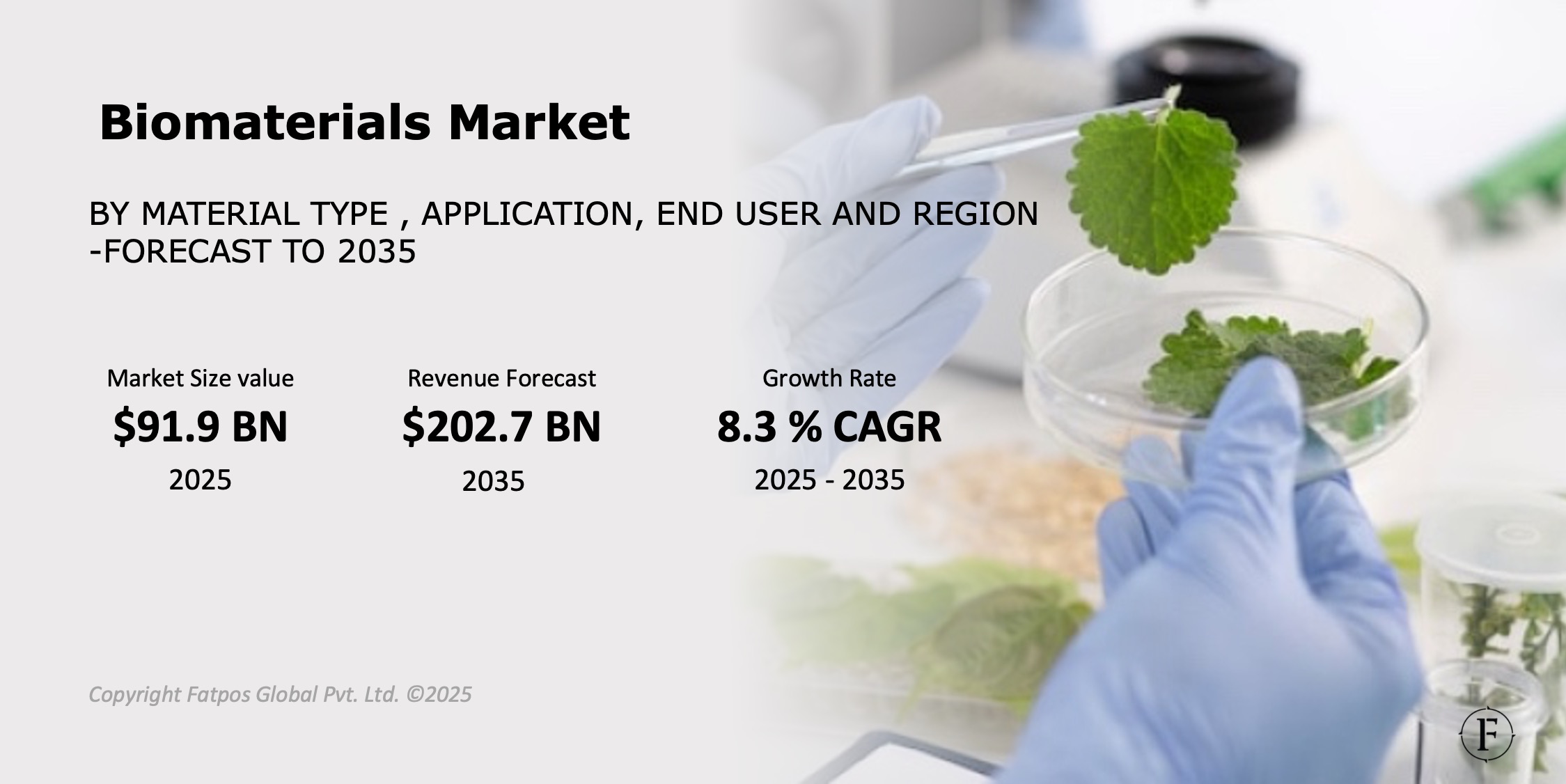
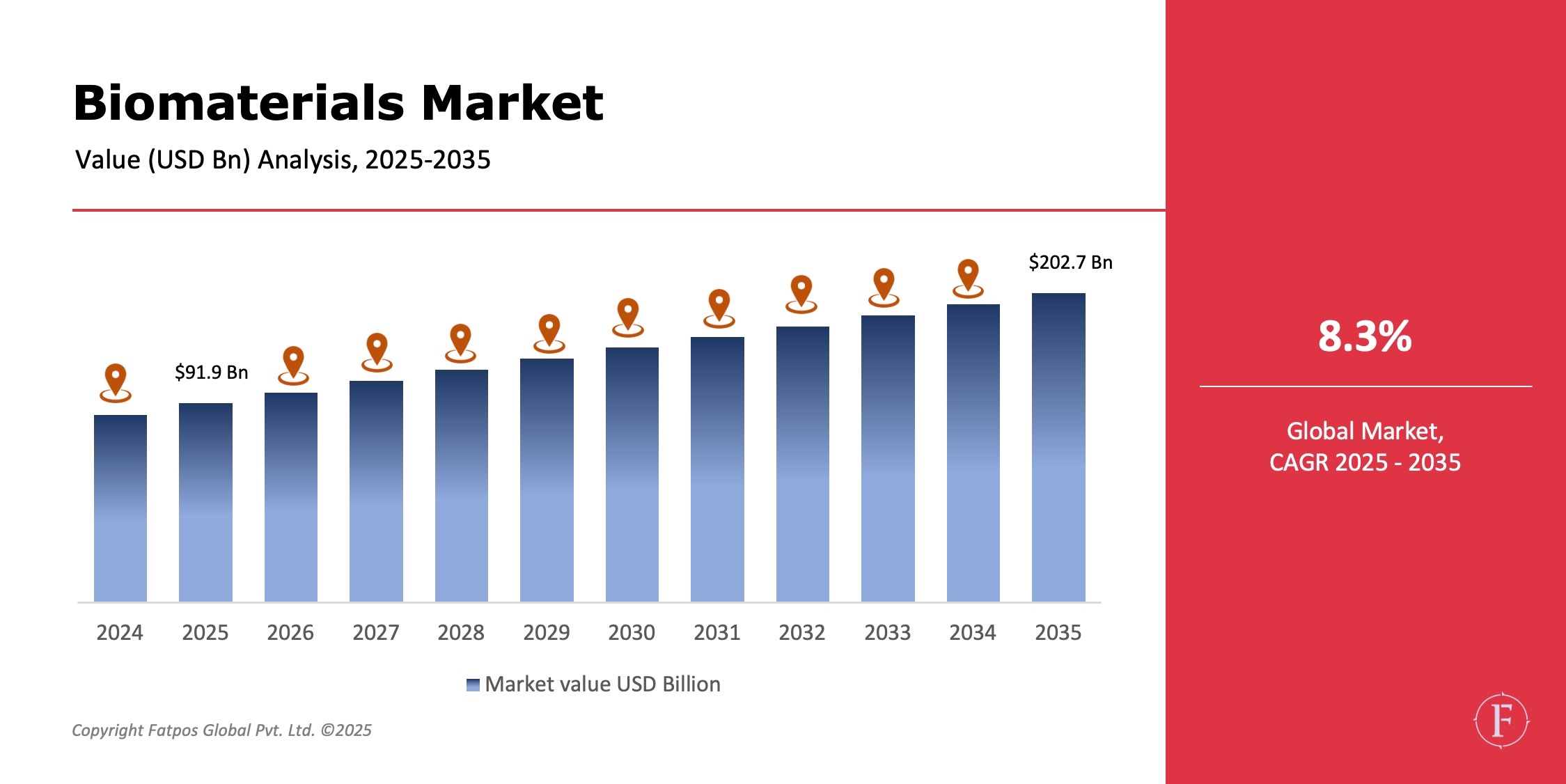
The biomaterials market is projected to grow from USD 91.9 billion in 2025 to USD 202.7 billion by 2035 at 8.3% CAGR, fueled by rising surgeries, aging populations, chronic diseases, and regenerative medicine. Demand surges for implants, orthopedics, wound care, and cardiovascular devices, backed by investments in cell therapy, bioprinting, scaffolds, and medical polymers.
Product Overview
Biomaterials—natural or synthetic substances engineered for biocompatibility, mechanical strength, biodegradation, and implant safety—include polymers, metals, ceramics, composites, and biologics. They support orthopedic devices, stents, dental implants, wound dressings, scaffolds, prosthetics, and drug delivery. Innovations like 3D-printed scaffolds, nano-coatings, bioresorbable implants, and injectable gels enhance regenerative medicine, trauma care, sports medicine, and wound management outcomes
Key Takeaways
- The global Biomaterials Market will grow from from USD 91.9 billion in 2025 to USD 202.7 billion by 2035, at a CAGR of 8.3%.
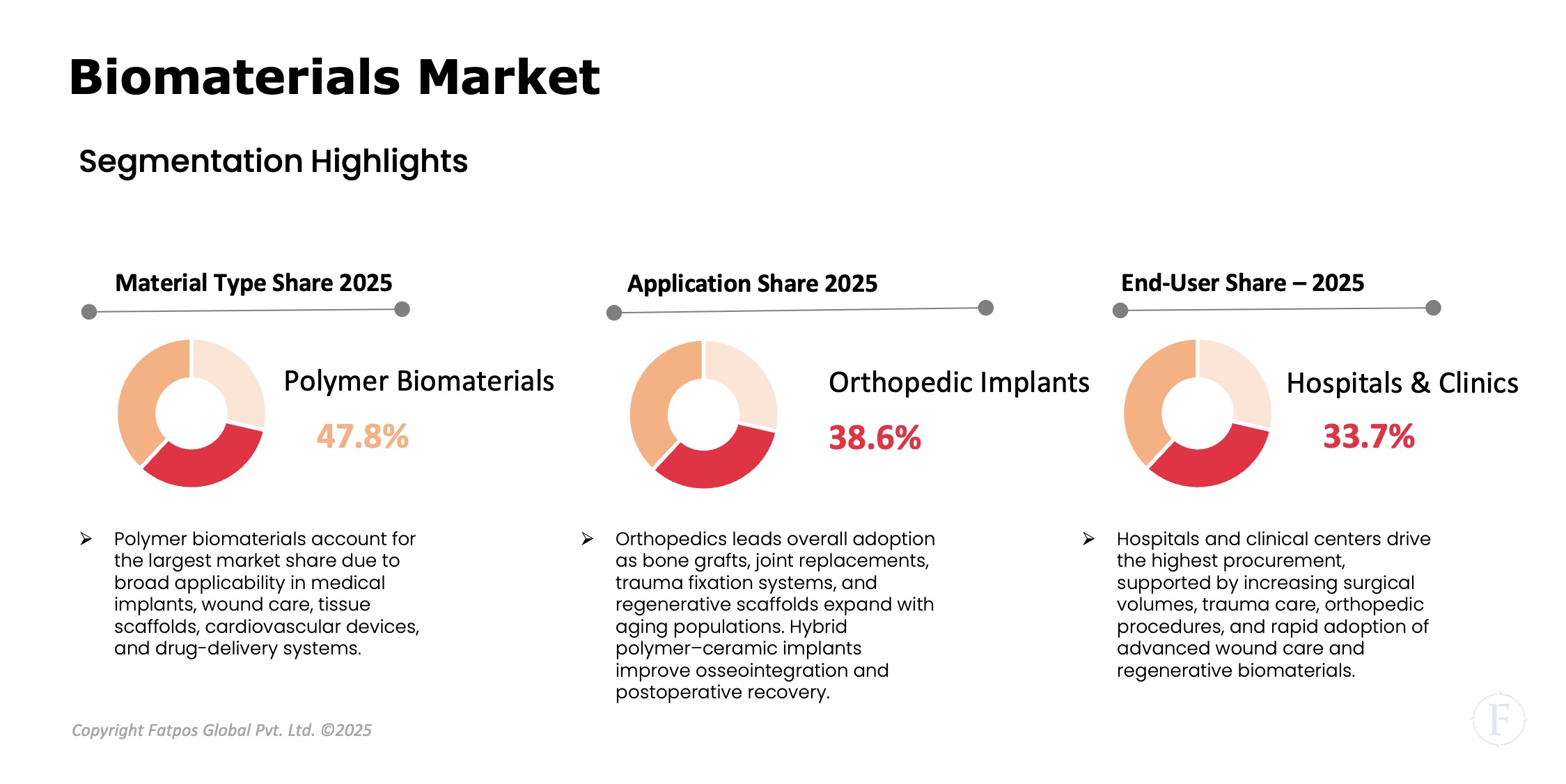
- Polymer biomaterials hold the highest biomaterials market share, driven by minimally invasive devices, tissue engineering and wound care systems.
- Orthopedic applications dominate, followed by cardiovascular, dental and regenerative therapy use cases.
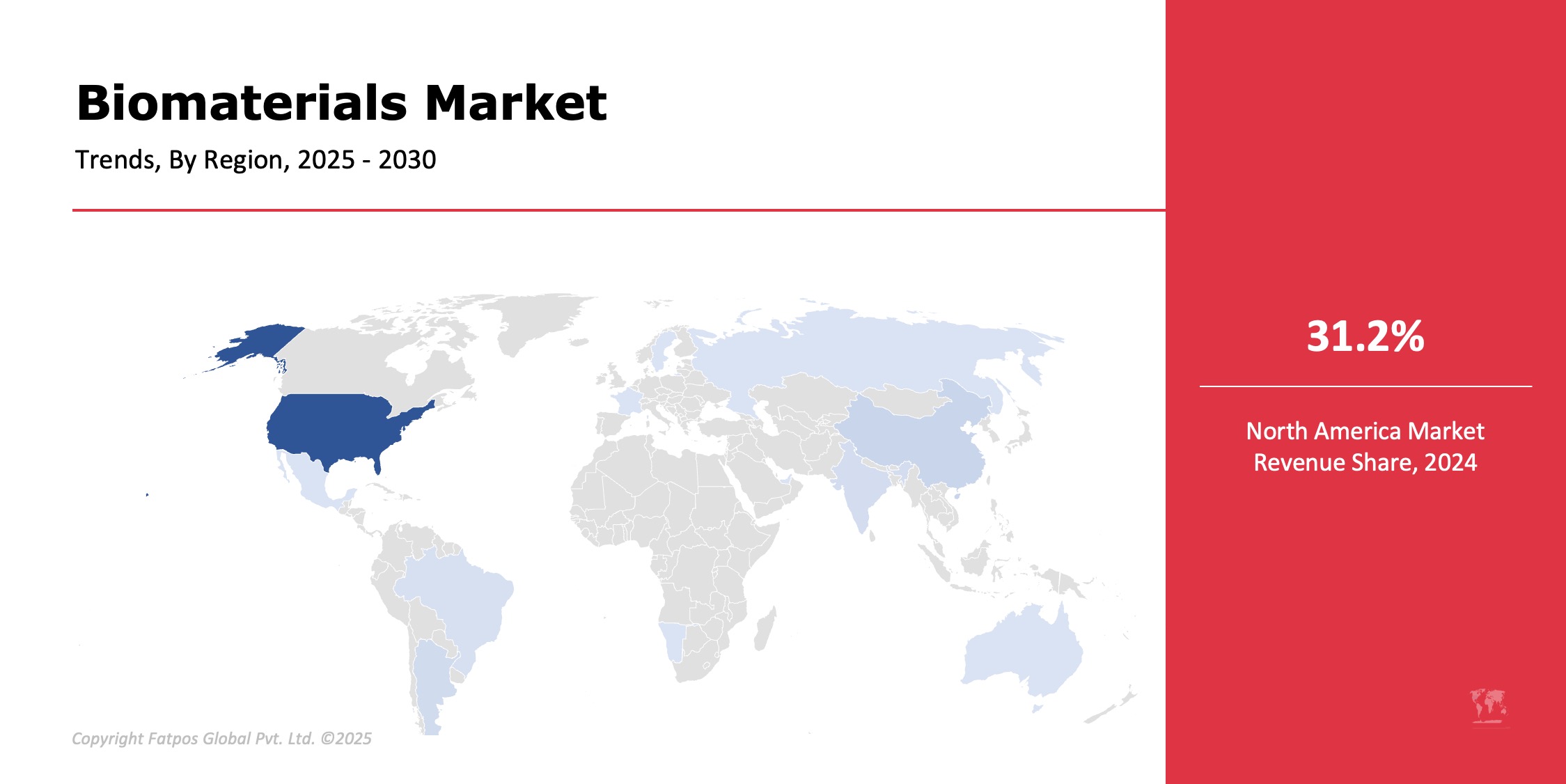
- North America leads global demand, backed by strong reimbursement, advanced medical manufacturing and high surgical adoption.
- 3D printing, nano-materials, composite scaffolds and bioresorbable implants are key product innovation trends.
Market Dynamics
Drivers:
The rising need for medical implants, orthopedic reconstruction, cardiovascular surgeries, and tissue regeneration is accelerating biomaterials adoption. Aging populations, sports injuries, and chronic conditions maintain growing surgical volumes. Investments in bioengineered grafts, smart coatings, injectable hydrogels, drug-eluting polymers, and stem-cell scaffolds fuel long-term commercial growth.
Restraints:
High costs, lengthy regulatory approvals, complex manufacturing, and biocompatibility challenges complicate commercialization. Issues like corrosion, infection, fatigue failure, and sterilization standards increase development costs. Limited material availability in low-income regions restricts widespread healthcare adoption.
Opportunities:
Bioresorbable stents, regenerative scaffolds, injectable bone substitutes, nano-surface modifications, and bioengineered ligaments drive new growth. Advances in 3D bioprinting, tissue engineering, and stem-cell therapy open regenerative medicine markets. Integration into wound care, dental prosthetics, and transcatheter devices broadens lucrative applications.
Challenges:
Balancing mechanical strength, degradation, cell adhesion, immune response, and antibacterial properties is difficult. Manufacturing reproducibility, infection control, sterilization, implant durability, and active coatings require interdisciplinary testing. Supply chains for specialized polymers and ceramics are cost- and regulation-sensitive.
Biomaterials Market Trends
The Biomaterials Market is evolving with accelerated deployment of 3D-printed implants, scaffolds with controlled porosity, polymer-ceramic composites, surface functionalization and biocompatible nano-technology. Polymeric and natural biomaterials are witnessing rapid adoption in minimally invasive surgeries, wound dressings and controlled drug delivery. Orthopedic implants and cardiovascular stents remain dominant with drug-eluting coatings, corrosion resistance, and advanced osteointegration properties. Tissue engineering and regenerative medicine are expected to show the fastest growth as healthcare systems expand cell therapy research, biofabrication, and scaffold design capability.
Key Players Featured in the Report
The global Biomaterials Industry includes several leading manufacturers, such as:
- BASF SE
- Evonik Industries
- Corbion
- Zimmer Biomet
- Medtronic
- DSM Biomedical
- Stryker Corporation
- Collagen Solutions
- Berkeley Advanced Biomaterials
- Victrex Polymer Solutions
Regional Analysis
North America leads the biomaterials market with advanced manufacturing, reimbursement systems, and strong adoption of orthopedic, dental, and cardiovascular implants. Europe follows, driven by polymer science and tissue engineering research. Asia-Pacific registers the fastest growth, fueled by rising surgeries, trauma care, dental tourism, and expanding healthcare in China, Japan, India, and South Korea. Latin America and MEA grow steadily in injury care and joint replacement.
Segmentation Analysis
Agricultural waste feedstock dominates due to abundance and efficiency; anaerobic digestion grows quickest for cost-effectiveness. Transportation leads end-use for low-carbon fuels, while industrial and power segments accelerate with grid integration.
Report Key Elements
|
Report Key Elements |
Details |
|
Study Period |
2025-2035 |
|
Market Size by 2035 |
USD 202.7 billion |
|
Market CAGR |
8.3% |
|
By Material |
Polymer, Metal, Ceramic, Natural |
|
By Application |
Orthopedics, Cardiovascular, Dental, Wound Care, Tissue Engineering, Others |
|
By End Use |
Hospitals & Clinics, Ambulatory Surgical Centers, Research Institutions |
|
By Region |
Europe, North America, Asia-Pacific, Latin America, Middle East & Africa |
|
Key Market Players |
Medtronic, Zimmer Biomet, DSM Biomedical, Evonik, Stryker, BASF |
Biomaterials Industry Instances
- Zimmer Biomet expanded its orthopedic biomaterial portfolio with next-generation bone graft substitutes and advanced joint coatings.
- Medtronic accelerated commercialization of bioresorbable cardiovascular scaffolds with drug-eluting film technologies.
- Collagen Solutions enhanced regenerative wound-care platforms for chronic ulcer management.
- Evonik expanded its medical-grade polymer production for implantable scaffolds and trauma fixation systems.
Analyst Review
As per our Biomaterials Market analysis, the market shows strong multi-decade growth driven by expanding surgical applications, regenerative tissue science, and device innovation. Polymer and composite biomaterials are expected to maintain dominant share with rising adoption across wound care, tissue scaffolds, dental prosthetics and minimally invasive implants. As healthcare spending expands and chronic disease prevalence grows, biomaterials will remain strategically positioned across orthopedic, cardiovascular and regenerative medicine portfolios.
Frequently Asked Questions (FAQ):
The market is projected to grow from USD 91.9 billion in 2025 to USD 202.7 billion by 2035, at a CAGR of 8.3%, supported by rising implant demand, regenerative medicine, and advanced medical manufacturing.
North America leads due to advanced orthopedic and cardiovascular implant usage, strong reimbursement and mature healthcare infrastructure.
Orthopedic implants are the dominant segment, followed by cardiovascular, dental and wound-management biomaterial systems.
Polymer and bioresorbable biomaterials are expected to grow fastest due to strong compatibility with minimally invasive devices and regenerative medicine.
Medical device manufacturers, orthopedic solution providers, cardiovascular technology developers, dental implant suppliers, hospitals, trauma centers, wound-care companies, research institutes, and investors seeking insight into regenerative medicine, implant innovation and global healthcare demand.
 Select License Type


.png)


