


Marine Biotechnology Market Research 2035
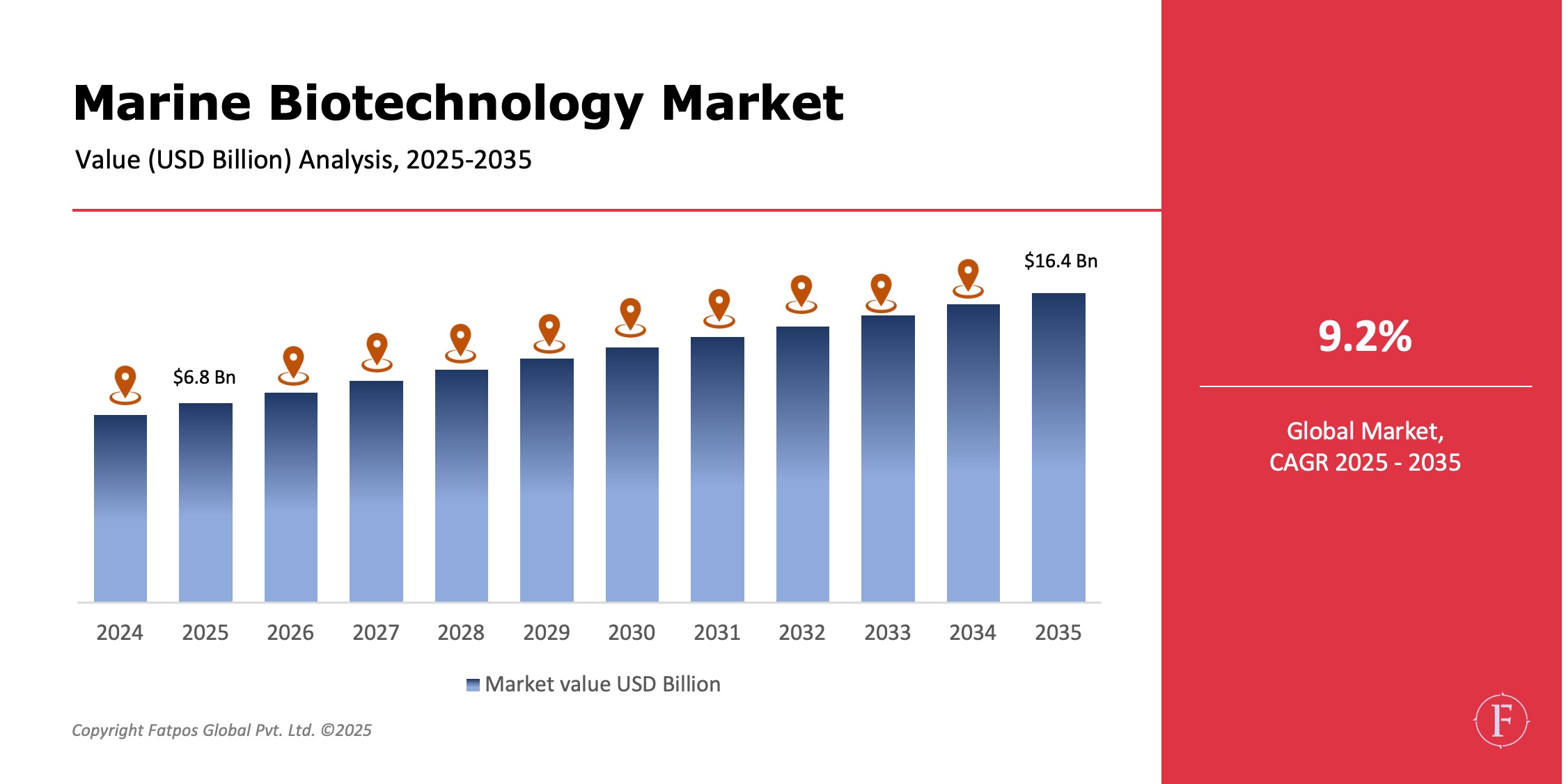
The Marine Biotechnology Market was valued at approximately USD 6.8 billion in 2025 and is projected to reach USD 16.4 billion by 2035, registering a CAGR of 9.2% during the forecast period. Market growth is driven by increasing demand for novel bioactive compounds, rising pharmaceutical research, and expanding applications of marine-derived enzymes and biomaterials across healthcare, food, and industrial sectors.
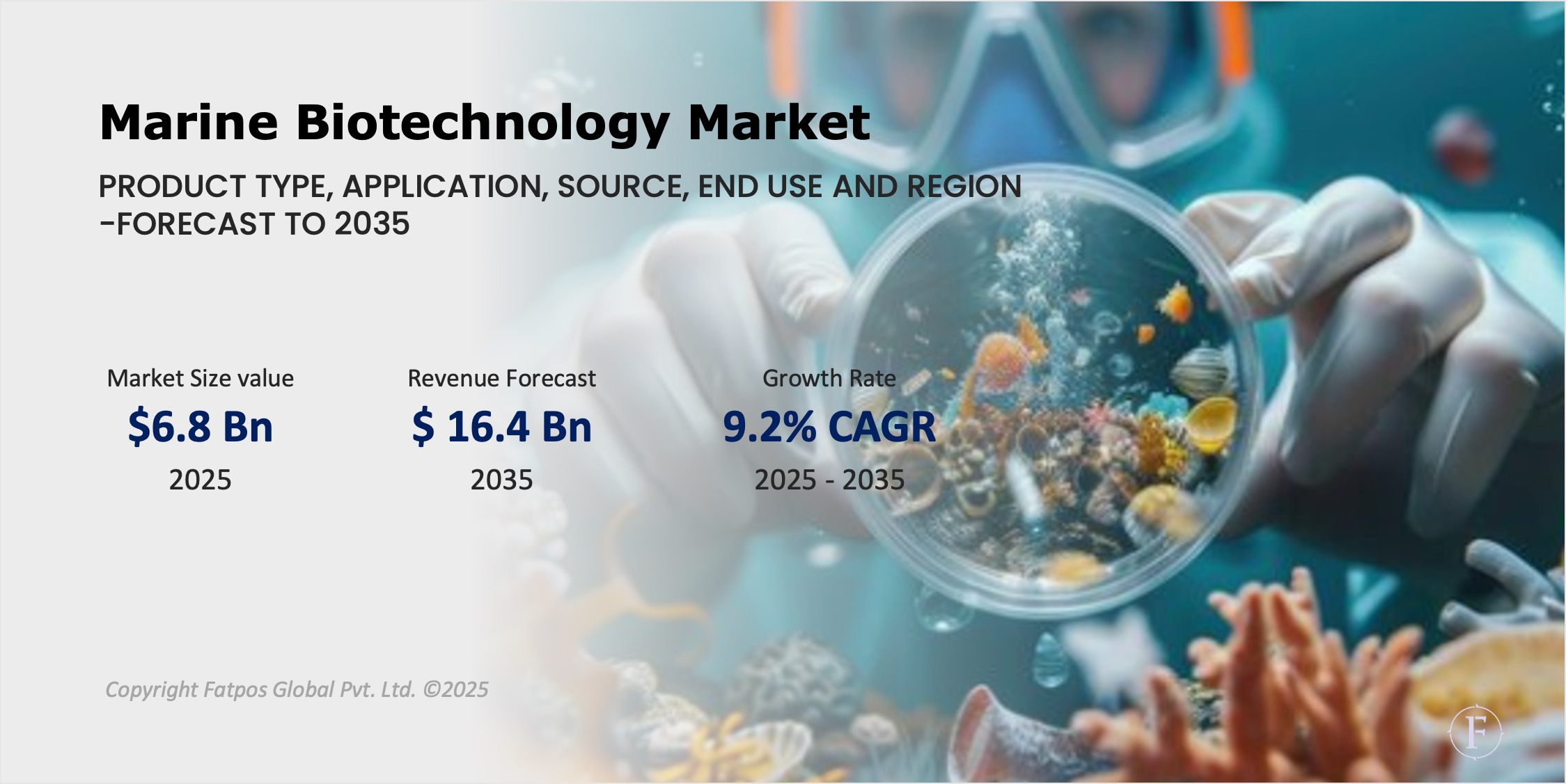
Marine biotechnology leverages marine organisms to develop products with high therapeutic, nutritional, and industrial value. Oceans represent a vast and largely untapped biological resource, offering unique compounds with antimicrobial, anti-inflammatory, anticancer, and antioxidant properties. Growing investments in marine research, coupled with advances in genomics and bioprocessing technologies, are accelerating commercialization.
Product Overview
Marine biotechnology involves the exploration and application of biological materials derived from marine organisms such as algae, bacteria, fungi, invertebrates, and fish. These biological resources are used to produce enzymes, bioactive compounds, biomaterials, and other functional ingredients.
Marine-derived products are increasingly utilized in pharmaceuticals, nutraceuticals, cosmetics, food processing, and bioenergy applications. Compared to terrestrial sources, marine organisms offer higher chemical diversity and unique molecular structures. Sustainable harvesting practices, aquaculture-based sourcing, and synthetic biology approaches are being adopted to ensure long-term resource availability and environmental protection.
Key Takeaways:
- Marine Biotechnology Market expected to grow at 9.2% CAGR through 2035
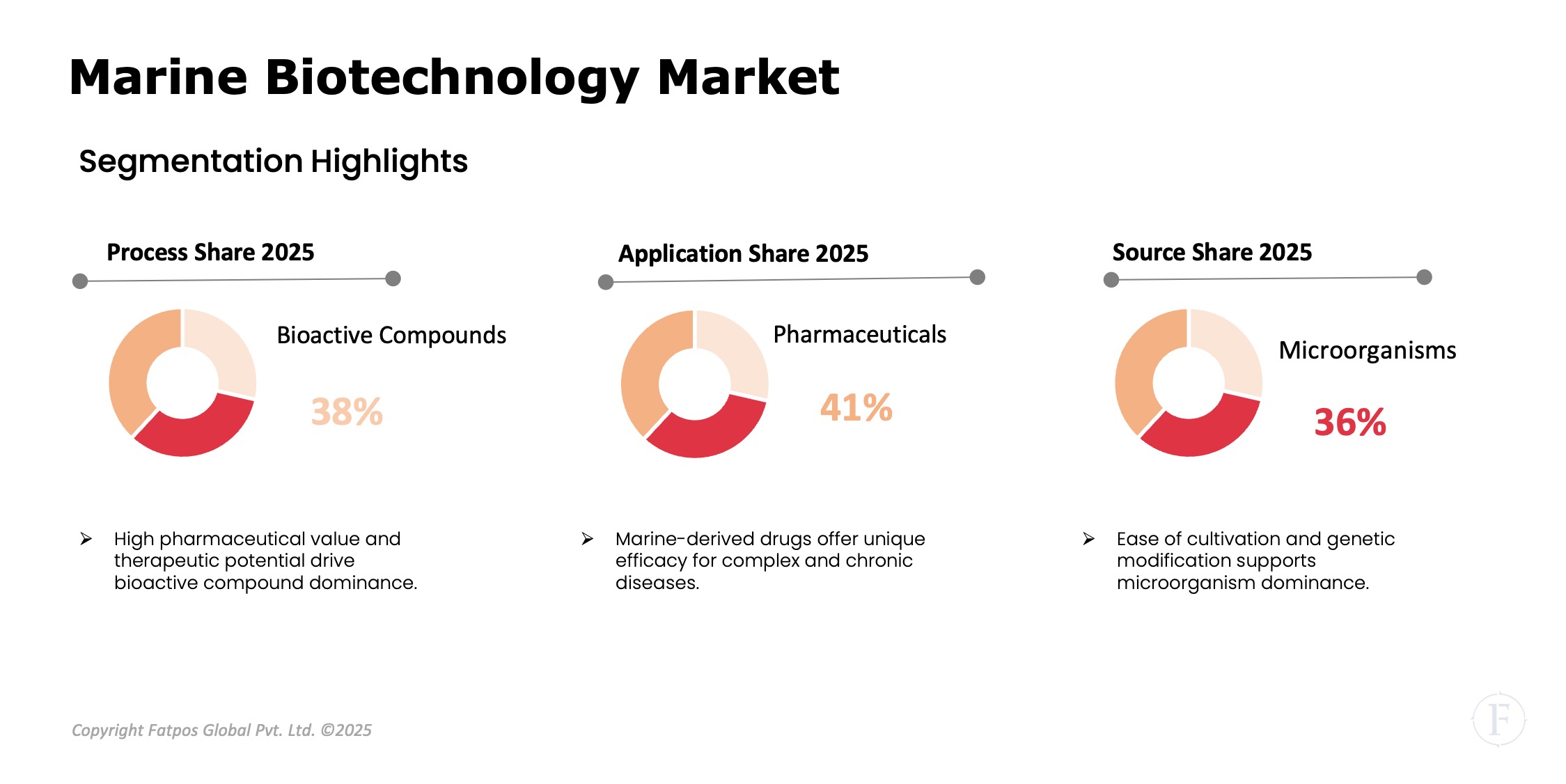
- Bioactive compounds dominate product demand
- Pharmaceuticals represent the largest application segment
- Microorganisms are the primary biological source
- Healthcare remains the leading end-use sector
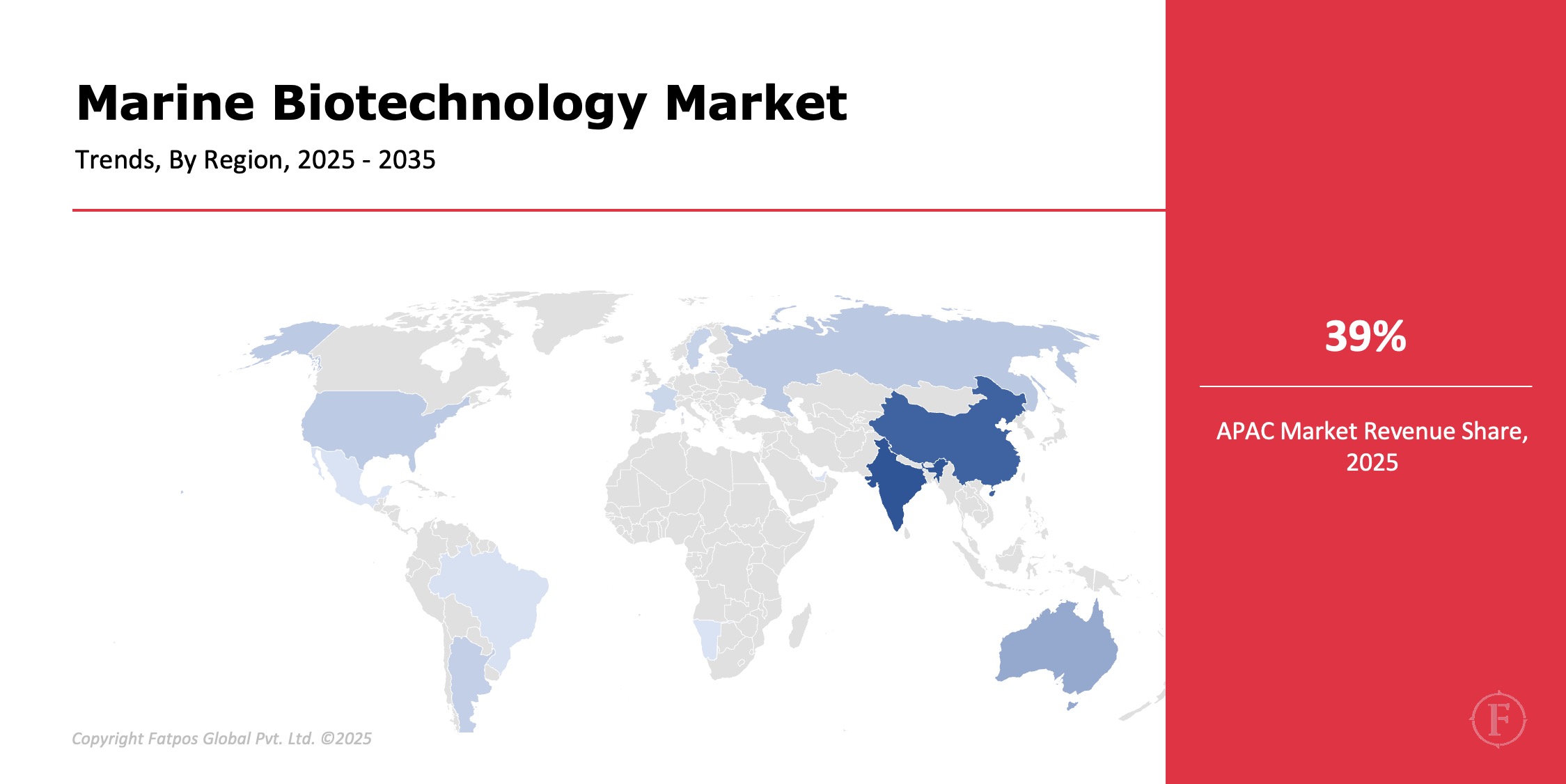
- Asia-Pacific leads the global market
Market Dynamics
Drivers
The Marine Biotechnology Market is driven by increasing demand for innovative pharmaceutical and healthcare solutions. Marine-derived bioactive compounds offer superior efficacy in treating cancer, infectious diseases, and inflammatory conditions. Rising consumer preference for natural and sustainable ingredients boosts demand in nutraceuticals and cosmetics.
Advancements in marine genomics, metagenomics, and bioprocessing technologies have improved compound discovery and scalability. Government funding for marine research, coupled with growing interest in blue economy initiatives, further supports market expansion. Industrial demand for marine enzymes in food processing and biofuels also contributes to sustained growth.
Restraints
High research and development costs associated with marine biotechnology restrain market growth. Limited access to deep-sea ecosystems and complex extraction processes increase operational expenses. Regulatory challenges related to marine biodiversity protection and bioprospecting rights further restrict commercialization.
Uncertainty in large-scale production and limited standardization of marine-derived products can delay product approvals. Additionally, ethical concerns regarding marine ecosystem disruption and overexploitation pose challenges for sustainable market development, particularly in ecologically sensitive regions.
Opportunities
Marine biotechnology offers significant opportunities through the discovery of novel compounds for pharmaceuticals and nutraceuticals. Rising demand for algae-based proteins, omega-3 fatty acids, and functional ingredients presents strong growth potential. Expansion of biofuels and biodegradable biomaterials from marine sources supports sustainability initiatives.
Emerging economies with expanding research infrastructure provide untapped opportunities. Collaboration between research institutions, biotechnology firms, and governments is accelerating innovation. Synthetic biology and fermentation-based marine compound production further enhance scalability and commercial viability.
Challenges
The Marine Biotechnology Market faces challenges related to high development costs, regulatory complexity, and environmental sustainability. Accessing marine biodiversity requires specialized equipment and expertise, increasing research expenses. Regulatory frameworks governing marine genetic resources vary across regions, creating compliance challenges. Scaling production while maintaining compound efficacy and environmental responsibility remains difficult. Limited availability of skilled marine biotechnologists and long product development timelines further slow commercialization. Ensuring sustainable sourcing without harming marine ecosystems is a critical challenge that requires continuous monitoring, technological innovation, and strong international collaboration.
Marine Biotechnology Market Trends
The market is witnessing increased focus on algae-based biotechnology due to its scalability and environmental benefits. Pharmaceutical companies are investing in marine-derived anticancer and antiviral compounds. Advances in AI-driven compound screening and marine genomics are accelerating drug discovery.
Cosmetic manufacturers are adopting marine bioactives for anti-aging and skin protection formulations. Industrial sectors are increasingly using marine enzymes for eco-friendly processing. Strategic partnerships and public-private collaborations are shaping future market innovation and expansion.
Key Players in the Global Marine Biotechnology Industry
- BASF SE
- DSM-Firmenich
- Lonza Group
- CP Kelco
- Marinova Pty Ltd
- Aker BioMarine
- FMC Corporation
- Ginkgo Bioworks
- Sea6 Energy
- Biotec Pharmacon
Regional & Country Analysis
The Marine Biotechnology Market shows strong regional variation based on marine biodiversity availability, research infrastructure, and government support. Asia-Pacific dominates the market due to rich marine resources and strong investments in marine research across China, Japan, South Korea, and Australia. These countries actively support blue economy initiatives and marine pharmaceutical development.
North America holds a significant share, driven by advanced biotechnology research, strong pharmaceutical industries, and increasing commercialization of marine-derived compounds in the United States and Canada. Europe follows closely, supported by sustainability-focused regulations, extensive marine research programs, and growing demand for natural bioactive ingredients, particularly in countries such as Germany, France, and Norway. Latin America is an emerging market, benefiting from expanding aquaculture activities and untapped marine biodiversity. The Middle East & Africa show gradual growth, supported by rising research collaborations and investments in marine biotechnology infrastructure.
Segmentation Highlights
Bioactive compounds dominate product segments due to high-value pharmaceutical applications. Pharmaceuticals remain the leading application segment driven by marine-derived drug development. Microorganisms are the most utilized source due to scalability advantages. Healthcare dominates end use owing to therapeutic demand. Asia-Pacific holds the highest regional share supported by marine resources and research capabilities.
Report Key Elements
|
ATTRIBUTES |
DETAILS |
|
Study Period |
2019–2035 |
|
Base Year |
2024 |
|
Forecast Period |
2025–2035 |
|
Market Size by 2035 |
USD 16.4 Billion |
|
Market CAGR |
9.2% |
|
By Product Type |
Enzymes, Bioactive Compounds, Biomaterials, Others |
|
By Application |
Pharma, Nutraceuticals, Cosmetics, Industrial, Biofuels |
|
By Source |
Microorganisms, Algae, Invertebrates, Fish, Others |
|
By End Use |
Healthcare, Food & Beverages, Energy, Cosmetics, Industrial |
|
By Region |
North America, Europe, Asia-Pacific, Latin America, MEA |
|
Marine Biotechnology Market: Key Players |
BASF SE, DSM-Firmenich, Lonza Group, CP Kelco, Marinova Pty Ltd |
Global Marine Biotechnology Industry Instances
- Pharmaceutical firms developed marine-derived anticancer compounds
- Algae-based proteins adopted in functional food products
- Marine enzymes used in eco-friendly industrial processing
- Governments invested in blue economy and marine research initiatives
Analyst Review
As per our Marine Biotechnology Market analysis, the market will witness sustained growth through 2035 driven by pharmaceutical innovation, sustainability demand, and technological advancements. While regulatory and cost challenges remain, expanding applications and research investments will significantly strengthen long-term market prospects.
Frequently Asked Questions (FAQ):
Marine biotechnology uses marine organisms to develop products for pharmaceuticals, nutraceuticals, cosmetics, industrial processing, and bioenergy applications.
Growth is driven by pharmaceutical innovation, demand for natural bioactives, sustainability focus, and advancements in marine genomics and bioprocessing technologies.
Pharmaceuticals dominate due to high demand for marine-derived anticancer, antiviral, and anti-inflammatory compounds.
Microorganisms lead due to ease of cultivation, scalability, and genetic modification capabilities.
Asia-Pacific leads due to rich marine biodiversity, strong research funding, and blue economy initiatives.
 Select License Type


.png)


