


Pyrogen Testing Market Research, 2034
The global pyrogen testing market is expected to grow at a CAGR of 9.2% during the forecast period from 2024 to 2034. The market size was valued at US$ 1.4 billion in 2023 and is projected to reach US$ 3.8 billion by 2034.
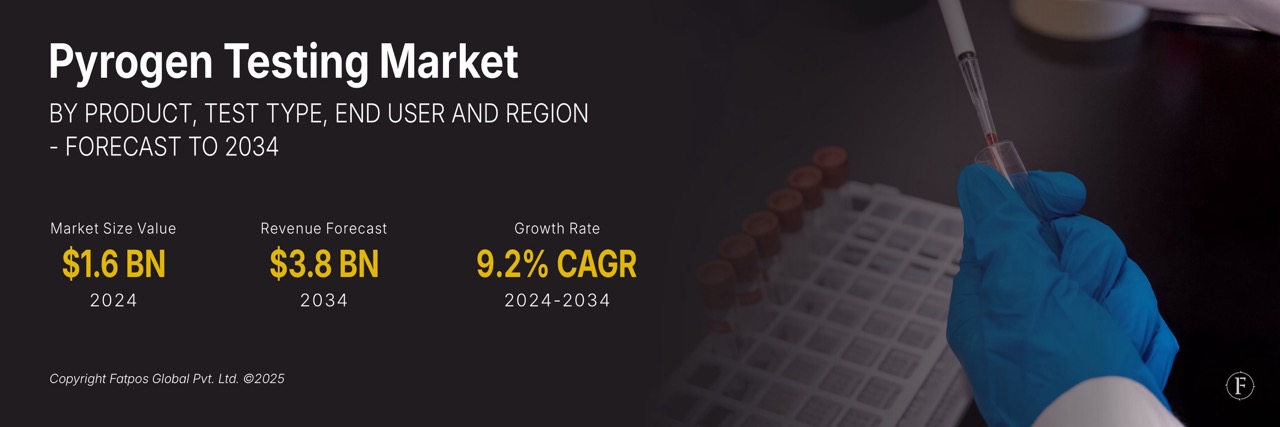
Pyrogen testing is an essential procedure in the pharmaceutical, biotechnology, and medical device sectors that is actively used to identify pyrogens, substances that can form fever in the body. Pyrogens, commonly bacterial endotoxins, can cause serious reactions, particularly in injectable medications, vaccines, or implanted medical devices.
Pyrogen testing is crucial to guarantee the safety of products and to meet the regulations established by organizations such as the FDA and EMA. The most used techniques are the Limulus Amebocyte Lysate (LAL) test, which uses blood from horseshoe crabs, the Rabbit Pyrogen Test (RPT), and modern animal-free methods like the Monocyte Activation Test (MAT) and recombinant Factor C (rFC) assay. These tests are vital in protecting patient health by avoiding complications caused by pyrogens.
Market Highlights:
The rise in global pharmaceutical and biologic production, due to the growing incidence of chronic illnesses and the demand for vaccines, has heightened the demand for strict quality control measures such as pyrogen testing. Furthermore, global regulatory authorities impose strict pyrogen testing standards, especially for sterile items and injectable medications, resulting in a consistent demand for pyrogen testing.
This shift towards ethical, animal-free testing methods, such as recombinant Factor C and the Monocyte Activation Test, has also led to increased demand as companies actively looking for sustainable options. Due to ongoing progress in biotechnology and a growing emphasis on biosafety, the market for pyrogen testing is expected to experience substantial growth in the foreseeable future.
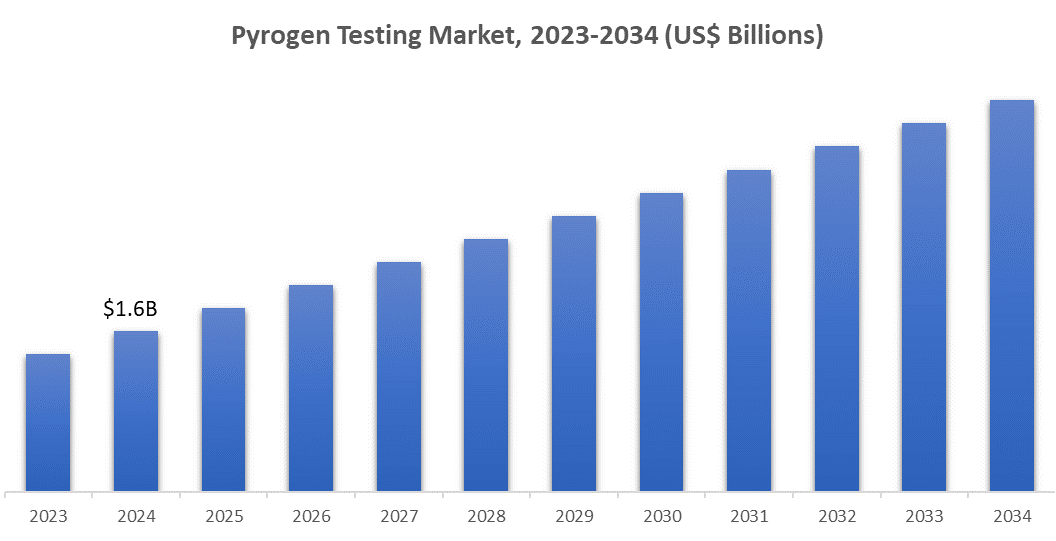
Market Segmentation:
LAL's test reliability and cost-effectiveness cement its market-leading position
The market is segmented based on the Test Type into LAL Tests, Rabbit Pyrogen Tests, In Vitro Tests, and Monocyte Activation Tests (MAT). The Limulus Amebocyte Lysate (LAL) assay dominates the market mainly attributed to its reliability, affordability, and extensive regulatory approval for identifying bacterial endotoxins. The LAL test, sourced from horseshoe crab blood, is commonly used by the pharmaceutical, biotechnology, and medical device sectors as a standard technique for endotoxin detection, particularly in North America and Europe.
It is effective and very responsive, making it ideal for high-volume testing scenarios. Regulatory organizations such as the FDA (Food & Drugs Administration) and EMA (European Medical Agency) acknowledge LAL as an established technique, maintaining its leading status despite new alternatives. Despite concerns about the horseshoe crab populations, the LAL test remains the favored method for pyrogen testing due to its proven safety and effectiveness.
Pharmaceutical & Biotechnology firms dominate due to high pyrogen testing needs
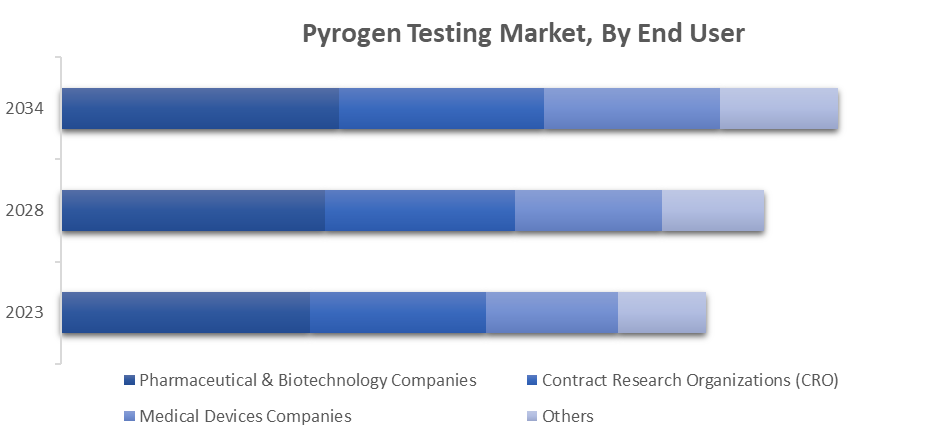
The market is categorized based on the End User into Pharmaceutical & Biotechnology Companies, Medical Device Companies, Contract Research Organizations (CROs), and Others. Pharmaceutical and biotechnology firms are the primary consumers in the market, influenced by the large number of products requiring rigorous pyrogen testing, particularly injectable drugs, biologics, and vaccines.
These firms encounter strict regulatory requirements, such as adhering to FDA, EMA, and other standards, to guarantee patient safety and avoid negative immune reactions. Due to the growing global demand for biologics, biosimilars, and novel therapies, these companies are consistently investing in pyrogen testing to sustain product quality. With an increasing focus on sustainable and animal-free testing, major pharmaceutical and biotech firms are also incorporating advanced pyrogen testing techniques such as the Monocyte Activation Test (MAT) and recombinant Factor C (rFC) assay.
Market Dynamics:
Growth Drivers
Increase in Pharmaceutical and Biologic Production to Fuel Market Expansion
Strong Growth in global pharmaceutical and biologic production acts as a major factor driving market growth. As chronic diseases become more prevalent, there has been an increase in the total demand for injectables, vaccines, and intricate biologic medications, resulting in stricter quality control and safety testing standards. Pyrogen testing is crucial for complying with safety regulations, especially for injectable and implantable devices.
Moreover, the growth of biopharmaceuticals, biosimilars, and personalized medicine increases the demand for dependable pyrogen testing. Contract research organizations (CROs) and manufacturers currently outsource comprehensive testing to guarantee compliance, generating constant demand for different pyrogen testing techniques. This upward trend is anticipated to persist as biopharmaceutical advancements increase, fueling the demand for reliable testing solutions.
Stringent Pyrogen Testing Regulations to Propel Market Growth
Regulatory bodies such as the FDA and EMA have been focused on implementing stringent pyrogen testing standards to protect patient safety, particularly concerning injectable medications, vaccines, and medical devices. These regulations require thorough testing for endotoxins and other pyrogens to avoid negative reactions.
Pharmaceutical and biotech firms are required to perform extensive pyrogen testing to adhere to safety regulations, guaranteeing that their products are free of fever-causing impurities. Compliance standards in various sectors, such as pharmaceuticals, biologics, and medical devices, create a steady demand for validated testing methods like the LAL test and promote a transition toward sustainable testing alternatives such as recombinant Factor C (rFC) and MAT. With increasing regulatory scrutiny, the demand for premium pyrogen testing services is also growing.
Restraints
High Cost of Advanced Testing Methods May Restrict Growth
The higher costs associated with advanced, animal-free testing techniques such as the Monocyte Activation Test (MAT) and recombinant Factor C (rFC) present a major limitation in the pyrogen testing industry. Although these approaches provide ethical and environmental benefits, their high costs restrict implementation, especially for smaller firms and in emerging areas.
The tools, materials, and specialized knowledge required to adopt these technologies add to the total expense, making conventional LAL tests more attractive for businesses looking for economical options. The shift to animal-free options faces additional obstacles due to restricted regulatory approval in specific areas. As a result, elevated expenses continue to restrict growth, especially for firms working in resource-constrained environments or with limited finances, impeding the wider implementation of these advanced pyrogen testing techniques.
Recent Developments
- Charles River Laboratories has introduced a novel recombinant Factor C (rFC) testing kit, providing an animal-free pyrogen detection solution aligned with ethical standards. The company's acquisition of a biotechnology firm specializing in cell-based assays enhances its pyrogen testing capabilities with advanced biological testing solutions.
- Thermo Fisher Scientific Inc. has launched a high-sensitivity pyrogen testing instrument, enhancing endotoxin detection capabilities in complex biologic samples. The company's acquisition of a diagnostic testing firm expands its pyrogen testing portfolio, focusing on animal-free alternatives for endotoxin testing.
- Lonza Group has introduced a new line of LAL-based testing reagents with improved stability, catering to high-volume testing needs in pharmaceutical production. The company's partnership with a digital health firm aims to develop automated pyrogen testing solutions for biopharmaceutical facilities, boosting workflow efficiency.
- Merck KGaA has launched a comprehensive pyrogen testing kit supporting both LAL and recombinant Factor C methods, offering flexibility to meet diverse regulatory requirements.
- bioMérieux SA has introduced an innovative MAT-based test kit to meet growing demand for animal-free pyrogen testing. The company's investment in expanding its European production facilities will support increasing demand for its MAT and advanced testing kits.
Key Players:
- Charles River Laboratories
- Thermo Fisher Scientific Inc.
- Lonza Group AG
- Merck KGaA
- Associates of Cape Cod, Inc.
- WuXi AppTec
- GenScript Biotech Corporation
- Sartorius AG
- bioMérieux SA
- Ellab A/S
- Fujifilm Wako Chemicals U.S.A. Corporation
- Microcoat Biotechnologie GmbH
- Nelson Laboratories, LLC
- Sanquin Reagents
- InvivoGen
- Other Prominent Players (Company Overview, Business Strategy, Key Product Offerings, Financial Performance, Key Performance Indicators, Risk Analysis, Recent Development, Regional Presence, SWOT Analysis)
Regional Analysis
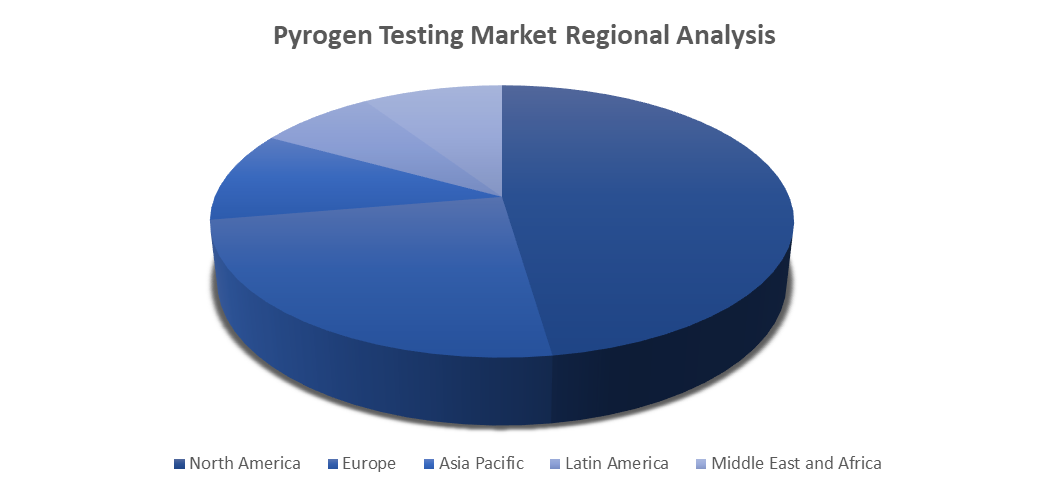
The global pyrogen testing market is segmented based on regional analysis into five major regions: North America, Latin America, Europe, Asia Pacific and the Middle East and Africa.
North America is at the forefront, mainly due to the strict regulatory standards set by agencies like the FDA and significant investments in pharmaceutical and biotechnology research. The region prioritizes quality and adherence to regulations, with existing systems in place for producing biologics and conducting pyrogen tests. Also, the increasing number of chronic illnesses and high demand for injectable drugs and vaccines lead to ongoing testing needs. Key corporations are based in North America, making it easier to utilize the most up-to-date testing technologies.
Europe is also a major market, especially due to its rapid adoption of the Monocyte Activation Test (MAT) as part of ethical testing efforts. The rapid growth in the Asia-Pacific region is attributed to the increased production of pharmaceuticals, higher healthcare spending, and expanding regulations for ensuring product safety.
Latin America and the Middle East & Africa have smaller market percentages owing to insufficient infrastructure and less regulations; nonetheless, they are up-and-coming markets with opportunities for expansion as healthcare systems progress and awareness of pyrogen testing grows.
Market is further segmented by region into:
- North America Market Size, Share, Trends, Opportunities, Y-o-Y Growth, CAGR – United States and Canada
- Latin America Market Size, Share, Trends, Opportunities, Y-o-Y Growth, CAGR – Mexico, Argentina, Brazil, and Rest of Latin America
- Europe Market Size, Share, Trends, Opportunities, Y-o-Y Growth, CAGR – United Kingdom, France, Germany, Italy, Spain, Belgium, Hungary, Luxembourg, Netherlands, Poland, NORDIC, Russia, Turkey, and Rest of Europe
- Asia Pacific Market Size, Share, Trends, Opportunities, Y-o-Y Growth, CAGR – India, China, South Korea, Japan, Malaysia, Indonesia, New Zealand, Australia, and Rest of APAC
- Middle East and Africa Market Size, Share, Trends, Opportunities, Y-o-Y Growth, CAGR – North Africa, Israel, GCC, South Africa, and Rest of MENA
Market Scope and Segments:
|
ATTRIBUTE |
DETAILS |
|
Study Period |
2018-2034 |
|
Base Year |
2023 |
|
Forecast Period |
2024-2034 |
|
Historical Period |
2019-2022 |
|
Growth Rate |
CAGR of 9.2% from 2024-2034 |
|
Unit |
Value (US$ Billion) |
|
Segmentation |
Main Segments List |
|
By Product |
|
|
By Test Type |
|
|
By Application |
|
|
By Region |
|
Frequently Asked Questions (FAQ):
The global pyrogen testing market size was values at US$ 1.4 billion in 2023 and is projected to reach the value of US$ 3.8 billion in 2034, exhibiting a CAGR of 9.2% during the forecast period.
The market involves medical devices and methods to detect pyrogens, harmful substances causing fever, in pharmaceuticals, biologics, and medical devices. It includes techniques like Limulus Amebocyte Lysate (LAL), recombinant Factor C (rFC), and Monocyte Activation Test (MAT) to ensure product safety and compliance with regulatory standards.
The LAL Tests and Pharmaceutical and Biotechnology segment accounted for the largest market share.
Key players in the global pyrogen testing market include Charles River Laboratories, Thermo Fisher Scientific, Lonza Group, Merck KGaA, Associates of Cape Cod, WuXi AppTec, GenScript Biotech, Sartorius, bioMérieux, Ellab, Fujifilm Wako Chemicals, Microcoat Biotechnologie, Nelson Laboratories, Sanquin Reagents, InvivoGen. and Other Prominent Players.
The Growth of the market is fueled by higher pharmaceutical and biologics demands, increased worries about product safety and contamination, expanding regulatory demands, technological testing advancements, and the necessity for animal-free testing alternatives.
 Select License Type


.png)


