



AI in healthcare Market Research 2035
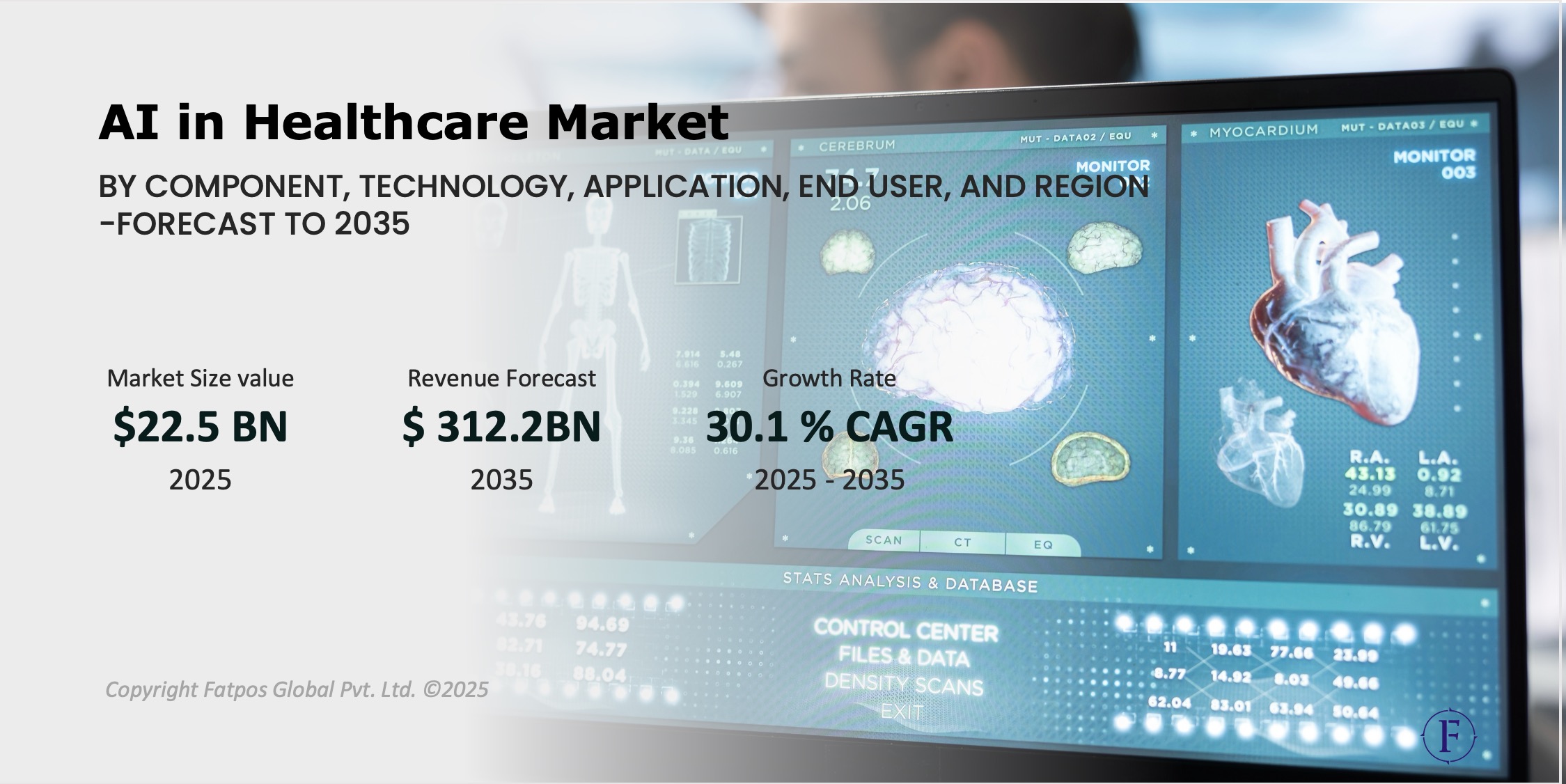
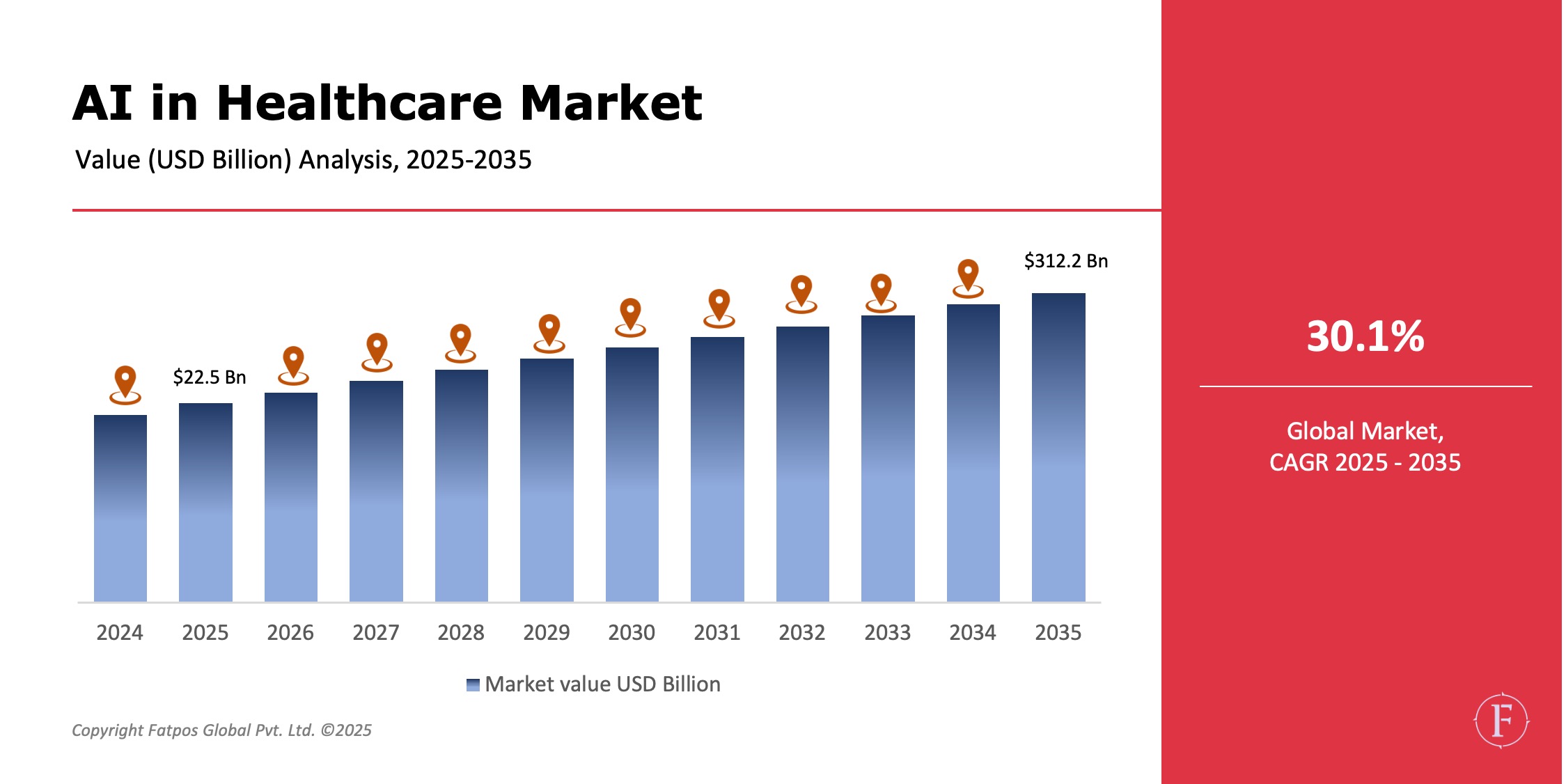
AI in Healthcare Market was valued at USD 22.5 billion in 2025 and is projected to reach USD 312.2 billion by 2035, registering a CAGR of 30.1% during the forecast period. Market growth is driven by increasing adoption of data-driven healthcare systems, rising demand for early and accurate diagnostics, expanding use of AI in drug discovery and clinical trials, and growing investments in digital health infrastructure.
The integration of artificial intelligence into healthcare systems is transforming clinical decision-making, operational efficiency, and patient outcomes. AI technologies enable real-time data analysis, predictive diagnostics, personalized treatment planning, and automation of administrative workflows, positioning the sector as a critical component of next-generation healthcare delivery.
Product Overview
AI in healthcare refers to the application of advanced computational algorithms and machine learning models to analyze complex medical data and support clinical and operational processes. These solutions are deployed across hospitals, diagnostic centers, pharmaceutical companies, and payer systems to improve efficiency, accuracy, and decision-making.
By component, the market includes software platforms for analytics and decision support, hardware infrastructure such as AI-optimized processors and servers, and services including integration, consulting, and maintenance. By technology, AI solutions leverage machine learning for predictive analytics, natural language processing for clinical documentation and interaction, computer vision for imaging analysis, and context-aware computing for real-time insights.
Applications span medical imaging, diagnostics, drug discovery, virtual health assistants, clinical workflow optimization, and remote patient monitoring, enabling healthcare providers to deliver more efficient and personalized care.
Key Takeaways:
- The AI in Healthcare Market is projected to grow at approximately 29.6% CAGR through 2035.
- Software solutions account for the largest share of market revenue.
- Medical imaging and diagnostics represent the leading application segment.
- Hospitals and healthcare providers dominate end-user demand.
- North America holds the largest market share, while Asia-Pacific is the fastest-growing region.
- Integration of AI with electronic health records (EHRs) is a key industry trend
Market Dynamics
Drivers
Increasing demand for early disease detection and improved diagnostic accuracy is a primary driver of AI adoption in healthcare. AI-powered imaging and diagnostic tools enable faster interpretation of medical data, supporting clinicians in identifying conditions such as cancer, cardiovascular diseases, and neurological disorders at early stages.
Growth in healthcare data volumes, including electronic health records, imaging data, and genomic information, is driving the need for advanced analytics solutions. AI technologies enhance data utilization, enabling predictive analytics and personalized treatment planning. Additionally, rising investments in digital health infrastructure and supportive government initiatives are accelerating market expansion.
Restraints
High implementation costs associated with AI systems, including infrastructure, integration, and training, limit adoption among small and mid-sized healthcare providers. Data privacy and security concerns related to patient information present significant regulatory challenges, particularly in regions with strict compliance frameworks.
Limited availability of standardized datasets and interoperability issues between healthcare systems can impact AI model performance and scalability. Resistance to adoption due to lack of technical expertise among healthcare professionals also remains a constraint.
Opportunities
Expansion of AI applications in drug discovery and clinical trials presents significant opportunities for market growth. AI enables faster identification of drug candidates, reduces development timelines, and improves trial efficiency through patient stratification and predictive modeling.
Growth in telemedicine and remote patient monitoring is creating demand for AI-powered analytics and virtual care solutions. Emerging markets offer strong growth potential due to increasing healthcare investments, digital transformation initiatives, and expanding access to healthcare services.
Challenges
Ensuring accuracy, transparency, and explainability of AI algorithms remains a critical challenge, particularly in clinical decision-making environments. Regulatory approval processes for AI-based medical solutions can be complex and time-consuming.
Integration of AI systems into existing healthcare infrastructure requires alignment with legacy systems, data formats, and workflows, increasing implementation complexity. Additionally, maintaining ethical standards and minimizing bias in AI models is essential for widespread adoption.
AI in healthcare Market Trends
The AI in healthcare market is experiencing rapid transformation driven by technological advancements and increasing digitalization. Adoption of AI-powered diagnostic tools and imaging solutions is expanding across hospitals and diagnostic centers. Integration of AI with electronic health records enables improved clinical decision support and workflow optimization.
Use of natural language processing for clinical documentation and virtual assistants is improving patient engagement and administrative efficiency. Growth in personalized medicine, supported by AI-driven analytics, is enabling targeted therapies based on patient-specific data. Asia-Pacific is emerging as a key growth region due to increasing healthcare digitization and investments in AI technologies.
Key Players in the Global AI in healthcare Industry
- IBM Corporation
- Google LLC
- Microsoft Corporation
- Amazon Web Services (AWS)
- NVIDIA Corporation
- Siemens Healthineers
- GE Healthcare
- Philips Healthcare
- Oracle Corporation
- Medtronic plc
Regional & Country Analysis
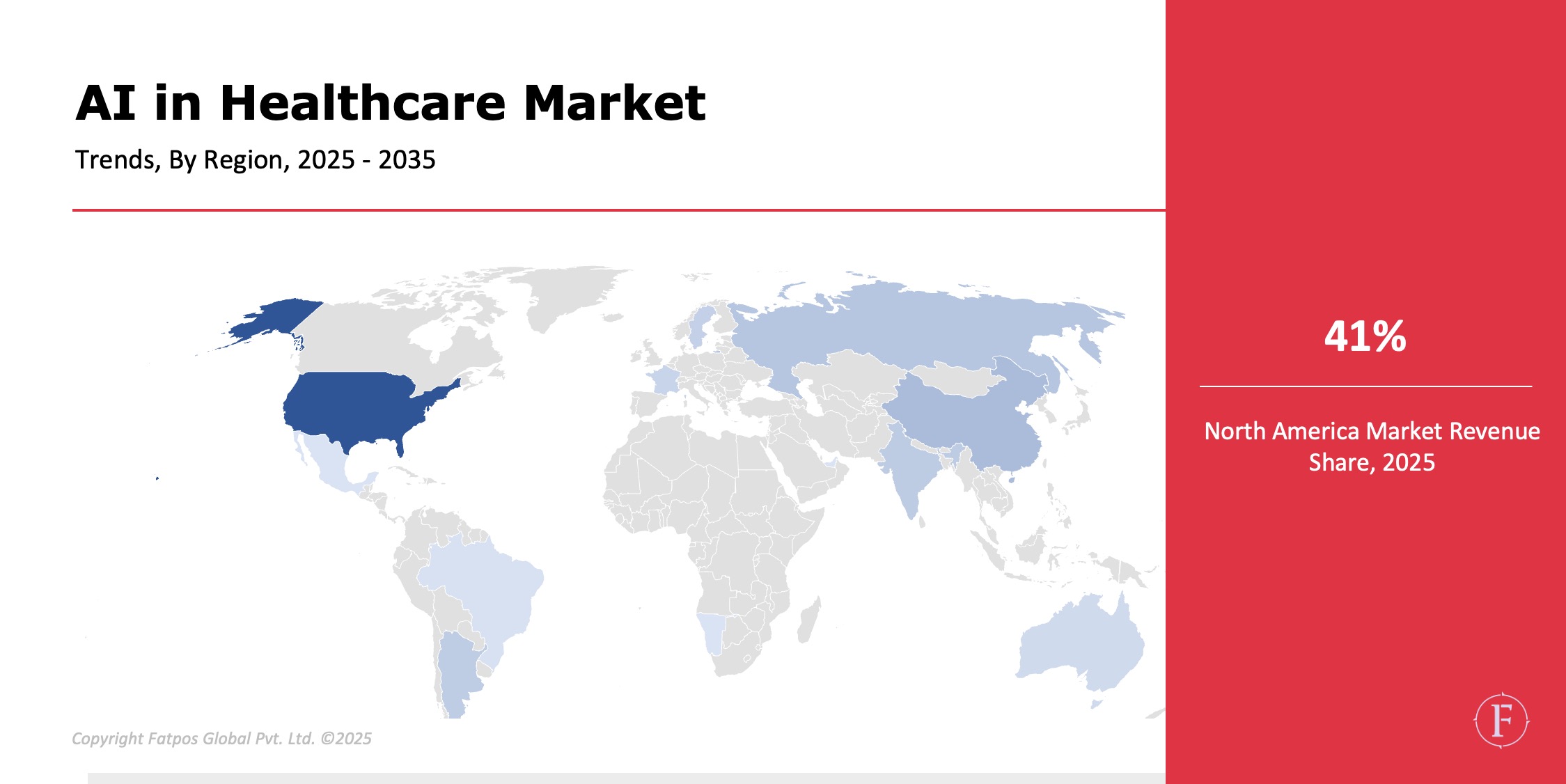
North America holds a dominant position in the AI in healthcare market, supported by advanced healthcare infrastructure, strong presence of technology providers, and high adoption of digital health solutions. The United States leads in AI implementation across diagnostics, drug discovery, and healthcare analytics.
Europe demonstrates steady growth driven by government initiatives, research funding, and increasing adoption of AI in clinical workflows. Asia-Pacific is the fastest-growing region, supported by expanding healthcare infrastructure, rising investments in digital health, and increasing demand for advanced diagnostic solutions in countries such as China, India, and Japan.
Latin America and the Middle East & Africa are emerging markets, supported by improving healthcare access and growing adoption of digital technologies.
Segmentation Highlights
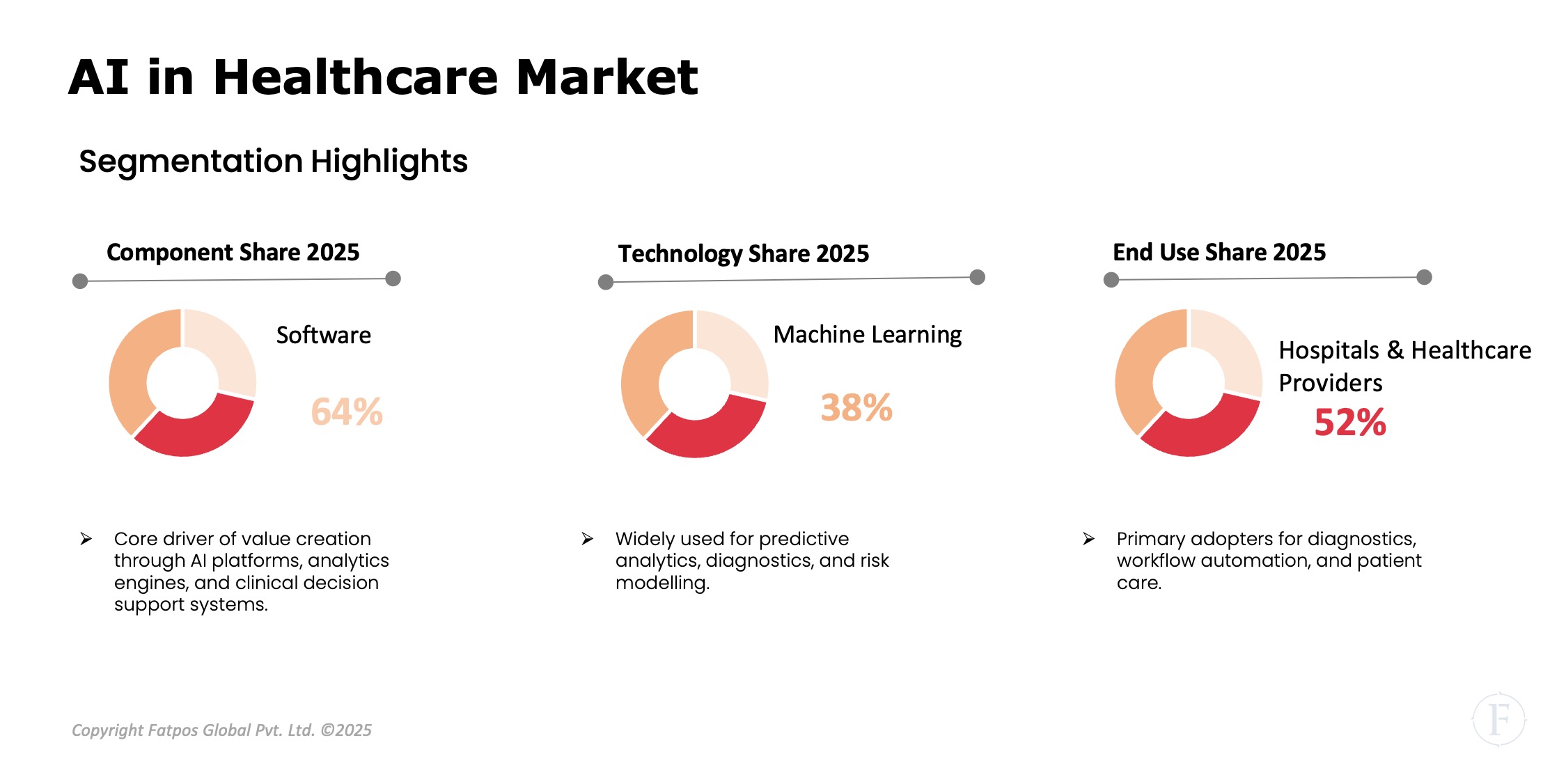
By component, software accounts for the largest share due to widespread use of AI platforms for diagnostics, analytics, and workflow management. By application, medical imaging and diagnostics dominate the market, followed by drug discovery and virtual assistants.
Hospitals and healthcare providers represent the largest end-user segment, driven by increasing adoption of AI for clinical decision support and operational efficiency. Pharmaceutical and biotechnology companies are also significant contributors due to growing use of AI in research and development.
Report Key Elements
|
ATTRIBUTES |
DETAILS |
|
Study Period |
2019–2035 |
|
Base Year |
2024 |
|
Forecast Period |
2025–2035 |
|
Market Size by 2035 |
USD 312.2.6billion |
|
Market CAGR |
30.1% |
|
By Component |
Software, Hardware, Services |
|
By Technology |
Machine Learning, NLP, Computer Vision, Context-Aware |
|
By Application |
Imaging, Drug Discovery, Virtual Assistants, Monitoring |
|
By End User |
Hospitals, Pharma, Payers |
|
By Region |
NA, Europe, APAC, LATAM, MEA |
|
AI in healthcare Market: Key Players |
IBM Corporation, Google LLC, Microsoft Corporation, Amazon Web Services (AWS) |
Global AI in healthcare Industry Instances
- Healthcare providers implemented AI-based diagnostic tools for imaging analysis.
- Pharmaceutical companies adopted AI platforms for drug discovery and clinical trials.
- Hospitals integrated AI with EHR systems for workflow optimization.
- Technology firms expanded AI healthcare solutions through partnerships and acquisitions.
Analyst Review
As per our AI in healthcare Market analysis report, the AI in healthcare market is expected to experience substantial growth over the forecast period, driven by increasing demand for data-driven healthcare solutions, advancements in AI technologies, and expanding application areas. While regulatory and implementation challenges persist, continued investment in digital health infrastructure and AI innovation is expected to support long-term market growth.
Frequently Asked Questions (FAQ):
AI in healthcare refers to the use of artificial intelligence technologies to analyze medical data and support clinical and operational decisions.
Demand for advanced diagnostics, healthcare data growth, and digital transformation.
Medical imaging and diagnostics.
Asia-Pacific.
Strong growth supported by technology adoption and healthcare digitization
 Select License Type


.png)


