


Dialyzer Market Research 2035
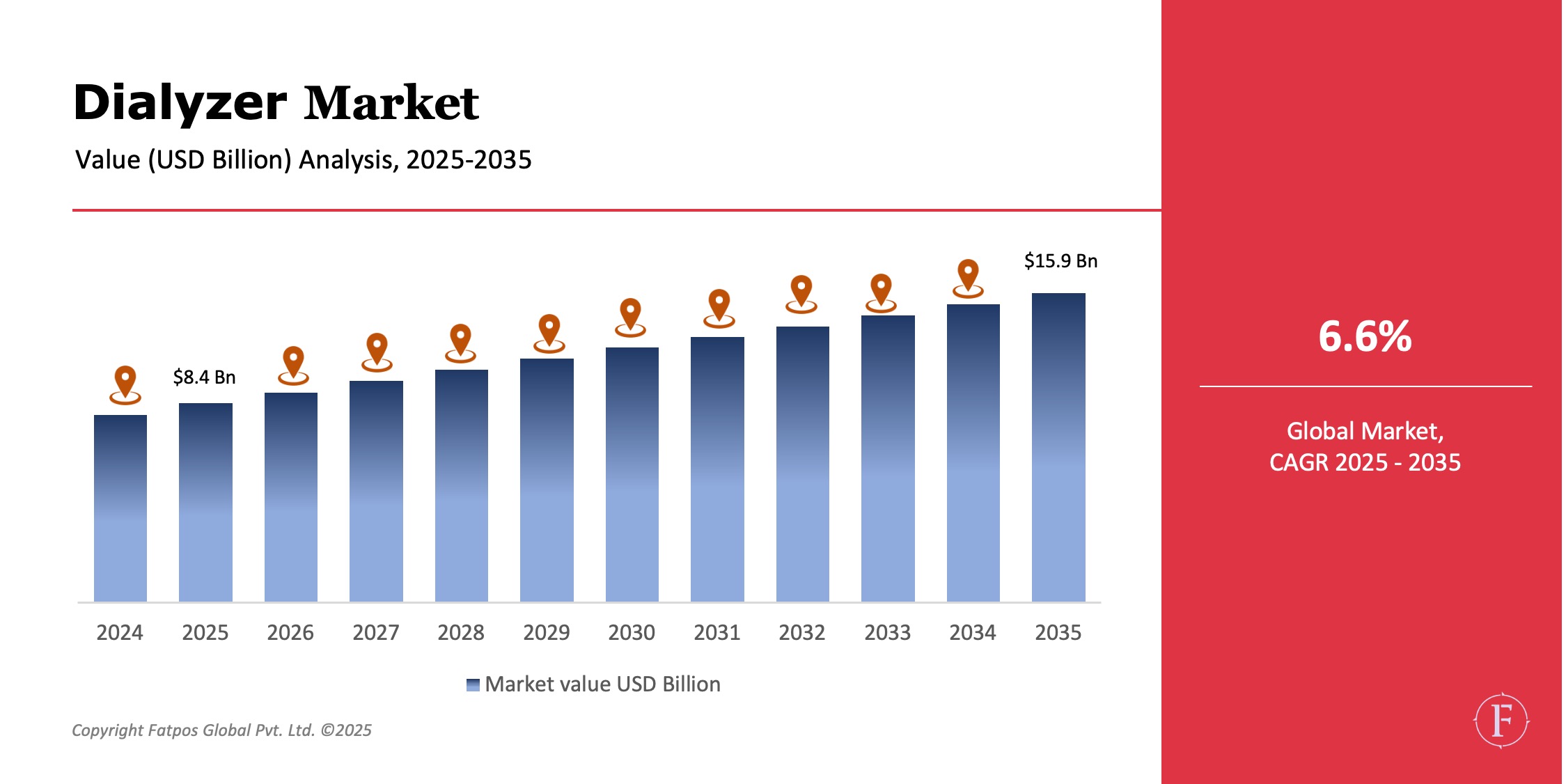
The Dialyzer Market was valued at USD 8.4 billion in 2025 and is projected to reach USD 15.9 billion by 2035, registering a CAGR of 6.6% during the forecast period. Market growth is primarily driven by the rising global burden of chronic kidney disease (CKD), increasing incidence of end-stage renal disease (ESRD), and growing demand for long-term hemodialysis treatment.
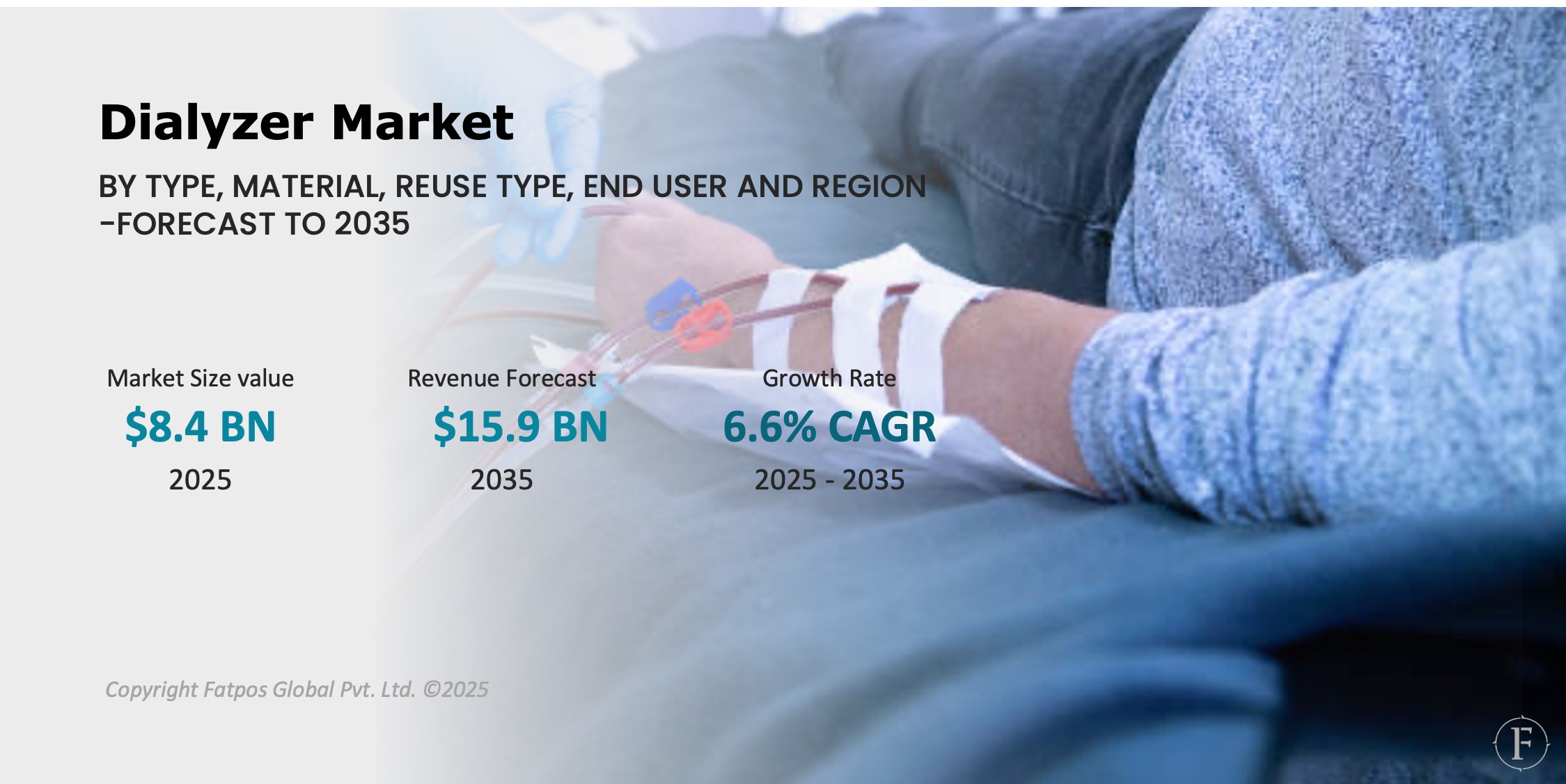
Dialyzers are essential medical devices used during hemodialysis to remove metabolic waste products, toxins, and excess fluids from the blood when kidney function is impaired. Continuous advancements in membrane technology, increasing availability of dialysis services, and expanding healthcare access in emerging economies are supporting sustained market expansion globally.
Product Overview
Dialyzer, commonly referred to as an artificial kidney, plays a central role in hemodialysis therapy. It contains a semi-permeable membrane that facilitates diffusion and ultrafiltration, enabling efficient blood purification. Dialyzers are available in different designs and materials to suit patient needs, treatment duration, and clinical settings.
High-flux dialyzers have gained widespread adoption due to their superior ability to remove middle- and large-molecule toxins, improving patient outcomes. Synthetic membrane dialyzers are increasingly preferred over cellulose-based alternatives due to enhanced biocompatibility and reduced inflammatory reactions. Rising dialysis patient populations and growing awareness of renal care continue to strengthen demand for dialyzers worldwide.
Key Takeaways :
- Dialyzer Market expected to grow at 6.6% CAGR through 2035
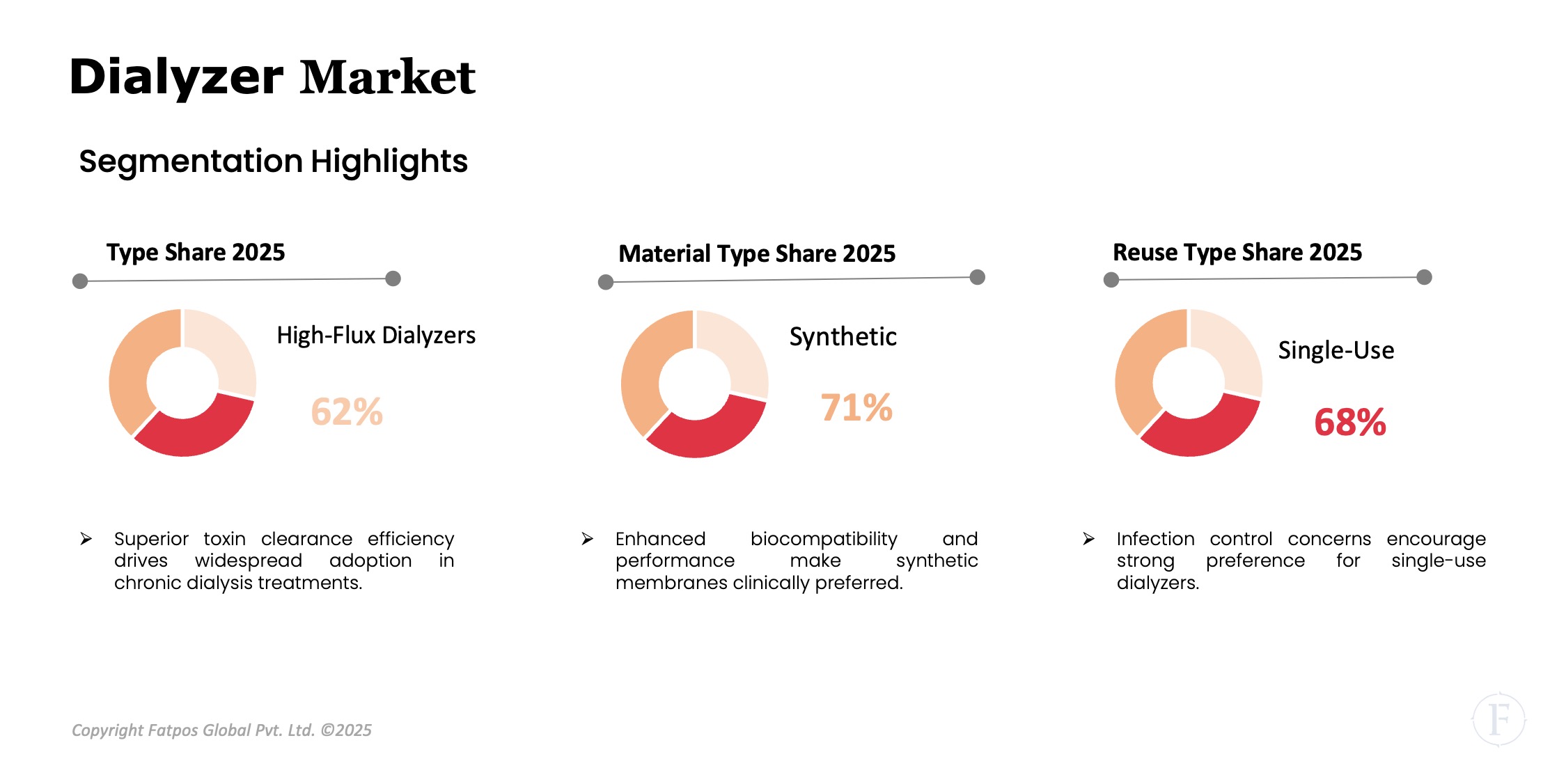
- High-flux dialyzers dominate due to improved clinical efficiency
- Synthetic membranes lead material adoption globally
- Dialysis centers are the largest end users
- Single-use dialyzers gain preference for infection control
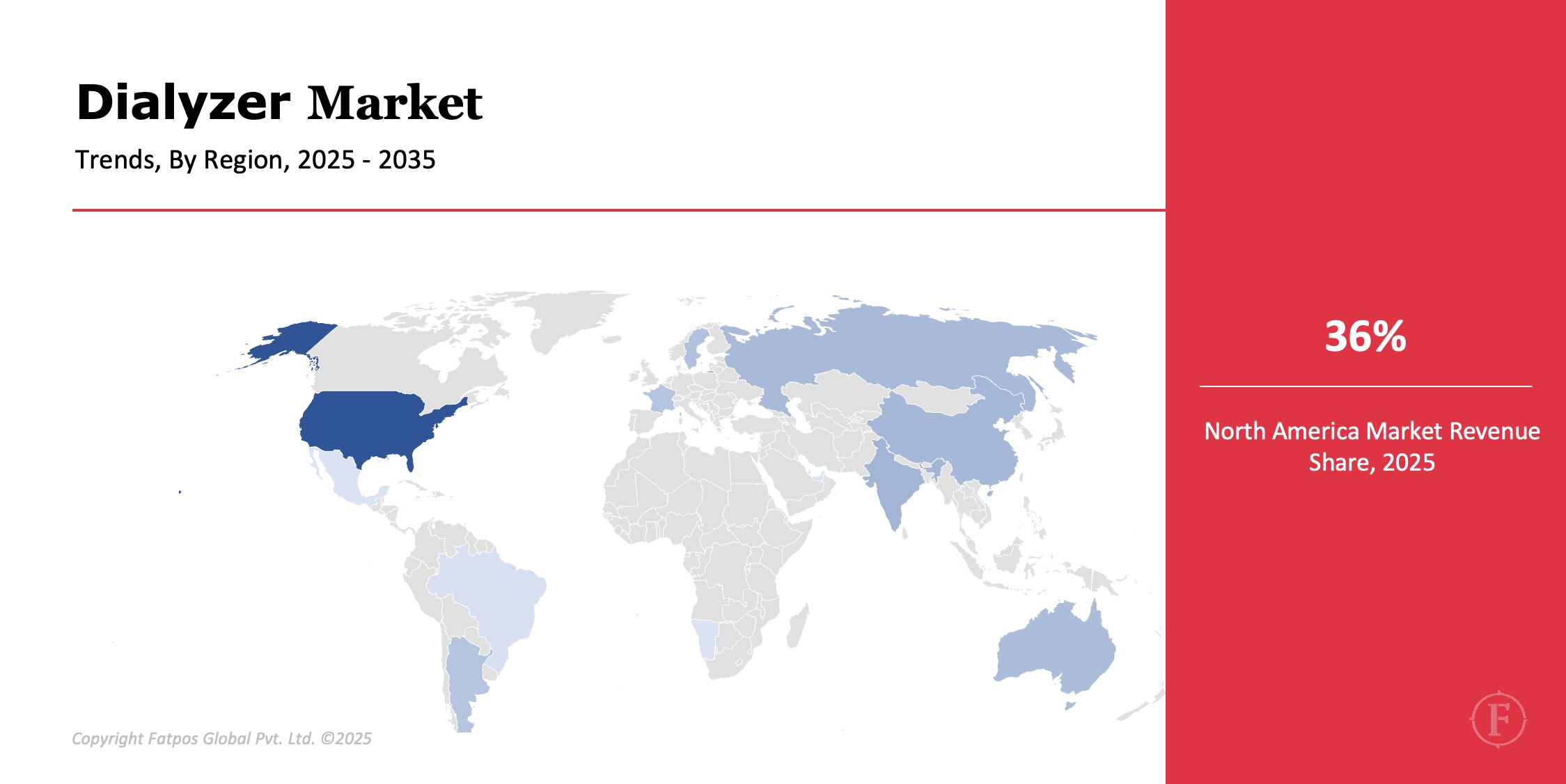
- North America leads, while Asia-Pacific shows fastest growth
Market Dynamics
Drivers
The increasing prevalence of chronic kidney disease and end-stage renal disease is the primary driver of the Dialyzer Market. Rising incidence of diabetes and hypertension, major contributors to kidney failure, has significantly increased dialysis demand worldwide. Growth in the aging population further elevates the number of patients requiring long-term renal replacement therapy.
Technological advancements in dialyzer membranes have improved solute clearance, biocompatibility, and treatment efficiency. Expansion of dialysis infrastructure, supportive reimbursement policies in developed regions, and improving access to renal care in emerging economies collectively support steady global market growth.
Restrictions
High costs associated with dialysis treatment remain a major restraint for the Dialyzer Market, particularly in low- and middle-income regions. Limited access to dialysis facilities in rural and underserved areas restricts patient reach. Strict regulatory requirements for dialyzer manufacturing, quality control, and reuse increase compliance costs for manufacturers. Risk of infection and complications related to dialyzer reuse in certain regions also limits acceptance.
Additionally, long-term dependence on dialysis places financial pressure on healthcare systems, potentially constraining market expansion in cost-sensitive environments.
Opportunities
Growing adoption of home dialysis presents a significant opportunity for dialyzer manufacturers. Technological advancements enabling compact, portable, and user-friendly dialysis systems support this trend. Emerging economies with expanding healthcare infrastructure and rising awareness of kidney disease offer strong growth potential. Public-private partnerships and investments in dialysis networks further enhance market reach. Innovation in high-performance synthetic membranes, improved toxin clearance technologies, and environmentally sustainable dialyzer designs create opportunities for differentiation and long-term market growth.
Challenges
The Dialyzer Market faces challenges related to ensuring consistent quality, safety, and performance across diverse clinical settings. Managing infection risks, particularly in reusable dialyzer systems, remains a critical concern. Supply chain disruptions and fluctuating raw material prices can impact production efficiency. Training healthcare professionals for proper dialyzer handling and usage is essential to avoid complications.
Additionally, balancing technological innovation with cost-effectiveness poses challenges, especially in regions with limited healthcare budgets and high dialysis patient loads.
Dialyzer Market Trends
The market is witnessing increased adoption of high-flux dialyzers due to improved removal of middle-molecule toxins. Synthetic membrane dialyzers are increasingly preferred for better biocompatibility and reduced inflammatory responses. Single-use dialyzers are gaining traction to minimize cross-contamination risks.
Growth in home dialysis and wearable dialysis technologies is shaping future demand. Sustainability initiatives are encouraging manufacturers to reduce environmental impact by optimizing materials and waste management associated with disposable dialyzers.
Key Players in the Global Dialyzer Industry
- Fresenius Medical Care
- Baxter International Inc.
- Nipro Corporation
- Braun Melsungen AG
- Asahi Kasei Medical
- Toray Medical Co., Ltd.
- Medtronic
- ResMed
- Nikkiso Co., Ltd.
- Crothall Healthcare
Regional & Country Analysis
North America dominates the Dialyzer Market due to advanced dialysis infrastructure, high prevalence of ESRD, and favorable reimbursement frameworks. Europe follows with strong adoption of advanced dialysis technologies and expanding elderly populations.
Asia-Pacific is the fastest-growing region, driven by increasing CKD prevalence, rising healthcare investments, and expanding dialysis networks in China and India. Latin America and the Middle East & Africa represent emerging markets supported by improving healthcare access and government initiatives to expand renal care services.
Segmentation Highlights
By type, high-flux dialyzers account for the largest share due to enhanced clinical outcomes. By material, synthetic dialyzers dominate owing to superior biocompatibility. By reuse type, single-use dialyzers lead due to infection control priorities. By end user, dialysis centers represent the largest segment due to specialized infrastructure and high patient volumes. Regionally, North America leads the market, while Asia-Pacific records the fastest growth rate.
Report Key Elements
|
ATTRIBUTES |
DETAILS |
|
Study Period |
2019–2035 |
|
Base Year |
2024 |
|
Forecast Period |
2025–2035 |
|
Market Size by 2035 |
USD 15.9 Billion |
|
Market CAGR |
6.6% |
|
By Type |
Low-Flux Dialyzers, High-Flux Dialyzers |
|
By Material |
Synthetic, Cellulose-Based |
|
By Reuse Type |
Single-Use, Reusable |
|
By End User |
Hospitals, Dialysis Centers, Home Dialysis |
|
By Region |
North America, Europe, Asia-Pacific, Latin America, MEA |
|
Dialyzer Market: Key Players |
Fresenius Medical Care, Baxter International Inc., Nipro Corporation, B. Braun Melsungen AG, Asahi Kasei Medical |
Global Dialyzer Industry Instances
- Dialysis centers expanded high-flux dialyzer adoption to improve patient outcomes
- Manufacturers developed advanced synthetic membranes for enhanced biocompatibility
- Governments increased funding for dialysis infrastructure expansion
- Home dialysis programs adopted compact and portable dialyzer technologies
Analyst Review
As per our Dialyzer Market analysis, the market is poised for steady growth through 2035, supported by increasing dialysis demand and continuous technological advancements. While cost pressures and infrastructure limitations persist in developing regions, innovation in membrane technology and expansion of home dialysis are expected to create new growth avenues. Companies focusing on performance, safety, and affordability will strengthen their competitive positioning globally.
Frequently Asked Questions (FAQ):
A dialyzer is a medical device used in hemodialysis to remove waste, toxins, and excess fluids from blood when kidneys fail.
Market growth is driven by rising chronic kidney disease cases, aging populations, increasing diabetes prevalence, and expanding global dialysis infrastructure.
High-flux dialyzers dominate the market due to better toxin clearance, higher efficiency, and improved clinical outcomes for dialysis patients.
Key trends include increased adoption of high-flux dialyzers, synthetic membranes, single-use devices, and growing preference for home dialysis.
North America leads the market due to advanced dialysis facilities, high treatment access, strong reimbursement systems, and established healthcare infrastructure.
 Select License Type


.png)


