


Intravenous Solutions Market Research, 2035
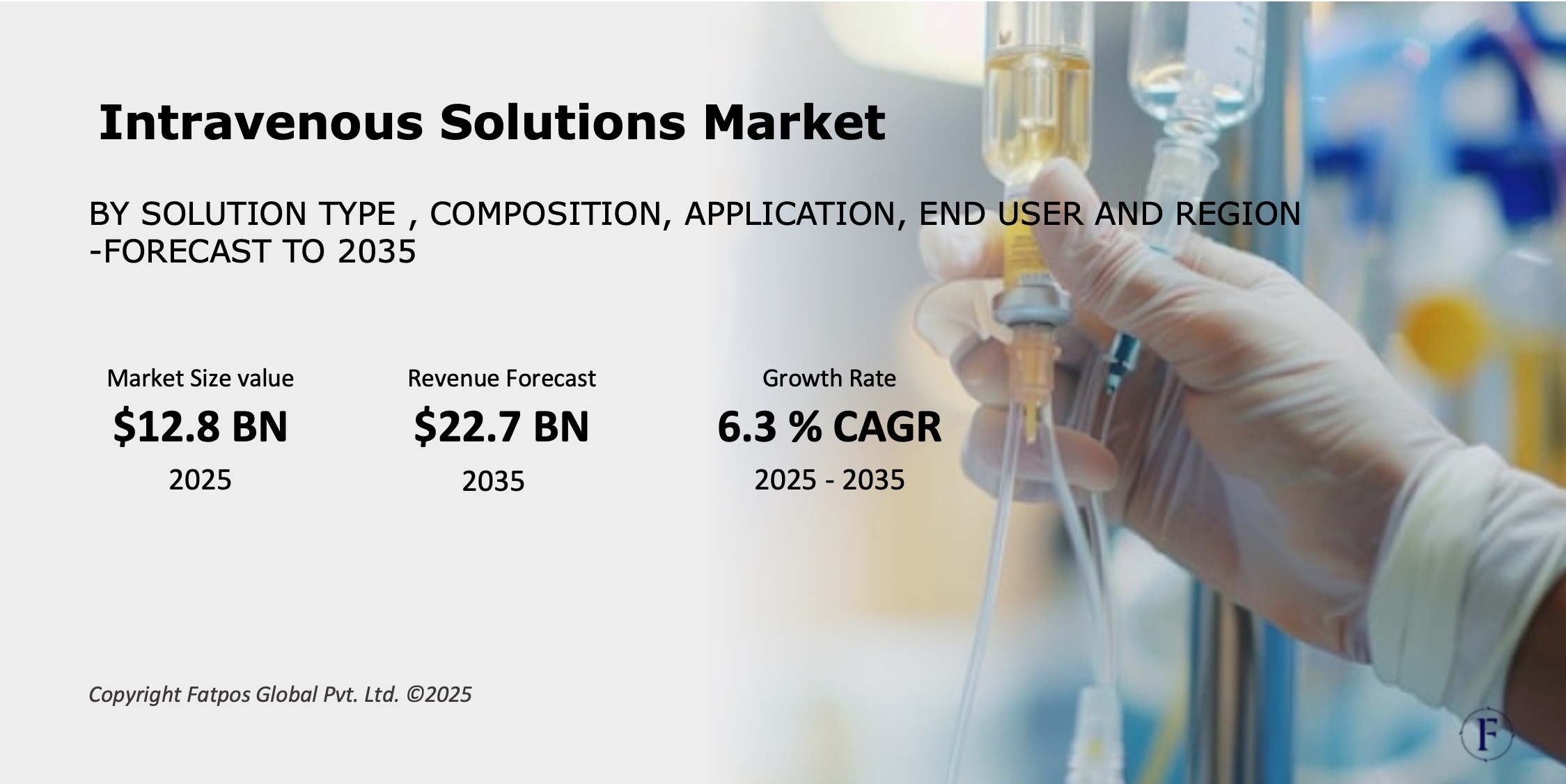
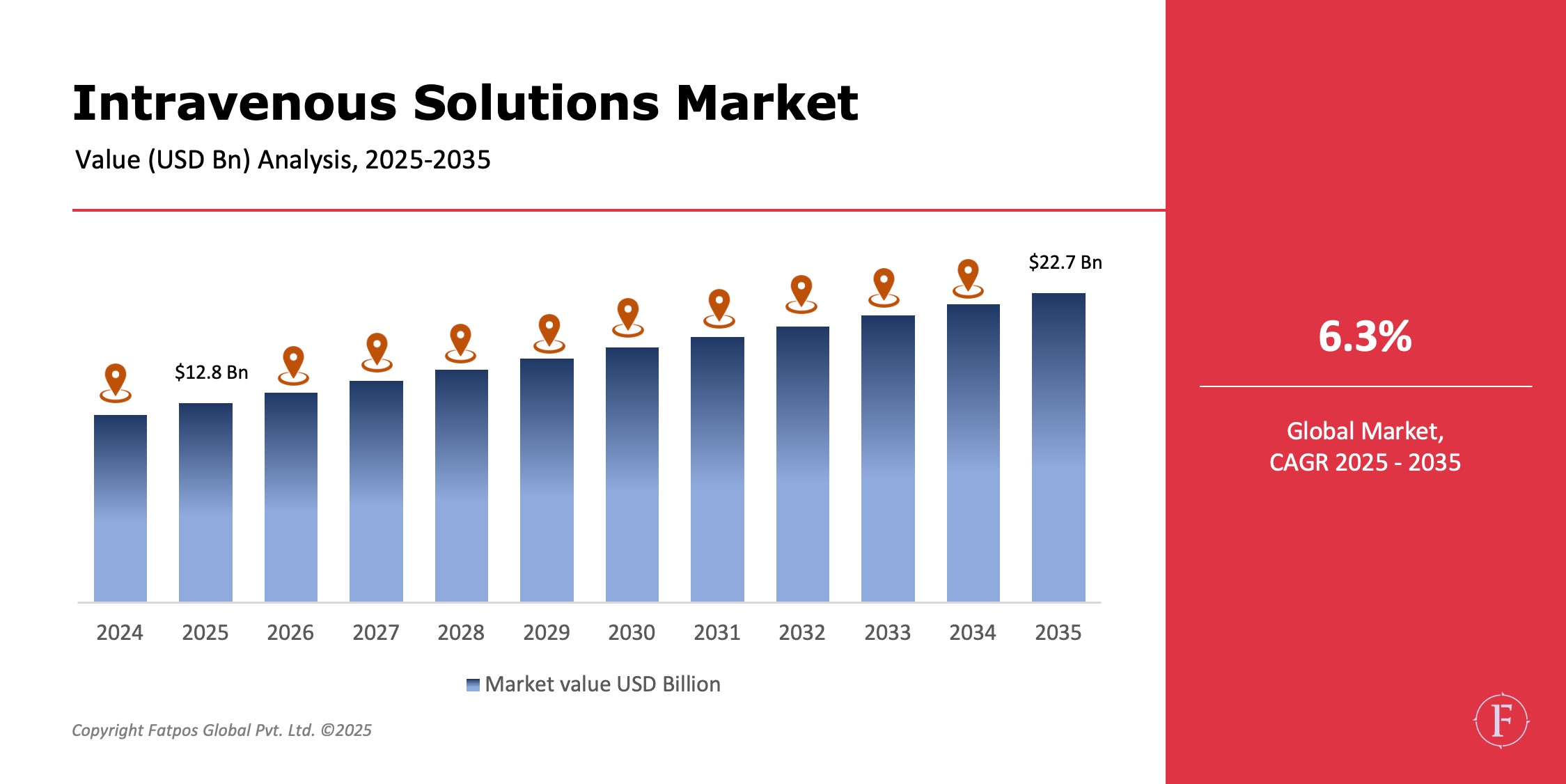
Intravenous solutions (IV) market, valued at USD 12.8 billion in 2025, is projected to reach USD 22.7 billion by 2035 at a 6.3% CAGR. Rising admissions, surgeries, trauma, dehydration, and chronic diseases drive demand for fluids, parenteral nutrition, and electrolyte therapies. Aging populations, ICU expansion, oncology therapies, and emergency care protocols increase long-term utilization. Additionally, the rising adoption of smart infusion technologies, automated compounding systems, and sterile intravenous manufacturing aligns with global hospital modernization.
Product Overview
Intravenous Solutions are sterile fluids delivered intravenously to restore electrolytes, provide hydration, nutrients, and drug carriers in critical care, surgery, oncology, and emergencies. Key types include crystalloids (saline, LR, dextrose) for resuscitation; colloids (albumin) for volume expansion; parenteral nutrition (TPN) for non-enteral feeding; and balanced electrolytes for acid-base balance. Dual-chamber bags and balanced crystalloids gain preference for improved outcomes.
Key Takeaways
- The Intravenous Solutions is expected to grow from USD 12.8B in 2025 to USD 22.7B by 2035 at a 6.3% CAGR.
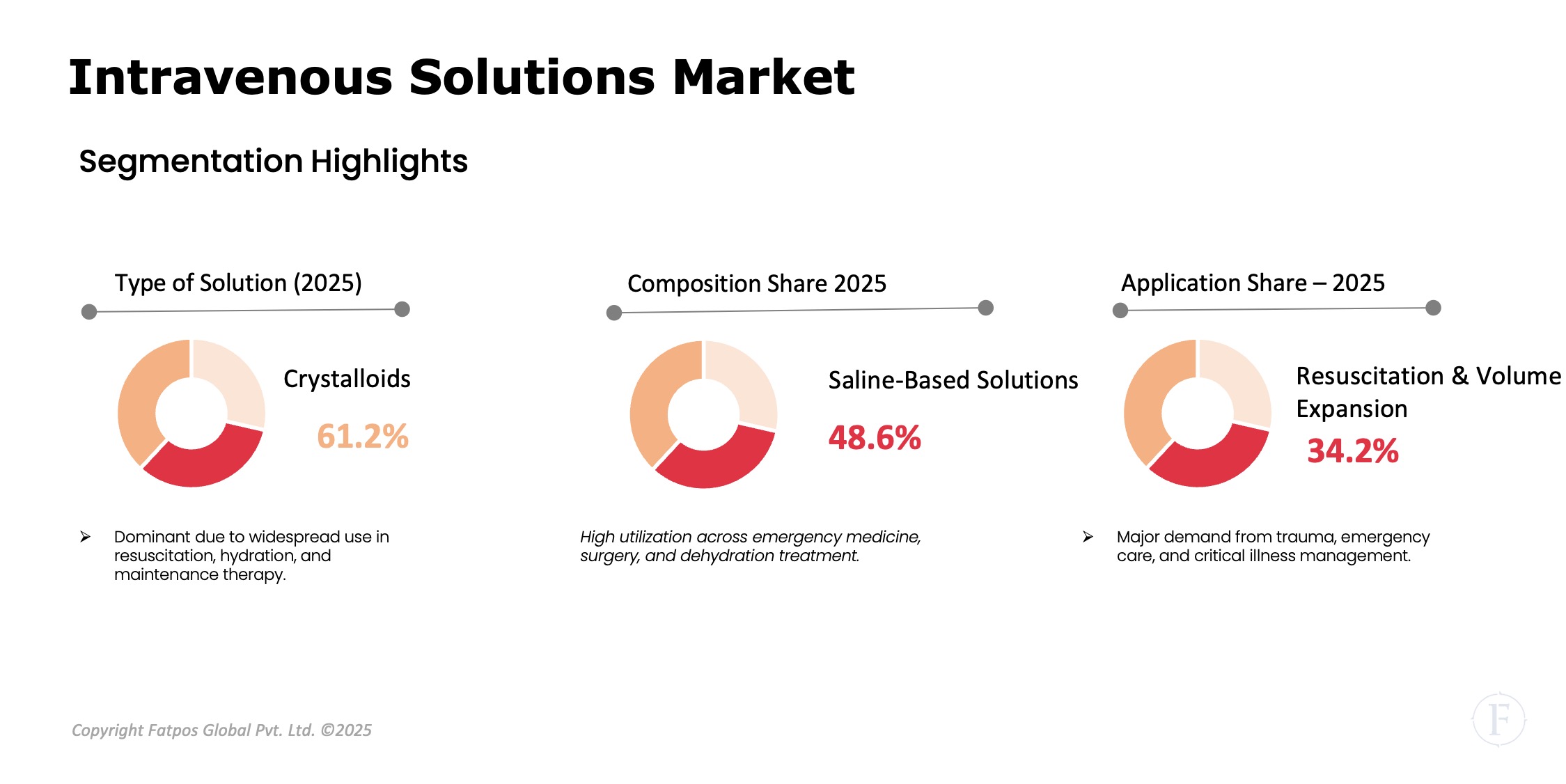
- Crystalloid solutions remain the dominant segment, driven by widespread use in emergency and inpatient care.
- Parenteral nutrition is the fastest-growing category, reflecting rising chronic illness and long-term ICU dependency.
- Hospitals hold the highest market share, while home-care IV treatments and ambulatory surgical centers show rapid adoption.
- Increasing demand for balanced electrolyte solutions and sterile manufacturing standards supports premium product sales.
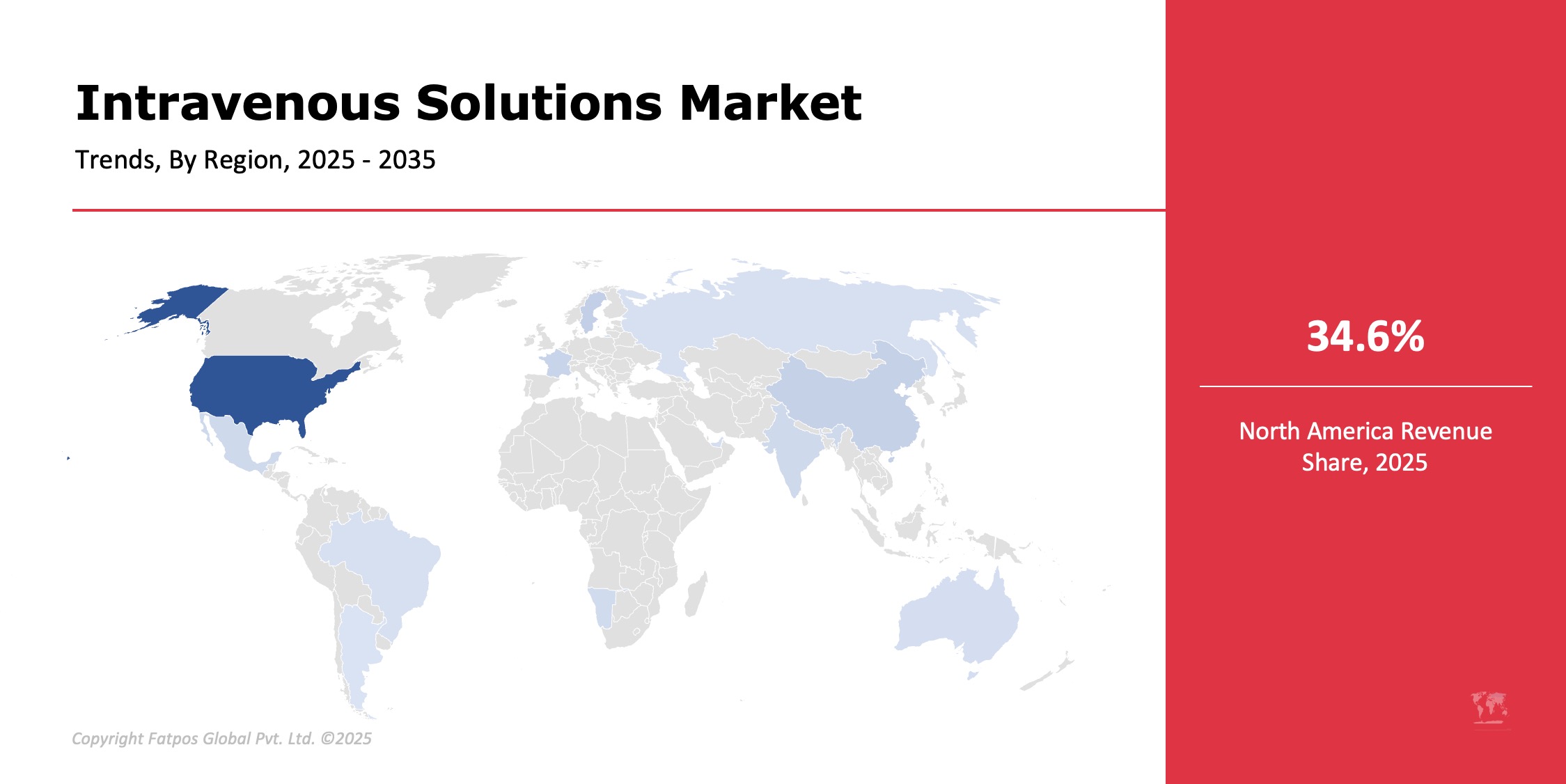
- North America and Europe maintain leading shares, while Asia-Pacific is the fastest-growing region due to rising hospital capacity and healthcare spending.
Market Dynamics
Drivers:
Rising chronic diseases (cancer, kidney failure, GI disorders), dehydration, postoperative recovery, and infections drive IV solution demand. Higher ICU admissions, trauma, surgeries, and emergencies boost usage. Multi-chamber bags, anti-contamination seals, automated compounding, home-care infusion, and aging populations with supportive reimbursements enhance safety and expand outpatient applications.
Restraints:
Sterility breaches, contamination recalls, labor-intensive compounding, and temperature storage limits disrupt supply chains. Regional regulatory variations delay approvals. High costs of premium colloids/TPN and limited access in low-income areas hinder adoption. Global saline shortages during pandemics expose production scalability and inventory vulnerabilities.
Opportunities:
Rising TPN demand in oncology, neonatology, geriatrics, and GI disorders offers strong growth. Critical care expansion in developing nations boosts premium electrolytes. Ready-to-administer IVs, customized blends, and sterile products add value. Military medicine, disaster response, home infusions, manufacturing automation, and sustainability initiatives expand market reach.
Challenges:
Sterility breaches, contamination recalls, labor-intensive compounding processes, and storage temperature limitations challenge supply chain continuity. Regulatory differences across regions complicate product approvals. Limited patient access to IV nutrition in low-income areas, coupled with high cost of premium colloids and parenteral nutrition, restricts adoption. Global shortages of IV saline bags, especially during pandemics, highlight vulnerabilities in production scalability and inventory management.
Intravenous Solutions Market Trends
The IV solutions market shifts to balanced crystalloids, dual-chamber bags, customized parenteral blends, amino acid-rich solutions, and phosphate-stabilized nutrients. Hospitals adopt pre-mixed solutions, compounding automation, and closed-system devices for sterility. Home infusion, telehealth monitoring, and portable pumps expand access. Trends emphasize fluid stewardship, electrolyte optimization for kidney/septic patients, and post-surgical recovery.
Key Players Featured in the Report
Our Intravenous Solution Industry report includes several leading manufacturers, such as:
- Baxter International
- Fresenius Kab
- Braun Melsungen AG
- ICU Medical
- Grifols S.A.
- JW Life Science
- Otsuka Pharmaceutical
- Terumo Corporation
- Pfizer Inc. (Injectables Division)
- Amanta Healthcare
Regional Analysis
North America leads the Intravenous Solutions Market due to advanced healthcare infrastructure, high hospital admission rates, strong ICU capacity, and widespread adoption of parenteral nutrition and electrolyte therapies. Europe follows, supported by an aging population, rising surgical volumes, and strong regulatory frameworks ensuring product quality and safety. Asia-Pacific is the fastest-growing region, driven by expanding hospital networks, increasing healthcare expenditure, rising prevalence of chronic diseases, and improving access to critical care across China and India. Latin America shows steady growth with modernization of healthcare facilities, while the Middle East & Africa market expands gradually, supported by investments in emergency care, trauma management, and hospital infrastructure development.
Segmentation Analysis
The Intravenous Solutions Market is segmented by solution type, composition, application, end user, packaging, and region. By solution type, crystalloids dominate due to widespread use in hydration, resuscitation, and maintenance therapy, while parenteral nutrition solutions show strong growth driven by critical care and oncology demand. By composition, saline- and glucose-based solutions hold major share, supported by balanced electrolyte formulations. Key applications include volume expansion, maintenance fluids, nutrition support, electrolyte correction, and drug dilution. By end user, hospitals account for the largest share, followed by clinics, ambulatory surgical centers, and home care settings, reflecting expanding outpatient and long-term care use.
Report Key Elements
|
Report Key Elements |
Details |
|
Study Period |
2025-2035 |
|
Intravenous Solutions MarketSize by 2035 |
USD 22.7 billion |
|
Market CAGR |
6.3% |
|
BY Solution |
Crystalloids, Colloids, PN, Electrolytes |
|
By End User |
Hospitals, Clinics, ASCs, Home Care, Emergency |
|
By Application |
Volume Expansion, Maintenance, Nutrition, Electrolyte Correction |
|
By Region |
Europe, North America, Asia-Pacific, Latin America, Middle East & Africa |
|
Key Market Players |
Baxter, Fresenius, Braun, Grifols, ICU Medical |
Intravenous Solution Industry Instances
- Hospitals increasingly shift toward pre-mixed and ready-to-administer IV solutions.
- Automated IV compounding systems minimize contamination and dosage errors.
- Supply chain disruptions highlight need for local saline manufacturing.
- Military medical units adopt rapid-deployment IV kits for emergency response.
- Chronic care patients increasingly shift to home-based IV fluid management.
Analyst Review
As per our Intravenous Solutions Market analysis, the market shows strong growth from surgical demand, chronic illnesses, aging populations, emergency care, and critical care expansion. Parenteral nutrition, balanced crystalloids, and multi-chamber bags boost value. Supply chain improvements, sustainable packaging, and automated compounding drive innovation. Despite sterility and regulatory hurdles, long-term expansion continues via healthcare access and off-site infusions.
Frequently Asked Questions (FAQ):
The market will reach USD 22.7 billion by 2035, growing at a CAGR of 6.3%
North America holds the largest market share due to strong hospital infrastructure and high chronic disease burden.
Crystalloids, due to widespread use in fluid resuscitation, hydration, and electrolyte balancing.
Parenteral nutrition, supported by critical illness, oncology care, and malnutrition treatment needs.
Hospitals, infusion providers, pharma companies, IV fluid manufacturers, policymakers, and healthcare distributors seeking detailed insights on product demand, regulatory trends, and global market opportunities.
 Select License Type


.png)


