



Probiotics Market Research 2035
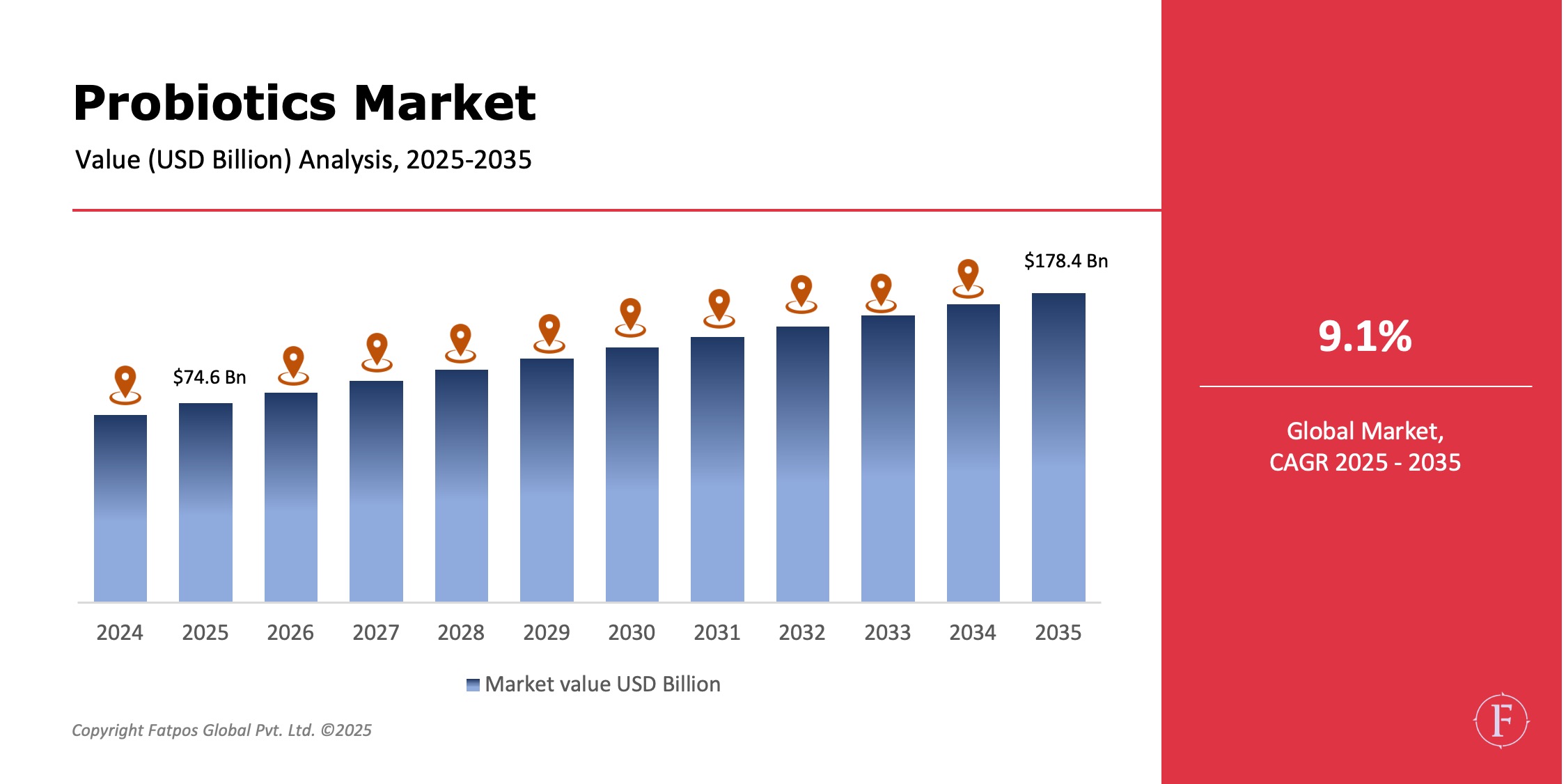
The Probiotics Market was valued at USD 74.6 billion in 2025 and is projected to reach USD 178.4 billion by 2035, registering a CAGR of 9.1% during the forecast period. Market growth is driven by rising consumer awareness regarding gut health, increasing prevalence of digestive disorders, growing demand for functional foods, and expanding applications of probiotics in dietary supplements and animal nutrition.
The probiotics industry forms a key segment within the global functional food, nutraceutical, and preventive healthcare ecosystem. Probiotics are increasingly recognized for their role in supporting digestive health, immune function, and overall wellness, leading to widespread adoption across both developed and emerging economies.

Product Overview
Probiotics are a kind of bacteria living in the human body which assist in promoting the healthy gut functionality. They are necessary to correct the digestive disorders. Probiotics are easily available in various forms such as tablets, capsules, gel and powders. Probiotics are also being used to treat digestive issues, neurological problems and to detect mental illnesses.
By product type, the market includes probiotic foods and beverages such as yogurt, fermented milk, and functional drinks; dietary supplements including capsules, tablets, and powders; and probiotic-infused animal feed products. By ingredient, probiotics are broadly categorized into bacterial strains such as Lactobacillus and Bifidobacterium, and yeast-based probiotics.
Key Takeaways :
- The probiotics market is projected to grow at approximately 9.1% CAGR through 2035.
- Probiotic foods & beverages represent the largest product segment.
- Bacterial probiotics dominate the ingredient landscape.
- Rising focus on gut health and immunity is a major growth driver.
- Asia-Pacific is expected to be the fastest-growing regional market.
- Product innovation and clean-label trends are shaping industry growth.
Market Dynamics
Drivers
The increasing awareness regarding the utilization of probiotics for health benefits it offers is estimated to boost the market growth in the near future. Probiotics assist in improving the gut health and help in easy digestion. It has several health benefits like immunity boosting, management of weight, maintaining gut health obesity prevention, and many others.
The evolving awareness among the consumers, regarding the healthy maintenance of body and utilization of super foods along with the use of vegan foods are expected to increase the demand for plant-based products and eventually the probiotics.
Restrictions
Probiotics are the living microorganisms. The products containing probiotics depend on cultivation and secretion by probiotic living organisms completely. The risk of contamination of these probiotics is high which may be toxic and is estimated to oppose the market growth. The investment for research and development process is high and production of bacterial strain is tough which is also a restraint to the market growth.
Opportunities
The growing demand for personalized nutrition and preventive healthcare presents significant growth opportunities for the probiotics market. Advances in microbiome research are enabling the development of targeted probiotic formulations tailored to specific health conditions and age groups.
Expansion of probiotics in emerging markets, driven by rising health awareness and expanding middle-class populations, offers additional growth potential. Increasing adoption of probiotics in animal feed to improve livestock health and reduce antibiotic usage also supports market diversification.
Challenges
Probiotics' health benefits hinge on exact strains, doses, and each person's unique gut microbiome, complicating scientific proof and variable results. Educating buyers on these specifics is vital yet challenging. The market grapples with differentiation, cutthroat competition, and pricing squeezes—especially from rising private-label options in mature regions.
Probiotics Market Trends
The probiotics market is witnessing significant evolution driven by innovation and changing consumer preferences. Growing demand for clean-label, plant-based, and dairy-free probiotic products is a notable trend, reflecting broader shifts toward natural and allergen-free nutrition.
Product innovation in formats such as gummies, sachets, and functional beverages is enhancing consumer convenience and compliance. Synbiotics, which combine probiotics with prebiotics, are gaining popularity due to enhanced efficacy. Asia-Pacific continues to be a major innovation hub, supported by strong consumption of fermented foods and beverages.
Key Players in the Global Probiotics Industry
- Danone S.A.
- Nestlé S.A.
- Yakult Honsha Co., Ltd.
- Chr. Hansen Holding A/S
- Kerry Group plc
- Lallemand Inc.
- Probi AB
- BioGaia AB
- DuPont (IFF)
- General Mills, Inc.
Regional & Country Analysis
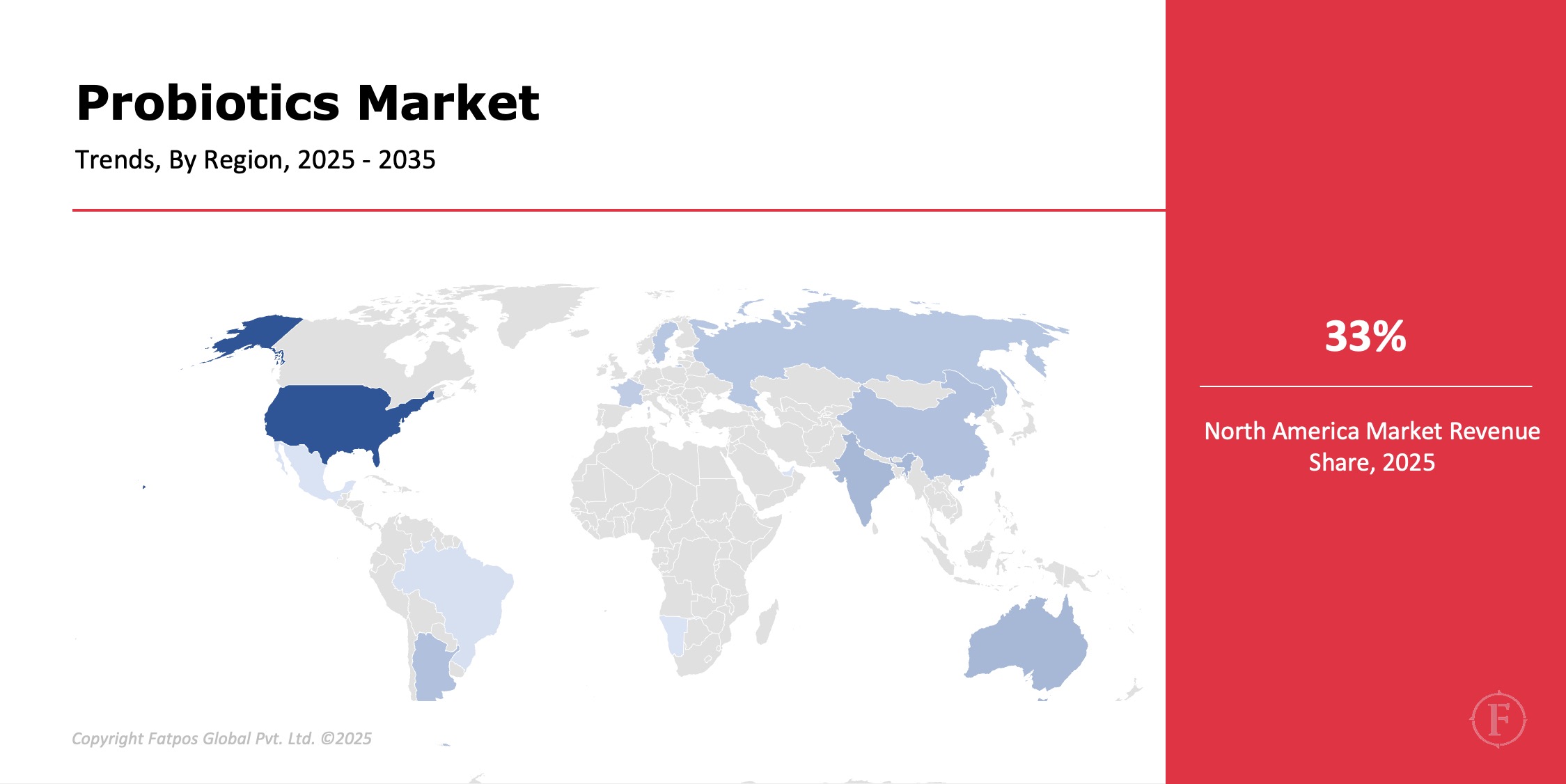
North America holds a significant share of the global probiotics market, driven by high consumer awareness, strong presence of dietary supplement brands, and widespread adoption of functional foods. The United States leads the region due to robust retail distribution and increasing focus on preventive healthcare.
Europe demonstrates steady growth supported by regulatory clarity, high consumption of fermented dairy products, and growing interest in gut health. Asia-Pacific is expected to be the fastest-growing region, driven by traditional consumption of fermented foods, expanding urban populations, and rising disposable incomes in countries such as China, India, Japan, and South Korea. Latin America and the Middle East & Africa represent emerging markets with improving health awareness.
Segmentation Highlights
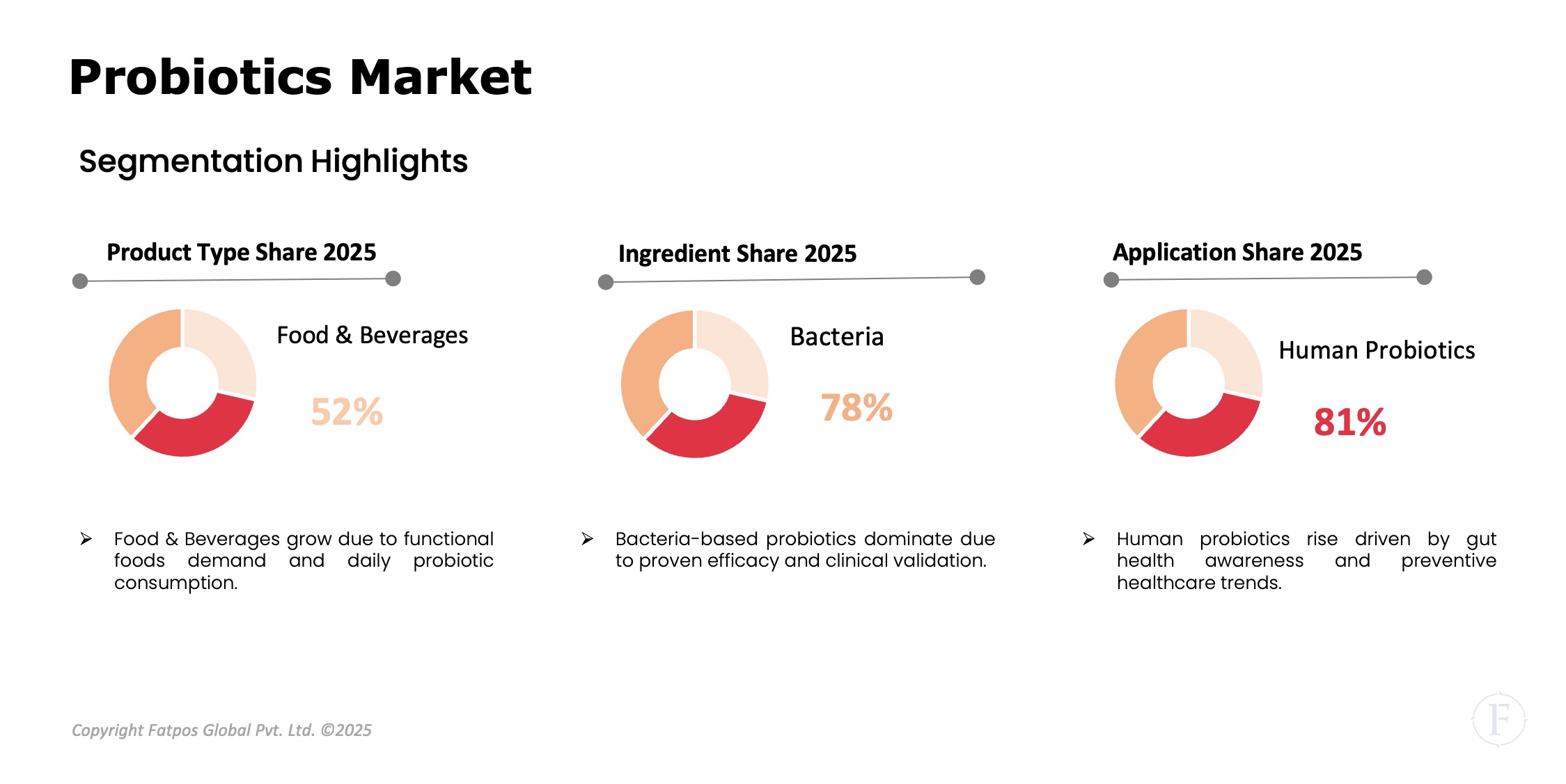
By product type, probiotic foods and beverages account for the largest probiotics market share due to daily consumption patterns and widespread availability. By ingredient, bacterial probiotics dominate owing to extensive research backing and broad application across food and supplements. Human probiotics represent the largest application segment, while animal probiotics are gaining traction as alternatives to antibiotic growth promoters.
Report Key Elements
|
ATTRIBUTES |
DETAILS |
|
Study Period |
2019–2035 |
|
Base Year |
2024 |
|
Forecast Period |
2025–2035 |
|
Market Size by 2035 |
USD 178.4 billion |
|
Market CAGR |
9.1% |
|
By Product Type |
Food & Beverages, Supplements, Animal Feed |
|
By Ingredient |
Bacteria, Yeast |
|
By Application |
Human Probiotics, Animal Probiotics |
|
By Distribution Channel |
Supermarkets, Pharmacies, Online, Specialty Stores |
|
By Region |
North America, Europe, Asia-Pacific, Latin America, MEA |
|
Probiotics Market: Key Players |
Danone SA, Nestlé SA, Yakult Honsha Co., Ltd., Chr. Hansen Holding A/S |
Global Probiotics Industry Instances
- Food manufacturers launched probiotic-enriched dairy and non-dairy products.
- Supplement companies introduced strain-specific probiotic formulations.
- Animal nutrition providers adopted probiotics to improve livestock health.
- Governments promoted reduced antibiotic usage in animal farming.
Analyst Review
As per our Probiotics Market Analysis, the market is expected to experience robust growth over the forecast period, supported by increasing health awareness, scientific advancements in microbiome research, and expanding functional food applications. While regulatory and stability challenges persist, innovation and emerging market expansion are expected to support long-term growth.
Frequently Asked Questions (FAQ):
Probiotics are live beneficial microorganisms that improve gut balance, enhance digestion, strengthen immunity, and support overall human health.
Market growth is driven by rising health awareness, functional food consumption, preventive healthcare adoption, and increasing digestive health concerns.
Probiotic foods and beverages dominate due to daily consumption patterns, easy availability, consumer trust, and strong functional health positioning.
Asia-Pacific is the fastest-growing region driven by dietary habits, large population base, expanding middle class, and health-focused consumers.
The long-term outlook indicates strong growth supported by product innovation, scientific validation, lifestyle changes, and rising global health consciousness.
 Select License Type


.png)


