


Hybrid Solar Wind Systems Market Size
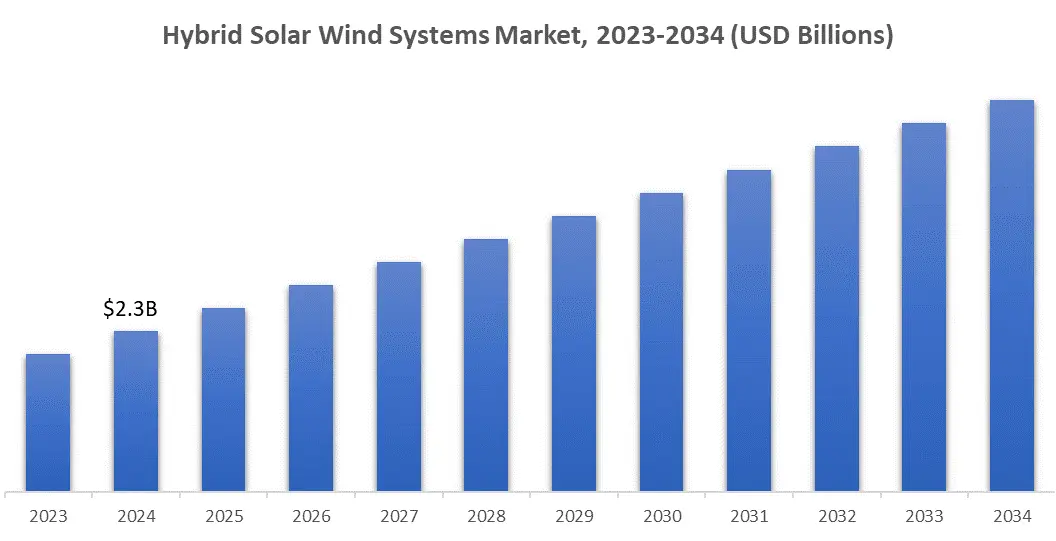
From 2024 to 2034, the Hybrid Solar Wind Systems Market is projected to experience robust growth, with a CAGR of 7.9%. Starting from a USD 2.1 billion valuation in 2023, the market is on track to achieve USD 5 billion by 2034.
Product Overview:
Hybrid solar wind systems utilize both solar panels and wind turbines to produce renewable energy. These systems take advantage of how solar and wind resources work well together: solar panels produce electricity when the sun is out, while wind turbines generate power when it is windy, typically at night or on cloudy days. This dual approach strategy guarantees a more stable and trustworthy energy source in comparison to independent solar or wind systems. Hybrid systems are especially advantageous in remote and off-grid areas, providing a sustainable solution for energy self-sufficiency. They also help in directly reducing carbon emissions and dependence on fossil fuels, in line with worldwide environmental objectives. Technological developments and government support continue to promote the use of hybrid solar wind systems in various residential, commercial, and industrial settings.
Market Highlights:
Hybrid Solar Wind Systems Market is expected to exhibit a CAGR of 7.9% during the forecast period, 2024-2034
Hybrid solar wind systems market is expected to reach USD 5 billion, with a projected growth rate of 7.9% during the forecast period. This growth is driven by increasing environmental concerns and the demand for sustainable energy solutions. Technological advancements have improved the efficiency of solar and wind components, leading to reduced costs and making hybrid systems more attractive. Government incentives and supportive regulations also contribute to the adoption of these systems. Additionally, the need for reliable electricity in isolated and off-grid areas is fueling the expansion of this market. As global efforts to reduce carbon emissions and enhance energy security intensify, the future outlook for the market is promising. Continued advancements and cost reductions are expected to further drive the hybrid solar wind systems market.
Hybrid Solar Wind Systems Market Segmentation:
Standalone Systems hold market prominence for being cost-effective and ideal for remote applications
Hybrid solar wind system market is classified based on Connectivity into Standalone, and On-Grid Systems. Standalone hybrid solar wind systems are prevalent in isolated settings as they are ideal for areas without electricity grid access, like remote communities, farms, telecom towers, and island nations. Expanding the grid to these locations may be costly and not feasible, making standalone systems a dependable and economical option. Even though they may be more expensive initially than grid-connected systems, they are a more cost-effective option for remote areas due to the lack of grid expansion infrastructure. Moreover, numerous developing nations are prioritizing off-grid electrification to fulfill essential electricity requirements in isolated areas. Hybrid solar wind systems offer a cleaner, more sustainable alternative to diesel generators often utilized in off-grid situations.
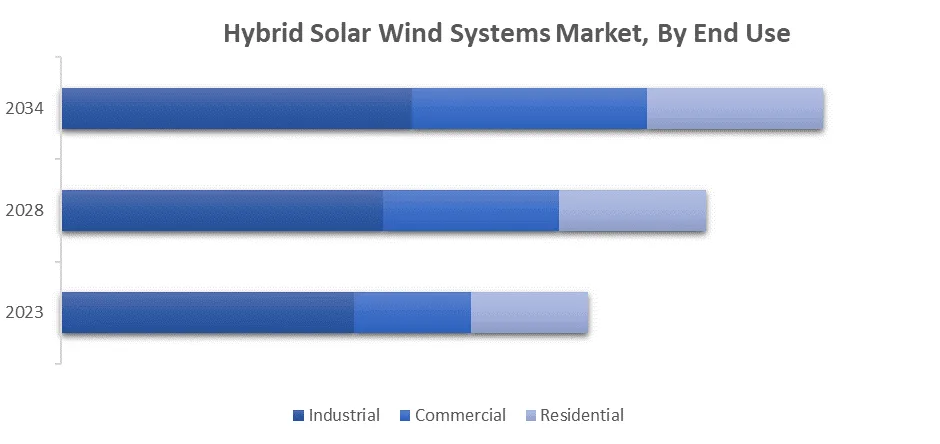
Industrial segments hold a dominant market position owing to higher energy demand and increasing focus on sustainability
Hybrid solar wind systems market is classified based on End Use into Residential, Commercial, and Industrial. In the present market and regulatory landscape, the industrial segment holds the largest share owing to several appealing factors. Hybrid systems are used in industrial facilities to reduce their direct reliance on the grid and save on energy expenses due to their high energy demands. Many industrial firms are under pressure to directly reduce their carbon footprint which has resulted in a noticeable emphasis on sustainability. Hybrid systems provide a renewable and eco-friendly energy option. Moreover, industries are being pressured to embrace renewable energy sources due to strict environmental regulations, and hybrid systems are assisting with compliance. Large-scale power generation can be economically feasible with hybrid systems, offering increased energy security and reliability over standalone solar or wind systems, which makes them ideal for several industrial operations.
Market Dynamics:
Growth Drivers
Growing Demand for Clean Energy to Promote Overall Market Growth
There has been an increasing need for clean energy due to climate change and a significant reduction in fossil fuel reserves is boosting the hybrid solar wind systems market. Rising interest in renewable energy and climate change awareness has created a higher market demand, prompting individuals, businesses, and governments to seek ways to lower their carbon footprint and support a sustainable future. Hybrid systems, which utilize wind and solar power to generate clean electricity, offer an appealing solution. Furthermore, the depletion of fossil fuels also gives rise to concerns regarding energy security. Hybrid systems aid in diversifying energy sources and cutting back on dependence on conventional, frequently imported, fuels. This is particularly important for nations that have a small amount of fossil fuels, guaranteeing a more consistent and safe energy provision.
Governments' Active Promotion of Renewable Energy with Incentives to Propel Market Growth
Government incentives have had a positive effect on the Hybrid Solar Wind Systems Market by encouraging the adoption of renewable energy. Subsidies are provided to cover the initial installation expenses, which helps to lower the cost of hybrid systems for individuals and businesses, ultimately boosting the adoption of these systems in the market. Tax incentives, such as credits, deductions, or exemptions on equipment import taxes, also encourage investment in hybrid systems. Feed-in tariffs enable owners to sell extra electricity to the grid at higher prices, generating extra income and increasing financial appeal. Renewable Portfolio Standards (RPS) establish goals for generating electricity from renewable sources, leading to increased demand for hybrid systems to help achieve these goals and stimulate the market for clean and sustainable energy solutions.
Restraints
Grid Integration Issues to Act as a Significant Restraint for Hybrid Solar Wind Systems Market
Grid integration challenges are a major obstacle for the Hybrid solar wind systems market, particularly for systems that are connected to the grid. Fluctuations in solar and wind power output due to intermittency can disturb grid stability, requiring extra resources to uphold satisfactory frequency and voltage levels. Hybrid systems may cause power quality problems including voltage fluctuations and harmonics, which can harm grid equipment and interrupt operations. Incorporating hybrid systems also requires more protective gear, resulting in overall higher expenses and complications. Upgrades that are both costly and time-consuming may be necessary due to limitations in grid capacity. These obstacles can raise expenses for the system, hinder acceptance due to technical complexities, and create regulatory difficulties. Nonetheless, innovations such as energy storage systems, smart grid technology, and enhanced grid infrastructure present hopeful options for improved integration.
Recent Developments
- In 2023, Siemens Gamesa Renewable Energy introduced a new hybrid energy system integrating solar and wind energy with advanced energy storage solutions. The company partnered with a leading energy storage company in mid-2023 to develop a scalable hybrid solution for utility-scale projects.
- In late 2023, General Electric launched a new series of hybrid solar wind turbines tailored for offshore applications. They acquired a leading solar panel manufacturer in early 2024 to enhance their hybrid system capabilities and expand their renewable energy portfolio.
- Vestas Wind announced a strategic initiative in early 2023 to focus on hybrid energy systems, aiming to double their market share by 2025. The company released new hybrid energy management software in mid-2023 to optimize the performance of combined solar and wind installations.
- In 2024, Suzlon Energy Limited merged with a solar technology company to strengthen its hybrid energy system offerings. The company introduced a hybrid microgrid solution designed for rural and remote areas in mid-2023.
- In 2023, Goldwind formed a joint venture with a global solar company to develop integrated hybrid solutions. The company launched an advanced hybrid turbine incorporating wind and solar power generation capabilities in late 2023.
Hybrid Solar Wind Systems Market, Key Players:
- Siemens Gamesa Renewable Energy
- General Electric
- Vestas Wind Systems A/S
- Suzlon Energy Limited
- Goldwind
- ReGen Powertech
- Bergey Windpower Co.
- Canadian Solar Inc.
- Zenith Solar
- Senvion
- Schneider Electric
- Blue Pacific Solar
- Northern Power Systems
- WindStream Technologies
- Mitsubishi Electric Corporation
- Other Prominent Players (Company Overview, Business Strategy, Key Product Offerings, Financial Performance, Key Performance Indicators, Risk Analysis, Recent Development, Regional Presence, SWOT Analysis)
Regional Analysis
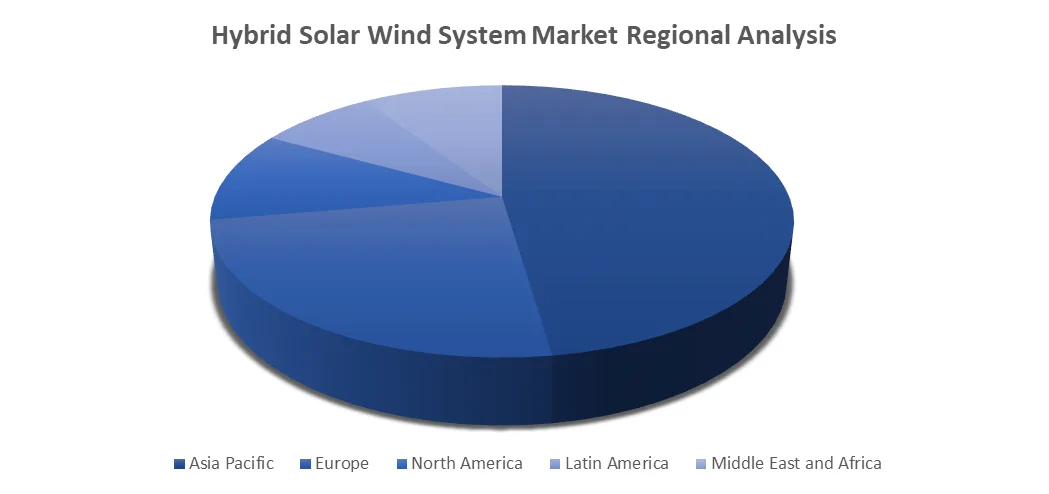
Hybrid solar wind systems market is segmented based on regional analysis into five major regions: North America, Latin America, Europe, Asia Pacific, and the Middle East and Africa. The Asia Pacific region holds the predominant market position accounting for nearly 40% of the total share, owing to the thriving power industry. Fast-paced economic expansion and industrial development in the APAC region result in higher electricity needs, with hybrid systems being a dependable and eco-friendly option, particularly in regions with restricted grid connection. Multiple countries in the Asia Pacific region, such as China, India, and South Korea, have set ambitious goals for renewable energy and see hybrid systems as crucial for reducing their overall dependence on fossil fuels. The adoption of renewable energy is further encouraged by government support in the form of policies and incentives, such as financial aid for installation and feed-in tariffs.
Nevertheless, there is growth potential in other areas as well. Significant market growth is anticipated in North America, specifically in the United States and Canada, due to several government incentives, technological advances, and a focus on achieving energy self-sufficiency. Europe's focus on environmental sustainability and ambitious renewable energy goals motivates the adoption of hybrid systems. Latin America and the Middle East & Africa both have abundant renewable energy sources and an increasing need for electricity. With the decreasing cost of technology and the implementation of supportive government policies, the market for hybrid systems in these areas is expected to grow substantially.
Source: Fatpos Global
Impact of Covid-19 on Hybrid Solar Wind Systems Market
Hybrid Solar Wind Systems Market experienced both positive and negative effects from the COVID-19 pandemic. Negative impacts included significant disruptions in the global solar panels, wind turbines, and other components supply chain, leading to project installation delays and equipment scarcities. The slowdown in the economy led to a significant reduction in direct renewable energy projects, as businesses and individuals were careful with their spending, creating delays in hybrid system installations. Conversely, the pandemic also resulted in some beneficial effects. The pandemic has led to a greater focus on environmental issues, which has sparked a surge in interest in sustainable options such as hybrid systems. These are seen as a way to reduce direct dependence on fossil fuels and encourage the use of cleaner energy sources. The increase in remote work globally has led to a rise in interest in hybrid systems for off-grid use, especially in isolated areas where dependable electricity is essential for remote work activities.
Hybrid Solar Wind Systems Market is further segmented by region into:
- North America Market Size, Share, Trends, Opportunities, Y-o-Y Growth, CAGR – United States and Canada
- Latin America Market Size, Share, Trends, Opportunities, Y-o-Y Growth, CAGR – Mexico, Argentina, Brazil, and Rest of Latin America
- Europe Market Size, Share, Trends, Opportunities, Y-o-Y Growth, CAGR – United Kingdom, France, Germany, Italy, Spain, Belgium, Hungary, Luxembourg, Netherlands, Poland, NORDIC, Russia, Turkey, and Rest of Europe
- Asia Pacific Market Size, Share, Trends, Opportunities, Y-o-Y Growth, CAGR – India, China, South Korea, Japan, Malaysia, Indonesia, New Zealand, Australia, and Rest of APAC
- Middle East and Africa Market Size, Share, Trends, Opportunities, Y-o-Y Growth, CAGR – North Africa, Israel, GCC, South Africa, and Rest of MENA
Hybrid Solar Wind Systems Market Scope and Segments:
|
ATTRIBUTE |
DETAILS |
|
Study Period |
2018-2034 |
|
Base Year |
2023 |
|
Forecast Period |
2024-2034 |
|
Historical Period |
2019-2022 |
|
Growth Rate |
CAGR of 7.9% from 2024-2034 |
|
Unit |
Value (USD Billion) |
|
Segmentation |
Main Segments List |
|
By Connectivity |
|
|
By End Use |
|
|
By Region |
|
Frequently Asked Questions (FAQ):
Hybrid Solar Wind Systems Market size was valued at USD 2.1 billion in 2023 and is projected to reach the value of USD 5 billion in 2034, exhibiting a CAGR of 7.9% during the forecast period.
Hybrid Solar Wind Systems Market involves integrated renewable energy solutions that combine solar and wind power generation technologies. These systems aim to harness the complementary nature of solar and wind resources to provide reliable, sustainable electricity generation. They are increasingly adopted globally for their potential to enhance energy security and reduce carbon emissions.
The Standalone and Industrial segment accounted for the largest Hybrid Solar Wind Systems Market share.
Key players in the Hybrid Solar Wind Systems Market include Siemens Gamesa Renewable Energy, General Electric, Vestas Wind Systems A/S, Suzlon Energy Limited, Goldwind, ReGen Powertech, Bergey Windpower Co., Canadian Solar Inc., Zenith Solar, Senvion, Schneider Electric, Blue Pacific Solar, Northern Power Systems, WindStream Technologies, Mitsubishi Electric Corporation, and Other Prominent Players.
Growing demand for clean energy, government incentives, and technological advancements are driving the Hybrid Solar Wind Systems Market.
 Select License Type


.png)


