


Biomethane Market Research, 2035
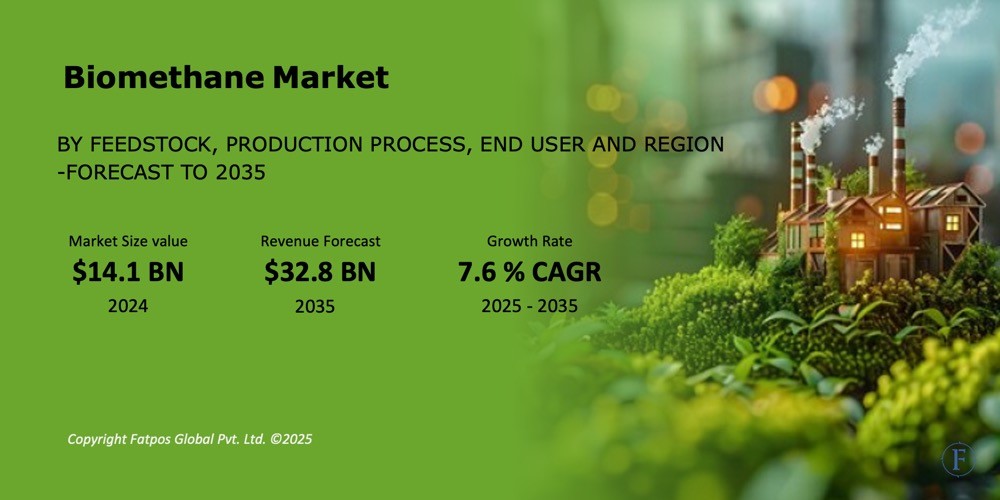
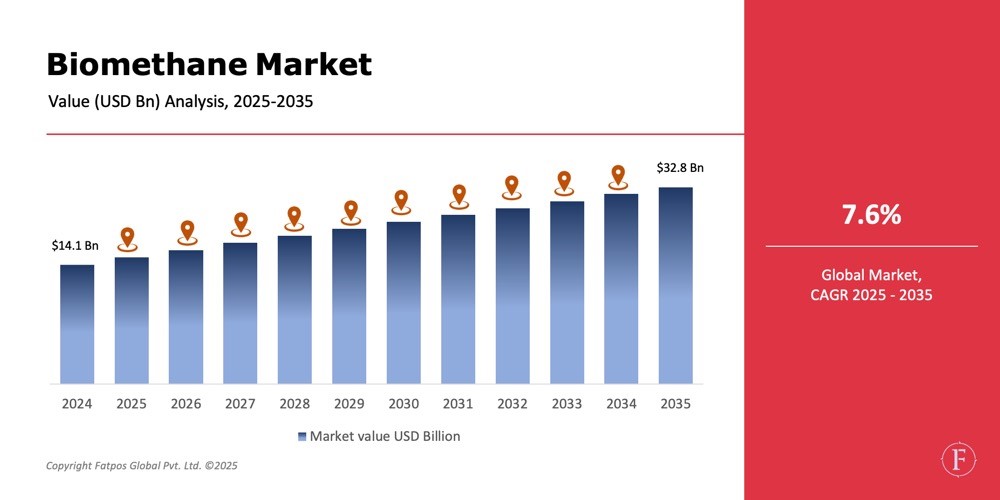
The global Biomethane Market was valued at USD 15.4 billion in 2025 and is projected to reach USD 32.8 billion by 2035, growing at a CAGR of 7.6% from 2025-2035.
The market's expansion is strongly tied to rising demand for renewable energy, waste management solutions, government incentives for carbon neutrality, and advancements in production technologies. Additionally, policy support in Europe, North America, and Asia-Pacific—particularly through subsidies and infrastructure projects—is accelerating adoption of biomethane as a clean fuel alternative.
Product Overview
Biomethane is a renewable natural gas produced from organic waste via anaerobic digestion or gasification, offering a low-carbon substitute for fossil natural gas. It provides environmental benefits like greenhouse gas reduction, waste valorization, and energy security for transportation, electricity, and industrial uses. Modern biomethane integrates grid injection capabilities, vehicle fuel standards, and circular economy models, finding applications in utilities, fleets, construction sites, and households across Europe, the US, and emerging markets. As global decarbonization efforts intensify and waste-to-energy policies expand, demand for biomethane is set to emerge significantly.
Key Takeaways
- Europe holds over 45% of Biomethane market share in 2024, driven by subsidies and waste policies in Germany, France, and UK.
- Asia-Pacific projects the fastest CAGR of 13-15% to 2035, fueled by agricultural waste in China, India, and Japan.
- US biomethane market growth via incentives, targeting USD 8 billion by 2032.
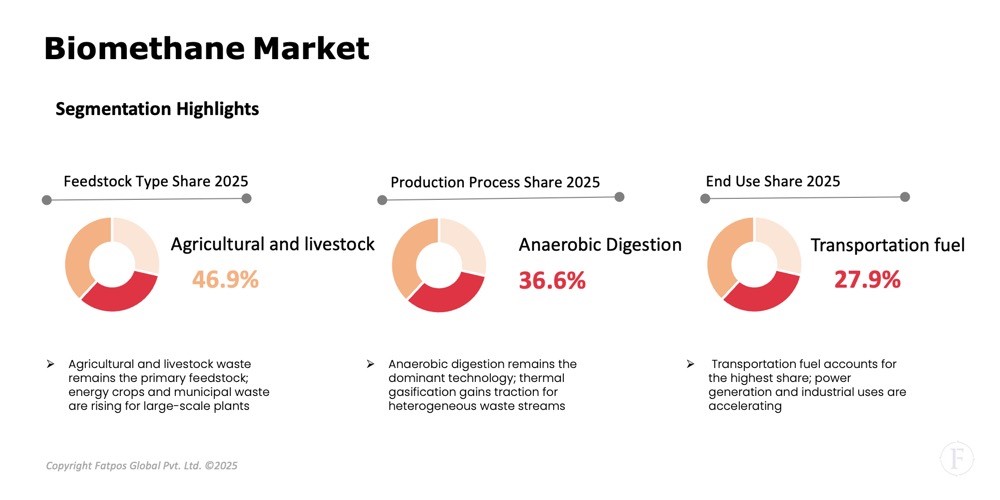
- Anaerobic digestion leads production, with agricultural waste dominating feedstock at 40-50% share.
- Transportation end-use captures major growth, supported by fleet decarbonization.
Market Dynamics
Drivers
The Biomethane Market is propelled by environmental regulations, net-zero goals in Europe and North America, and the shift to renewables amid rising fossil fuel costs, positioning it as a key player in energy transition. With organic waste abundance from agriculture and municipalities, biomethane supports circular economies, backed by incentives in the EU, US, and China that enhance production scalability. The market, valued around USD 9-15 billion in 2025, expects 7-14% CAGR through 2035 driven by these factors.
Restrictions
High upfront costs for digestion plants, purification technology, and grid upgrades pose barriers, especially in developing regions with limited infrastructure. Feedstock variability, regulatory hurdles, and competition from hydrogen or electrification further challenge scalability in areas like Asia and Latin America
Opportunities
Innovations in efficient digesters, co-digestion techniques, and biomethane-to-chemicals open growth via diverse applications in transport fuels and power, appealing to eco-conscious sectors. Rental and injection models at waste sites, utilities, and industrial parks are expanding, with strong potential in Europe, US, and UAE
Challenges
Safety in handling, inconsistent feedstock quality, and policy gaps erode confidence, while advanced alternatives like green hydrogen intensify competition
Biomethane Market Trends
The biomethane market is expanding rapidly, with global value expected to climb strongly over the next decade, supported by net-zero policies and waste-to-energy regulations. Transportation fuels and gas-grid injection are the fastest-growing uses, while agricultural and municipal waste dominate feedstock. Europe leads capacity additions and planned investments, positioning biomethane as a core pillar of the circular, low-carbon energy transition.
Key Players Featured in the Report
The global Biomethane Industry includes several leading manufacturers, such as:
- Bright Biomethane
- Homebiogas
- EnviTec Biogas
- PlanET Biogas
- Air Liquide
- ENGIE
- Veolia
- TotalEnergies
- Shell
- ExxonMobil
Regional Analysis
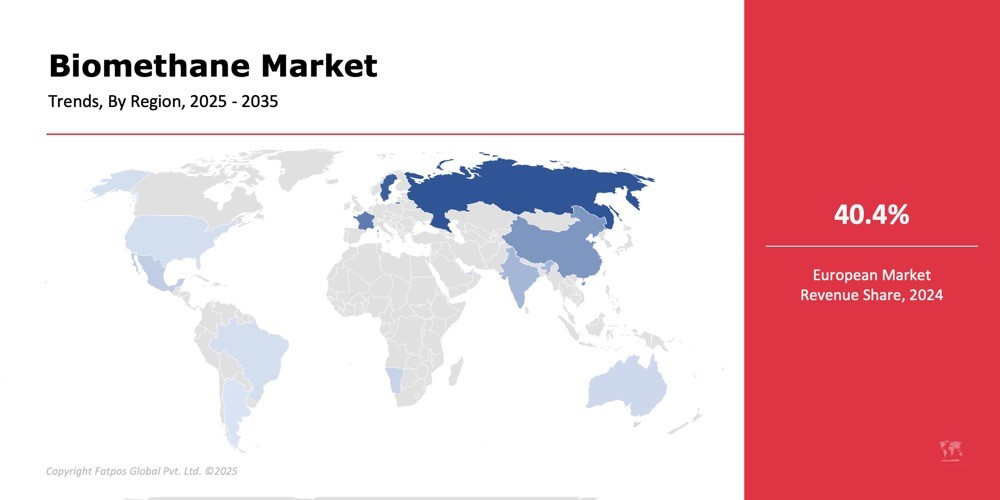
Europe leads the biomethane market analysis with nearly 42% share due to strong renewable energy policies and advanced biogas infrastructure, followed by North America which is driven by incentives and growing landfill gas-to-fuel projects. Asia-Pacific is the fastest-growing region, supported by rapid urbanization and high organic waste generation, while Latin America and the Middle East & Africa are gradually expanding through improvements in waste management systems, tourism-related demand, and emerging bioenergy initiatives.
Segmentation Analysis
Agricultural waste remains the dominant feedstock in the biomethane market due to its high availability and processing efficiency; Anaerobic digestion grows quickest for cost-effectiveness. Transportation leads end-use for low-carbon fuels, while industrial and power segments accelerate with grid integration.
Report Key Elements
|
Report Key Elements |
Details |
|
Study Period |
2025-2035 |
|
Market Size by 2035 |
USD 32.8 billion |
|
Market CAGR |
7.6% |
|
By Feedstock |
Agricultural Waste, Energy Crops, Municipal Waste, Sewage |
|
By Production Process |
Anaerobic Digestion, Thermal Gasification |
|
By End-Use |
Transportation, Power, Industrial, Heating |
|
By Region |
Europe, North America, Asia-Pacific, Latin America, Middle East & Africa |
|
Key Market Players |
Bright Biomethane, EnviTec, Veolia, ENGIE |
Biomethane Industry Instances
- Bright Biomethane expanded plants in Europe for grid injection in 2024.
- EnviTec partnered with US farms for agricultural waste projects.
- Veolia launched thermal gasification for municipal waste in Asia.
- ENGIE introduced transport-grade biomethane fueling stations in 2024
Analyst Review
The Biomethane Market Analysis shows robust growth from policy support, tech advances, and waste utilization. Focus on agricultural feedstocks, digestion efficiency, and transport applications will define leadership. Long-term biomethane market forecast stays positive amid global sustainability pushes.
Frequently Asked Questions (FAQ):
The market is projected to grow from USD 14.1 billion in 2024 to USD 32.8 billion by 2035, at a CAGR of 7.6%, supported by renewable energy targets, decarbonization policies, and expanding end-use applications.
North America holds over 38% of the global market share due to strong insurance coverage, healthcare infrastructure, and growing elderly care investments.
Europe currently holds the largest biomethane market share (around 42% of global revenues), driven by ambitious climate goals, generous incentives, mature gas-grid infrastructure, and rapid rollout of renewable natural gas projects in countries such as Germany, France, the UK, the Netherlands, and Italy.
Anaerobic digestion of agricultural residues, animal manure, and municipal organic waste remains the leading and fastest‑growing production route, supported by circular-economy policies and the need to reduce methane emissions from waste streams.
Biomethane project developers, gas utilities, EPC contractors, technology suppliers, investors, policymakers, transportation and logistics operators, industrial energy users, and sustainability consultants seeking insights on renewable gas opportunities, regulations, investment pipelines, and competitive strategies across global biomethane value chains.
 Select License Type


.png)


