


Animal Aids Market Research, 2034
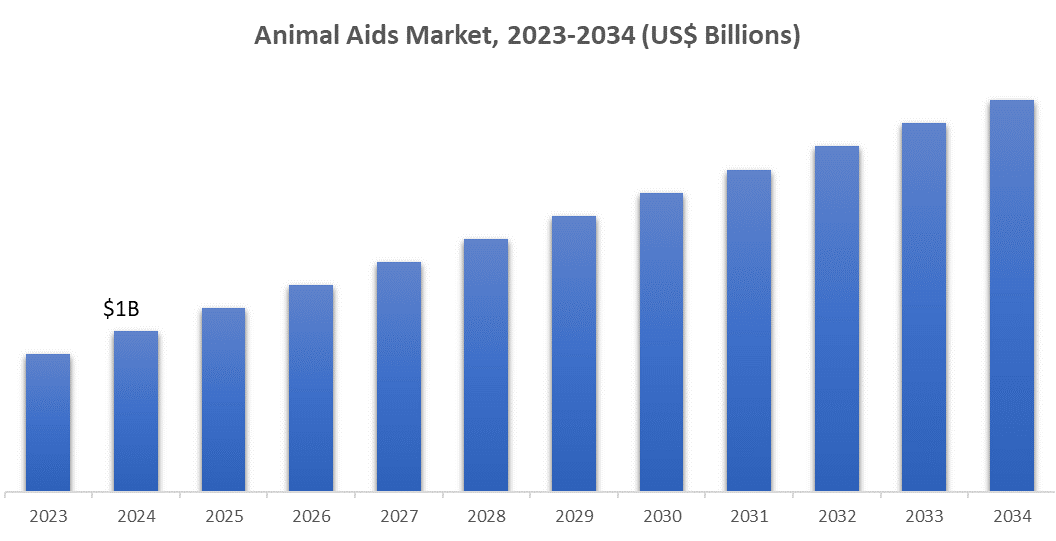
The global Animal Aids Market is expected to achieve a 5.8% CAGR during the forecast period (2024-2034). The market size was US$ 0.9 billion in 2023 and is projected to reach US$ 1.7 billion by 2034.
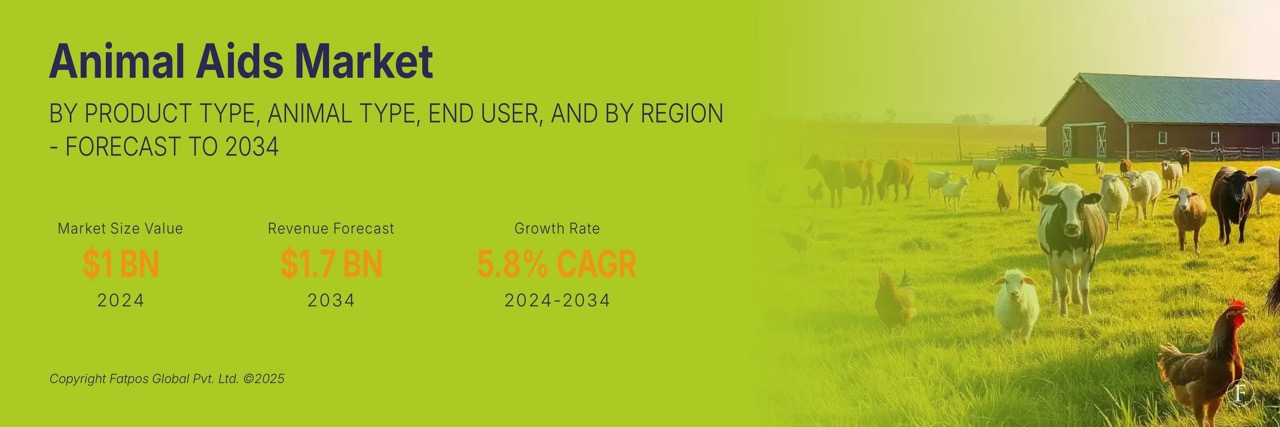
Animal aids encompass a wide variety of items and gear created to improve the health, welfare, and maintenance of animals, such as pets, livestock, and wildlife. These aids include medications like antibiotics, vaccines, and pain relievers for treating or preventing diseases; supplements such as vitamins and minerals to support overall health; tools for veterinary diagnostics to identify illnesses; medical instruments for surgical procedures; and products for wound care like bandages and disinfectants for helping injuries heal. Animal aids are crucial for veterinarians, pet owners, farmers, and animal welfare organizations to provide proper care, treatment, and management for animals, ultimately enhancing their quality of life and helping to prevent the spread of zoonotic diseases.
Market Highlights:
The global Animal Aids Market is expected to achieve a value of US$ 1.7 billion, with a growth rate of 5.8% during the projected timeframe, driven by a variety of factors. Growing numbers of people owning pets and treating them as family members result in a greater need for advanced veterinary services and products. Investments in animal health are increasing due to the growing global population and demand for livestock products to maintain productivity and food safety. The market growth is also being enhanced by technological developments in veterinary diagnostics, treatments, and surgical procedures.
Furthermore, increasing recognition of the importance of animal welfare, along with government actions and rules, is promoting the use of animal assistance. Anticipated growth in the future is predicted with ongoing trends, as well as a greater emphasis on prevention care and the creation of new products to tackle evolving animal health issues.
Source: Fatpos Global
Market Segmentation:
Medical products hold market prominence owing to rising pet ownership and developments in veterinary medicine
Animal Aids Market is classified based on Product Type into Medicinal Products, Nutritional Supplements, Diagnostic Products, Surgical Equipment, and Wound Care Products. Various factors contribute to the dominance of medicinal products in the animal aid market. The high occurrence of pet health problems like parasites, and chronic illnesses, and the necessity for vaccinations leads to a steady need for these items. The increase in pet ownership and the practice of considering pets as part of the family also add to the rise in spending on veterinary care, which includes necessary medications.
Innovative treatments in veterinary medicine have developed, improving the efficacy of medicinal products and increasing their market presence. Furthermore, rising regulatory standards and growing public awareness regarding pet health have resulted in a rise in preventative care measures, guaranteeing a consistent demand for medical products to maintain health and well-being. Although there has been an increase in other areas such as nutritional supplements, medicinal products continue to play a vital role in maintaining pet health.
Specialized products and higher pet ownership drive companion animal market dominance
Animal Aids Market is classified based on Animal Type into Companion Animals, Livestock Animal, and Wildlife Animal. Companion animals, especially dogs and cats, are the primary focus of the animal aid industry due to multiple set of reasons. High rates of owning pets make a big impact, with millions of households globally having dogs and cats, leading to a growing need for pet products and services. The increasing trend of treating pets as family members has contributed to a rise in spending on their care, including veterinary visits, medications, and accessories, fueling the demand for pet-related services.
The market is highly developed, providing a variety of specialized products and services such as pet food, grooming supplies, and veterinary care. Moreover, regulatory agencies frequently concentrate on pets, ensuring a strong market for their well-being. Although livestock and wildlife animals need help too, companion animals outnumber them and receive more resources for their care, making them the primary focus.

Source: Fatpos Global
Market Dynamics:
Growth Drivers
Rising Pet Ownership and Livestock Farming Boost Demand for Animal Aids and Medication
Raising public awareness about animal health and welfare is a major factor influencing the animal assistance industry. Pet owners have become increasingly educated on the significance of preventive care, appropriate nutrition, and routine visits to veterinarians, increasing the overall demand for products and services that enhance the health of animals. Educational initiatives, social networking platforms, and advocacy efforts from animal welfare groups have played a crucial role in promoting this awareness.
Furthermore, the trend of humanizing pets has increased the emphasis on their well-being, leading owners to be more willing to spend on their pets' medical needs. This trend also applies to animals raised for farming and those living in the wild, as the focus on humane treatment and disease prevention has resulted in more stringent rules and higher requests for health products, which in turn boosts market expansion.
Advancements in Veterinary Medicine and Technology to Propel Market Growth
Developments in veterinary medicine and technology play a crucial role in the expansion of the animal healthcare market. New, modern treatments like targeted therapies, personalized medicine, and advanced diagnostics have greatly enhanced the quality of care for animals. Innovations such as telemedicine, health monitoring wearables, and advanced imaging methods are transforming the way vets diagnose and treat conditions, improving accessibility and efficacy of care.
These advancements have resulted in the production of customized items tailored to individual health requirements, improving the effectiveness of treatments. Additionally, ongoing research in veterinary medicine is constantly bringing forth new drugs and treatments, broadening the selection of choices for pet caregivers and experts, resulting in an increase in market growth.
Restraints
Strict regulations May Hinder Market Growth and Innovation
Stringent regulations within the animal aid industry are necessary to guarantee the safety and effectiveness of products, but they can also hinder progress and creativity. The lengthy and costly procedures required for regulatory approval can delay the launch of new products and technologies. Businesses need to navigate intricate regulations, which usually require thorough testing, documentation, and adherence to different global standards. This could deter smaller companies from entering the market and hinder the speed at which established businesses can innovate.
Furthermore, strict regulations may result in higher expenses for customers, decreasing market accessibility. Although these regulations only safeguard the well-being of animals, they may also hinder market growth and postpone the release of innovative solutions.
Recent Developments
- In 2023, Boehringer Ingelheim introduced a new broad-spectrum parasiticide for cattle, NexGard® Combo, which is expected to set a new standard in parasite control in livestock and companion animals. In 2024, the company entered into a joint venture with a leading animal genetics firm to develop innovative solutions aimed at improving the health and productivity of farm animals.
- In 2023, Merck & Co., Inc., launched a new vaccine, NOBIVAC® EDGE, targeting respiratory diseases in dogs. The vaccine has been well-received for its efficacy and safety profile. The company acquired a biotech firm in 2024, specializing in gene therapy for animals, which will accelerate the development of cutting-edge treatments for genetic disorders in pets.
- In 2023, Elanco Animal Health Incorporated launched a new line of probiotics for pets under the BioDigest brand, aiming to improve gut health in dogs and cats. In 2024, Elanco announced a strategic partnership with a leading agricultural company to develop sustainable livestock feed solutions, aligning with global trends toward sustainability in animal farming.
- In 2023, Ceva released a new intranasal vaccine for swine, SUPRAH®, designed to protect against respiratory diseases and reduce the need for antibiotics. The company 2024 acquired a diagnostics company to enhance its capabilities in disease detection and prevention, strengthening its position in the global animal health market.
Key Players:
- Boehringer Ingelheim GmbH
- Merck & Co., Inc.
- Elanco Animal Health Incorporated
- Ceva Santé Animale
- Zoetis Inc.
- Virbac
- IDEXX Laboratories, Inc.
- Bayer AG
- Dechra Pharmaceuticals PLC
- Vetoquinol S.A.
- Heska Corporation
- Neogen Corporation
- Covetrus, Inc.
- Henry Schein, Inc.
- Patterson Companies, Inc.
- Other Prominent Players (Company Overview, Business Strategy, Key Product Offerings, Financial Performance, Key Performance Indicators, Risk Analysis, Recent Development, Regional Presence, SWOT Analysis)
Regional Analysis
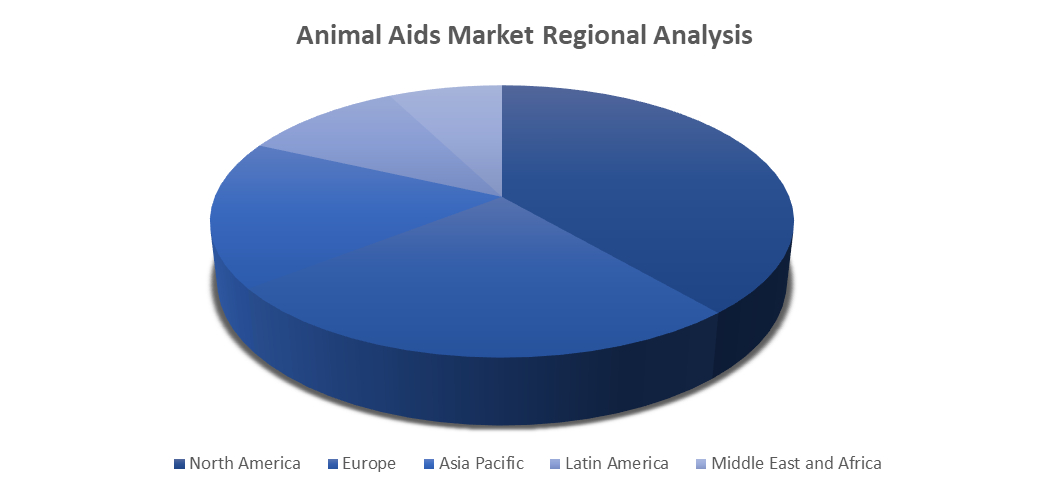
Global Animal Aids Market is segmented based on regional analysis into five major regions: North America, Latin America, Europe, Asia Pacific and the Middle East and Africa.
North America, particularly the US, is the primary region in the worldwide animal aid market. This leadership is guided by the significant number of people owning pets, a well-developed and experienced pet care sector, a consumer culture that prioritizes the health and happiness of pets, and a strict regulatory system that guarantees the safety and quality of products.
On the other hand, Europe stands out due to its extensive and increasing number of pets and high desire for high-quality pet items and services.
The Asia Pacific region, led by China and Japan, is quickly growing as more people are owning pets. Although still in development, Latin America displays encouraging growth prospects in the animal aid industry. The pet ownership rates in the Middle East and Africa are increasing slowly as the demand for pet care grows, despite starting at lower levels.
Source: Fatpos Global
Impact of Covid-19 on The Market
Market was greatly affected by the COVID-19 pandemic, resulting in both positive and negative consequences. Increased pet adoption and a greater focus on pet health during lockdowns led to a rise in demand for animal aids. Consumers showed a stronger interest in investing in their pets' health, resulting in increased sales of pet care items and services.
Nevertheless, production and distribution were impacted by supply chain disruptions and economic uncertainties, resulting in shortages and higher costs. Moreover, challenges were presented due to temporary closures of pet care facilities and shifts in consumer spending habits. In general, although the pandemic drove some market expansion, it also brought about challenges that industry participants had to adjust to.
Market is further segmented by region into:
- North America Market Size, Share, Trends, Opportunities, Y-o-Y Growth, CAGR – United States and Canada
- Latin America Market Size, Share, Trends, Opportunities, Y-o-Y Growth, CAGR – Mexico, Argentina, Brazil, and Rest of Latin America
- Europe Market Size, Share, Trends, Opportunities, Y-o-Y Growth, CAGR – United Kingdom, France, Germany, Italy, Spain, Belgium, Hungary, Luxembourg, Netherlands, Poland, NORDIC, Russia, Turkey, and Rest of Europe
- Asia Pacific Market Size, Share, Trends, Opportunities, Y-o-Y Growth, CAGR – India, China, South Korea, Japan, Malaysia, Indonesia, New Zealand, Australia, and Rest of APAC
- Middle East and Africa Market Size, Share, Trends, Opportunities, Y-o-Y Growth, CAGR – North Africa, Israel, GCC, South Africa, and Rest of MENA
Market Scope and Segments:
|
ATTRIBUTE |
DETAILS |
|
Study Period |
2018-2034 |
|
Base Year |
2023 |
|
Forecast Period |
2024-2034 |
|
Historical Period |
2019-2022 |
|
Growth Rate |
CAGR of 5.8% from 2024-2034 |
|
Unit |
Value (US$ Billion) |
|
Segmentation |
Main Segments List |
|
By Product Type |
|
|
By Animal Type |
|
|
By End User |
|
|
By Region |
|
Frequently Asked Questions (FAQ):
Animal Aids Market size was valued at US$ 0.9 billion in 2023 and is projected to reach the value of US$ 1.7 billion in 2034, exhibiting a CAGR of 5.8% during the forecast period.
Animal Aids includes items and offerings created to help maintain the health and welfare of animals. This consists of supplements for nutrition, devices for medical purposes, tools for grooming, and other products for care. The market focuses on pet owners who want to improve their pets' quality of life by providing different aids and interventions.
The Medical Products and Companion Animals segment accounted for the largest Market share.
Key players in the Animal Aids Market include Boehringer Ingelheim GmbH, Merck & Co., Inc., Elanco Animal Health Incorporated, Ceva Santé Animale, Zoetis Inc., Virbac, IDEXX Laboratories, Inc., Bayer AG, Dechra Pharmaceuticals PLC, Vetoquinol S.A., Heska Corporation, Neogen Corporation, Covetrus, Inc., Henry Schein, Inc., Patterson Companies, Inc. and Other Prominent Players.
Rising pet ownership, humanization of pets, increased pet healthcare awareness, e-commerce adoption, and innovation in pet products are driving the animal aids market.
 Select License Type


.png)


