



Air Duct Market Research, 2034
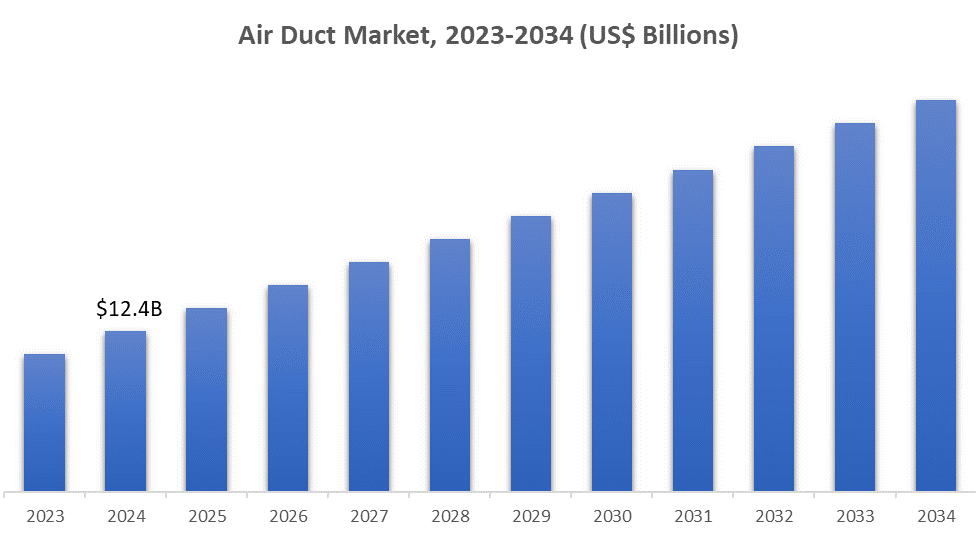
The global air duct market is anticipated to grow at a CAGR of 5.8% in the forecast period (2024-2034), with the market size valued at US$ 11.8 billion in 2023 and projected to reach US$ 19.7 billion by 2034.
Air ducts are an essential part of heating, ventilation, and air conditioning (HVAC) systems, as they distribute conditioned air throughout buildings and ensure adequate airflow. Air ducts, which are often made of metal, fiberglass, or flexible plastic, provide pathways for hot or cold air to travel from a building's HVAC unit to various rooms or spaces. They come in a variety of forms and sizes, including round, rectangular, and oval, to suit varied architectural styles and airflow requirements.
Properly designed and installed air ducts improve energy efficiency by reducing air leakage and ensuring stable temperature throughout the structure. They also play an important role in maintaining indoor air quality by removing dust, and other impurities before circulating the air. Regular maintenance, such as cleaning and sealing, is required to ensure the efficiency and lifespan of air ducts, ensuring healthy and comfortable indoor environments while optimizing HVAC system efficiency.
Market Highlights
The market is rising due to the increasing demand of better energy solutions and increased awareness from the general public regarding the consumption of better air quality is one of the major reasons driving the market. The integration of better technological equipment such as motion sensors and smart ducts which help in noise cancellation and regulating temperatures with airflow are making the air duct systems more efficient and saving major external costs.
Additionally, The Covid-19 pandemic helped in increasing market growth as the residential use was at an all-time high boosting all over market growth.
Market Segmentation
Increasing Demand in the Tertiary Sector to influence high use of galvanized steel ducts
The market based on Materials is segmented into Aluminum, Galvanized Steel, Stainless Steel, Fiberglass, Flexible and Others. Galvanized steel is exceptionally resistant to corrosion and rust, ensuring durability and lifespan in even the harshest situations. Its low cost, combined with its ability to endure high pressures and temperatures, make it a popular choice for various HVAC systems and ducting installations.
Furthermore, galvanized steel is widely available on the market, making it accessible to manufacturers and constructors, adding to its popularity and extensive use. Galvanized steel remains a popular material for air duct fabrication due to its versatility, which enables for modification to meet individual project requirements. With a proven track record of dependability and performance, galvanized steel continues to dominate the market.
Flexibility and Space Efficiency drives the rise in demand for rectangular air ducts
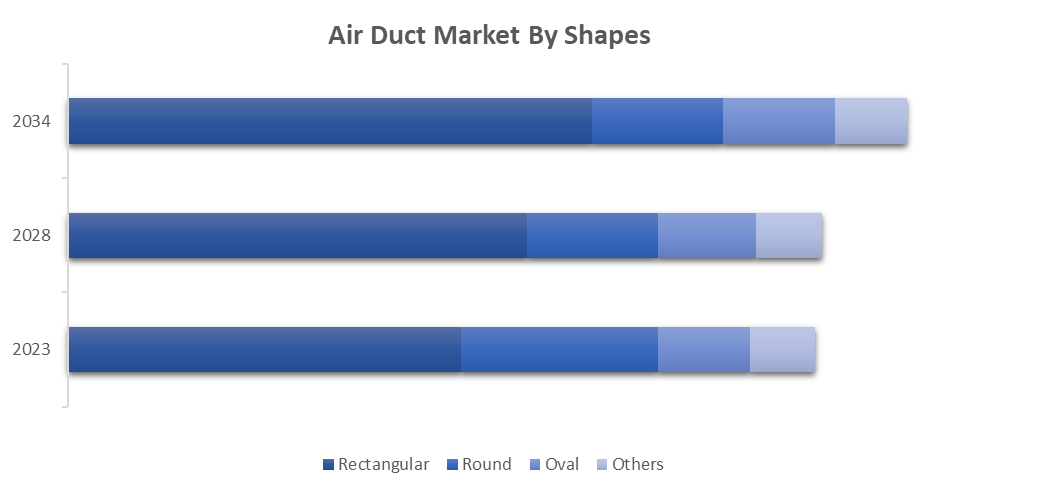
The market based on Shapes is segmented into Round, Rectangular, Oval, and Others. Rectangular ducts emerge as a flexible and adaptable choice, especially due to their ease of installation and ability to fit into small places. Their rectangular design allows for the efficient use of limited building space, making them appropriate for structures with restricted space. Furthermore, its flexibility allows for easy bending and movement, making installation in difficult situations possible and maintaining complete ventilation coverage throughout structures.
Rectangular ducts are particularly cost-effective when compared to round ducts, due to their simple installation process and deployment efficiency. Due to their low cost, they are a popular alternative for a variety of construction projects, including residential structures and commercial complexes. With their ability to deliver optimum airflow while optimizing space utilization and cost efficiency, rectangular air ducts continue to play a significant role in shaping the ventilation systems of modern buildings.
Market Dynamics
Growth Drivers
Growing Awareness about Energy Efficiency and Improving Indoor air quality is Increasing the use of Air Ducts
Consumer preferences and government initiatives aimed at promoting energy-efficient solutions to decrease carbon footprints and lower energy costs have resulted in a major increase in demand for air ducts. Consumers are increasingly prioritizing duct systems that use less energy and are sustainable over long periods of use. Furthermore, growing awareness of low air quality index (AQI) levels has increased demand for better filtration and duct cleaning services, driven by a desire to improve indoor air quality.
These elements collectively influence customer demand, resulting in a greater emphasis on superior services that directly contribute to market expansion. As the emphasis on energy efficiency and indoor air quality grows, demand for innovative air duct solutions is projected to rise further.
Technological Advancements with smart solutions is transforming the Market
The market is witnessing a series of technological advancements that help and improve the way air is transferred in buildings. HVAC systems now come with smart sensors which collect real time data regarding the humidity, air quality and help in moderating these functions.
New equipment like antimicrobial coatings and noise reducing silencers are being added in order to reduce noise transmission and creating healthy environments. Optimizing airflow with the help of smart ducts can help in reducing energy consumption. Smart sensors can identify over-heating issues and can use auto-cut technology which can identify problems and help in reducing the overall maintenance costs.
Restraints
High Initial Investment and Installation Costs come up as a hurdle for Market Growth
High initial investments are required for the installation and maintenance of air duct systems, often serving as a barrier for the market. The cost of large and complex HVAC systems can be substantially high, and hiring skilled professionals for installation adds necessary expenses.
Additionally, industries and commercial setups may incur licenses fees for government permits, which may contribute these indirect expenses. Smart ducts and sensor-featured systems often carry premium prices, making them an expensive investment. These high initial costs typically prevent the customers from choosing these systems and go for cheaper alternatives like air purifiers. All of these obstacles hinder the overall market growth.
Recent Developments
- In 2023, Linlab, announced plans in January to expand its production capacity in Poland. This signifies their focus on meeting the growing demand for air ducts in the region.
- In 2023, Daikin acquired Alliance Air Products. This acquisition strengthens Daikin's position in the high-efficiency equipment and services sector, which could indirectly benefit the market by pushing for more efficient duct systems.
- In 2023, Greenheck, launched its IntelliZone Technology. This system utilizes zone pressure sensors to optimize airflow and improve energy efficiency within buildings. They are actively focusing on developing air duct solutions that integrate with data analytics and control systems for improved building management.
- In 2023, Saint-Gobain launched its new Isover Comfort panel, a prefabricated air duct system offering superior thermal and acoustic insulation. They are also involved in development of air duct systems that promote better air filtration or healthier materials.
- In 2023, Systemair AB, prioritizes indoor air quality solutions. They are likely continued advancements in for air duct systems that promote better air quality within buildings. They have also acquired companies like Climapacs and Laminaire Flow, though not directly related to air ducts, but it strategically provides ground for the company.
Key Players
- Lindab International AB
- Greenheck Fan Corporation
- Ventec International Group Co., Ltd.
- Saint-Gobain
- FlaktGroup
- TROX GmbH
- Systemair AB
- Kingspan Group PLC
- Metal Industries Group Limited (MIG)
- Bricofer S.A.
- Armacell International S.A.
- Rockwool International A/S
- Knauf Insulation
- Owens Corning
- Other Prominent Players (Company Overview, Business Strategy, Key Product Offerings, Financial Performance, Key Performance Indicators, Risk Analysis, Recent Development, Regional Presence, SWOT Analysis)
Regional Analysis
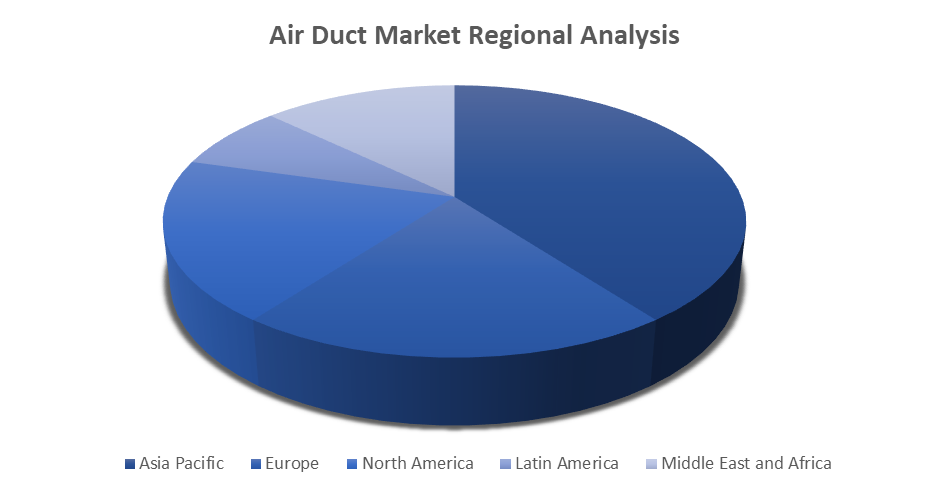
The global air duct market is segmented based on regional analysis into five major regions: North America, Latin America, Europe, Asia Pacific and the Middle East and Africa.
Asia-Pacific is the leading region in the market, influenced by the rising construction of buildings and infrastructure projects and a growing demand for improved indoor air quality. The factor of developing economies also significantly contributes to the Asia-Pacific Market, as majority of countries like China, India, Vietnam, and others are undertaking essential industrial and commercial projects accompanied by rapid urbanization. Major players like Ventec International and Lindlab International are contributing to the regional growth.
Europe and North America follow suit, with both regions having mature and stable markets. There is a rising demand of Air Duct systems with better technology in new buildings. Thermal Air requirements is also a major demand in these regions due to the extreme cold weathers. These dynamics will provide significant opportunities for the Air Duct Industry in the foreseeable future.
Market is further segmented by region into
- North America Market Size, Share, Trends, Opportunities, Y-o-Y Growth, CAGR – United States and Canada
- Latin America Market Size, Share, Trends, Opportunities, Y-o-Y Growth, CAGR – Mexico, Argentina, Brazil, and Rest of Latin America
- Europe Market Size, Share, Trends, Opportunities, Y-o-Y Growth, CAGR – United Kingdom, France, Germany, Italy, Spain, Belgium, Hungary, Luxembourg, Netherlands, Poland, NORDIC, Russia, Turkey, and Rest of Europe
- Asia Pacific Market Size, Share, Trends, Opportunities, Y-o-Y Growth, CAGR – India, China, South Korea, Japan, Malaysia, Indonesia, New Zealand, Australia, and Rest of APAC
- Middle East and Africa Market Size, Share, Trends, Opportunities, Y-o-Y Growth, CAGR – North Africa, Israel, GCC, South Africa, and Rest of MENA
Market Scope and Segments
|
ATTRIBUTE |
DETAILS |
|
Study Period |
2018-2034 |
|
Base Year |
2023 |
|
Forecast Period |
2024-2034 |
|
Historical Period |
2019-2022 |
|
Growth Rate |
CAGR of 5.8% from 2024-2034 |
|
Unit |
Value (US$ Billion) |
|
Segmentation |
Main Segments List |
|
By Material |
|
|
By Shape |
|
|
By Application |
|
|
By Region |
|
Frequently Asked Questions (FAQ):
The global air duct market size was valued at US$ 11.8 billion in 2023 and is projected to reach the value of US$ 19.7 billion in 2034, exhibiting a CAGR of 5.8% during the forecast period.
The market are shapes and structures which are used in distributing air with the help of heating, ventilating, and air conditioning machines, throughout the buildings or facilities of the residential, commercial and industrial settings.
The Galvanized Steel and Rectangular Shaped Air Duct Segment accounted for the largest market share in the market.
Key players in the global air duct market include Lindab International AB, Greenheck Fan Corporation, Ventec International Group Co., Ltd., Saint-Gobain, FlaktGroup, TROX GmbH, Systemair AB, Kingspan Group PLC, Metal Industries Group Limited (MIG), Bricofer S.A., Armacell International S.A., Rockwool International A/S, Knauf Insulation, Owens Corning and, Other Prominent Players.
Rising demand for energy-efficient solutions, government initiatives promoting sustainability, and increasing awareness of indoor air quality are driving the market.
 Select License Type


.png)


