


Fire Doors Market Research 2035
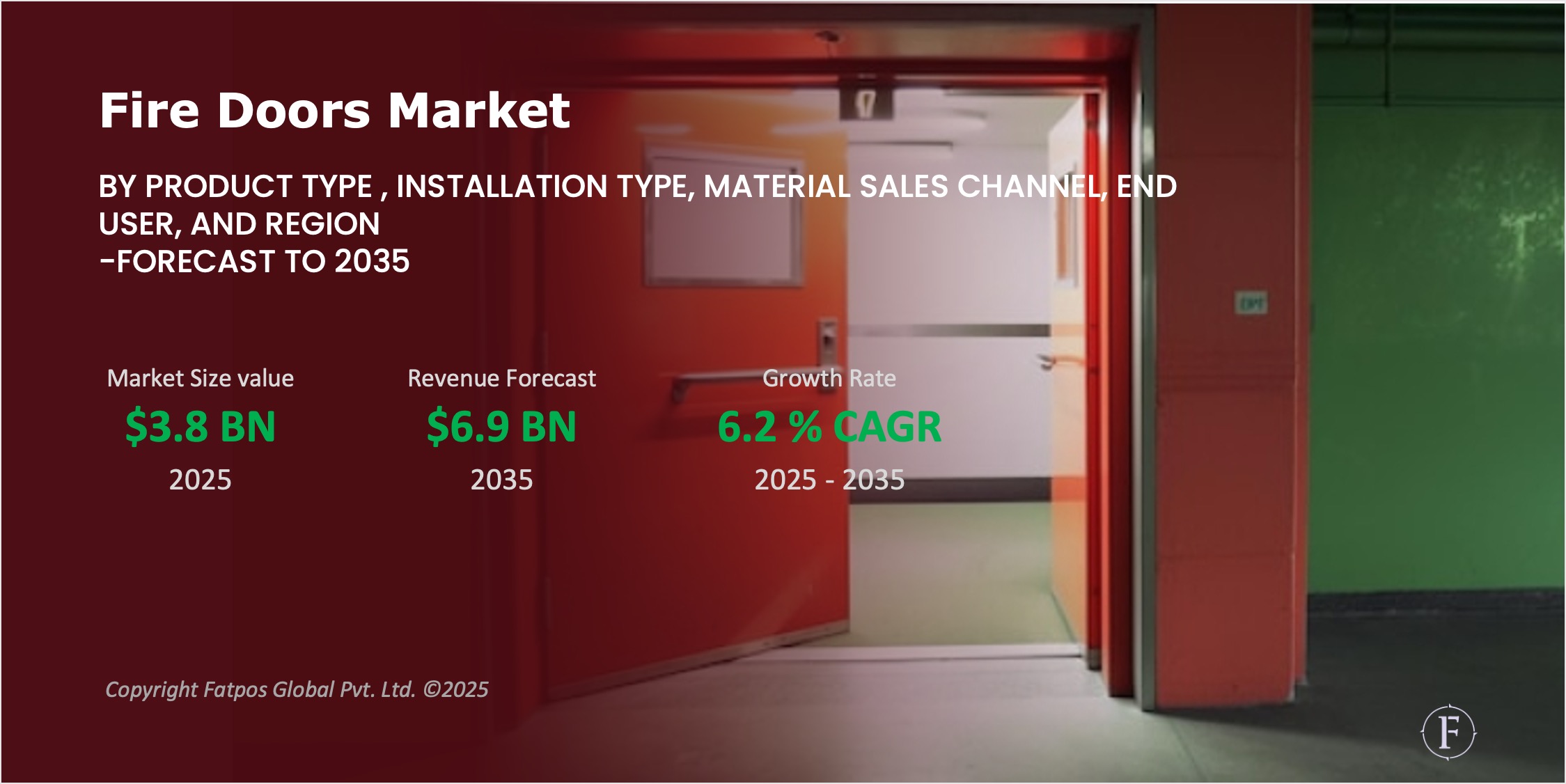
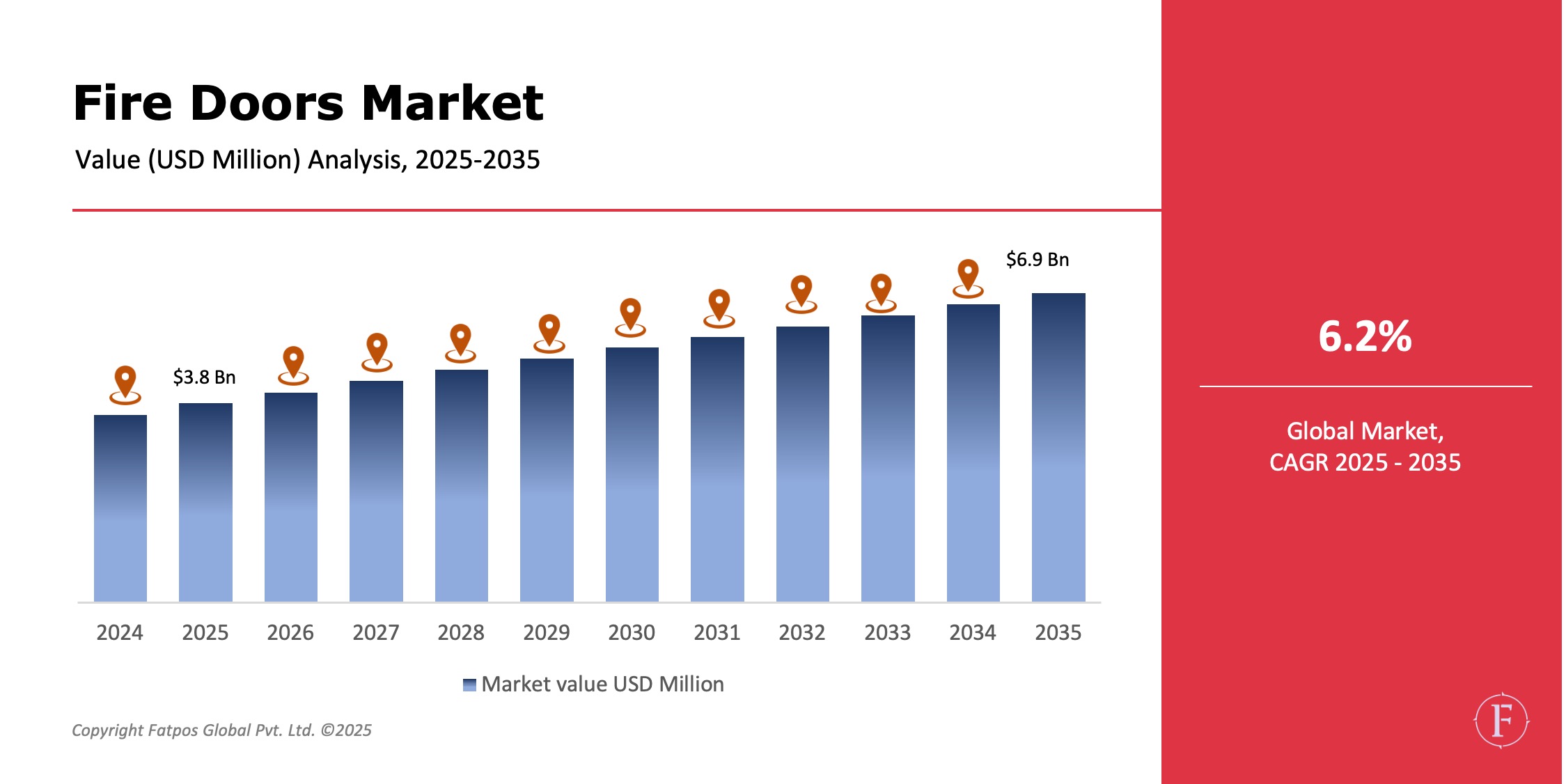
The Fire Doors Market Size was USD 3.8 billion in 2025 and is projected to reach USD 6.9 billion by 2035, registering a CAGR of 6.2%, The market expansion stems from emerging construction in residential, commercial, and industrial sectors, alongside stringent fire safety regulations and heightened awareness of building standards. Technological advances in materials enhance fire and smoke containment, protecting lives and assets while meeting international codes. Urbanization, smart city initiatives, and infrastructure growth in emerging economies further boost demand for certified, robust fire door solutions.
Product Overview
Fire doors, engineered to resist fire and smoke for 30-120 minutes, classify into steel variants for durable commercial/industrial use, wooden for aesthetic residential/institutional settings, composite for cost-effective balance, and glass for visibility with fire resistance. Installation spans new construction and retrofits in existing buildings. Materials like galvanized steel, stainless steel, timber, and aluminum determine strength, corrosion resistance, and performance, ensuring compliance across diverse applications.
Key Takeaways :
- The Fire Doors Market is forecast to grow at ~6.2% CAGR through 2035.
- Steel fire doors hold the largest share due to robustness and compliance with commercial safety standards.
- Retrofit installations are expanding as aging infrastructure undergoes safety upgrades.
- Commercial and industrial sectors dominate demand due to stringent fire codes.
- Adoption of smart fire door systems integrated with IoT and building management systems (BMS) is an emerging trend.
- Asia-Pacific emerges as the fastest growing regional market.
Market Dynamics
Drivers
Rising global construction in residential and non-residential sectors fuels fire door demand amid urbanization and smart building growth. Stringent fire safety codes like NFPA, IBC, and Eurocodes mandate robust solutions for life safety and asset protection. Heightened emphasis on insurance compliance and infrastructural projects accelerates adoption of certified fire doors worldwide.
Restrictions
Higher upfront costs of certified fire door systems deter adoption in budget-constrained projects despite long-term safety benefits. Installation and maintenance demand skilled labor, complicating deployment in commercial and industrial settings. Longer lead times for custom or large-scale solutions delay construction timelines and infrastructure projects.
Opportunities
Retrofit demand arises for existing buildings to upgrade fire safety compliance amid evolving regulations. Smart sensors and IoT integration enable automated fire door control for enhanced response in smart buildings. Lightweight, high-performance materials advance fire ratings while reducing installation complexity. Distribution expands through e-commerce and digital marketplaces, streamlining access for residential and commercial projects.
Challenges
Fragmented global fire door markets face challenges from varying standards and certification requirements across regions, complicating compliance and cross-border trade. Small and medium commercial projects often lack awareness of advanced fire safety solutions, hindering adoption despite regulatory mandates and safety benefits.
Fire Doors Market Trends
Intumescent coatings and fire seals enhance fire door resistance by expanding under heat to seal gaps and block smoke. Glass fire door systems gain traction in modern architecture for visibility while maintaining safety ratings. Smart fire doors with IoT enable real-time monitoring and automated emergency closure, integrating with building management systems. Specialized maintenance and inspection services grow to ensure compliance; Modular prefabricated solutions accelerate installation in construction projects.
Key Players in the Global Fire Doors Industry
- ASSA ABLOY
- Jeld-Wen, Inc.
- Hormann Group
- Masonite International Corporation
- Yale Industrial Products
- Ceco Door Products
- NATIONAL FIRE DOOR SYSTEMS
- Fortress Paper Ltd. (Door Division)
- Dakota Manufacturing
- Koramic Fire Solutions
- Latham International
- Bases Loaded Industries
- FenestraPro (div. of IMC Building Products)
Regional & Country Analysis
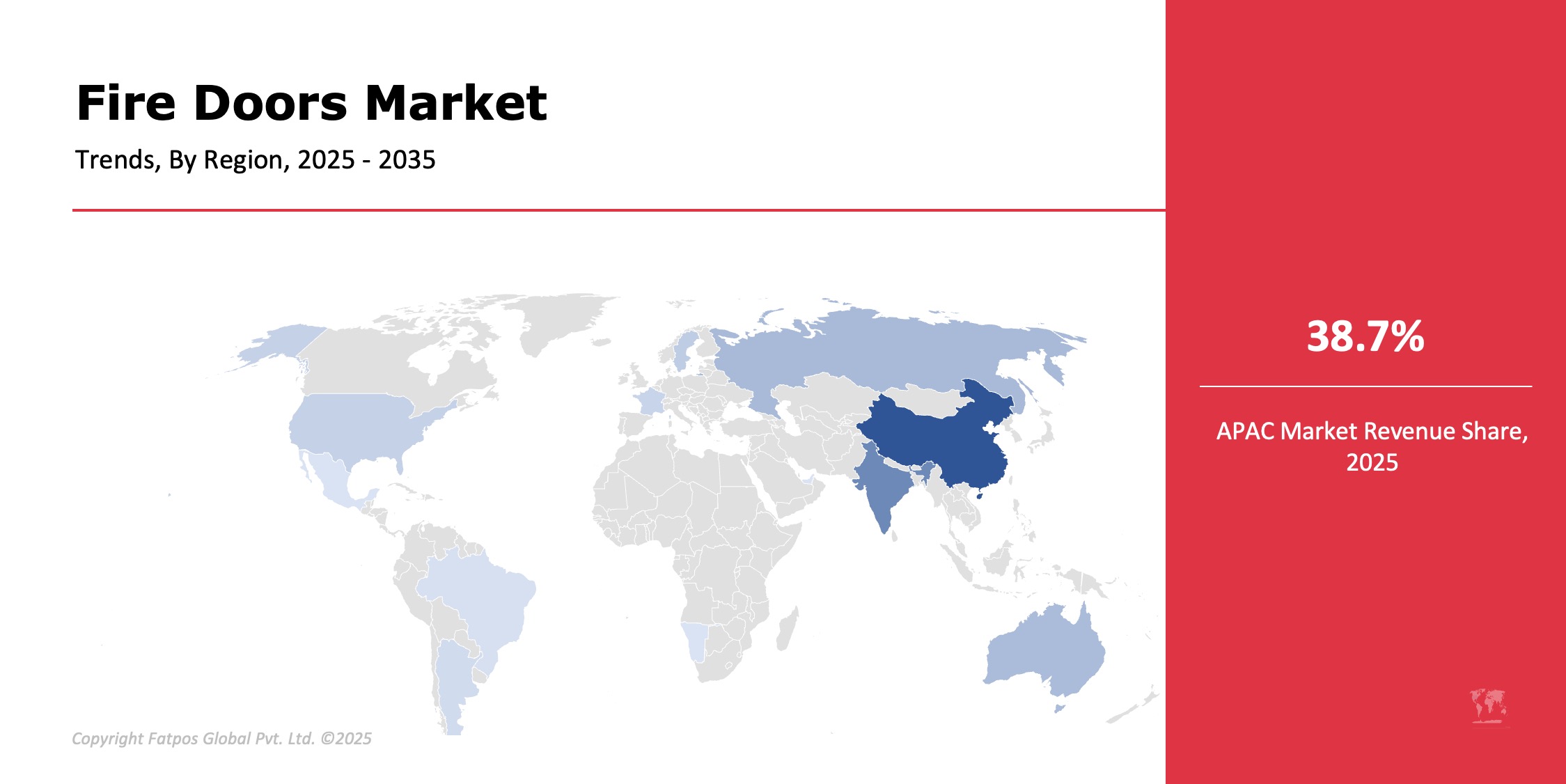
North America leads the fire doors market, propelled by stringent NFPA and IBC codes, robust commercial/industrial construction, and extensive retrofitting, with the US driving adoption of advanced safety standards. Europe maintains stable growth through comprehensive Eurocodes, high safety awareness, and contributions from Germany, UK, France, and Scandinavia. Asia-Pacific emerges fastest amid rapid urbanization, residential/commercial infrastructure boom, and strict regulations in China, India, and Southeast Asia. Latin America shows moderate expansion via infrastructure investments in Brazil, Mexico, and Argentina, coupled with growing commercial fire safety focus.
Segmentation Highlights
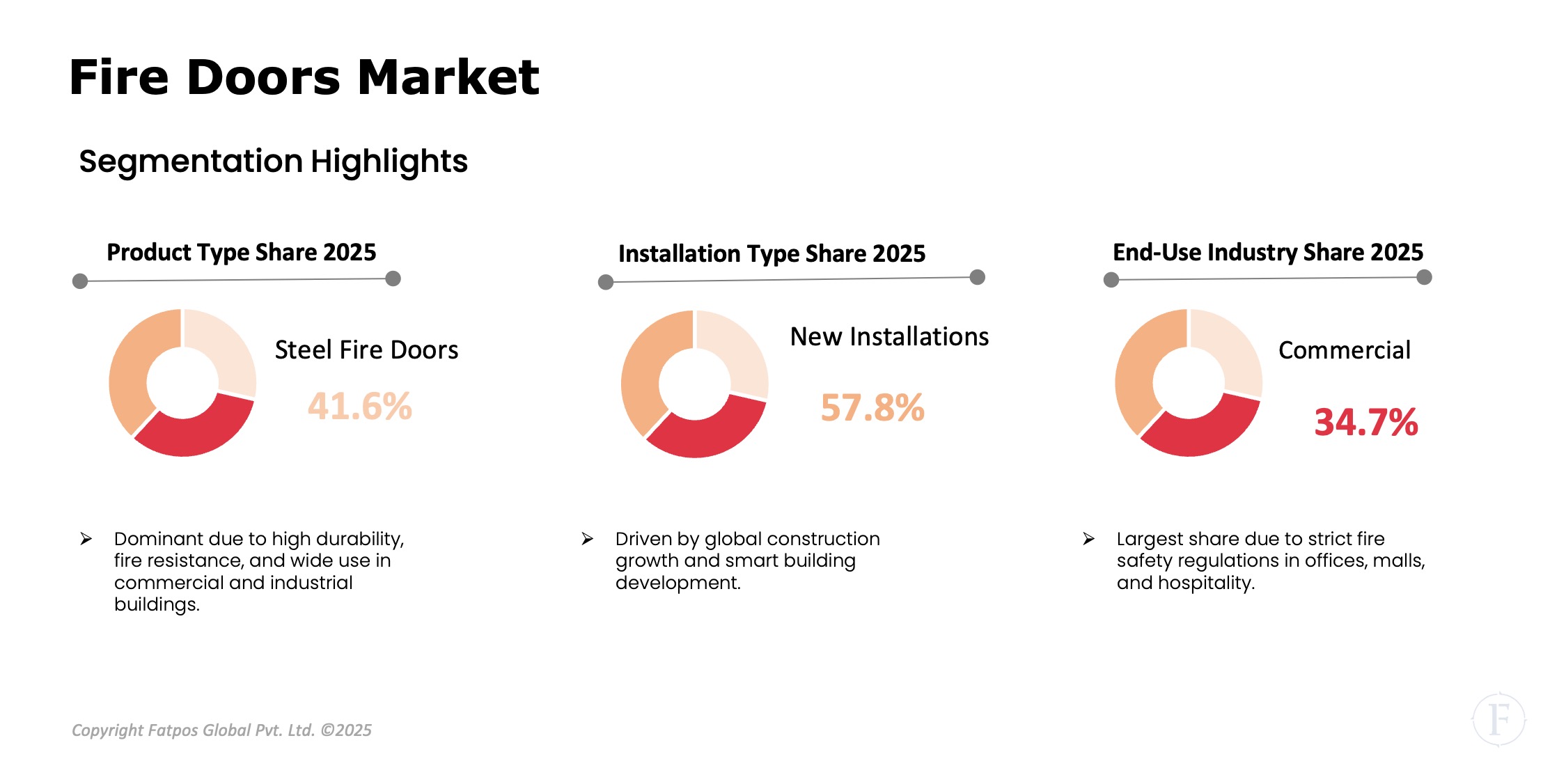
Steel fire doors dominate the market due to their exceptional strength and compliance with rigorous industrial specifications, ensuring reliable fire resistance in high-risk environments. Retrofit installations grow faster than new construction in mature markets, addressing compliance upgrades in existing commercial and industrial buildings. These sectors drive highest demand, compelled by stringent regulations mandating certified fire containment solutions. Galvanized and stainless steel materials prevail for superior durability, corrosion resistance, and sustained fire performance across diverse applications.
Report Key Elements
|
ATTRIBUTES |
DETAILS |
|
Study Period |
2019–2035 |
|
Base Year |
2024 |
|
Fire Doors Market Forecast Period |
2025–2035 |
|
Fire Doors Market Size by 2035 |
USD 6.9 billion |
|
Market CAGR |
6.2% |
| Product Type | Steel Fire Doors, Wooden Fire Doors, Composite Fire Doors, Glass Fire Door |
|
By Installation Type |
New Installation, Retrofit |
|
By Material |
Galvanized Steel, Stainless Steel, Timber, Aluminum |
|
By Sales Channel |
Direct Sales, Distributors & Dealers, Online |
|
By End User |
Residential, Commercial, Industrial, Institutional |
|
By Region |
NA, Europe, APAC, LATAM, MEA |
|
Key Market Players |
ASSA ABLOY, Jeld-Wen, Inc., Hörmann Group, Masonite International Corporation, Yale Industrial Products, Ceco Door Products, and National Fire Door Systems |
Global Fire Doors Industry Instances
- Large commercial campus in North America installed smart fire door systems integrated with IoT for automated emergency response.
- Industrial facility in Europe upgraded legacy doors with steel fire doors with intumescent seals for enhanced fire rating.
- Asia-Pacific residential high-rise adopted glass fire door assemblies for design aesthetics and safety compliance.
- leading construction contractor implemented prefabricated fire door systems to accelerate project timelines.
Analyst Review
As per our Fire Doors Market analysis report, market is presents steady growth opportunities as global construction implements stringent fire safety regulations and demands higher performance fire-resistant solutions. Steel fire doors retain dominance due to durability and compliance, while innovations such as heat-activated smart closures and IoT connectivity are reshaping product portfolios. Retrofits in aging infrastructure and demand in emerging economies are significant growth vectors. However, the cost and complexity of installation pose challenges for small projects. Manufacturers investing in digital solutions, modular designs, and services (installation + maintenance) are well positioned through 2035.
Frequently Asked Questions (FAQ):
The market is driven by stringent fire safety regulations, rising construction activities, and increased awareness of life safety in residential, commercial and industrial buildings.
Steel fire doors dominate due to high strength, durability and compliance with global standards.
Asia-Pacific is the fastest-growing market due to rapid urbanization and infrastructure expansion.
Commercial and industrial sectors lead adoption due to strict compliance requirements.
Smart fire doors, modular solutions, intumescent coatings, and IoT integration are key growth trends.
 Select License Type


.png)


