


Roofing Market Research, 2034
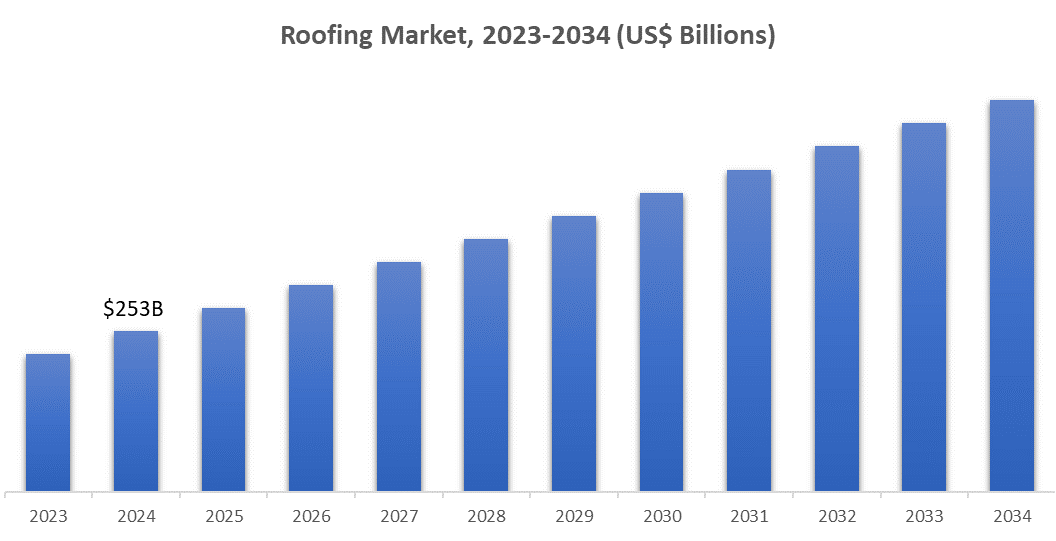
The global roofing market is expected to grow at a CAGR of 4.5% during the forecast period (2024-2034). The market size was valued at US$ 242.3 billion in 2023 and is projected to reach US$ 392.9 billion by 2034.
Roofing involves protecting a building's top structure, the roof, by covering it with materials that guard against the elements, like rain, wind, snow, and sunlight. Roofing plays a vital role in construction, safeguarding buildings from water damage and maintaining their strength and lifespan. Different types of roofing materials, such as asphalt shingles, metal, tiles, wood, and synthetic materials, have varying levels of durability, insulation, and aesthetic appeal.
Deciding on the type of roofing material is influenced by elements such as the weather, architectural layout, and financial resources. Besides providing protection, roofing also contributes to energy efficiency by improving insulation and regulating temperatures in the building, thanks to advanced materials.
Market Highlights
The market growth is influenced by several influential factors. Rapid Urbanization and infrastructure development, especially in developing countries, are leading to a rise in the need for housing, offices, and factories. Furthermore, the increased focus on eco-friendly and sustainable building methods is driving the adoption of advanced roofing materials, such as cool roofs and green roofs.
Renovation and remodelling projects, particularly in developed regions, also facilitate boosting the market growth. In the future, advancements in roofing materials, such as lightweight, long-lasting, and environmentally friendly options, will drive the market forward, as awareness of climate resilience and durable roofing solutions grows.
Source: Fatpos Global
Market Segmentation
Asphalt shingle roofing dominates the market due to its cost-effectiveness and ease of installation
The market is segmented based on Type into Bituminous Roofing, Asphalt Shingle, Metal Roofing, Concrete Roofing, Tile Roofing, and Others. Asphalt shingle roofing is the most popular type of roofing globally, particularly in North America. There are several reasons for its wide appeal, including its affordability, easy installation, and design versatility. Asphalt shingles are a more cost-effective option compared to materials like metal or tile roofing, making them a desirable choice for residential buildings.
Homeowners can achieve various aesthetic looks without spending a lot of money by choosing from different available styles and colours. Additionally, asphalt shingles are lightweight, which helps reduce stress on buildings. Their durability, along with advancements in weather-resistant and algae-resistant shingles, further solidifies their position. While metal and tile roofing is gaining popularity in some areas, asphalt shingles remain the preferred choice for a significant portion of the global market.
Residential roofing leads the market due to a larger consumer base and frequent replacement requirements
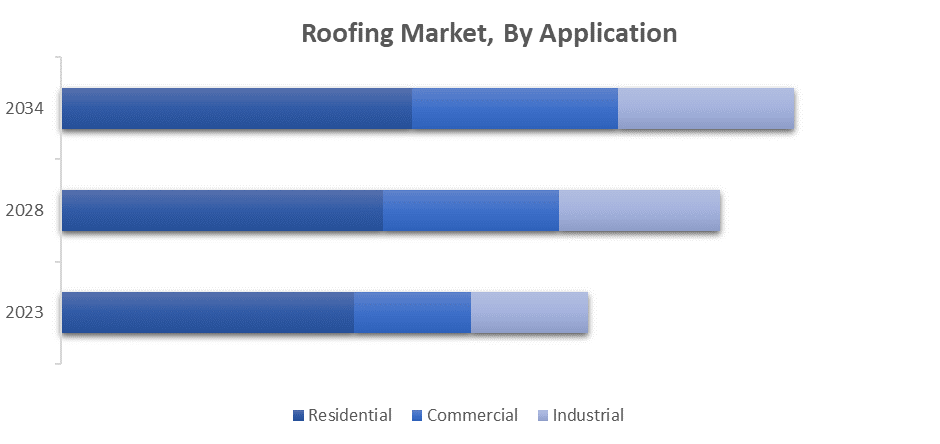
The market is segmented based on Application into Residential, Commercial, and Industrial. Residential roofing tends to hold the dominant market position owing to several compelling factors. The residential sector, which includes many homeowners and small apartment complexes, is the biggest group of consumers, creating a constant demand for roofing products and services. Residential roofs typically need to be replaced more often than commercial or industrial roofs, as a result of elements such as weather conditions and different maintenance methods.
This leads to a consistent demand for roofing repairs and replacements. Moreover, housing developments address a variety of requirements by providing a broad selection of choices to accommodate various financial constraints and personal tastes. Government incentives that encourage upgrades to energy-efficient roofing are also helping to drive market growth. The DIY market also plays a part, with numerous homeowners opting to take on roofing projects on their own, increasing demand.
Market Dynamics
Growth Drivers
Growing Urbanization and Infrastructure Development to Bolster Market Growth
Rapid urban development, especially in developing regions, is significantly increasing the need for roofing materials. With the increasing migration to urban areas, there is a growing demand for residential, commercial, and industrial structures. This trend is particularly noticeable in regions such as Asia, Africa, and Latin America, where economic advancement is driving significant development in infrastructure. The building of additional residential complexes, shopping centers, and factories is directly linked to a rise in the need for roofing supplies.
Moreover, governments in these regions are also making substantial investments in infrastructure expansion, such as low-cost housing initiatives, innovative urban centers, and transportation systems, which are driving growth in the roofing industry. Robust growth is anticipated in the roofing industry, linked to ongoing urbanization driving up construction activities on a global scale.
Increasing Focus on Energy-Efficient Buildings to Boost Adoption of Roofing Materials
The increasing focus on energy-efficient buildings is a key factor, driving the roofing market. With the growing environmental concerns and energy costs, sustainable construction practices are becoming more prevalent. There is a growing trend in the use of advanced roofing materials such as cool roofs and green roofs due to their ability to save energy. Cool roofs have a higher reflectivity, which results in more sunlight being reflected and less heat being absorbed, leading to reduced reliance on air conditioning and lower energy costs.
Green roofs, containing plants, enhance insulation and reduce the urban heat island effect. These roofing choices support global sustainability objectives and are backed by government incentives and construction regulations. Consequently, there is anticipated growth in the demand for energy-efficient roofing options, leading to advancements in technology and expansion of the market.
Restraints
Fluctuating Raw Material Prices May Result in Higher Costs and Lower Margins
Fluctuations in the costs of raw materials like asphalt, metal, and synthetic materials present a major obstacle for roofing manufacturers. The materials are essential for creating different roofing products, and any changes in their prices can significantly affect the manufacturing cost structure. For example, the cost of asphalt is highly influenced by the price of crude oil, which is famously volatile due to political conflicts and market forces.
Likewise, disruptions in the supply chain, modifications in trade policies, or fluctuations in worldwide demand can impact metal prices. Price changes can impact profit margins for manufacturers, leading them to either bear the costs or transfer them to consumers, which could lower demand. As a result, it is vital to control raw material expenses in order to sustain profitability in the roofing sector.
Recent Developments
- In 2023, Atlas Roofing Corporation launched the StormMaster Shake, a high-performance shingle designed to withstand extreme weather conditions, including wind and impact. The company also expanded its polyiso roofing insulation production capacity at its manufacturing facility in Meridian, Mississippi, to meet increasing market demand.
- During 2023-24, GAF Materials Corporation introduced Timberline Solar, the first nailable solar shingle, blending roofing and solar energy generation in a single product. This innovation supports GAF's push towards sustainable roofing solutions. The company also formed a joint venture with Standard Industries to launch GAF Energy, focusing on integrating solar solutions into roofing products and aiming to revolutionize residential solar energy adoption.
- In 2023-24, CertainTeed (Saint-Gobain) introduced the Presidential Shake IR, an impact-resistant shingle that provides enhanced durability and aesthetic appeal, catering to areas prone to severe weather.
- In the same timeframe, Tamko launched the Titan XT line of shingles featuring AnchorLock™ layer technology, which provides enhanced wind resistance and durability. The company expanded its production capacity with a new manufacturing line in Frederick, Maryland, to meet the rising demand for its roofing products.
- Lastly, in 2023-24, Johns Manville (Berkshire Hathaway Inc.) introduced the GlasKap CR G, a cap sheet designed for cool roofing systems, which reflects more sunlight and helps reduce building cooling costs.
Key Players
- Owens Corning
- Atlas Roofing Corporation
- GAF Materials Corporation
- CertainTeed (Saint-Gobain)
- TAMKO Building Products LLC
- Johns Manville (Berkshire Hathaway Inc.)
- IKO Industries Ltd.
- Firestone Building Products Company, LLC
- Carlisle Companies Incorporated
- Braas Monier Building Group
- Etex Group
- Sika AG
- Boral Limited
- Hindalco
- Crown Roof Tiles
- Other Prominent Players (Company Overview, Business Strategy, Key Product Offerings, Financial Performance, Key Performance Indicators, Risk Analysis, Recent Development, Regional Presence, SWOT Analysis)
Regional Analysis
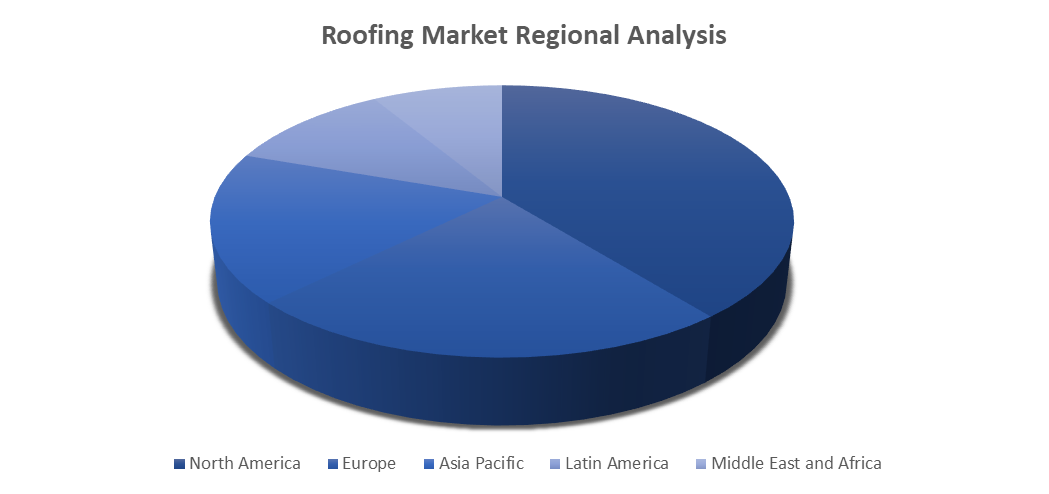
Global Roofing Market is segmented based on regional analysis into five major regions: North America, Latin America, Europe, Asia Pacific and the Middle East and Africa.
North America is the dominant market player in the global roofing industry due to its strong construction sector, high need for energy-efficient roofs, and strict building regulations. The increased use of innovative roofing materials, such as cool roofs and solar-integrated solutions, in the region is a result of its commitment to sustainable building practices.
The United States, in particular, plays a significant role, fueled by high demand from home renovation projects, government rewards for energy-efficient structures, and a thriving commercial building industry. Moreover, the mature market in North America is enhanced by substantial investments in infrastructure development and the existence of top roofing manufacturers, which strengthen its position as a leader in the global roofing market.
Nonetheless, Europe, Asia-Pacific, Latin America, and the Middle East & Africa are all collectively experiencing substantial market growth. Europe is propelled by a significant emphasis on energy-efficient and environmentally friendly roof options, backed by governmental regulations and incentives. The Asia-Pacific region is experiencing fast expansion as a result of urbanization and infrastructure development, particularly in China and India, where construction projects are flourishing.
Latin America and the Middle East & Africa are up-and-coming markets, experiencing growth due to rising construction activities and infrastructure projects. Nevertheless, these areas encounter obstacles like varying costs of raw materials and economic instabilities, which could influence market behaviour.
Market is further segmented by region into:
- North America Market Size, Share, Trends, Opportunities, Y-o-Y Growth, CAGR – United States and Canada
- Latin America Market Size, Share, Trends, Opportunities, Y-o-Y Growth, CAGR – Mexico, Argentina, Brazil, and Rest of Latin America
- Europe Market Size, Share, Trends, Opportunities, Y-o-Y Growth, CAGR – United Kingdom, France, Germany, Italy, Spain, Belgium, Hungary, Luxembourg, Netherlands, Poland, NORDIC, Russia, Turkey, and Rest of Europe
- Asia Pacific Market Size, Share, Trends, Opportunities, Y-o-Y Growth, CAGR – India, China, South Korea, Japan, Malaysia, Indonesia, New Zealand, Australia, and Rest of APAC
- Middle East and Africa Market Size, Share, Trends, Opportunities, Y-o-Y Growth, CAGR – North Africa, Israel, GCC, South Africa, and Rest of MENA
Market Scope and Segments
|
ATTRIBUTE |
DETAILS |
|
Study Period |
2018-2034 |
|
Base Year |
2023 |
|
Forecast Period |
2024-2034 |
|
Historical Period |
2019-2022 |
|
Growth Rate |
CAGR of 4.5% from 2024-2034 |
|
Unit |
Value (US$ Billion) |
|
Segmentation |
Main Segments List |
|
By Type |
|
|
By Roof Type |
|
|
By Application |
|
|
By Region |
|
Frequently Asked Questions (FAQ):
The global roofing market size was valued at US$ 242.3 billion in 2023 and is projected to reach the value of US$ 392.9 billion in 2034, exhibiting a CAGR of 4.5% during the forecast period.
The market encompasses the production, distribution, and installation of roofing materials used to cover and protect buildings. It includes a wide range of products, such as asphalt shingles, metal roofing, tiles, slate, and others. The market is driven by factors like construction activity, aging infrastructure, and consumer preferences for durability, energy efficiency, and aesthetics.
The Asphalt Shingle and Residential segment accounted for the largest market share.
Key players in the global roofing market include Owens Corning, Atlas Roofing Corporation, GAF Materials Corporation, CertainTeed (Saint-Gobain), TAMKO Building Products LLC, Johns Manville (Berkshire Hathaway Inc.), IKO Industries Ltd., Firestone Building Products Company, LLC, Carlisle Companies Incorporated, Braas Monier Building Group, Etex Group, Sika AG, Boral Limited, Hindalco, Crown Roof Tiles and Other Prominent Players.
The market is driven by factors such as increasing construction activity, demand for energy-efficient roofs, aging infrastructure, natural disasters, and government incentives.
 Select License Type


.png)


