


Air Cargo Market Research 2035
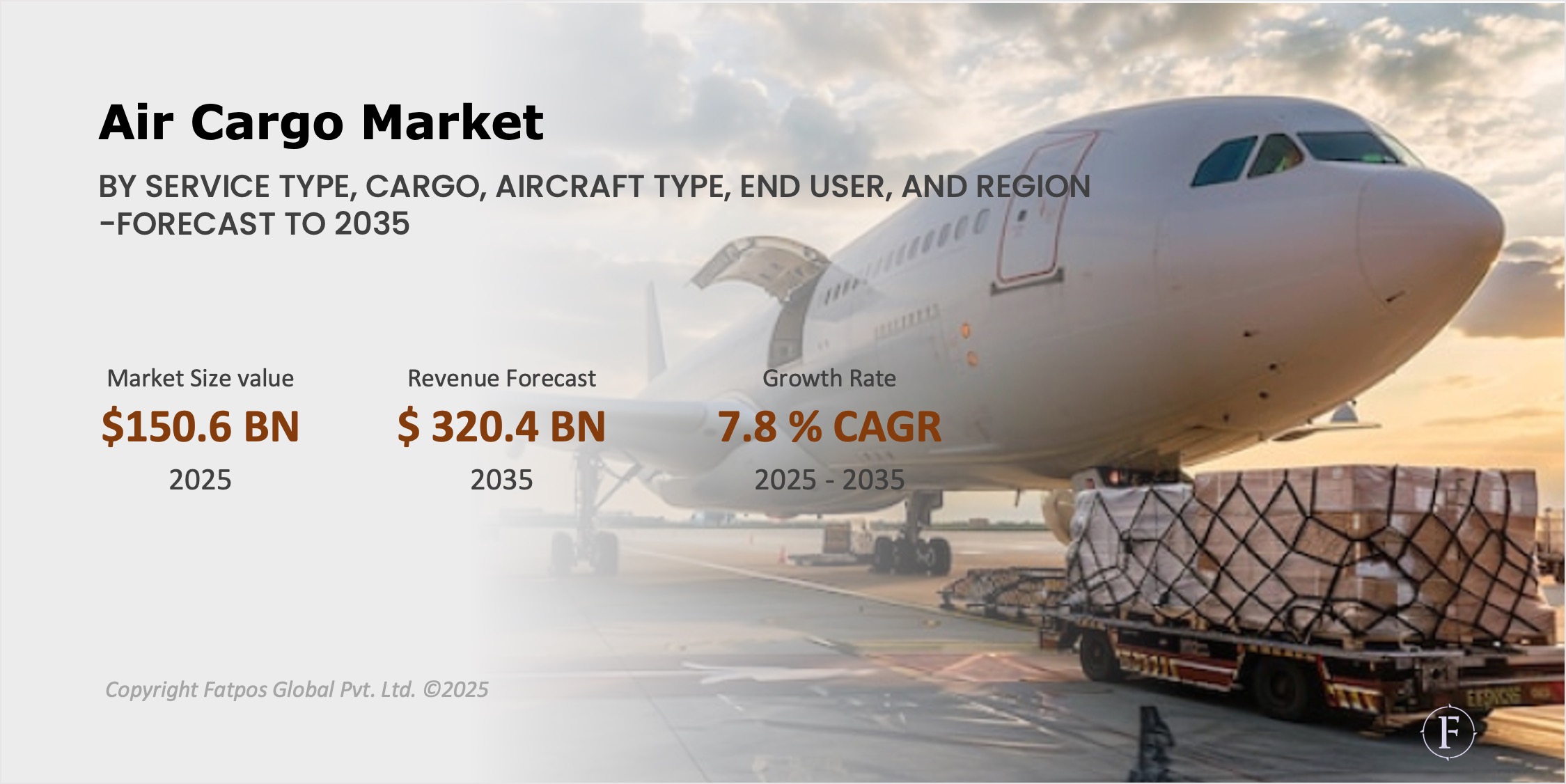
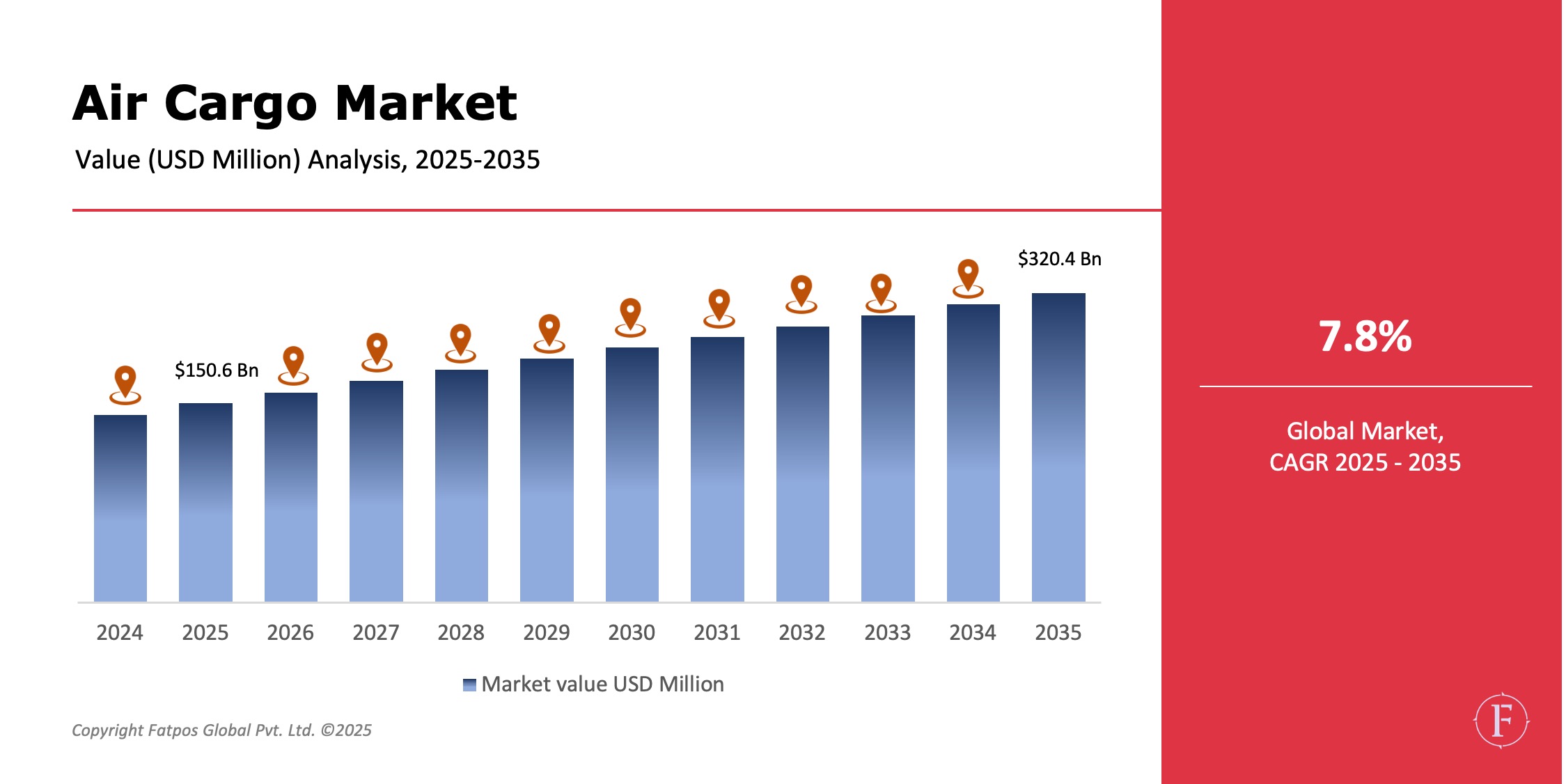
The Air Cargo Market was valued at USD 150.6 billion in 2025 and is projected to reach USD 320.4 billion by 2035, registering a CAGR of 7.8% during the forecast period. Market growth is supported by the expansion of global e-commerce, rising demand for time-critical and high-value goods transportation, increasing pharmaceutical and perishable shipments, and continued globalization of supply chains.
The air cargo industry plays a critical role in global trade by enabling rapid cross-border movement of goods, supporting just-in-time manufacturing, healthcare supply chains, and high-value logistics, while contributing significantly to aviation, trade facilitation, and economic activity.
Product Overview
Air cargo services involve the transportation of goods via dedicated freighter aircraft or the belly hold of passenger aircraft. These services support a wide range of industries requiring speed, reliability, and global connectivity. By service type, the market includes express cargo for time-definite deliveries, general cargo for standard commercial goods, and special cargo covering pharmaceuticals, perishables, live animals, and hazardous materials.
By cargo type, air freight is widely used for perishable food products, temperature-sensitive pharmaceuticals, high-value electronics, automotive components, and aerospace parts. The sector serves manufacturers, retailers, e-commerce platforms, healthcare providers, and industrial enterprises that prioritize speed, security, and supply chain resilience.
Key Takeaways
- The Air Cargo Market is projected to grow at approximately 7.8% CAGR through 2035.
- Express and special cargo segments account for the largest revenue share.
- Growth in e-commerce and pharmaceuticals is a primary demand driver.
- Asia-Pacific is the fastest-growing regional market.
- Manufacturing and retail & e-commerce dominate end-user demand.
- Digitalization and cold-chain logistics are key industry trends.
Market Dynamics
Drivers
Expansion of global e-commerce has significantly increased demand for fast and reliable air cargo services, particularly for cross-border and time-definite deliveries. Growth in pharmaceutical manufacturing and distribution, including vaccines and biologics, has further strengthened demand for temperature-controlled air freight solutions. Increasing globalization of manufacturing and reliance on just-in-time inventory models continue to drive the need for rapid cargo movement across regions.
Air cargo also benefits from rising trade in high-value and lightweight goods such as electronics and precision components, where speed and security outweigh transportation costs. Continued investment in airport cargo infrastructure and freighter fleet expansion supports long-term market growth.
Restrictions
High operating costs associated with air freight, including fuel price volatility, aircraft maintenance, and airport handling charges, act as a key restraint for the market. Compared to sea and rail transport, air cargo remains a premium logistics option, limiting its use for low-value or bulk commodities.
Capacity constraints during periods of strong passenger traffic recovery, coupled with regulatory requirements related to security, customs, and emissions, increase operational complexity. Environmental concerns related to carbon emissions are also placing pressure on the industry to improve fuel efficiency and adopt sustainable aviation practices.
Opportunities
Growth in cold-chain logistics presents significant opportunities for the air cargo market, particularly for pharmaceuticals, fresh food, and biotechnology products. Advancements in temperature-controlled containers, real-time monitoring, and digital tracking enhance service reliability and expand addressable demand.
Digitalization of air cargo operations, including e-air waybills, automated handling systems, and AI-based demand forecasting, improves efficiency and transparency across the value chain. Emerging markets in Asia-Pacific, Latin America, and the Middle East offer strong growth potential due to rising trade volumes, expanding manufacturing bases, and airport infrastructure development.
Challenges
Managing capacity balance between passenger belly cargo and dedicated freighter operations remains a challenge, particularly during demand fluctuations. Compliance with evolving security regulations, customs procedures, and international trade requirements increases administrative burden for operators.
Sustainability pressures require airlines and logistics providers to invest in fuel-efficient aircraft, sustainable aviation fuels, and carbon reduction initiatives, increasing capital expenditure. Additionally, competition from alternative logistics modes for non-urgent shipments continues to influence pricing and service mix.
Air Cargo Market Trends
The air cargo market is undergoing structural changes driven by digitalization, sustainability, and evolving trade patterns. Increased adoption of dedicated freighter aircraft reflects long-term confidence in cargo demand independent of passenger traffic. Expansion of cold-chain capabilities and pharmaceutical-focused logistics corridors is reshaping network planning.
Digital tools such as e-documentation, cargo visibility platforms, and predictive analytics are improving operational efficiency and customer experience. Sustainability initiatives, including fleet modernization and sustainable aviation fuel adoption, are gaining priority as regulators and customers emphasize emissions reduction. Asia-Pacific continues to attract investment as a global manufacturing and logistics hub.
Key Players in the Global Air Cargo Industry
- DHL Aviation
- FedEx Corporation
- United Parcel Service (UPS)
- Cargolux Airlines
- Korean Air Cargo
- Lufthansa Cargo
- Qatar Airways Cargo
- Emirates SkyCargo
- Cathay Cargo
- Singapore Airlines Cargo
- Atlas Air Worldwide
Regional & Country Analysis
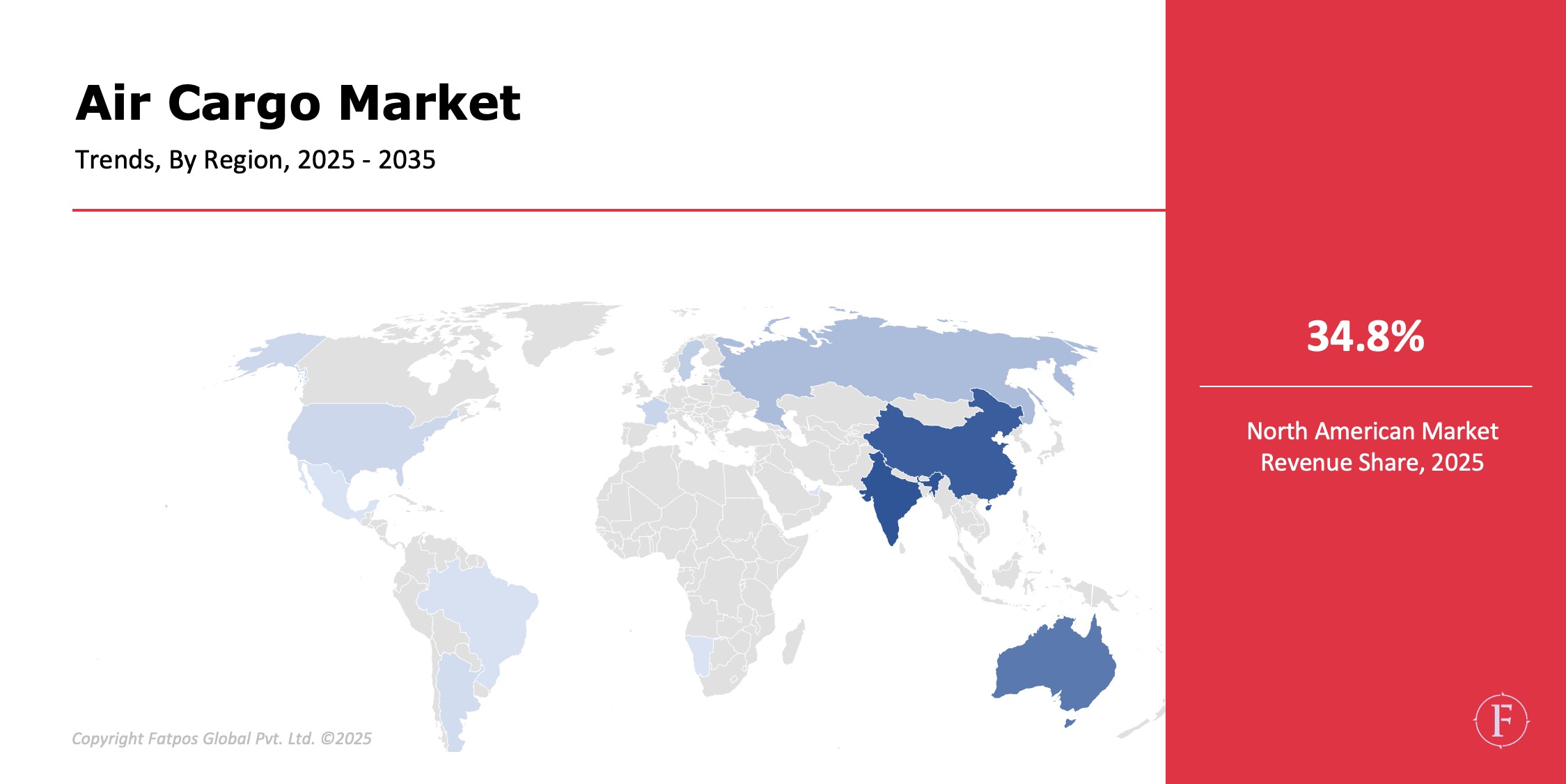
North America represents a major share of the global air cargo market, supported by strong e-commerce activity, integrated express networks, and major logistics hubs in the United States. Europe maintains a significant position driven by intra-regional trade, pharmaceutical logistics, and established cargo airports in Germany, France, and the Netherlands.
Asia-Pacific is the fastest-growing region, supported by manufacturing expansion in China, India, and Southeast Asia, rising cross-border e-commerce, and large-scale investments in airport cargo infrastructure. Latin America shows steady growth through exports of perishables and industrial goods, while the Middle East & Africa benefits from strategic hub positioning, trade corridors, and investments by Gulf carriers.
Segmentation Highlights
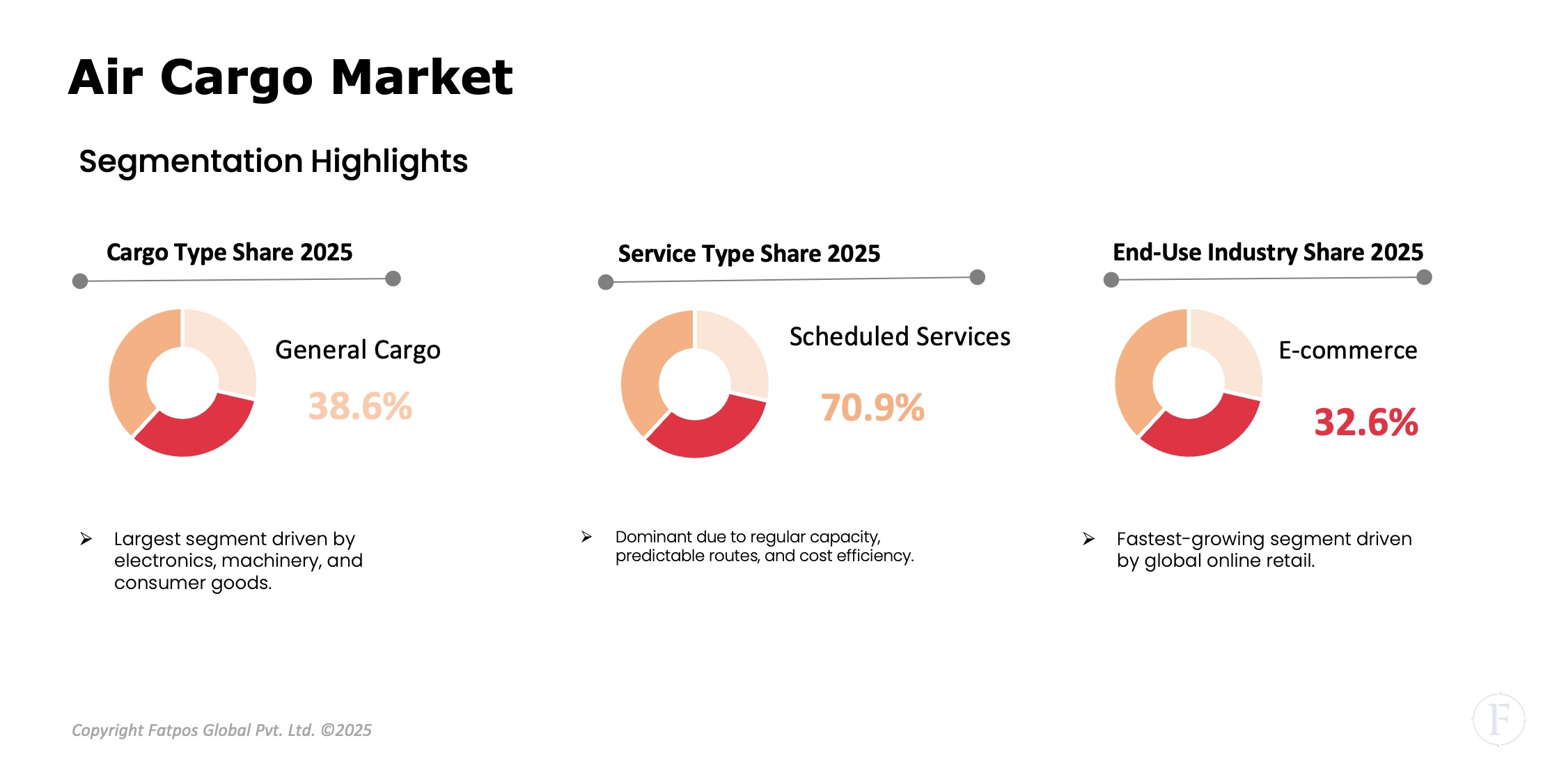
By service type, express cargo accounts for the largest share due to strong demand from e-commerce and time-critical shipments, followed by special cargo driven by pharmaceuticals and perishables. General cargo continues to serve a broad range of industrial applications.
By end user, retail & e-commerce and manufacturing together represent over 55% of total demand, supported by global supply chains and rapid fulfillment requirements. Healthcare demand has increased steadily, supported by growth in pharmaceutical production and distribution.
Report Key Elements
|
ATTRIBUTES |
DETAILS |
|
Study Period |
2019–2035 |
|
Base Year |
2024 |
|
Forecast Period |
2025–2035 |
|
Market Size by 2035 |
USD 320.4 billion |
|
Market CAGR |
7.8% |
|
By Service Type |
Express, General Cargo, Special Cargo |
|
By Cargo Type |
Perishable, Pharmaceuticals, Electronics, Automotive, Others |
|
By Aircraft Type |
Freighter Aircraft, Belly Cargo (Passenger Aircraft) |
|
By End User |
Manufacturing, Retail & E-commerce, Healthcare, Automotive |
|
By Region |
North America, Europe, Asia-Pacific, Latin America, Middle East & Africa |
|
Air Cargo Market: Key Players |
DHL Aviation, FedEx Corporation, United Parcel Service (UPS), Cargolux Airlines, Korean Air Cargo |
Global Air Cargo Industry Instances
- Logistics providers expanded dedicated freighter fleets.
- Airports invested in automated cargo handling and cold-chain facilities.
- E-commerce platforms increased reliance on express air cargo services.
- Airlines adopted digital documentation and tracking systems.
Analyst Review
As per our Air Cargo market analysis report, the air cargo market is expected to record sustained growth over the forecast period, supported by e-commerce expansion, pharmaceutical logistics, and global trade requirements. While cost pressures and sustainability challenges persist, continued investment in freighter capacity, digital infrastructure, and cold-chain solutions is expected to strengthen long-term market fundamentals.
Frequently Asked Questions (FAQ):
Air cargo refers to the transportation of goods by aircraft through dedicated freighters or passenger aircraft belly capacity.
E-commerce expansion, pharmaceutical logistics, and global supply chain requirements.
Express and special cargo services.
Asia-Pacific.
Stable growth supported by trade, e-commerce, and logistics digitalization.
 Select License Type


.png)


