


AI in Energy Market Research, 2034
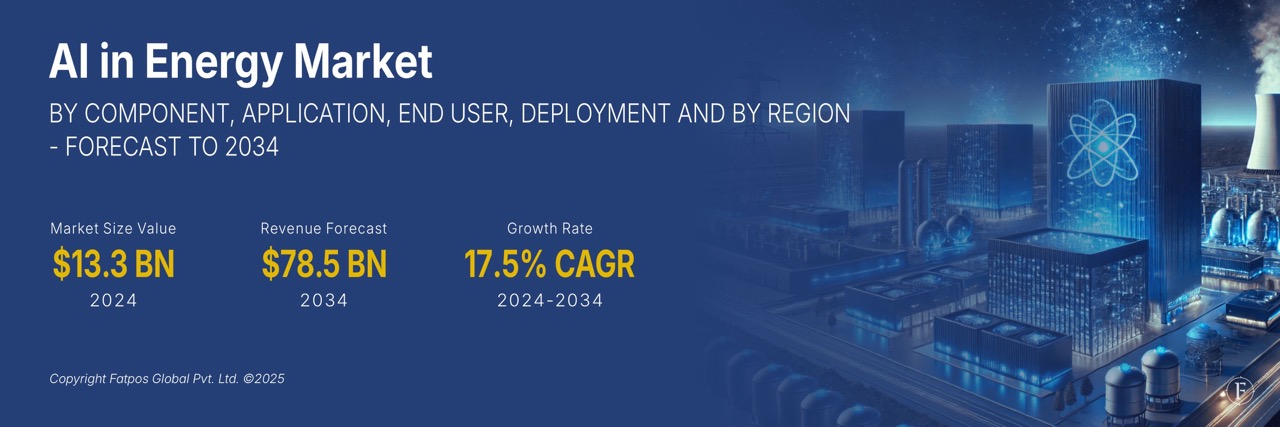
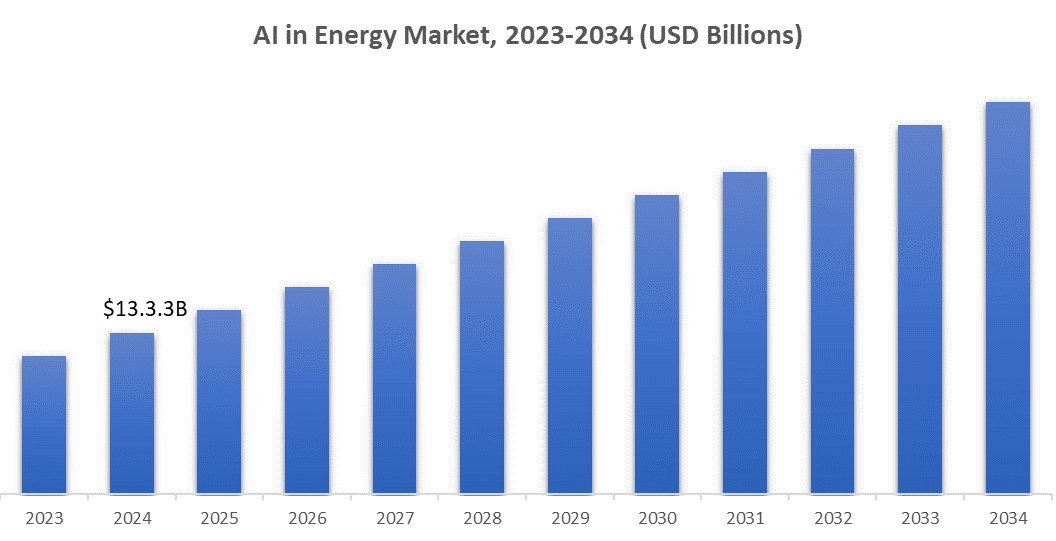
The global AI in energy market is anticipated to grow at a CAGR of 17.5% in the forecast period (2023-2034), with the market size valued at USD 13.3 billion in 2023 and projected to reach USD 78.5 billion by 2034.
Product Overview:
AI in the energy sector involves utilizing artificial intelligence technologies to improve the efficiency of energy production, distribution, and consumption. This encompasses applications such as equipment predictive maintenance, forecasting energy demand, integrating renewable energy, and managing smart grids. AI utilizes data analysis, machine learning, and automation to boost efficiency, lower expenses, improve safety, and diminish environmental effects. The technology assists energy firms in optimizing operations, incorporating renewable energy sources, and addressing the increasing demand for sustainable solutions. AI is revolutionizing the conventional energy sector into a smarter and more responsive system by tackling issues such as grid instability, variable demand, and equipment dependability.
Market Highlights:
The Global AI in Energy Market is projected to attain a total valuation of USD 78.5 billion, growing at a CAGR of 17.5% during the forecast period, fueled by the increasing demand for energy efficiency and sustainability, in addition to the ongoing developments in AI technology. The rise in applications of renewable energy in diverse sources such as solar and wind has generated a demand for better grid management and demand prediction. Public authorities and private entities are significantly investing in digital transformation projects, which in turn accelerates AI adoption. The energy industry's drive for automation, lowering costs, and predictive maintenance are additional contributing elements. Moreover, the surge in IoT devices and access to big data amplifies AI's potential, ensuring its essential function in addressing contemporary energy issues presently and going forward.
Market Segmentation:
The Solutions segment is expected to dominate the market, as it forms the backbone of various AI applications utilized in energy solutions
The market is segmented based on Components into Solutions, and Services. The solutions segment leads the market, with software platforms and AI algorithms at the heart of applications such as predictive maintenance, demand forecasting, and energy optimization. AI-driven solutions are essential for the supervision of renewable energy integration, improving grid reliability, and automating trading methods. The demand for data-driven insights and real-time analytics renders solutions essential. As investment in software innovation and scalable deployment models proliferates, solutions consistently dominate the market share, enhancing operational efficiencies throughout the energy sector.
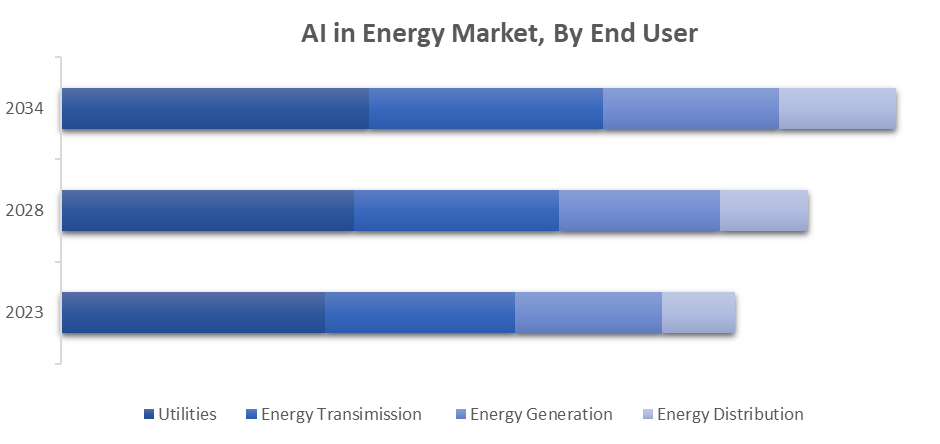
The Utilities segment is expected to dominate the market, driven by the growing need to modernize infrastructure and optimize resource allocation
The market is bifurcated based on the End User into Energy Transmission, Energy Generation, Energy Distribution, and Utilities. Utilities tend to lead the market owing to their comprehensive demand to upgrade infrastructure and improve overall operations. Utilities depend significantly on AI for managing the grid, predicting outages, and forecasting demand. As utility companies incorporate renewable energy sources, AI is crucial for maintaining grid stability and efficiency. Moreover, regulatory demands for improved sustainability and lower emissions force utilities to widely implement AI-driven technologies, establishing this as the largest sector.
Market Dynamics:
Growth Drivers
Global Focus on Renewable Energy Transition to Drive Market Growth
The global emphasis on reducing carbon emissions has increased the demand for AI technologies to combine and improve renewable energy systems. AI enhances the effectiveness of solar, wind, and various renewable sources by forecasting generation trends and overseeing storage systems. Governments globally are emphasizing renewable initiatives, with AI serving as a key facilitator to tackle issues such as variability and intermittency. This trend speeds up the implementation of AI in smart grids and energy trading systems, guaranteeing energy stability while enhancing sustainability objectives.
AI-Powered Smart Grid Technologies to Fuel Market Expansion and Drive Modernization
Artificial intelligence fuels advancement in the energy industry, particularly via smart grid innovations. Through the examination of large datasets from IoT devices, AI enhances grid dependability, decreases outages, and maximizes energy allocation. AI-enabled smart grids can actively identify and resolve issues, adjust to changes in demand, and improve the integration of renewable energy sources. These modernization initiatives are in line with energy sector objectives to ensure a continuous power supply while minimizing environmental effects, leading to considerable market expansion.
Restraints
Upskilling and Workforce Transition May Hinder Market Growth
The extensive applications of AI in the energy sector necessitate a workforce trained in AI, data science, and analytics skills. Training workers to handle and supervise AI systems is resource-draining and time-consuming, presenting a major challenge. Several organizations face severe challenges regarding the change and shortcomings in knowledge, ultimately hindering AI adoption. Additionally, the absence of uniform AI programs in energy sectors intensifies the problem, rendering workforce transition a significant obstacle. Tackling this limitation requires substantial investment in training initiatives, collaborations with educational organizations, and fostering a culture of ongoing education in the industry.
Recent Developments
- Siemens has accelerated its hydrogen ramp-up using generative artificial intelligence in 2024. New AI tools facilitate the design, engineering, and automation of hydrogen plants. The Hydrogen Plant Configurator will be available on the Siemens Xcelerator Marketplace by the end of 2024, while Comos AI and SFC Generation are expected to launch in early 2025. Siemens unveiled these AI tools at the Achema trade fair in Frankfurt, held from June 10 to 14, 2024.
- Sciendier Electroc and NVIDIA have collaborated to address the increasing efficiency and sustainability challenges posed by growing artificial intelligence demands. In December 2024, they introduced innovative solutions, including a cutting-edge data center reference design for liquid-cooled, high-density AI clusters with a maximum capacity of 132 kW per rack.
- GE Vernova has secured a three-year, $1 million project from the US Department of Energy to develop an AI Assistant for permitting and training in hydrogen deployment. This AI Assistant will focus on safe hydrogen handling, permitting, and training, prioritizing the safety of hydrogen development.
- ABB invested in Ndustrial in 2024 to accelerate decarbonization through AI-powered energy management technologies. This clean technology startup enhances ABB's digital and sustainable portfolio with energy optimization solutions.
- IBM partnered with the United Nations Development Programme in 2024 to develop two predictive AI models for energy and development in the Global South. The models include the Electricity Access Forecasting model and the Clean Energy Equity Index.
Key Players:
- Siemens AG
- Schneider Electric
- General Electric (GE)
- ABB Group
- IBM Corporation
- Google (DeepMind)
- Microsoft Corporation
- C3.ai
- Oracle Corporation
- Accenture
- Amazon Web Services (AWS)
- AutoGrid Systems
- SparkCognition
- Enel Group
- Baker Hughes
- Other Prominent Players (Company Overview, Business Strategy, Key Product Offerings, Financial Performance, Key Performance Indicators, Risk Analysis, Recent Development, Regional Presence, SWOT Analysis)
Regional Analysis
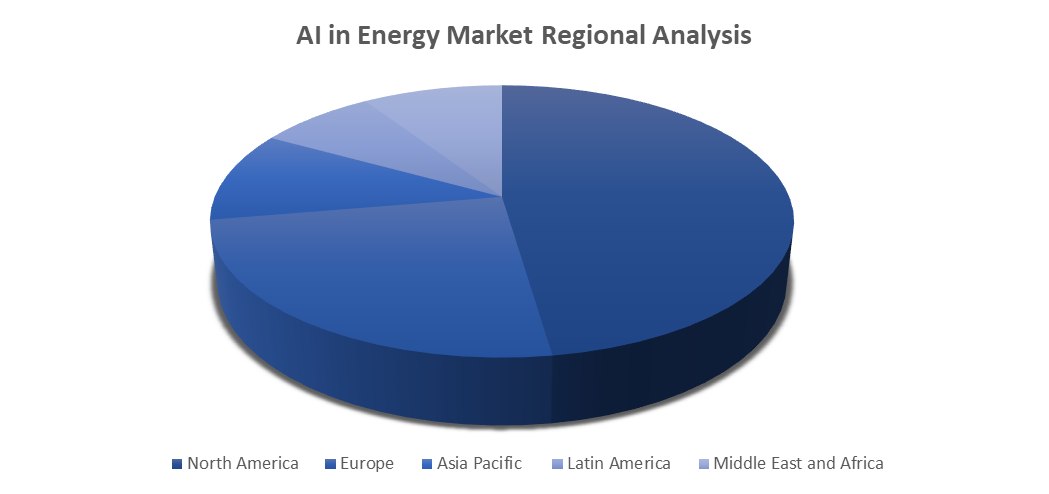
The global market is segmented based on regional analysis into five major regions: North America, Latin America, Europe, Asia Pacific, and the Middle East and Africa.
North America tends to dominate the market due to the ongoing investments in cutting-edge technologies and the extensive integration of AI in utilities. The region's existing infrastructure, along with government efforts to encourage smart grids and the incorporation of renewable energy, has led to considerable market expansion. Prominent AI firms and startups based in the U.S. have been playing a prominent role in fostering innovation and advancement, reinforcing North America's supremacy.
Europe follows the market closely, characterized by its strict regulations and bold renewable energy goals. The Asia-Pacific region has established itself as a formidable player owing to the swift industrial growth and governmental backing for clean energy projects, especially in China and India. At the same time, the Middle East and Africa, along with Latin America, are in the early phases, concentrating on updating infrastructure and incorporating AI to tackle particular energy issues.
AI in Energy Market is further segmented by region into:
- North America Market Size, Share, Trends, Opportunities, Y-o-Y Growth, CAGR – United States and Canada
- Latin America Market Size, Share, Trends, Opportunities, Y-o-Y Growth, CAGR – Mexico, Argentina, Brazil, and Rest of Latin America
- Europe Market Size, Share, Trends, Opportunities, Y-o-Y Growth, CAGR – United Kingdom, France, Germany, Italy, Spain, Belgium, Hungary, Luxembourg, Netherlands, Poland, NORDIC, Russia, Turkey, and Rest of Europe
- Asia Pacific Market Size, Share, Trends, Opportunities, Y-o-Y Growth, CAGR – India, China, South Korea, Japan, Malaysia, Indonesia, New Zealand, Australia, and Rest of APAC
- Middle East and Africa Market Size, Share, Trends, Opportunities, Y-o-Y Growth, CAGR – North Africa, Israel, GCC, South Africa, and Rest of MENA
Market Scope and Segments:
|
ATTRIBUTE |
DETAILS |
|
Study Period |
2018-2034 |
|
Base Year |
2023 |
|
Forecast Period |
2023-2034 |
|
Historical Period |
2019-2022 |
|
Growth Rate |
CAGR of 17.5% from 2023-2034 |
|
Unit |
Value (USD Billion) |
|
Segmentation |
Main Segments List |
|
By Component |
|
|
By Application |
|
|
By End User
|
|
|
By Deployment |
|
|
By Region |
|
Frequently Asked Questions (FAQ):
AI in Energy Market size was valued at USD 13.3 billion in 2023 and is projected to reach the value of USD 78.5 billion in 2034, exhibiting a CAGR of 17.5% during the forecast period.
AI in the Energy Market refers to the incorporation of artificial intelligence technologies, including machine learning and predictive analytics, within the energy industry to enhance energy generation, distribution, and usage. It includes a range of applications, such as predictive maintenance, energy optimization, and integration of renewable energy, to promote sustainability and efficiency.
The Solutions and Utilities segment accounted for the largest market share.
Key players in the market include Siemens AG, Schneider Electric, General Electric (GE), ABB Group, IBM Corporation, Google (DeepMind), Microsoft Corporation, (link unavailable), Oracle Corporation, Accenture, Amazon Web Services (AWS), AutoGrid Systems, SparkCognition, Enel Group, Baker Hughes. and Other Prominent Players.
The market is driven by factors such as increasing demand for energy efficiency, growing adoption of renewable energy sources, rising need for predictive maintenance, and advancements in AI and IoT technologies.
 Select License Type


.png)


