


Web Design and Development Market Research, 2034
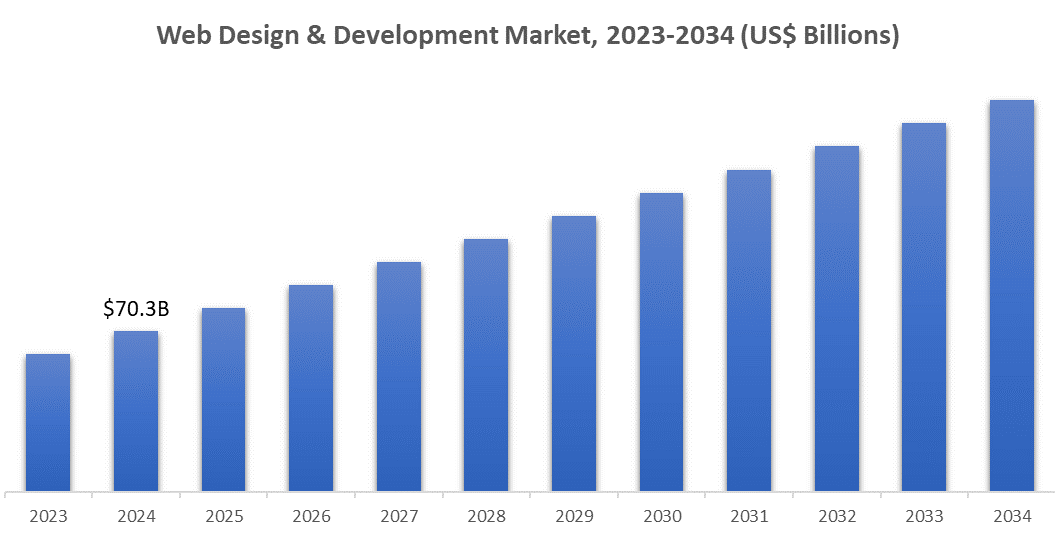
The global web design and development market is expected to grow at a CAGR of 8.2% during the forecast period (2024-2034). The market size was valued at US$ 65 billion in 2023 and is projected to reach US$ 154.5 billion by 2034.
Web Design and Development involves creating and maintaining websites and web applications. Web design focuses on the visual and user experience (UX) aspects, including layout, color schemes, typography, and overall aesthetics. The goal is to develop an intuitive and interactive interface that enhances user engagement and accessibility.
Web development, on the other hand, deals with the technical side, ensuring the functionality of the website, connecting databases and servers, and making sure it works seamlessly across all devices. This encompasses both front-end (client-side) and back-end (server-side) development. Together, web design and development ensure that websites are not only visually appealing but also functionally robust, meeting the needs of businesses, organizations, and users in a rapidly evolving digital world. This industry plays a critical role in online visibility, e-commerce, and digital interaction.
Market Highlights
The market growth is driven by several key factors, including the increasing reliance on digital platforms by businesses across various industries. The rise of e-commerce and online services has heightened the demand for robust web development to facilitate transactions and engage customers effectively.
Additionally, the growing use of mobile internet emphasizes the need for mobile-friendly and responsive designs. Emerging technologies such as AI, VR/AR, and IoT will further drive market growth by requiring more sophisticated and interactive web solutions. The ongoing digital transformation across multiple sectors ensures a steady demand for web design and development services.
Market Segmentation
Websites diverse use and interactive features label them as the dominant segment
The market is segmented based on Type into Websites, and Web Apps. Websites currently dominate the market, serving as the primary platform for businesses, organizations, and individuals to establish an online presence. They are essential for sharing information, showcasing products and services, and facilitating customer interaction. Websites act as the digital gateway, crucial for branding, marketing, and customer engagement.
While web apps are gaining importance for their interactive capabilities and task-specific functionalities, websites remain more prevalent due to their broad audience appeal and ease of creation and maintenance. Websites also play a key role in search engine optimization (SEO), attracting online traffic and enhancing visibility. As businesses continue to prioritize their online presence, the demand for website design and development remains strong, reinforcing their dominance in the market.
Large Enterprises Lead Due to Complex Digital Infrastructure and Substantial Budgets
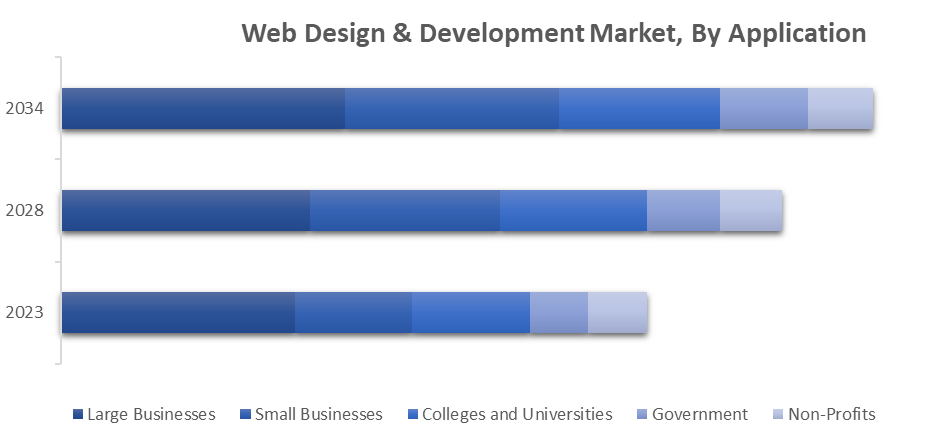
The market is segmented based on Application into Large Businesses, Small Businesses, Colleges and Universities, Government, and Non-Profits. Large enterprises currently lead the market due to their ability to invest in sophisticated and advanced web services. With substantial financial resources, they can fund customized platforms and maintain either in-house or outsourced development teams. Their complex digital infrastructures require robust web development to manage interconnected systems, databases, and applications.
Advanced online platforms are essential for data-driven decision-making, enabling large enterprises to gather and analyze vast amounts of data. Custom solutions are needed to optimize customer interactions, manage inventory, payments, and orders within intricate CRM systems, and support complex e-commerce operations. Large businesses are also at the forefront of adopting emerging technologies, dedicating resources to research and development to drive innovation.
Market Dynamics
Growth Drivers
Growth in E-Commerce to Provide Consistent Market Growth Opportunities
The rapid growth of the e-commerce industry significantly influences the web design and development market. As more consumers turn to online shopping, businesses must enhance their digital presence with advanced, user-friendly websites that offer seamless shopping experiences. This trend has led to increased demand for customized web solutions, including mobile-friendly designs, secure payment gateways, and integrated inventory management systems.
Additionally, e-commerce platforms are placing greater emphasis on website speed, security, and user interface to boost conversion rates and customer loyalty. The intense competition in the e-commerce sector underscores the need for businesses to differentiate themselves with unique and engaging website designs, driving growth in the web development industry.
Rising Focus on User Experience to Boost Market Growth
Businesses are increasingly prioritizing User Experience (UX) to enhance customer satisfaction and engagement. As consumers become more discerning, they demand websites that are easy to navigate, responsive, and visually appealing. This shift has led to greater demand for sophisticated web design services that prioritize UX principles such as intuitive navigation, faster load times, and personalized content.
Companies are adopting user-centered design approaches to create websites that not only attract visitors but also convert them into loyal customers. The growing importance of UX in digital strategies is pushing web development companies to innovate and offer solutions that improve user satisfaction, driving market growth.
Restraints
High Competition and Market Saturation May Create Challenges
The web design and development market faces increasing competition as more companies offer similar services. This saturation creates challenges for businesses trying to differentiate themselves, leading to price competition that can erode profit margins. As the market becomes more crowded, the barriers to entry lower, resulting in an oversupply of services. Companies often find themselves competing on price rather than quality, which can reduce profitability and stifle innovation.
Additionally, the rise of DIY website builders and templates has intensified competition, allowing smaller businesses and individuals to enter the market. The intense competition and market saturation present significant challenges for companies aiming to stay competitive and achieve long-term growth.
Recent Developments
- In 2023-24, GoDaddy Inc. introduced new tools aimed at helping small businesses establish an online presence, including enhanced website-building capabilities integrated with e-commerce features to streamline the process for users. The company successfully partnered with Microsoft to integrate Microsoft 365 services with GoDaddy's offerings, enabling small businesses to manage their online presence.
- In 2023-24, Adobe Systems Incorporated launched the next generation of its Creative Cloud suite, which includes enhanced features for web design, such as improved AI-powered tools in Adobe XD and new collaboration features in Adobe Dreamweaver. The company acquired Figma, a leading web design collaboration tool, to expand its capabilities in cloud-based design and collaboration, further strengthening its position in the web design space.
- In 2023-24, Wix.com Ltd. unveiled Wix Studio, a new platform aimed at professional web developers, offering advanced customization options and integration capabilities. The company announced its partnership with Google, integrating Google's AI tools to enhance website personalization features, allowing users to create more tailored and dynamic websites.
- In 2023-24, Squarespace, Inc. launched a new suite of e-commerce tools, including advanced inventory management and multi-channel selling options, catering to businesses looking to expand their online stores.
- In 2023-24, Shopify expanded its web development tools with the introduction of Shopify Frontend, a new framework that allows developers to create custom storefronts with greater flexibility.
Key Players
- GoDaddy Inc.
- Adobe Systems Incorporated
- com Ltd.
- Squarespace, Inc.
- Shopify Inc.
- Automattic Inc. (WordPress.com)
- Weebly (Square, Inc.)
- Microsoft Corporation
- HubSpot, Inc.
- Hibu Inc.
- WebFX
- HTMLPanda
- Cyber-Duck Ltd.
- Blue Fountain Media
- BigCommerce
- Other Prominent Players (Company Overview, Business Strategy, Key Product Offerings, Financial Performance, Key Performance Indicators, Risk Analysis, Recent Development, Regional Presence, SWOT Analysis)
Regional Analysis
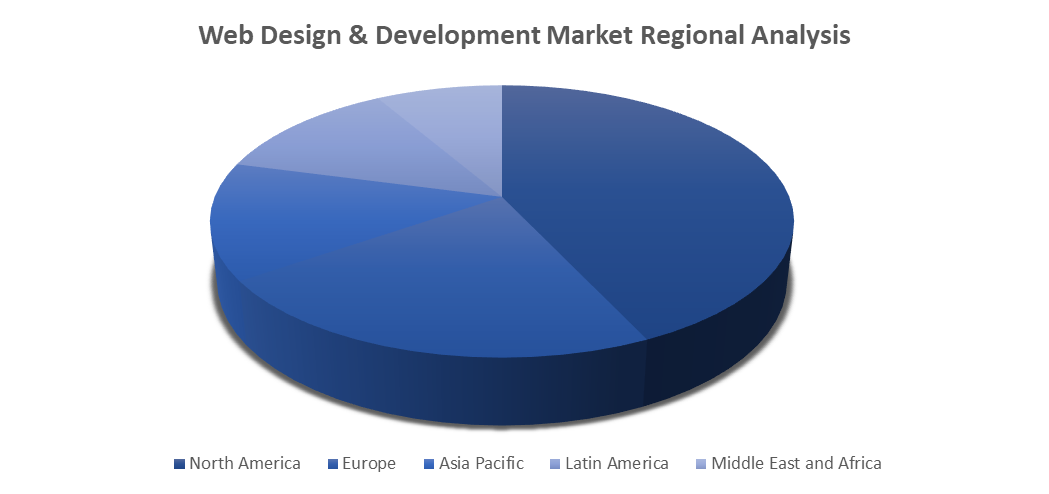
The global web design and development market is segmented based on regional analysis into five major regions: North America, Latin America, Europe, Asia Pacific, and the Middle East and Africa.
North America frequently takes the lead in the global market arena, thanks to its advanced infrastructure, strong consumer buying power, and major technological advancements. The area gains advantages from a thriving economy, strong R&D efforts, and quick acceptance of new technologies. A well-established regulatory system and a competitive market environment attract large companies and investments, further reinforcing its dominance.
Latin America, Europe, Asia Pacific, the Middle East, and Africa all display varied market dynamics when combined.
Europe's advantage lies in robust regulatory frameworks and focus on sustainability, while Asia Pacific's growth is propelled by fast industrialization and substantial consumer markets.
Latin America, the Middle East, and Africa are contributing to the development of emerging markets and the rise in investments. United, these areas present a combination of growth prospects and obstacles that counterbalance the worldwide market scenario.
Impact of Covid-19 on the Market
The market experienced a major influence from the COVID-19 pandemic as it hastened the move towards digital transformation. With the shift to remote work and online operations, there was a significant increase in the need for strong, easy-to-use websites. Businesses focused on improving their online presence, which resulted in more funds being spent on web design and development services.
During this time, there was also an increase in online shopping, requiring more advanced website solutions and improvements to user experience and user interface. On the contrary, certain smaller companies experienced financial difficulties which affected their capacity to fund web initiatives. In general, the pandemic accelerated digital expansion, altering market patterns and promoting advancements in web design and development.
Market is further segmented by region into:
- North America Market Size, Share, Trends, Opportunities, Y-o-Y Growth, CAGR – United States and Canada
- Latin America Market Size, Share, Trends, Opportunities, Y-o-Y Growth, CAGR – Mexico, Argentina, Brazil, and Rest of Latin America
- Europe Market Size, Share, Trends, Opportunities, Y-o-Y Growth, CAGR – United Kingdom, France, Germany, Italy, Spain, Belgium, Hungary, Luxembourg, Netherlands, Poland, NORDIC, Russia, Turkey, and Rest of Europe
- Asia Pacific Market Size, Share, Trends, Opportunities, Y-o-Y Growth, CAGR – India, China, South Korea, Japan, Malaysia, Indonesia, New Zealand, Australia, and Rest of APAC
- Middle East and Africa Market Size, Share, Trends, Opportunities, Y-o-Y Growth, CAGR – North Africa, Israel, GCC, South Africa, and Rest of MENA
Market Scope and Segments:
|
ATTRIBUTE |
DETAILS |
|
Study Period |
2018-2034 |
|
Base Year |
2023 |
|
Forecast Period |
2024-2034 |
|
Historical Period |
2019-2022 |
|
Growth Rate |
CAGR of 8.2% from 2024-2034 |
|
Unit |
Value (US$ Billion) |
|
Segmentation |
Main Segments List |
|
By Type |
|
|
By Application |
|
|
By Region |
|
Frequently Asked Questions (FAQ):
The global web design and development market size was valued at US$ 65 billion in 2023 and is projected to reach the value of US$ 154.5 billion in 2034, exhibiting a CAGR of 8.2% during the forecast period.
The market encompasses services and technologies related to creating, designing, and maintaining websites. This market includes activities such as UI/UX design, web development, content management, and site optimization, catering to businesses and individuals seeking an effective online presence.
The Websites and Large Businesses segment accounted for the largest market share.
Key players in the web design and development market include GoDaddy Inc., Adobe Systems Incorporated, Wix.com Ltd., Squarespace, Inc., Shopify Inc., Automattic Inc. (WordPress.com), Weebly (Square, Inc.), Microsoft Corporation, HubSpot, Inc., Hibu Inc., WebFX, HTMLPanda, Cyber-Duck Ltd., Blue Fountain Media, BigCommerce and Other Prominent Players.
Key factors driving the market include the increasing demand for digital presence, e-commerce growth, technological advancements, and the need for enhanced user experiences.
 Select License Type


.png)


