


Life Insurance Market Research 2035
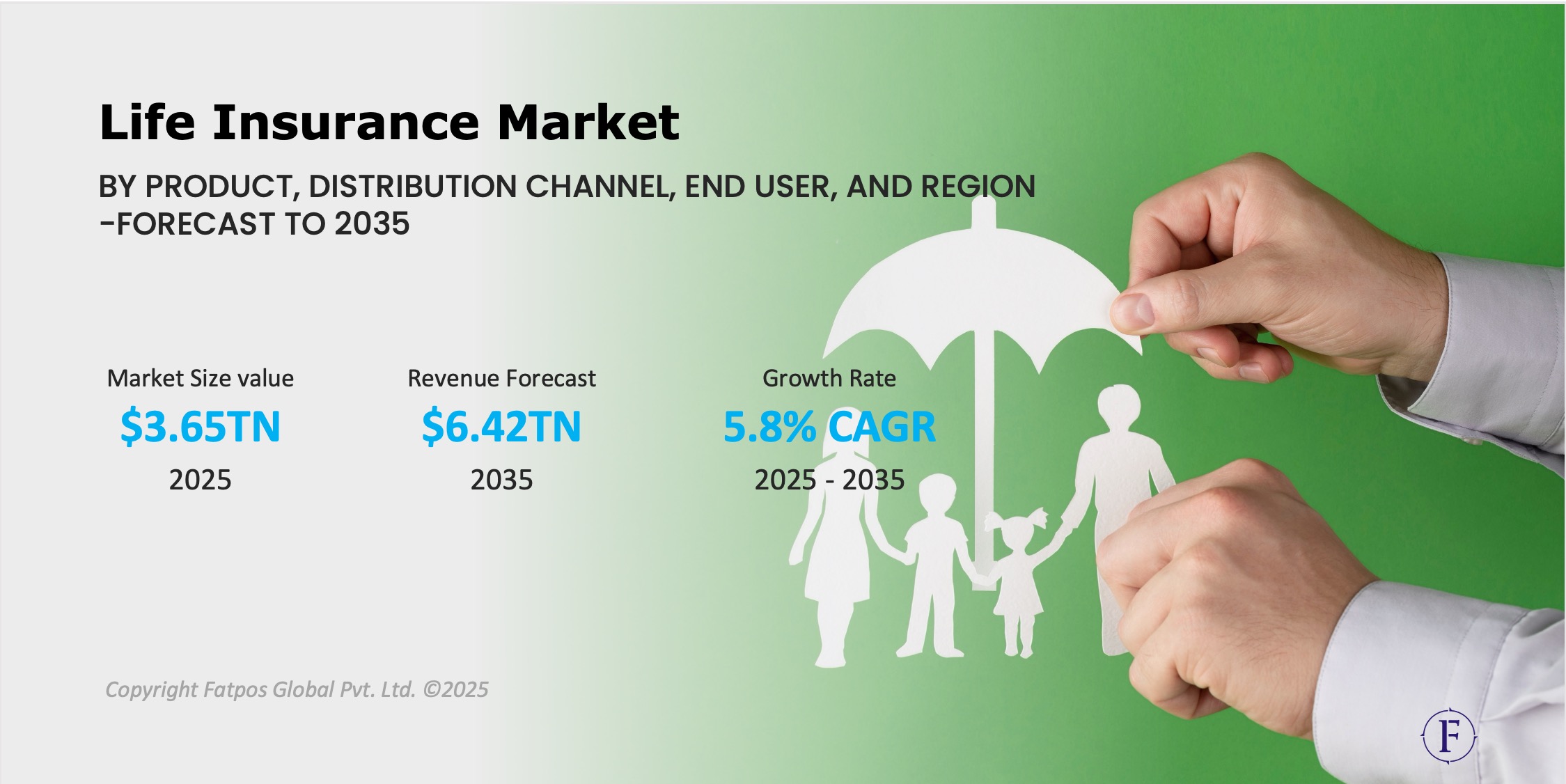
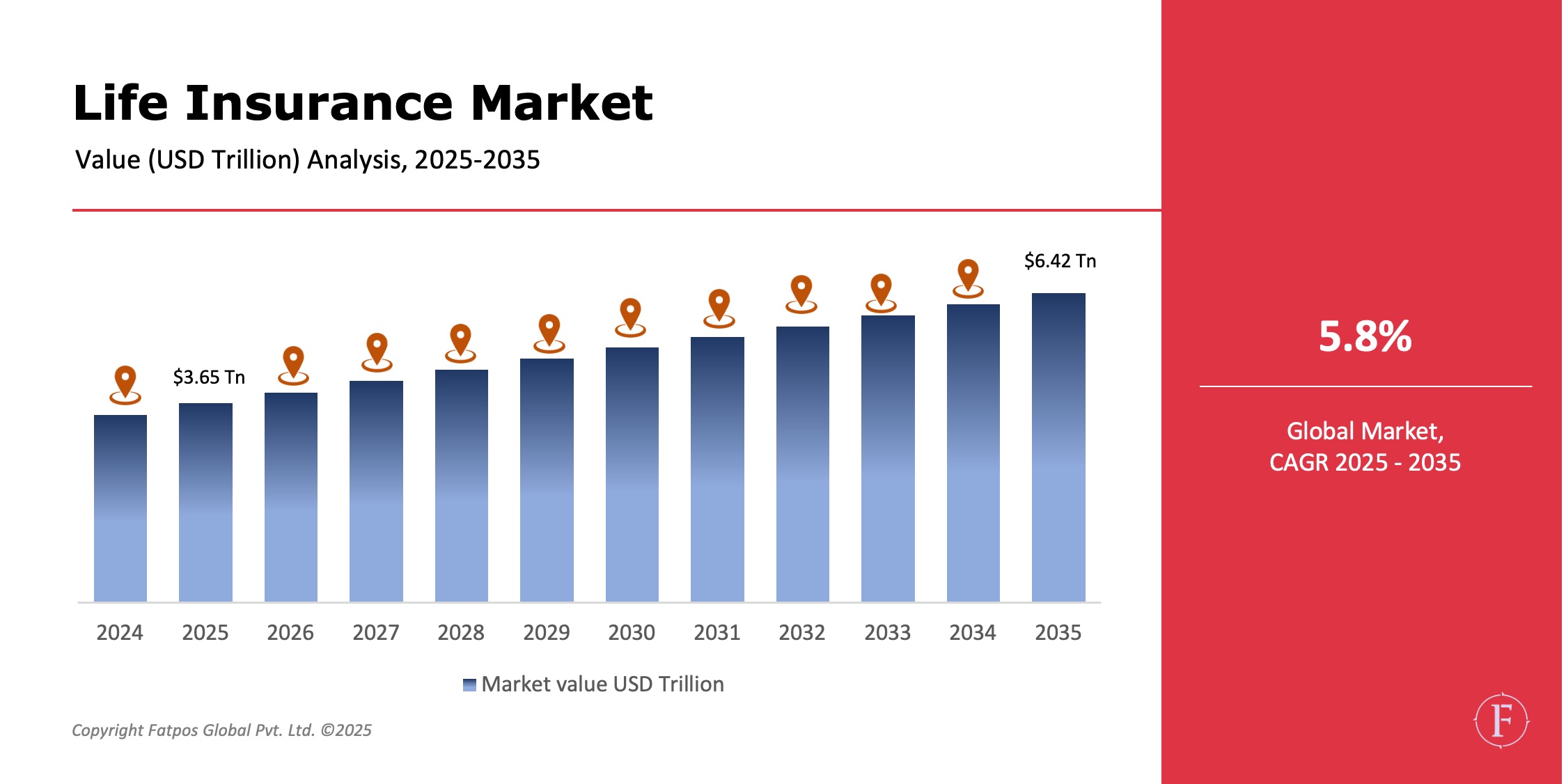
Life Insurance Market was valued at USD 3.65 trillion in 2025 and is projected to reach USD 6.42 trillion by 2035, registering a CAGR of 5.75% during the forecast period. Market growth is supported by rising awareness of financial protection, increasing middle-class population, growing demand for retirement planning solutions, and expansion of digital insurance platforms.
The life insurance industry plays a critical role in financial risk management by providing income protection, wealth transfer, and long-term savings solutions. It also contributes significantly to capital markets through long-term investments and supports financial stability across economies.
Product Overview
Life insurance refers to a financial contract between an insurer and a policyholder, wherein the insurer provides a death benefit or maturity payout in exchange for premium payments. These products are designed to provide financial security to beneficiaries and support long-term financial planning objectives.
By product type, the market includes term life insurance offering pure risk coverage, whole life insurance providing lifetime coverage with savings components, universal life insurance offering flexible premiums and benefits, and variable life insurance combining insurance with investment-linked returns.
Distribution channels include traditional agents and brokers, bancassurance partnerships, direct sales, and digital platforms. End users comprise individual policyholders seeking financial protection and corporate clients offering employee benefits and group insurance schemes.
Key Takeaways:
- The Life Insurance Market is projected to grow at approximately 5.8% CAGR through 2035.
- Term life insurance remains the largest segment due to affordability and simplicity.
- Digital channels are the fastest-growing distribution segment.
- Asia-Pacific represents the largest and fastest-growing regional market.
- Individuals account for the majority of policyholders globally.
- Integration of digital platforms and analytics is a key industry trend.
Market Dynamics
Drivers
Increasing demand for early disease detection and improved diagnostic accuracy is a primary Rising awareness regarding financial security and risk protection is a primary driver of life insurance adoption. Increasing life expectancy and changing demographic patterns are driving demand for retirement planning and long-term savings products. Growth in disposable incomes, particularly in emerging economies, is expanding the customer base for life insurance products.
Digital transformation in the insurance sector, including online policy issuance, automated underwriting, and AI-driven risk assessment, is improving accessibility and customer experience. Government initiatives promoting financial inclusion and insurance penetration further support market growth.
Restraints
Complex product structures and lack of financial literacy in certain regions limit customer understanding and adoption of life insurance products. High premium costs for certain policies can restrict access for lower-income populations.
Regulatory requirements and compliance frameworks vary across regions, increasing operational complexity for insurers. Additionally, low interest rate environments can impact returns on investment-linked insurance products, affecting product attractiveness.
Opportunities
Expansion of digital distribution channels presents significant opportunities for insurers to reach underserved populations and improve market penetration. Growth in microinsurance and customized insurance products tailored to specific demographic segments is expanding the addressable market.
Emerging markets in Asia-Pacific, Latin America, and Africa offer strong growth potential due to rising middle-class populations and increasing awareness of financial planning. Integration of advanced analytics and AI enables personalized product offerings and improved risk management.
Challenges
Maintaining customer trust and transparency in product offerings remains a key challenge for insurers. Managing long-term liabilities and ensuring adequate capital reserves requires effective risk management strategies.
The industry also faces challenges related to changing customer expectations, requiring continuous innovation in product design and service delivery. Competition from alternative financial products and investment options further influences market dynamics.
Life Insurance Market Trends
The Life Insurance market is experiencing rapid transformation driven by technological The life insurance market is evolving with increasing adoption of digital technologies and customer-centric solutions. Insurers are leveraging data analytics, artificial intelligence, and automation to streamline underwriting, claims processing, and customer engagement. Growth in digital platforms and mobile applications is enabling seamless policy management and enhancing accessibility.
Demand for flexible and personalized insurance products is increasing, particularly among younger consumers. Sustainability and ESG considerations are also influencing investment strategies of insurance companies. Asia-Pacific continues to lead market expansion due to high population density and growing insurance penetration.
Key Players in the Global Life Insurance Industry
- Allianz SE
- AXA Group
- Prudential Financial
- MetLife, Inc.
- China Life Insurance Company
- Ping An Insurance Group
- Manulife Financial
- Legal & General Group
- Aegon N.V.
- Zurich Insurance Group
Regional & Country Analysis
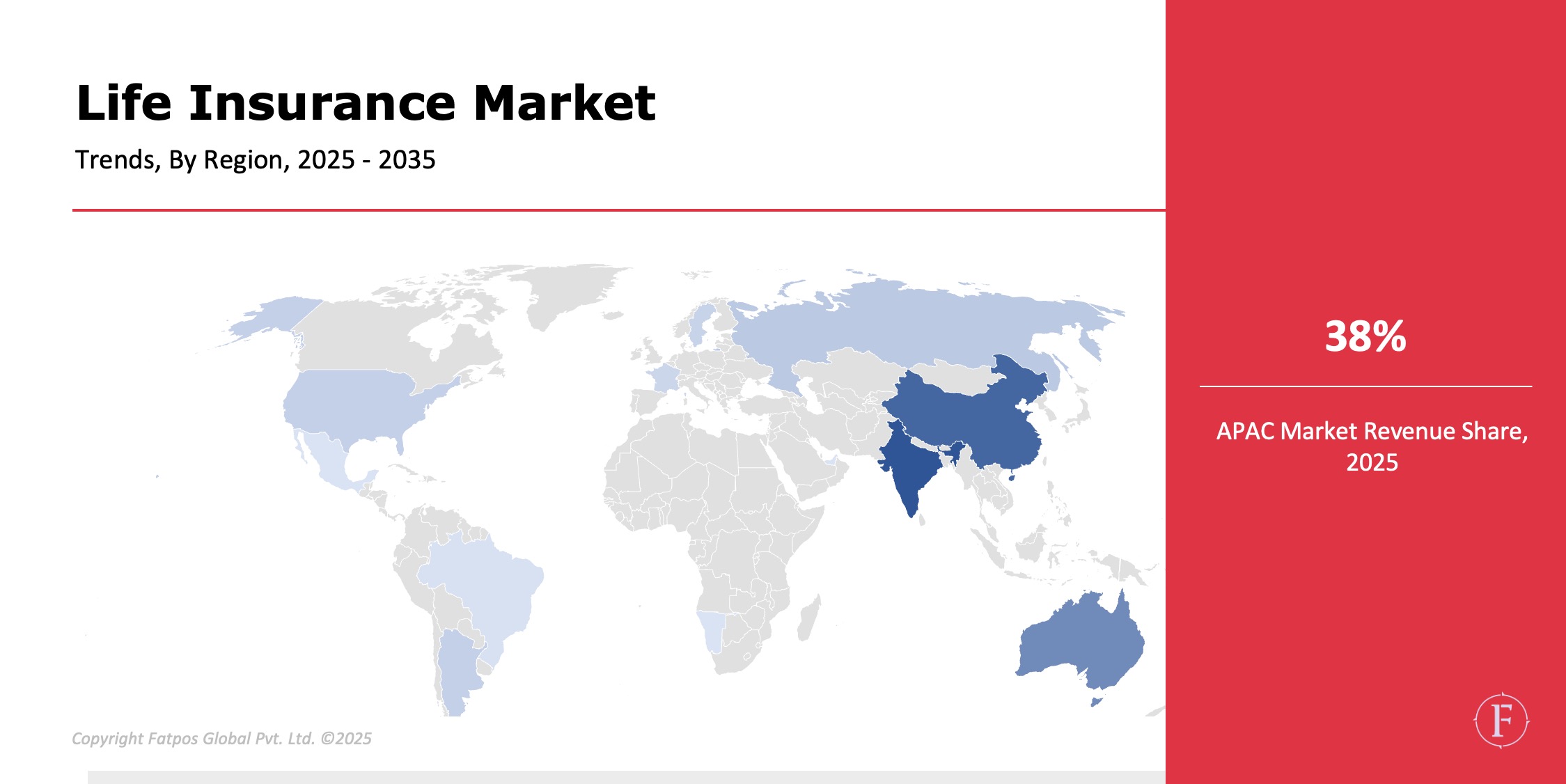
Asia-Pacific represents the largest share of the global life insurance market, driven by high population, increasing middle-class income, and expanding insurance penetration in countries such as China, India, and Southeast Asia. North America remains a mature market with stable growth supported by high insurance coverage and advanced financial systems.
Europe demonstrates steady growth driven by aging populations and demand for retirement planning solutions. Latin America and the Middle East & Africa are emerging markets with increasing adoption supported by financial inclusion initiatives and improving economic conditions.
Segmentation Highlights
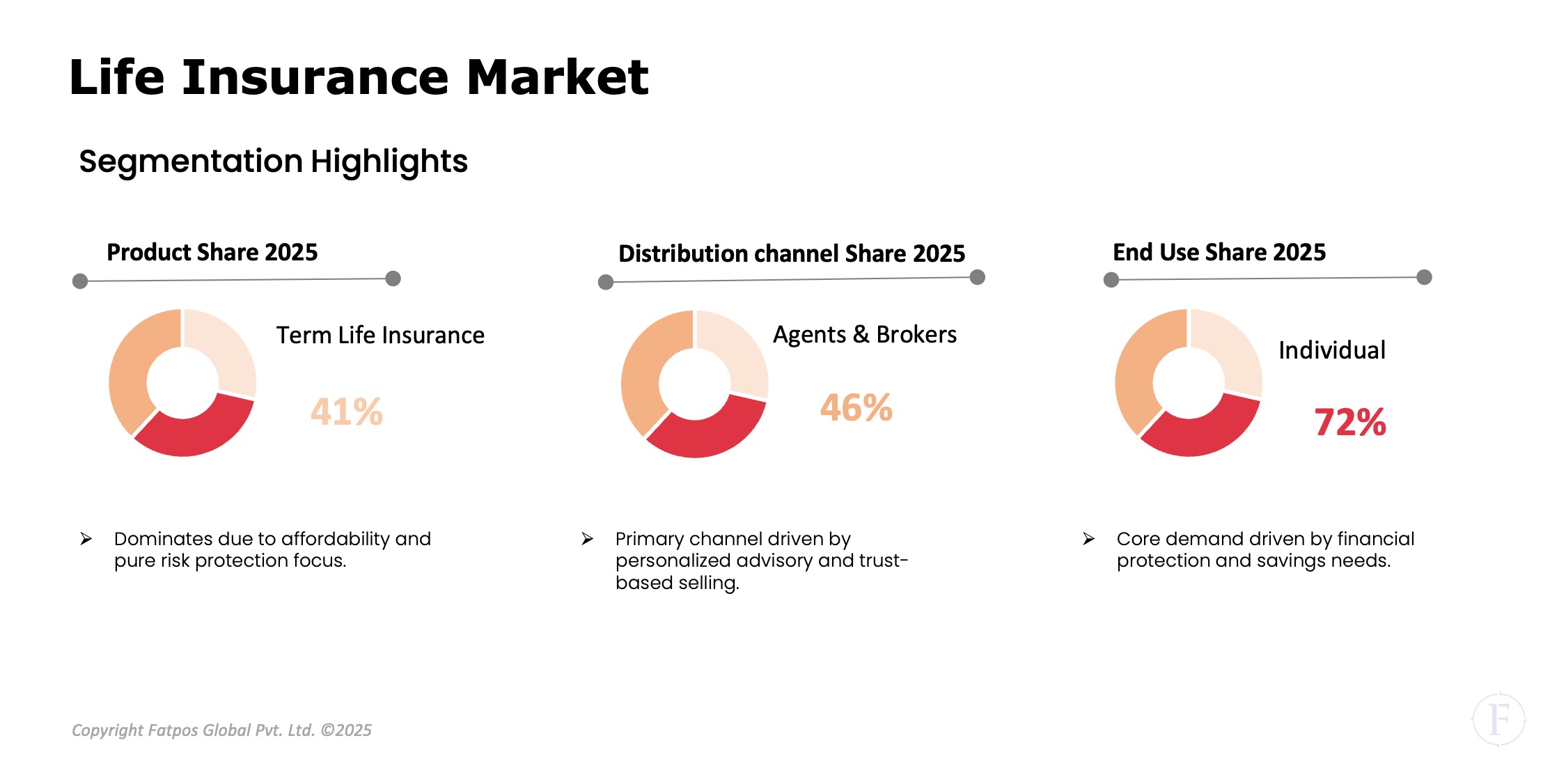
By product type, term life insurance accounts for the largest market share due to its affordability and straightforward structure, while universal and variable life insurance products are gaining traction for their investment-linked benefits.
By distribution channel, agents and brokers continue to dominate, although digital channels are experiencing rapid growth. By end user, individuals represent the majority of demand, while corporate policies contribute to group insurance coverage and employee benefits.
Report Key Elements
|
ATTRIBUTES |
DETAILS |
|
Study Period |
2019–2035 |
|
Base Year |
2024 |
|
Forecast Period |
2025–2035 |
|
Market Size by 2035 |
USD 6.42 trillion |
|
Market CAGR |
5.8% |
|
By Product |
Term, Whole, Universal, Variable |
|
By Distribution Channel |
Agents, Bancassurance, Digital |
|
By End User |
Hospitals, Pharma, Payers |
|
By Region |
NA, Europe, APAC, LATAM, MEA |
|
Life Insurance Market: Key Players |
Allianz SE, AXA Group, Prudential Financial, MetLife, Inc., China Life Insurance Company |
Global Life Insurance Industry Instances
- Insurers expanded digital platforms for policy issuance and customer engagement.
- Companies introduced customized and flexible life insurance products.
- Partnerships between insurers and banks strengthened bancassurance models.
- Emerging markets witnessed increased adoption of microinsurance solutions.
Analyst Review
As per our Life Insurance Market analysis report, the life insurance market is expected to experience steady growth over the forecast period, supported by increasing financial awareness, demographic shifts, and digital transformation initiatives. While regulatory and product complexity challenges persist, expansion of digital channels and emerging market opportunities
Frequently Asked Questions (FAQ):
Life insurance is a contract where an insurer provides financial payout to beneficiaries upon death or maturity, offering protection, income replacement, and long-term savings benefits.
Market growth is driven by financial awareness, rising life expectancy, retirement planning needs, digital distribution expansion, and increasing disposable incomes in emerging economies.
Term life insurance dominates due to affordability and simplicity, offering pure risk coverage. Investment-linked products are growing among customers seeking long-term wealth accumulation.
Digital transformation enables faster policy issuance, automated underwriting, and efficient claims processing, while improving customer experience through data analytics and personalized engagement strategies.
Opportunities include expansion in emerging markets, digital channels, microinsurance growth, and personalized products, supported by increasing demand for financial protection and retirement planning solutions.
 Select License Type


.png)


