


Digital Education Market Research 2035
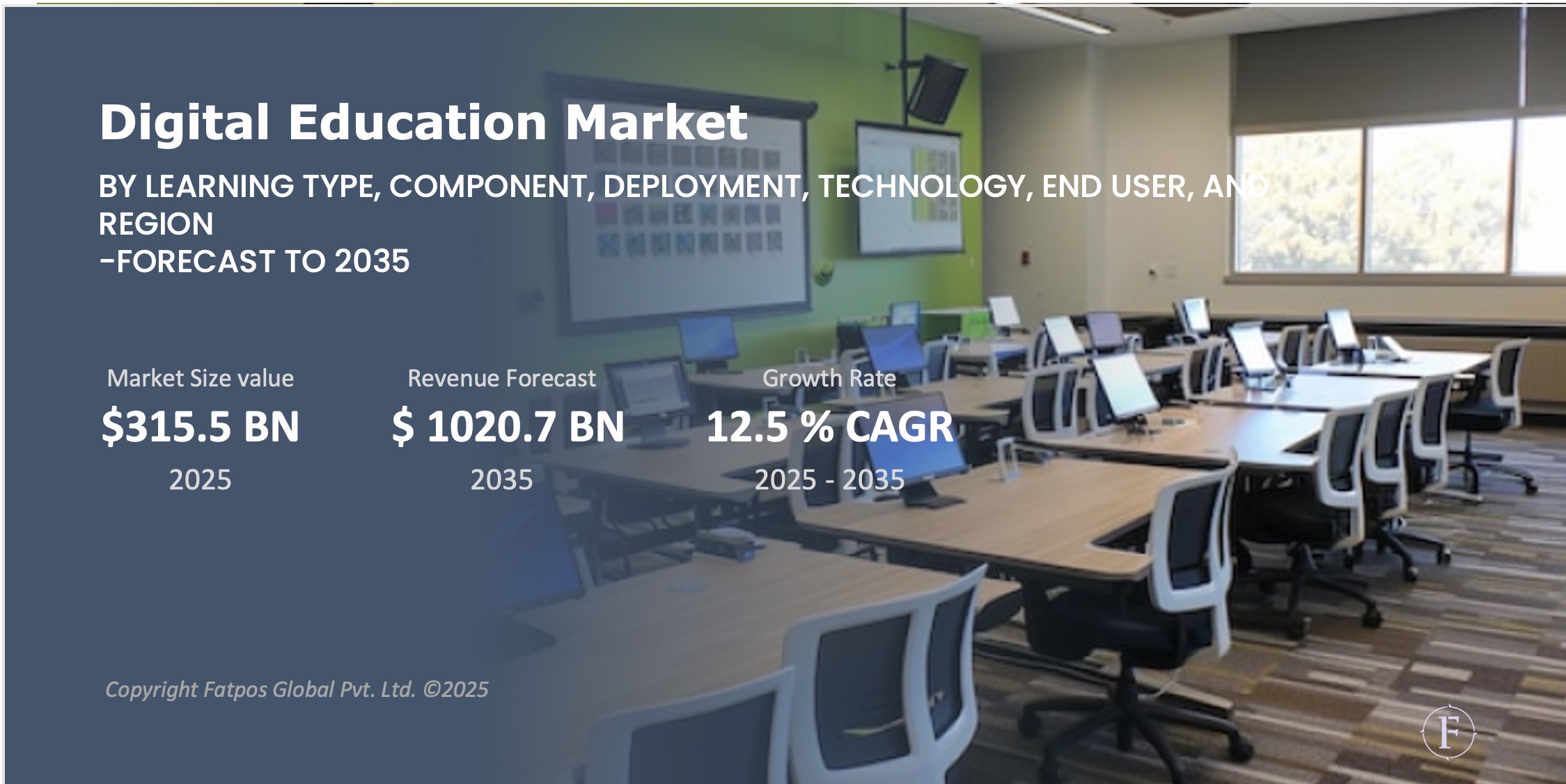
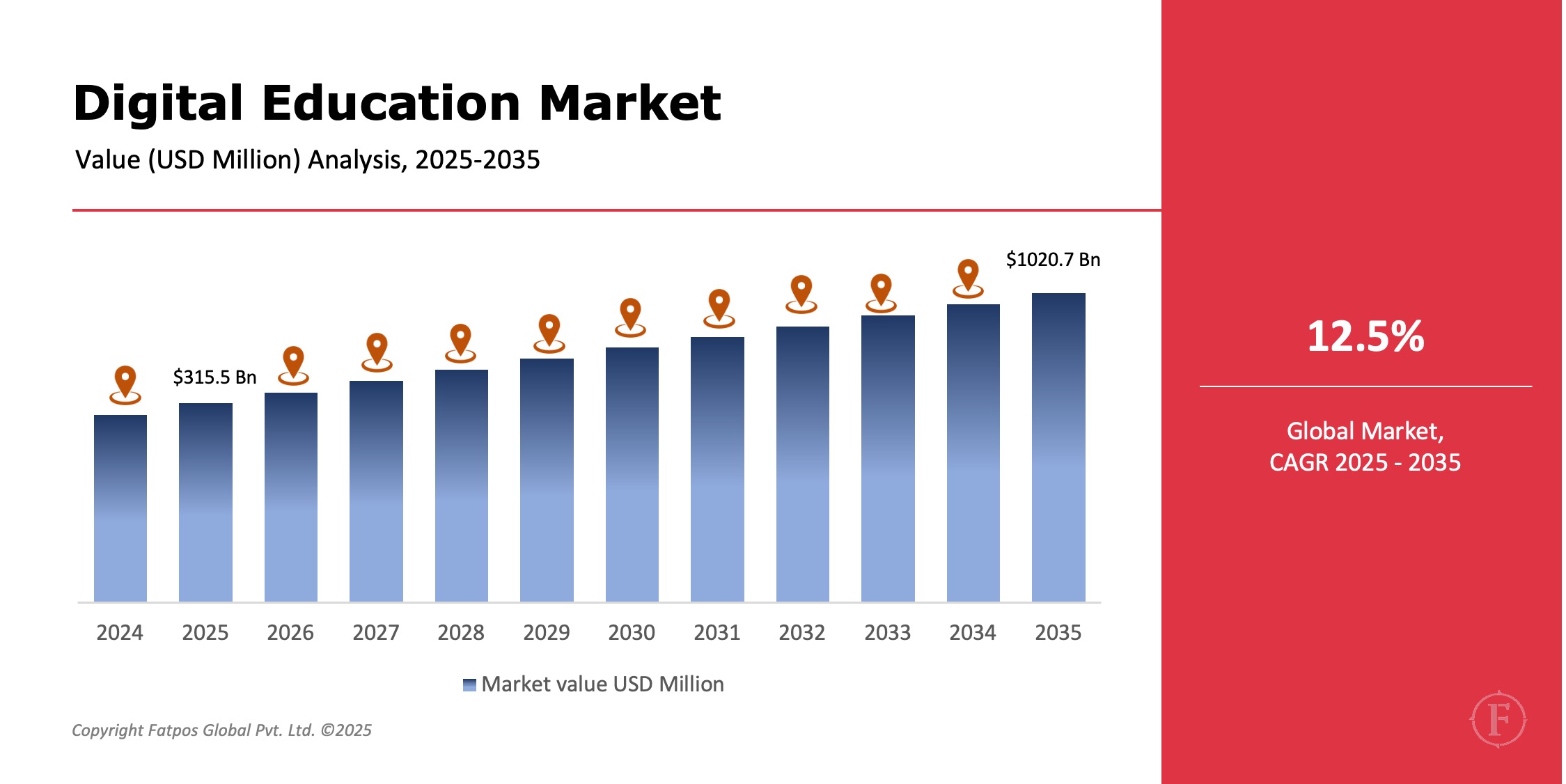
The Digital Education Market Size was USD 315.5 billion in 2025 and is projected to reach USD 1020.7 billion by 2035, registering a CAGR of 12.5%. Market expansion is driven by rapid digitalization of education systems, increasing internet penetration, rising adoption of e-learning platforms, growth in remote and hybrid learning models, and strong demand for upskilling and reskilling across industries.
Digital education leverages technology-enabled platforms, digital content, and interactive tools to deliver personalized, flexible, and scalable learning experiences. The market spans academic education, corporate training, skill development, certification programs, and lifelong learning, transforming how knowledge is delivered and consumed globally.
Product Overview
Digital education solutions seamlessly integrate software platforms, interactive content, and support services to create immersive virtual learning environments tailored for modern learners. By learning type, online learning delivers fully virtual courses through accessible digital platforms, enabling anytime, anywhere access to lectures and resources. Blended learning merges online modules with traditional in-person sessions for hybrid flexibility, while mobile learning optimizes content for smartphones and tablets, supporting on-the-go micro-lessons and assessments.
By component, content encompasses digital textbooks, engaging videos, quizzes, and simulations that foster interactive skill-building. Platforms like learning management systems (LMS) and learning experience platforms (LXP) centralize course delivery, progress tracking, and personalization. Services round out the ecosystem with expert consulting, educator training, custom content development, and ongoing technical support to ensure seamless implementation and scalability across schools, corporations, and lifelong learning programs.
Key Takeaways:
- The Digital Education Market is projected to grow at ~12.5% CAGR through 2035.
- Online learning platforms dominate global adoption.
- Strong demand for AI-driven personalized learning solutions.
- Corporate digital training is a key growth segment.
- Asia-Pacific is the fastest-growing regional market.
- Cloud-based platforms lead deployment due to scalability and cost efficiency.
Market Dynamics
Drivers
Global digital education expands rapidly due to surging internet and smartphone penetration, connecting millions in remote areas to quality learning resources. Rising demand for remote and flexible models accelerates post-pandemic, enabling personalized pacing for students and professionals balancing work-life commitments.
Workforce upskilling grows urgent as automation demands digital competencies like coding and data analysis, bridging skill gaps in evolving job markets. Governments worldwide launch initiatives—such as India's Digital India and U.S. E-Rate expansions—to build broadband infrastructure and subsidize edtech in underserved schools.
Advancements in AI personalize adaptive learning paths, while AR/VR immerses users in simulations for STEM training, and analytics provide real-time insights into learner progress, boosting engagement and outcomes across K-12, higher ed, and corporate sectors.
Restraints
Digital education faces persistent hurdles. The digital divide exacerbates inequities, leaving rural and low-income regions with limited internet, devices, and infrastructure, hindering access to online platforms and quality content.
Data privacy and cybersecurity loom large as platforms collect sensitive student information, risking breaches amid rising cyberattacks targeting edtech vulnerabilities. Resistance persists in traditional systems, where educators and institutions cling to familiar in-person methods, fearing job displacement, inadequate training, and over-reliance on screens that may stunt social development. Bridging these gaps demands inclusive policies and hybrid approaches.
Opportunities
AI-powered adaptive learning platforms expand rapidly, tailoring content to individual pace and style for personalized education across K-12 and corporate training. Micro-learning surges with bite-sized, on-demand modules, certifications, and skill-based courses that fit busy schedules, boosting completion rates and practical competencies.
Immersive AR/VR technologies gain adoption, transforming classrooms through virtual labs, historical simulations, and 3D anatomy lessons that enhance retention and engagement. Demand for lifelong learning and professional development intensifies as workers seek continuous upskilling amid automation, with platforms offering career pathways, reskilling programs, and micro-credentials to future-proof careers in dynamic job markets.
Challenges
Digital education grapples with core implementation challenges. Ensuring content quality demands rigorous curation and multimedia design to deliver accurate, relevant material that sustains learner engagement amid distractions and short attention spans.
Standardization and accreditation of digital credentials prove elusive, as varying platforms issue micro-credentials lacking universal recognition, eroding employer trust and learner mobility across global job markets. Managing scalability and platform interoperability requires robust infrastructure to handle surging user loads without crashes, alongside open APIs for seamless data sharing between LMS, third-party tools, and institutional systems. Collaborative standards like xAPI and strategic investments address these for equitable, effective scaling.
Digital Education Market Trends
Digital education trends accelerate innovation and accessibility. Rapid adoption of AI-based personalized learning paths customizes content to individual needs, boosting retention through adaptive algorithms that adjust difficulty in real-time. Increased use of gamification—badges, leaderboards, and quests—enhances engagement, transforming lessons into interactive challenges that motivate learners across ages.
Corporate e-learning platforms grow, delivering scalable digital training for upskilling via micro-modules and analytics-driven progress tracking. AR/VR integration creates immersive experiences, from virtual dissections to historical reenactments, deepening understanding beyond traditional methods. Subscription-based and freemium models expand access, offering tiered content from free basics to premium certifications, democratizing lifelong learning for global workforces.
Key Players in the Global Digital Education Industry
- Samsung Display
- LG Display
- Universal Display Corporation
- Sumitomo Chemical
- Merck Group
- BASF SE
- AUO Corporation
- BOE Technology Group
- Heliatek
- Novaled GmbH
- OLEDWorks
- Royole Corporation
Regional & Country Analysis
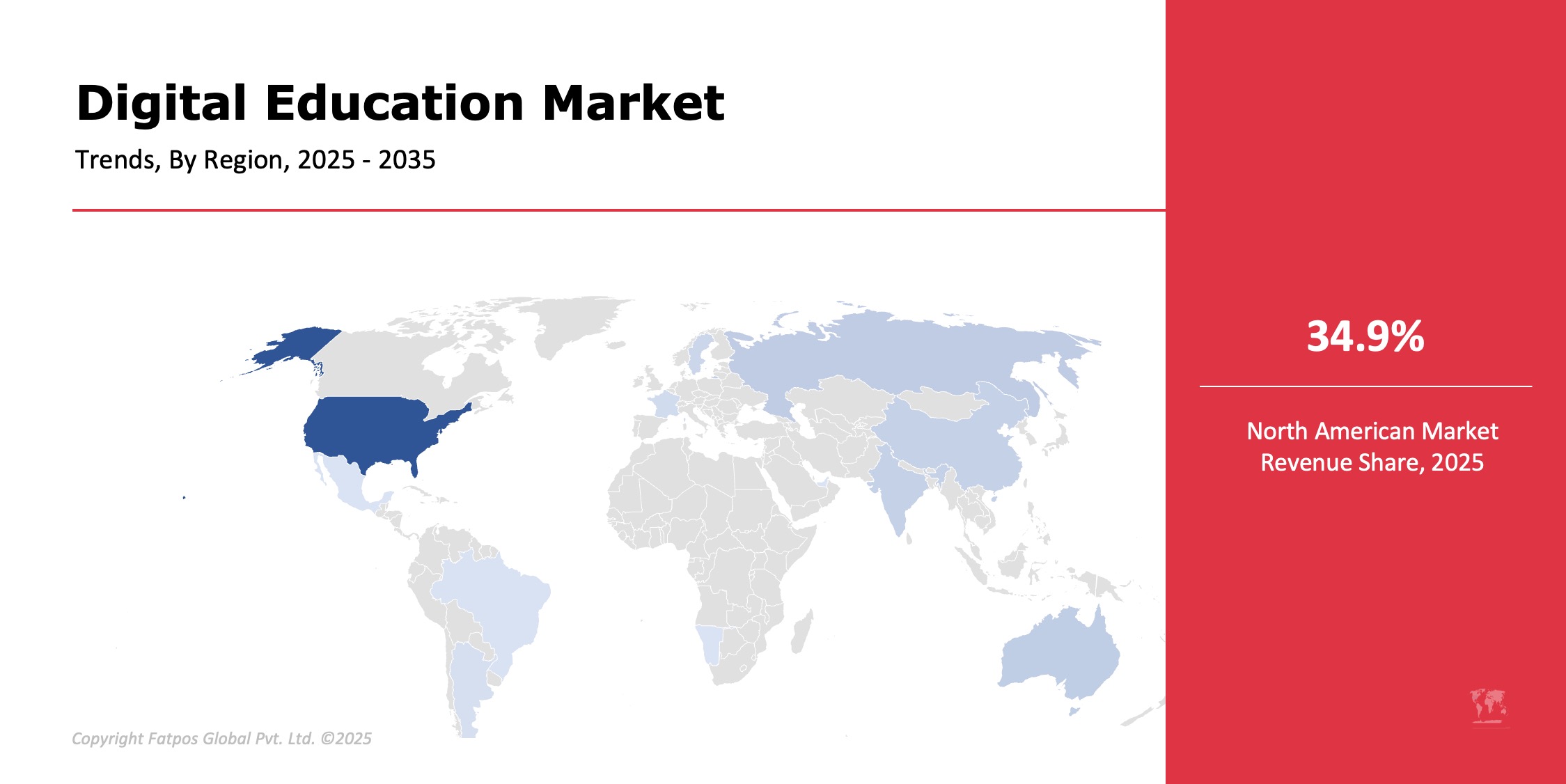
North America dominates the digital education market, fueled by cutting-edge infrastructure, robust corporate training demands, and widespread e-learning platform adoption across K-12 and higher education. Europe experiences strong growth through government-backed initiatives promoting digital transformation and lifelong learning policies that prioritize accessibility and equity.Asia-Pacific emerges as the fastest-growing region, propelled by massive student populations, surging mobile learning uptake, and swift digital shifts in China and India where affordable smartphones enable scalable edtech. Latin America sees rising adoption amid improved connectivity and progressive education reforms targeting underserved areas.
Middle East & Africa unlock emerging opportunities via government investments in digital infrastructure and skill development programs, bridging gaps in remote regions through localized content and mobile-first solutions.
Segmentation Highlights
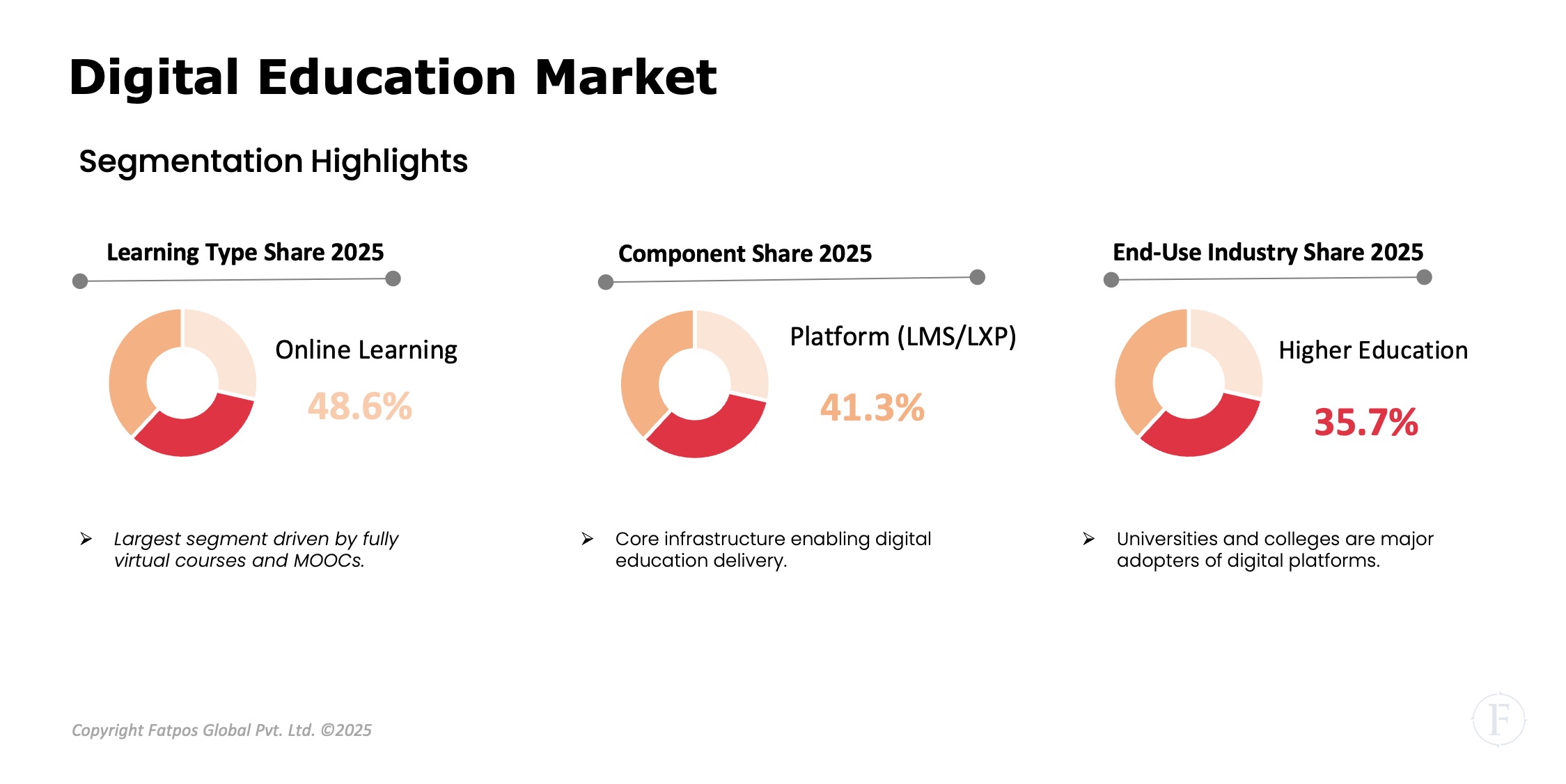
Online learning dominates the digital education market by learning type, offering fully virtual access via scalable platforms, while blended learning gains traction by merging online flexibility with in-person interaction for hybrid efficacy. By component, platforms such as LMS and LXP alongside digital content—including videos, simulations, and assessments—command the largest shares, powering personalized delivery and engagement.
Cloud-based solutions lead deployment modes, prized for scalability, cost-efficiency, and seamless updates across global users without heavy infrastructure. Higher education drives institutional adoption for remote degrees and MOOCs, while corporate sectors fuel demand through upskilling programs, compliance training, and analytics-driven workforce development, together representing the primary end-user segments.
Report Key Elements
|
ATTRIBUTES |
DETAILS |
|
Study Period |
2019–2035 |
|
Base Year |
2024 |
|
Digital Education Market Forecast Period |
2025–2035 |
|
Digital Education Market Size by 2035 |
USD 1020.7Bn |
|
Market CAGR |
12.5% |
| By Learning Type | Online Learning, Blended Learning, Mobile Learning |
|
By Component |
Content, Platform, Services |
|
By Deployment Mode |
Cloud-based, On-premise |
|
By Technology |
AI & Analytics, AR/VR, Learning Management Systems, Gamification, Big Data, Others |
|
By End User |
K-12, Higher Education, Corporate, Government & Public Sector, Individual Learners |
|
By Region |
NA, Europe, APAC, LATAM, MEA |
|
Key Market Players |
Samsung Display, LG Display, Universal Display Corporation, Sumitomo Chemical, Merck Group, BASF SE |
Global Digital Education Industry Instances
- Universities adopted AI-based LMS platforms for personalized learning.
- Corporations expanded digital upskilling programs for remote workforces.
- Governments launched national e-learning platforms.
- EdTech startups scaled mobile-first learning applications.
Analyst Review
As per our Digital Education Market analysis report, the market is undergoing transformative growth as technology reshapes global learning ecosystems. Demand for flexible, personalized, and scalable education solutions continues to rise across academic and professional segments. While access and standardization challenges persist, advancements in AI, analytics, and immersive technologies are expected to drive sustained market expansion through 2035.
Frequently Asked Questions (FAQ):
Electronics based on carbon-based materials instead of silicon, enabling flexible and lightweight devices.
Remote learning demand, workforce upskilling, and technological advancements.
Online learning platforms.
Asia-Pacific.
Strong double-digit growth driven by digital transformation and lifelong learning.
 Select License Type


.png)


