


Car Vaccum Market Research 2035
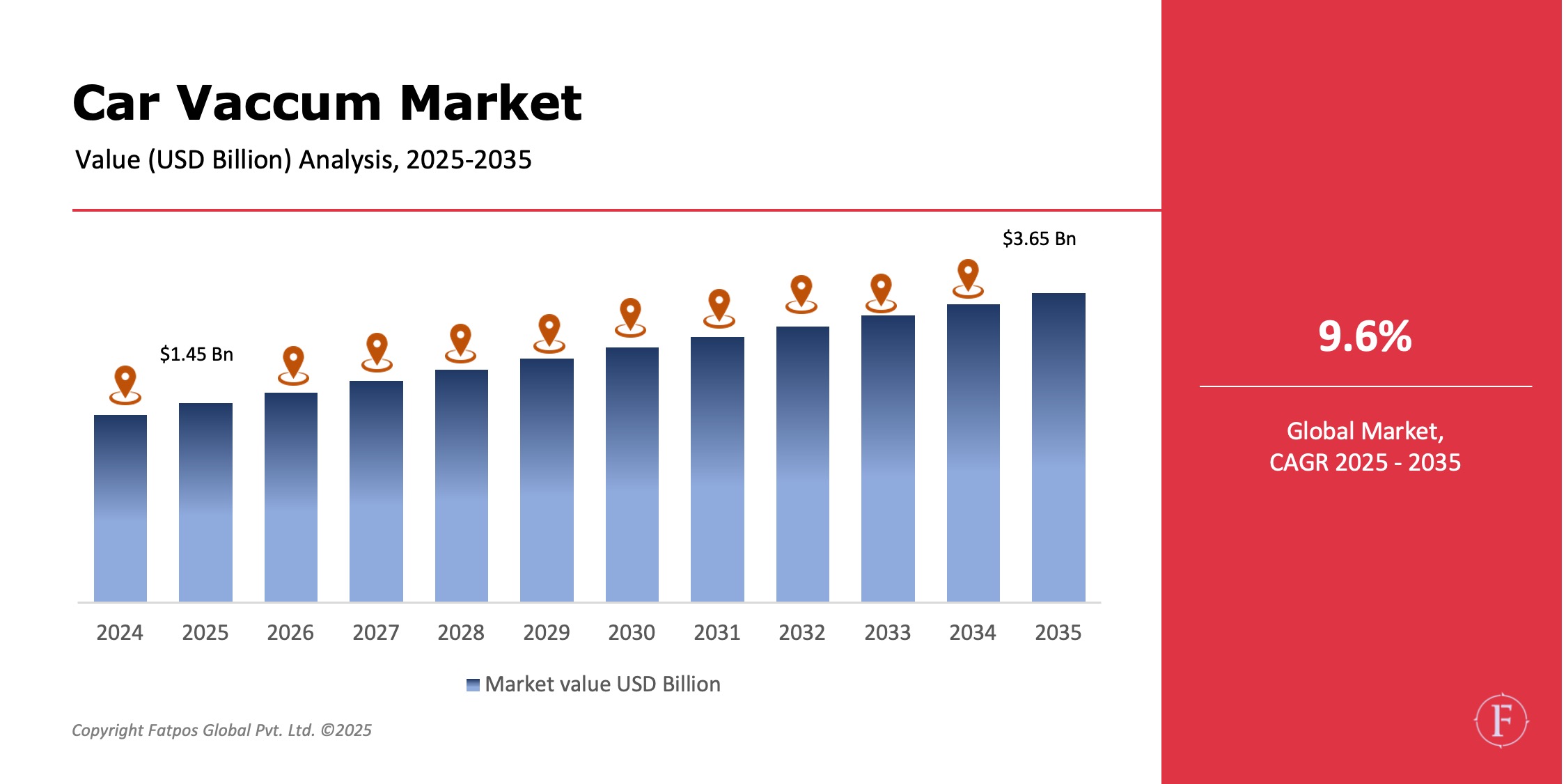
The Car Vacuum Market Size was valued at USD 1.45 billion in 2025 and is projected to reach USD 3.65 billion by 2035, registering a CAGR of 9.6% during the forecast period. Market growth is driven by rising vehicle ownership, increasing focus on vehicle hygiene and interior maintenance, growth of the automotive aftermarket, and rising consumer preference for portable, cordless, and high-suction cleaning solutions.
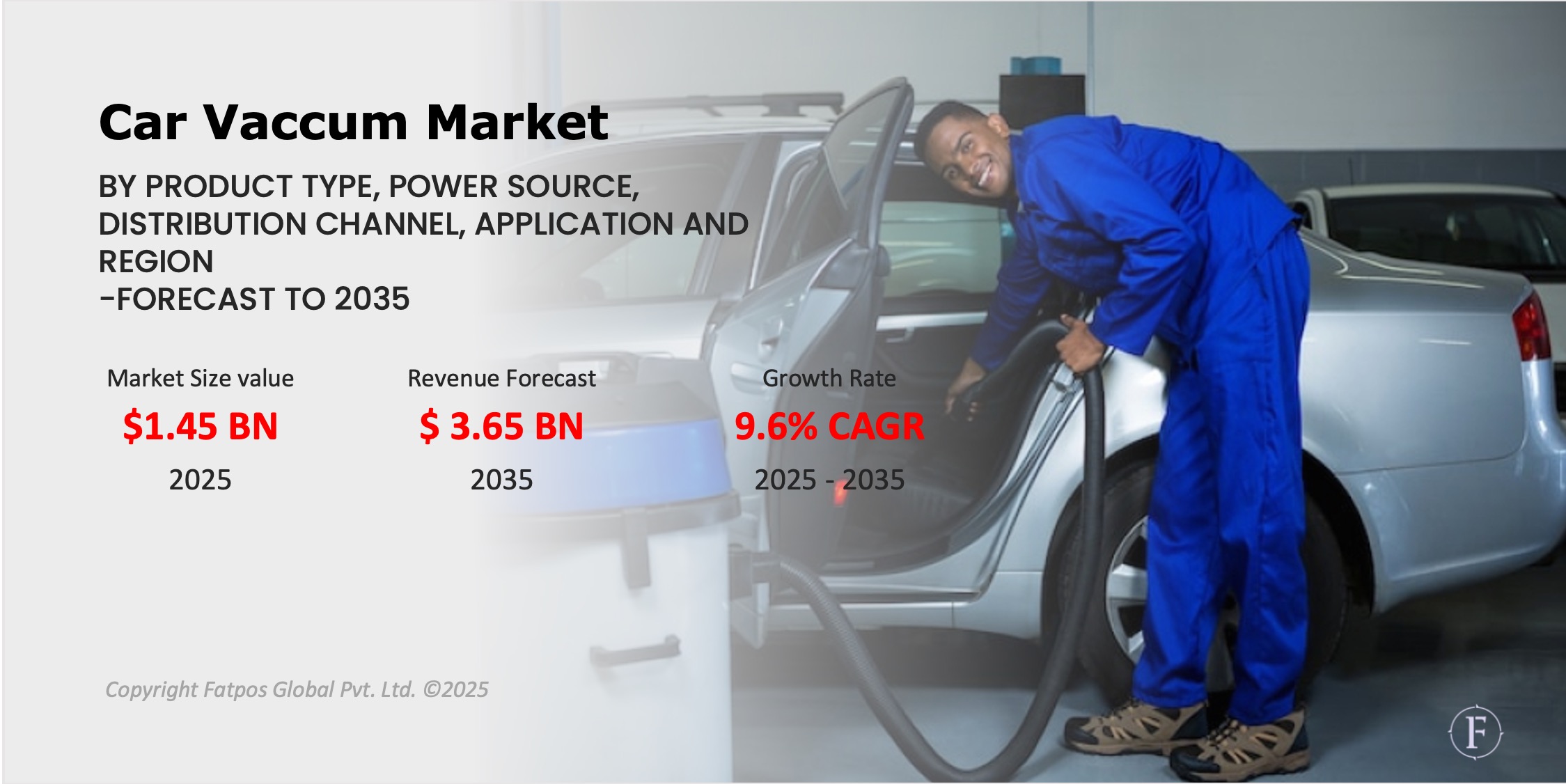
Car vacuum cleaners are compact, portable cleaning devices designed specifically for automotive interiors, enabling efficient removal of dust, debris, pet hair, and liquid spills from seats, carpets, dashboards, and storage compartments. As consumers increasingly view vehicles as personal spaces, demand for convenient and effective in-car cleaning solutions continues to rise globally.
Product Overview
Car vacuums are specialized vacuum cleaning devices engineered to operate within automotive environments. These devices are designed for compact storage, lightweight handling, and compatibility with vehicle power sources such as 12V sockets or rechargeable batteries. Modern car vacuums integrate features such as high-efficiency motors, multi-stage filtration, washable filters, and specialized nozzles for tight spaces.
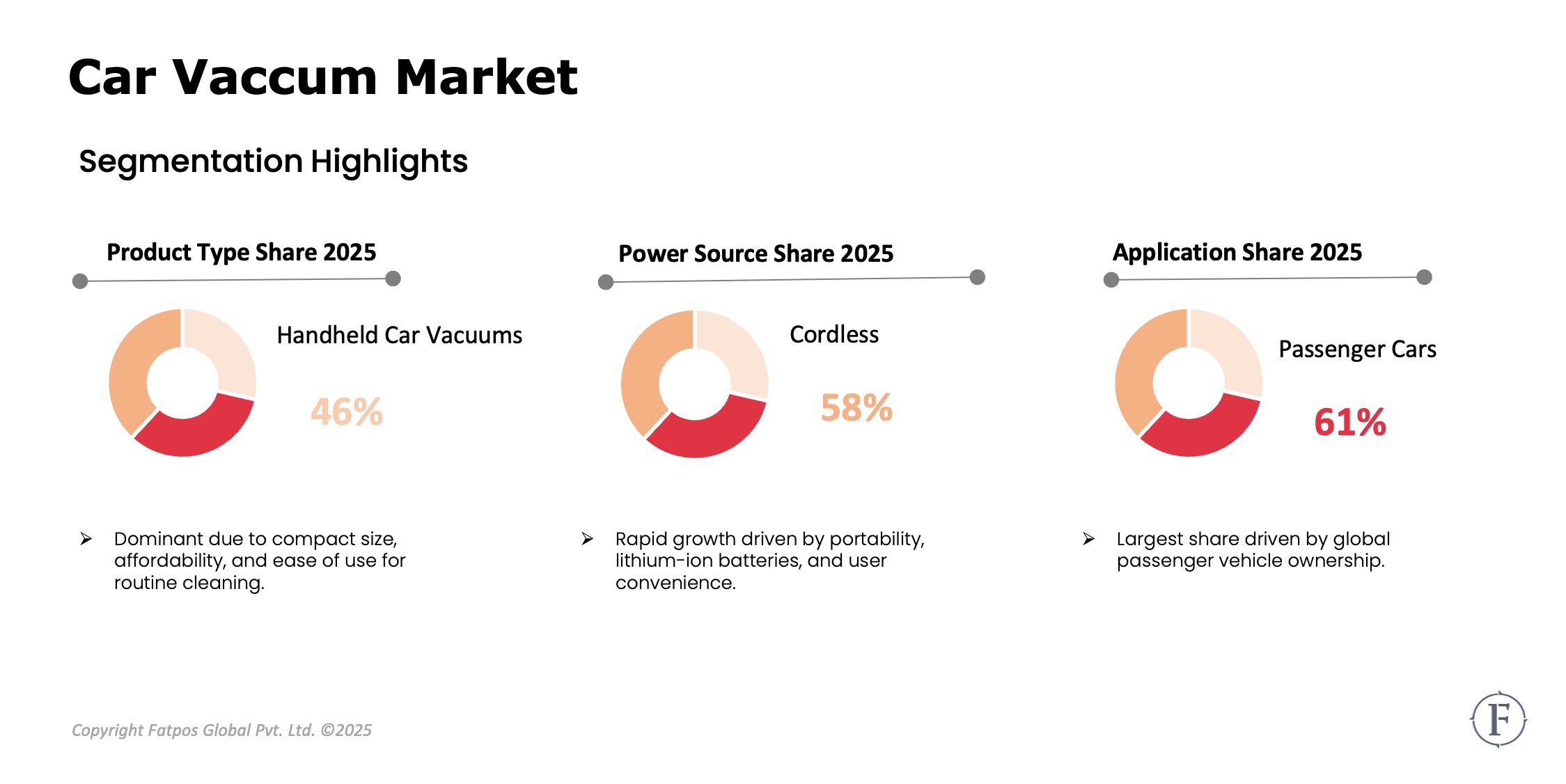
By product type, handheld car vacuums dominate the market due to portability and affordability. Wet & dry car vacuums are gaining traction for their ability to clean liquid spills alongside solid debris. By power source, corded car vacuums remain widely used due to continuous power supply, while cordless models are witnessing rapid growth driven by convenience, lithium-ion battery advancements, and improved run-time performance.
Key Takeaways :
- The car vacuum market is expected to grow at ~9.6% CAGR through 2035
- Handheld and cordless models dominate consumer demand
- Online retail is the fastest-growing distribution channel
- Rising vehicle hygiene awareness fuels aftermarket sales
- Asia-Pacific leads in volume growth
- Battery efficiency and suction power drive product differentiation
Market Dynamics
Drivers
The primary driver of the car vacuum market is the global rise in vehicle ownership, particularly passenger cars. As vehicle interiors accumulate dust, food residue, and environmental pollutants, consumers increasingly invest in convenient cleaning solutions. Growing awareness of vehicle hygiene, especially post-pandemic, has significantly influenced purchasing behavior.
Expansion of the automotive aftermarket industry and growth of professional car detailing services further support market demand. Technological advancements in compact motors, filtration systems, and battery technology enable higher suction performance in portable devices, enhancing user experience and adoption. The emergence in e-commerce platforms has also expanded product accessibility, allowing manufacturers to reach a broader consumer base directly.
Restrictions
Low-end models deliver insufficient suction power (often
Corded designs tether to 12V sockets, restricting access to rear seats or exteriors, and lack in EVs lacking traditional outlets. Durability woes—cheap plastics crack, motors overheat after 50 uses—coupled with frequent filter cleaning (every 5-10 sessions), discouraged upgrades. Competition from shop vacs or pro detailing erodes share. Solutions like rugged builds and auto-empty stations emerge slowly.
Opportunities
Decentralized energy systems, microgrids, and energy storage integration unlock major opportunities, fueled by renewables and EV growth. Microgrids ensure resilient power in remote or disaster-prone areas, while batteries like lithium-ion store excess solar/wind energy. Smart buildings optimize HVAC, lighting, and renewables via IoT for efficiency. Industrial management cuts costs through demand-response, and smart cities integrate traffic, utilities, and grids for sustainability.
Emerging markets boom as governments fund grid upgrades for development—India's Smart Cities Mission exemplifies this. AI forecasting predicts supply/demand; blockchain enables peer-to-peer trading; digital twins simulate optimizations. These innovations drive revenue via software-as-a-service and partnerships.
Challenges
Significant opportunities exist in the development of high-power cordless vacuums, fast-charging battery systems, and multi-functional cleaning devices. Integration of HEPA filters and antimicrobial coatings addresses growing health and hygiene concerns. Rising demand from car rental services, ride-hailing fleets, and commercial vehicle operators presents opportunities for bulk sales. Growth of electric vehicles and autonomous cars further encourages adoption of lightweight, energy-efficient cleaning devices.
Car Vacuum Market Trends
The car vacuum market is witnessing a shift toward cordless and rechargeable car vacuums, supported by advances in lithium-ion battery technology. Demand for wet & dry functionality is increasing, particularly among families and commercial vehicle users.
Manufacturers are introducing smart features, such as LED indicators, digital suction controls, and modular attachments. Sustainability trends are influencing the use of recyclable materials, energy-efficient motors, and washable filters. Online-exclusive product launches, influencer marketing, and direct-to-consumer sales models are becoming prominent strategies among leading brands.
Key Players in the Car Vaccum Industry
- Black+Decker
- Bosch Limited
- Dyson Ltd.
- Philips
- Eureka Forbes
- Stanley Black & Decker
- SharkNinja
- Tefal
- Vaclife
- Bissell Inc.
Regional & Country Analysis
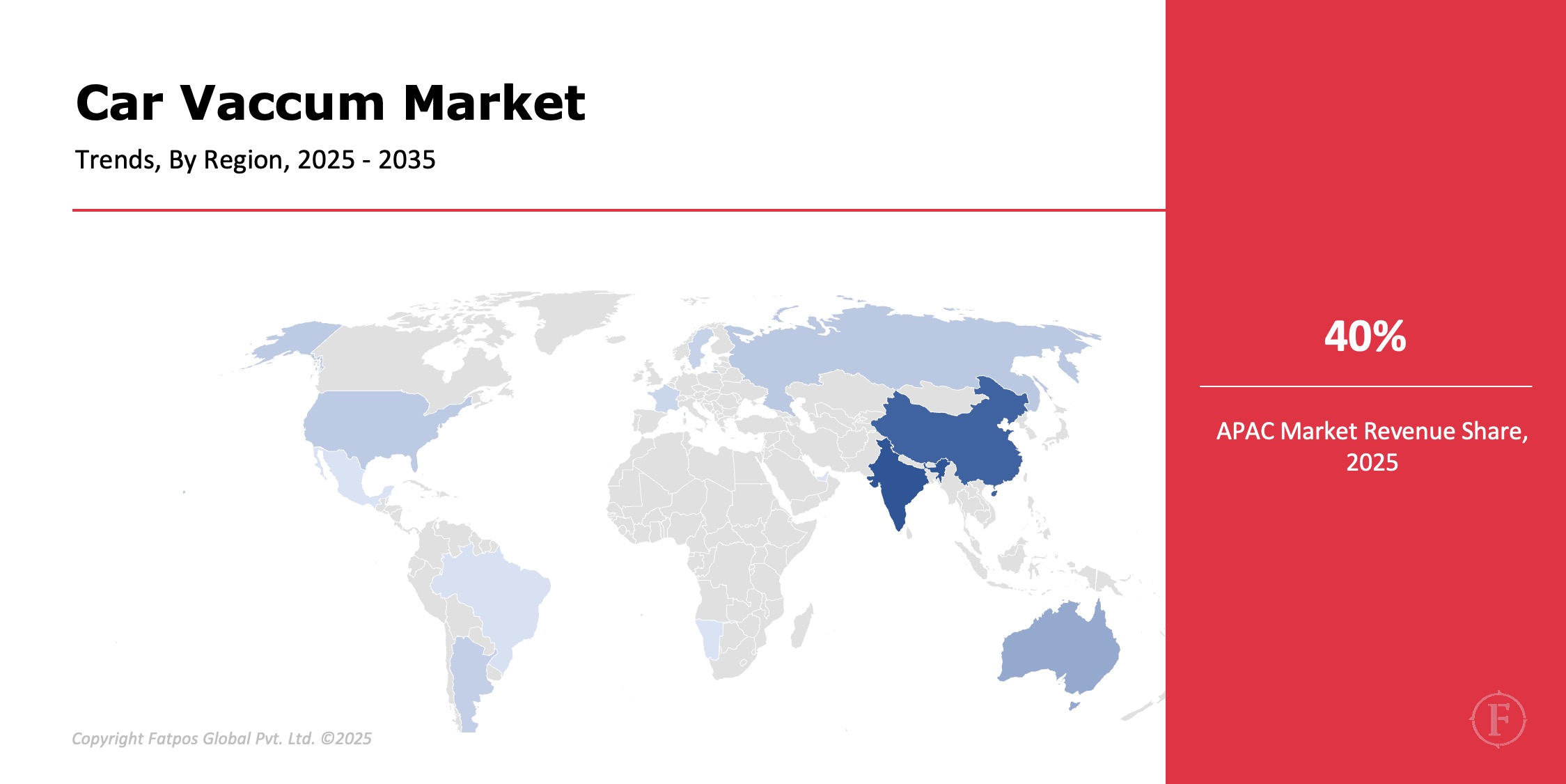
Asia-Pacific dominates the car vacuum market due to high vehicle ownership growth, expanding middle-class population, and rising demand for affordable automotive accessories in China, India, and Southeast Asia. North America maintains strong demand driven by high consumer spending on car care products and widespread adoption of premium vacuum cleaners. Europe shows steady growth supported by environmental awareness and high penetration of compact cleaning devices. Latin America and Middle East & Africa present emerging growth opportunities as automotive aftermarket services expand and urbanization increases.
Segmentation Highlights
By product type, handheld car vacuums account for the largest market share due to ease of use and affordability. Cordless vacuums show the fastest growth owing to portability and convenience. Passenger cars dominate application demand, while commercial vehicles and fleet operators contribute to rising volume sales. Online distribution channels are expanding rapidly, driven by competitive pricing and wider product availability.
Report Key Elements
|
ATTRIBUTES |
DETAILS |
|
Study Period |
2019–2035 |
|
Base Year |
2024 |
|
Forecast Period |
2025–2035 |
|
Market Size by 2035 |
USD 3.65 Billion |
|
Market CAGR |
9.6% |
|
By Product Type |
Handheld, Wet & Dry, Portable Canister |
|
By Power Source |
Corded, Cordless
|
|
By Distribution Channel
|
Online & Offline |
|
By Application |
Passenger Cars, Commercial Vehicles, Recreational Vehicles
|
|
By Region |
NA, Europe, APAC, LATAM, MEA |
|
Car Vaccum Market: Key Players |
Black+Decker, Bosch Limited, Dyson Ltd., Philips, Eureka Forbes |
Global Car Vaccum Industry Instances
- Automotive accessory brands launched high-suction cordless car vacuums
- Car rental companies adopted portable vacuums for quick interior cleaning
- E-commerce platforms expanded private-label car vacuum offerings
- Professional detailing services increased use of wet & dry models
Analyst Review
As per our Car Vacuum Market analysis and market forecast, the market is evolving from basic accessory demand toward performance-driven and convenience-oriented solutions. While pricing pressure and product differentiation remain challenges, innovation in battery technology, filtration efficiency, and ergonomic design is expected to drive sustained growth. Companies focusing on cordless performance, online distribution, and brand visibility are likely to gain competitive advantage.

Frequently Asked Questions (FAQ):
Portable vacuums tailored for vehicle interiors, featuring compact designs, 12V/rechargeable power, strong suction, and attachments for seats, mats, crevices.
Rising car ownership, post-pandemic hygiene focus, DIY maintenance, premium aftermarket demand, and cordless tech advancements.
Handheld car vacuums lead with 60% share, prized for portability, affordability ($20-60), and ease in quick spot cleans.
Asia-Pacific tops with 40% share, fueled by vehicle boom in China/India, manufacturing hubs, and e-commerce penetration.
Cordless Li-ion models with longer runtime, smart features (app control), wet/dry versatility drive steady 8-10% CAGR through 2030.
 Select License Type


.png)


