


Wood Coating Market Research 2035
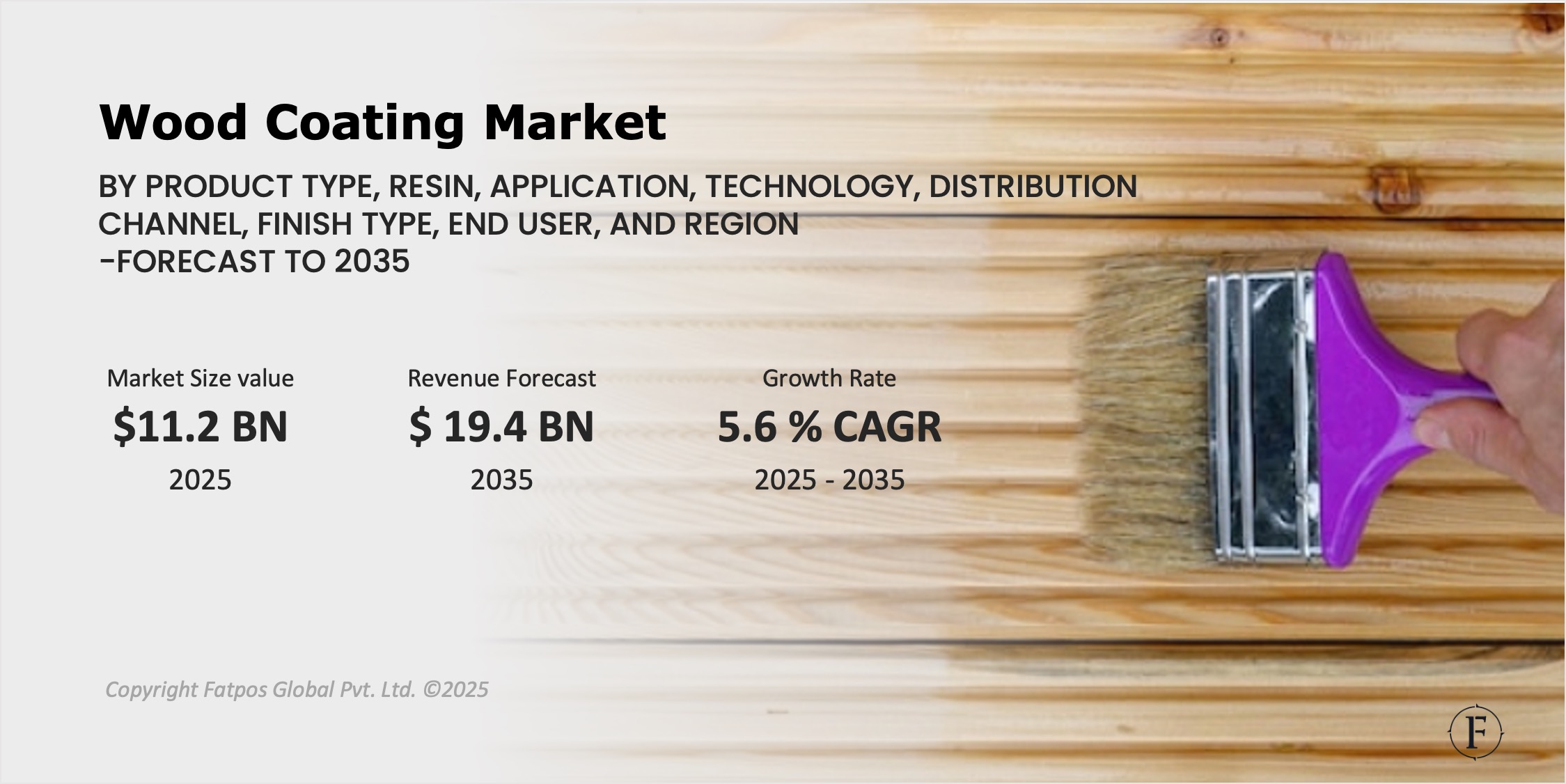
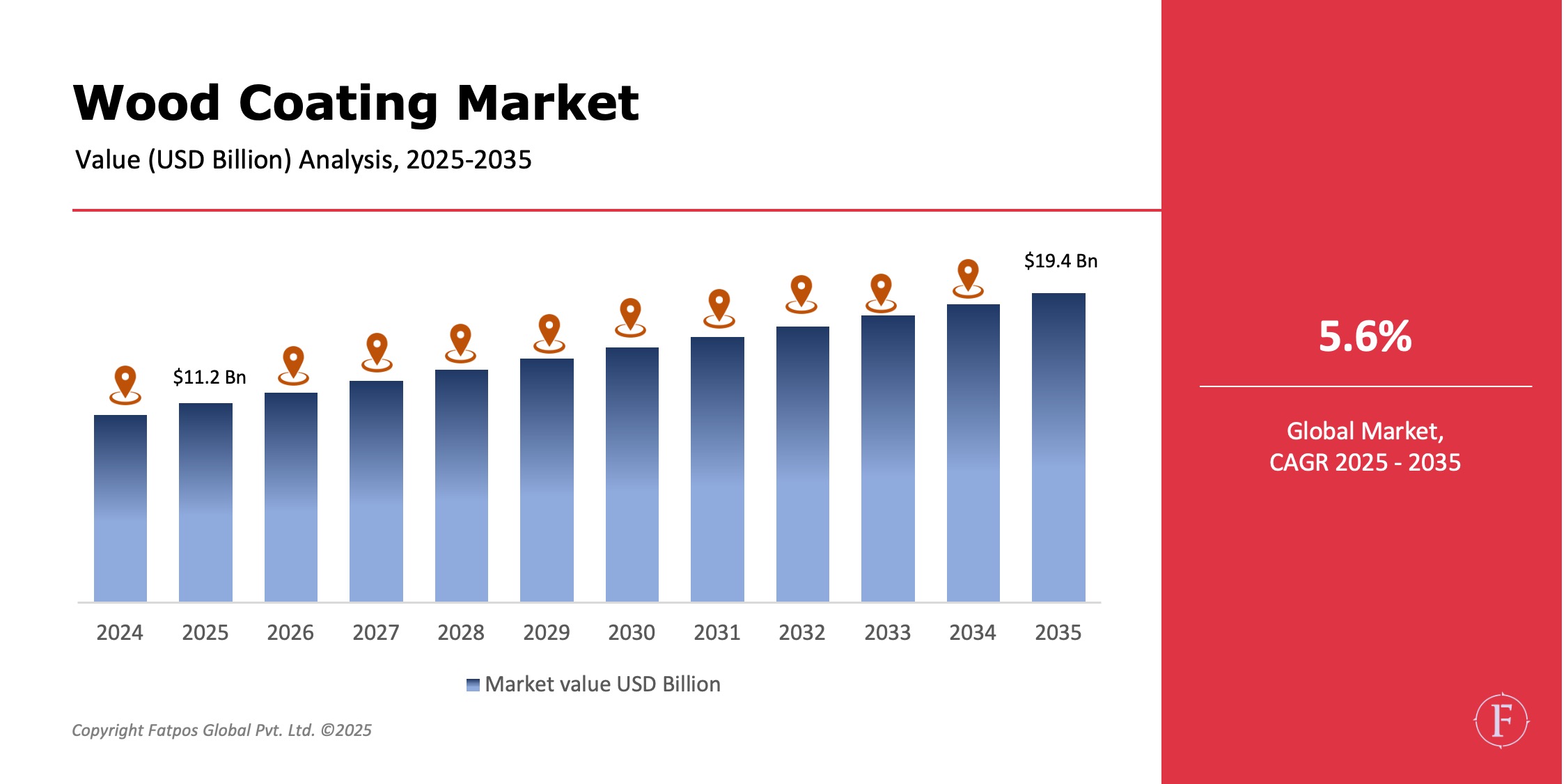
The Wood Coating Market Size was valued at USD 11.2 billion in 2025 and is projected to reach USD 19.4 billion by 2035, registering a CAGR of 5.6% Market growth is driven by rising construction and renovation activities, increasing demand for furniture and interior décor, growing preference for protective and decorative wood finishes, and tightening environmental regulations promoting low-VOC and sustainable coating solutions.
Wood coatings are specialized surface finishing materials designed to protect wooden substrates from moisture, UV radiation, chemicals, and mechanical wear while enhancing aesthetic appeal. As wood continues to be widely used in residential, commercial, and industrial applications, demand for high-performance, durable, and environmentally compliant wood coatings is steadily increasing.
Product Overview
Wood coatings deliver essential surface protection, durability, and aesthetic enhancement for wooden products and structures, significantly extending their lifespan, appearance, and performance across applications like furniture, flooring, cabinets, and exterior elements. By product type, water-based coatings are emerging in popularity thanks to their low VOC emissions, quick drying, and alignment with stringent regulations, making them ideal for eco-conscious uses. Solvent-based options persist in industrial settings for their superior wood penetration and robustness. Emerging powder coatings excel in engineered wood products with high efficiency and low waste, while UV-cured variants dominate furniture and flooring due to rapid curing and exceptional surface quality.
Resin types further diversify options: acrylics shine with color retention and UV resistance; polyurethanes offer top-tier abrasion and chemical resistance; cost-effective alkyds suit decorative needs; and epoxy with polyester resins handle demanding industrial and heavy-duty tasks. Overall, these innovations balance environmental demands, performance, and versatility in the evolving wood coatings market.
Key Takeaways :
- The Wood Coating Market is expected to grow at ~5.6% CAGR through 2035.
- Water-based coatings represent the fastest-growing product segment.
- Furniture and flooring account for the largest application share.
- Rising demand from residential and commercial construction sectors.
- Asia-Pacific dominates global consumption and production.
- Sustainability and low-VOC formulations are key competitive differentiators.
Market Dynamics
Drivers
Growth in global construction and renovation activities is a primary driver of the wood coating market, as residential housing, commercial buildings, and infrastructure projects increase demand for finished wood products. Rising consumer spending on furniture, modular kitchens, and interior décor further fuels demand for decorative and protective coatings.
Environmental awareness and regulatory pressure are accelerating the shift toward water-based and UV-cured coatings with reduced VOC emissions. Additionally, advancements in resin chemistry and coating technologies are improving durability, scratch resistance, and weatherability, expanding the use of wood coatings in both interior and exterior applications.
Restraints
The wood coatings market grapples with key restraints, primarily volatile raw material prices for petrochemical-derived resins, solvents, and additives, which disrupt supply chains and inflate costs. Stringent environmental regulations heighten formulation challenges, demanding low-VOC, eco-friendly alternatives that raise production expenses for manufacturers. In developing regions, low awareness of advanced technologies and end-user price sensitivity hinder uptake of premium products, favoring cheaper alternatives. These factors collectively slow market growth, compelling innovation in sustainable sourcing and cost-effective solutions to broaden accessibility and compliance.
Opportunities
Significant opportunities exist in the development of eco-friendly, bio-based, and low-VOC wood coatings to meet evolving regulatory and consumer preferences. Growth in ready-to-assemble furniture, engineered wood products, and prefabricated construction creates demand for factory-applied coatings with consistent quality and performance. Expansion of urban housing, hospitality, and commercial real estate projects in emerging economies further supports long-term market growth.
Challenges
Manufacturers in the wood coatings sector confront multifaceted challenges in harmonizing performance, sustainability, and cost, especially when transitioning from traditional solvent-based formulas to greener alternatives. Achieving uniform coating efficacy across varied wood substrates and harsh climatic conditions proves intricate, demanding rigorous testing and adaptation. Fierce rivalry from regional and global competitors intensifies pricing pressures, compelling relentless innovation in formulations, application methods, and supply chains. These hurdles underscore the need for R&D investments to deliver resilient, eco-compliant products without compromising affordability or quality.
Wood Coating Market Trends
The wood coatings market is undergoing a robust transition toward water-based and UV-cured variants, propelled by stringent environmental regulations and sustainability imperatives, which prioritize low emissions and rapid processing. Consumer preferences lean toward customizable finishes, matte textures, and natural wood aesthetics, particularly in furniture and interior designs. Technological advancements like digital color matching, automated spray systems, and smart coatings enhance application precision, efficiency, and superior finish quality. Meanwhile, strategic alliances between coating producers and furniture OEMs broaden market access, foster innovation, and enable tailored product solutions to meet diverse demands.
Key Players in the Global Wood Coating Industry
- Akzo Nobel N.V.
- PPG Industries, Inc.
- Sherwin-Williams Company
- BASF SE
- Axalta Coating Systems
- RPM International Inc.
- Asian Paints Limited
- Nippon Paint Holdings Co., Ltd.
- Kansai Paint Co., Ltd.
- ICA Group
Regional & Country Analysis
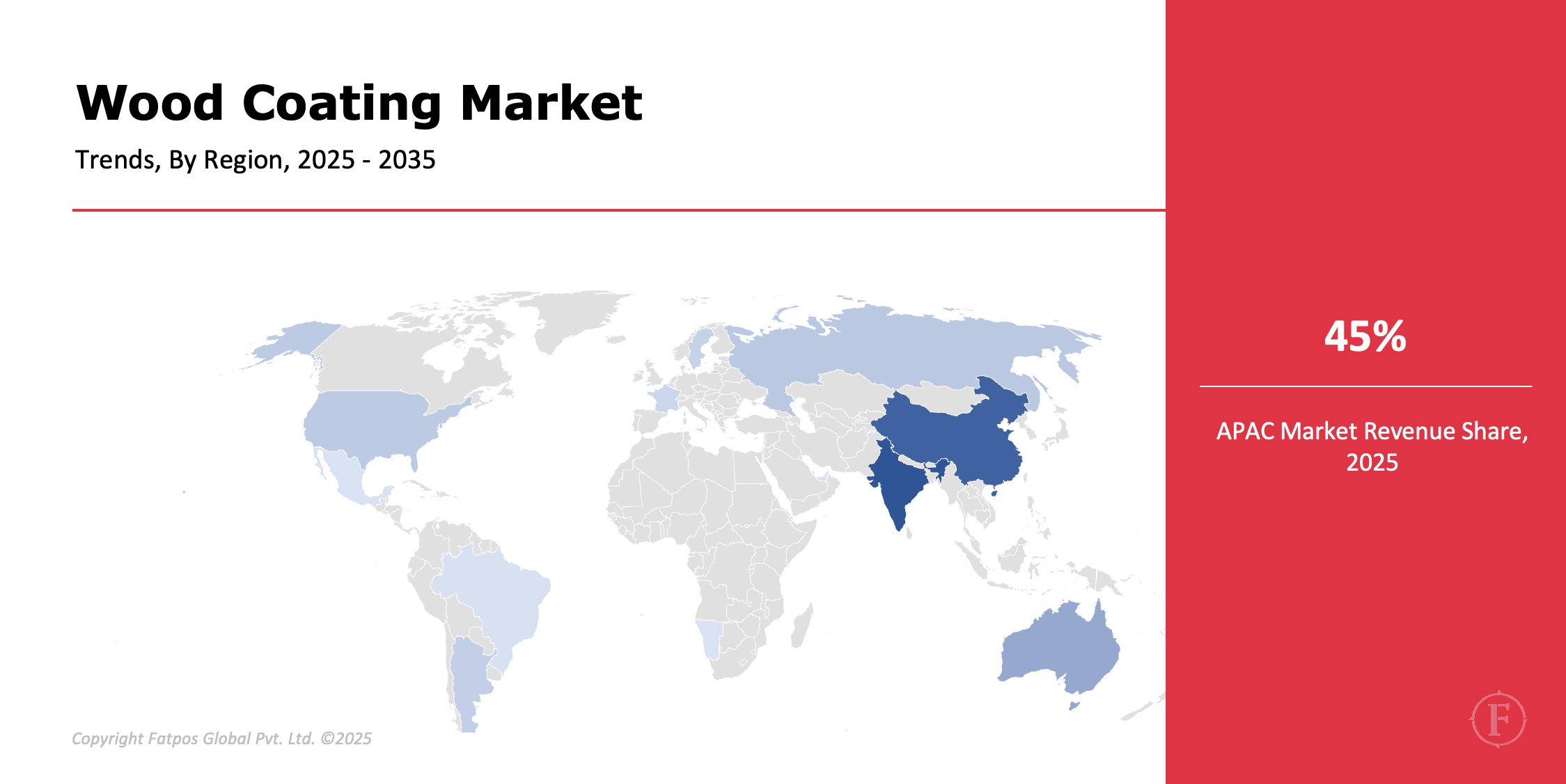
Asia-Pacific dominates the wood coating market due to rapid urbanization, expanding furniture manufacturing, and strong construction activity in China, India, and Southeast Asia. Europe maintains a mature market supported by strict environmental regulations and high adoption of water-based coatings. North America shows steady growth driven by residential renovation, furniture demand, and technological innovation. Latin America experiences moderate expansion with construction recovery, while Middle East & Africa present emerging opportunities through infrastructure development and hospitality projects.
Segmentation Highlights
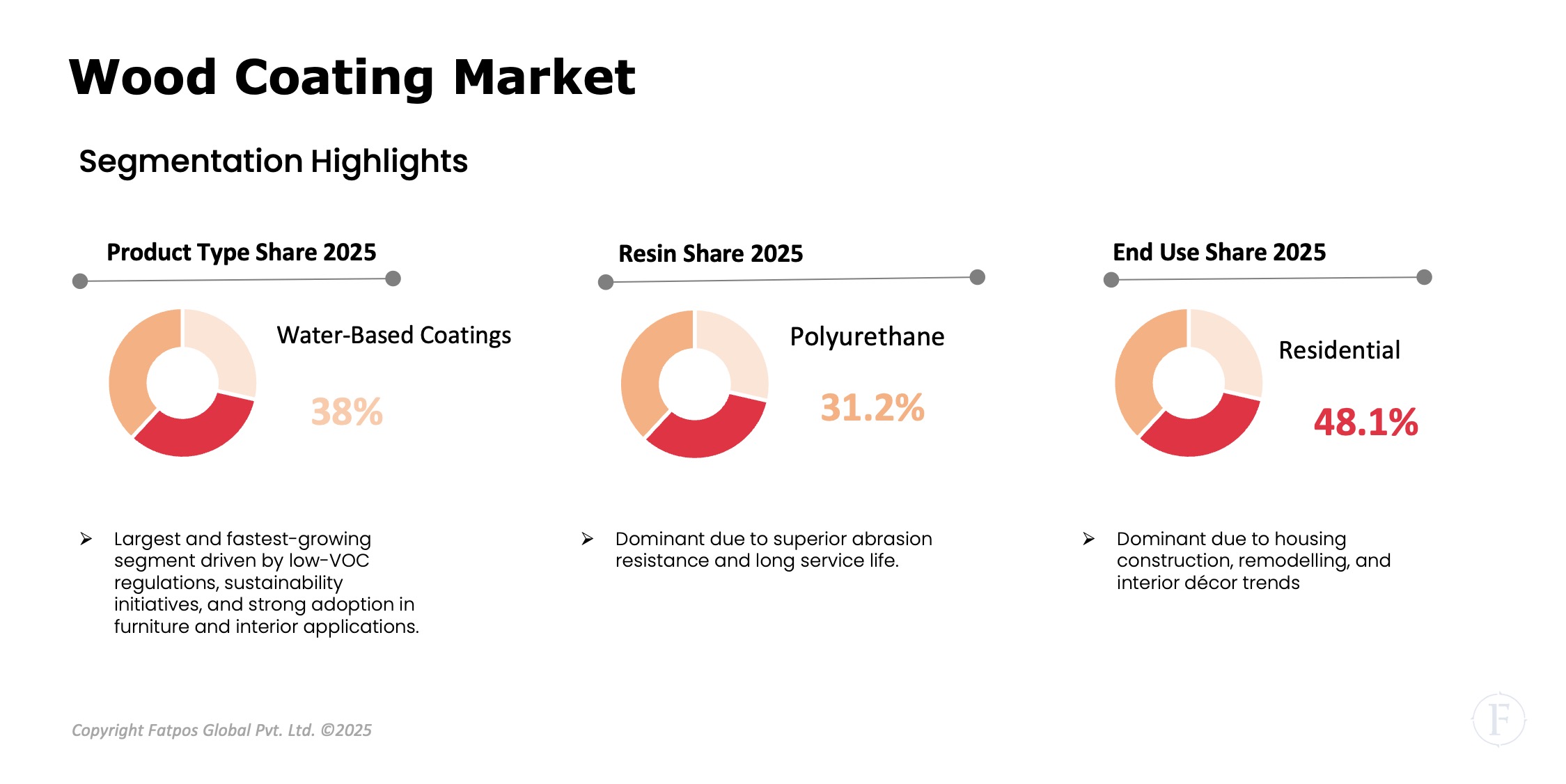
By product type, water-based coatings are gaining market share, while solvent-based coatings retain relevance in specific industrial applications. By resin type, polyurethane and acrylic coatings lead due to superior performance and versatility. Furniture remains the dominant application segment, followed by flooring and cabinets. Residential end use accounts for the largest share, while commercial and industrial segments are growing steadily with construction and refurbishment activities.
Report Key Elements
|
ATTRIBUTES |
DETAILS |
|
Study Period |
2019–2035 |
|
Base Year |
2024 |
|
Forecast Period |
2025–2035 |
|
Market Size by 2035 |
USD 19.4 billion |
|
Market CAGR |
5.6% |
| By Product Type | Water-Based, Solvent-Based, Powder, UV-Cured |
|
By Resin Type |
Acrylic, Polyurethane, Alkyd, Epoxy, Polyester, Others |
|
By Application |
Furniture, Flooring, Cabinets, Siding & Decking, Others |
|
By End User |
Residential, Commercial, Industrial |
|
By Region |
NA, Europe, APAC, LATAM, MEA |
|
Wood Coating Market: Key Players |
Akzo Nobel N.V., PPG Industries, Inc., Sherwin-Williams Company, BASF SE, Axalta Coating Systems |
Global Wood Coating Industry Instances
- Furniture manufacturers adopted water-based coatings to meet environmental standards.
- Construction firms used UV-cured coatings for high-performance flooring applications.
- Coating companies launched bio-based wood finishes for sustainable interiors.
- OEM partnerships expanded factory-applied coating solutions for modular furniture.
Analyst Review
As per our Wood Coating Market analysis report, market is evolving steadily as sustainability, aesthetics, and performance converge. While raw material volatility and regulatory compliance pose challenges, innovation in resin chemistry and eco-friendly formulations is unlocking new growth opportunities. Companies that focus on sustainable solutions, application-specific products, and OEM collaborations are expected to lead market expansion through 2035.
Frequently Asked Questions (FAQ):
Wood coatings are protective and decorative finishes applied to wooden surfaces to enhance durability, appearance, and resistance to moisture, UV radiation, chemicals, and mechanical wear. They are used across furniture, flooring, cabinetry, and exterior wood applications.
Market growth is driven by construction and renovation activities, rising furniture demand, increased use of engineered wood, and growing preference for low-VOC and sustainable coating solutions, supported by advancements in coating technologies.
Water-based wood coatings dominate growth due to environmental compliance, low VOC emissions, fast drying times, and improved performance, particularly in residential and commercial furniture and interior applications.
Furniture is the largest application segment, driven by residential housing growth, modular furniture adoption, and rising consumer spending on interior décor across developed and emerging markets.
Key challenges include raw material price volatility, stringent environmental regulations, balancing sustainability with performance, and intense competition leading to pricing pressure and continuous innovation requirements.
 Select License Type


.png)


