


Gold Recycling Market Research 2035
The Gold Recycling Market was valued at approximately USD 21.3 billion in 2025 and is projected to reach USD 39.6 billion by 2035, registering a CAGR of 6.7% during the forecast period. Growth is driven by increasing demand for sustainable gold supply, rising gold prices, fluctuations in mining output, and heightened regulatory focus on environmentally responsible material sourcing.
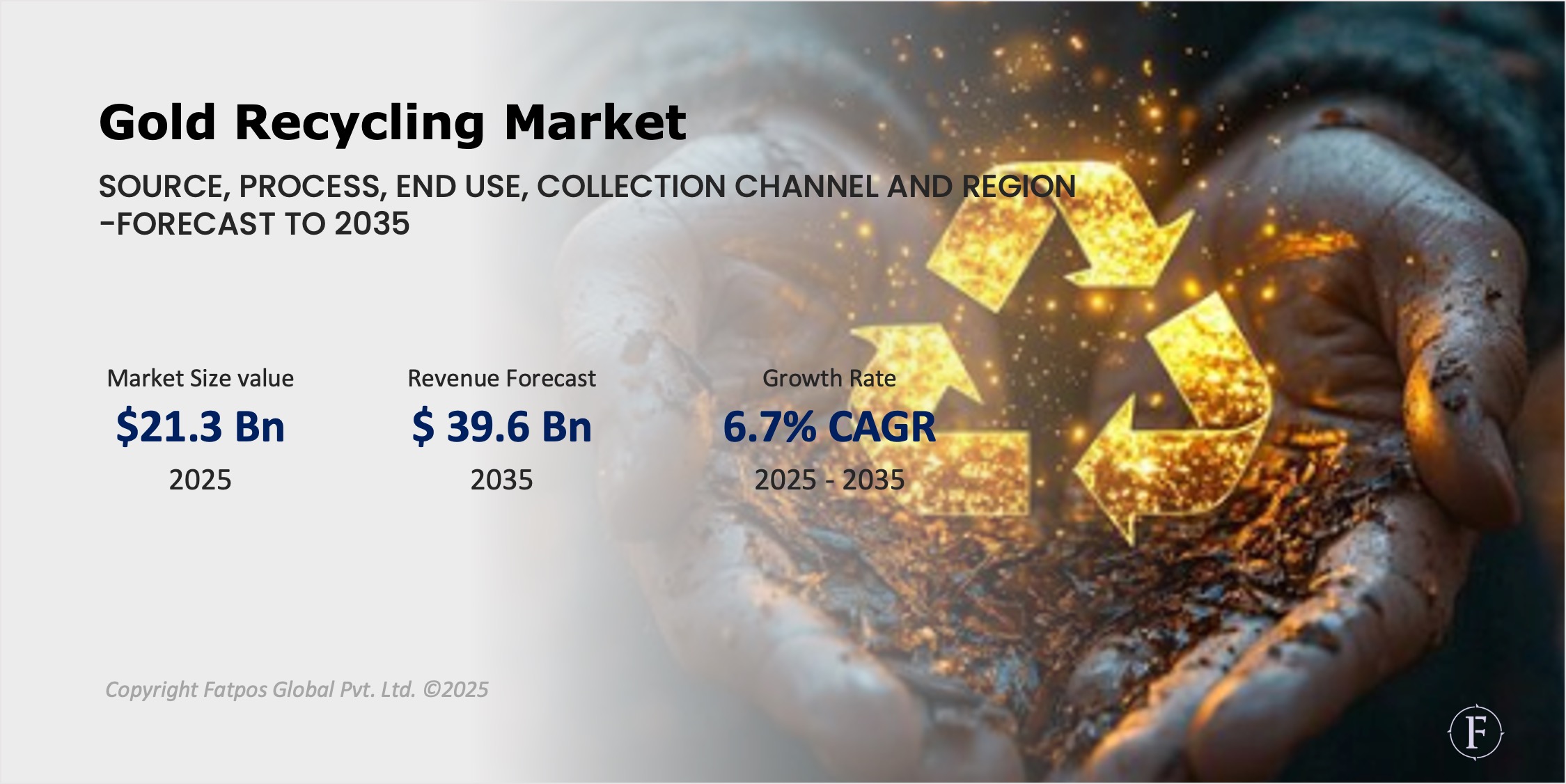
Gold recycling plays a critical role in supplementing primary gold supply, reducing the ecological footprint of mining operations, and stabilizing global supply chains. Recovery of gold from end-of-life products such as electronic waste, jewellery scrap, and industrial catalysts supports circular economy initiatives worldwide.
Product Overview
Gold recycling involves the recovery of gold from used, scrap, and defective products, followed by refining to purify the metal to industry standards. Major sources include jewellery, electronic waste (E-waste), dental waste, industrial scraps, and other consumer goods containing gold. Recycled gold is used across jewellery, investment products, electronics, and dental applications.
Processing techniques vary by source and desired purity levels, including fire assay, chemical and electrochemical methods, and combined hydrometallurgical and pyrometallurgical approaches. Collection of recyclable gold occurs through formal channels (regulated recycling facilities) and informal channels (small recyclers, informal collectors).
Key Takeaways:
- Gold Recycling Market expected to grow at 6.7% CAGR through 2035
- Jewellery is the largest source segment
- Chemical & Electrochemical processes dominate recovery methods
- Jewellery end use accounts for the highest consumption of recycled gold
- Formal collection channels lead due to traceability and regulation
- Asia-Pacific is the largest regional market
Market Dynamics
Drivers
The gold recycling market is driven by rising gold prices and increasing volatility in global mining output. Recycled gold offers a cost-effective and environmentally sustainable alternative to primary mined gold, reducing pressure on natural resources and lowering carbon emissions from mining. Increasing consumer awareness of sustainable sourcing and regulatory requirements for responsible supply chains encourage gold recycling practices across jewellery and electronics sectors.
Growth in electronic waste due to rapid technology turnover has created significant recyclable gold streams. Corporate initiatives by jewellery manufacturers to repurchase and reuse gold also enhance market growth, enabling circular supply chains and reducing raw material dependency.
Restraints
Despite its benefits, the gold recycling market faces challenges from inadequate collection infrastructure in many regions, especially in informal sectors where gold scrap is poorly captured. Low recovery rates from small-scale and artisanal sources due to suboptimal refining technology restrain overall supply. Regulatory complexities and varying environmental standards across countries make it difficult for recyclers to scale operations efficiently. Price fluctuations in gold markets can also disincentivize recycling when primary gold becomes cheaper.
Additionally, high initial investment costs for advanced recycling technologies and refining equipment further restrict expansion in emerging economies.
Opportunities
As environmental sustainability becomes a strategic priority, gold recycling stands to benefit from circular economy initiatives and corporate ESG commitments. Rapid growth in electronic waste presents a valuable opportunity for gold recovery, especially from high-value components such as connectors and microchips. Partnerships between formal recyclers and e-waste processors can unlock incremental supply streams. Advances in hydrometallurgical and bio-leaching technologies offer potential for more efficient and cost-effective gold recovery.
Emerging markets with expanding middle classes and strong consumer electronics penetration provide a growing base of recyclable materials. Government incentives for sustainable metals recycling can further stimulate sector investment and capacity expansion.
Challenges
The gold recycling market faces challenges related to inefficient collection systems, particularly in informal sectors where significant gold scrap remains untracked. Variations in environmental regulations and compliance standards across regions complicate operations for global recyclers. High capital investment requirements for advanced refining and recovery technologies limit entry of small and mid-sized players. Inconsistent supply of recyclable materials due to fluctuating gold prices affects operational stability.
Additionally, lack of consumer awareness regarding formal recycling channels reduces collection volumes. Managing hazardous waste from chemical processing and ensuring worker safety further add operational and regulatory complexities.
Gold Recycling Market Trends
The market is witnessing a shift toward automated and high-precision refining technologies that enhance gold recovery rates and minimize environmental impact. Digital traceability systems and blockchain-based supply chain solutions are gaining traction to ensure ethical sourcing and transparency. Formalization of previously informal recycling networks is improving material flows, especially in Asia-Pacific and Africa.
Growth in refurbished electronics and circular supply chains in jewellery manufacturing is increasing recycled gold use. Recyclers are also adopting multi-metal recovery processes to extract value from complex e-waste. Industry collaborations between technology innovators, recyclers, and regulators are shaping future market standards.
Key Players in the Global Gold Recycling Industry
- Umicore
- Asahi Holdings, Inc.
- Metallo Group
- Sims Metal Management
- EnviroGold Global Limited
- MBA Polymers
- Electron Metal Works
- Canadian Gold Reclaimers
- Refining & Recycling Precious Metals Co.
- Heritage Global Partners
Regional & Country Analysis
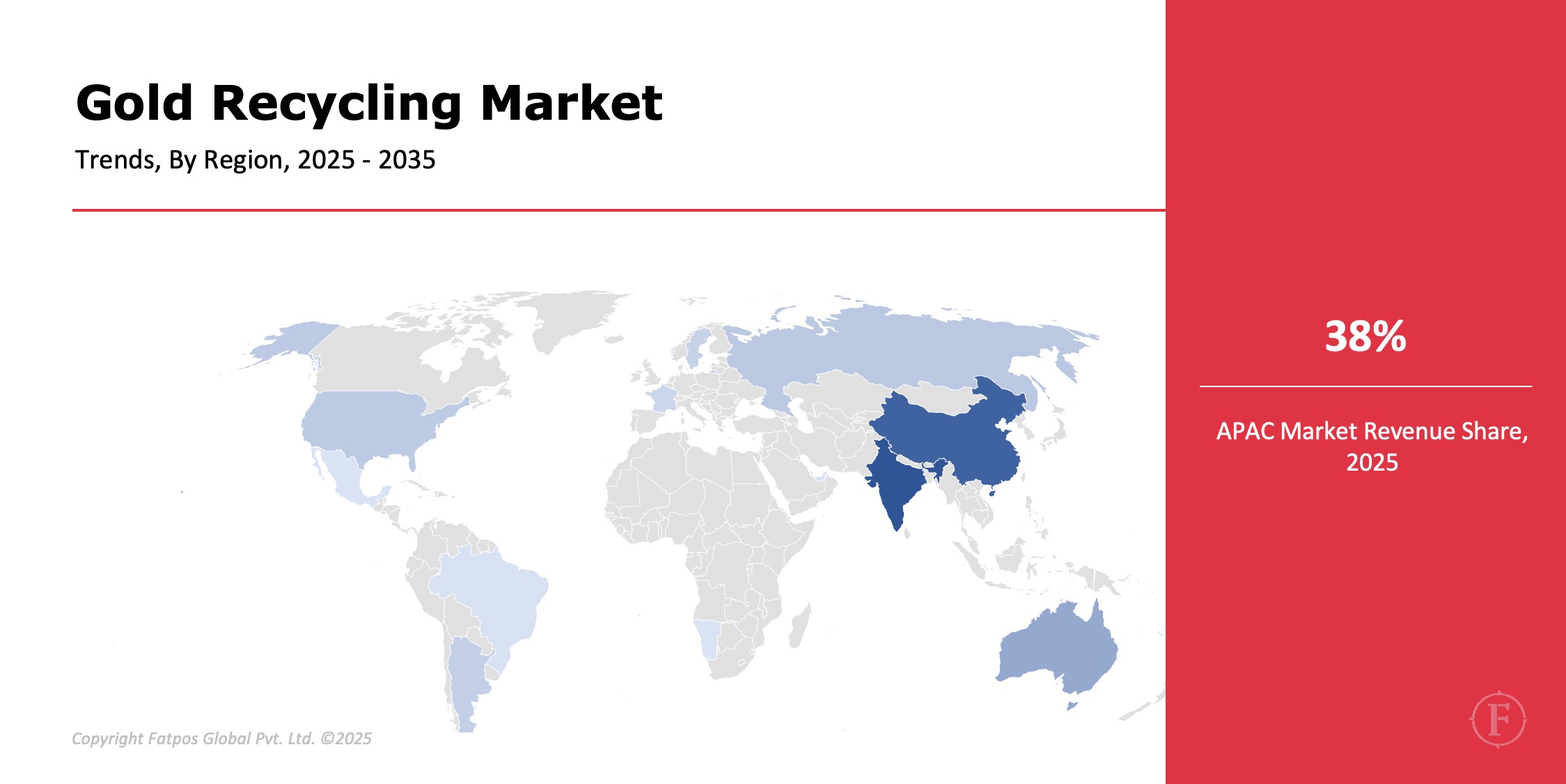
The Gold Recycling Market demonstrates strong regional variation driven by gold consumption patterns, industrial demand, and regulatory frameworks. Asia-Pacific dominates the market due to high jewellery consumption, large populations, and strong recycling activities in countries such as China and India, where gold holds cultural and financial significance. North America represents a mature market supported by advanced refining technologies, electronic waste recycling, and strict environmental regulations.
Europe shows steady growth, driven by sustainability initiatives, circular economy policies, and well-established precious metal recovery infrastructure, particularly in Germany, Switzerland, and the UK. Latin America is an emerging market, supported by mining activity and growing awareness of gold recovery from industrial waste. The Middle East & Africa exhibit moderate growth, driven by jewellery trade hubs and increasing focus on formal recycling channels, though informal recycling still limits full market potential.
Segmentation Highlights
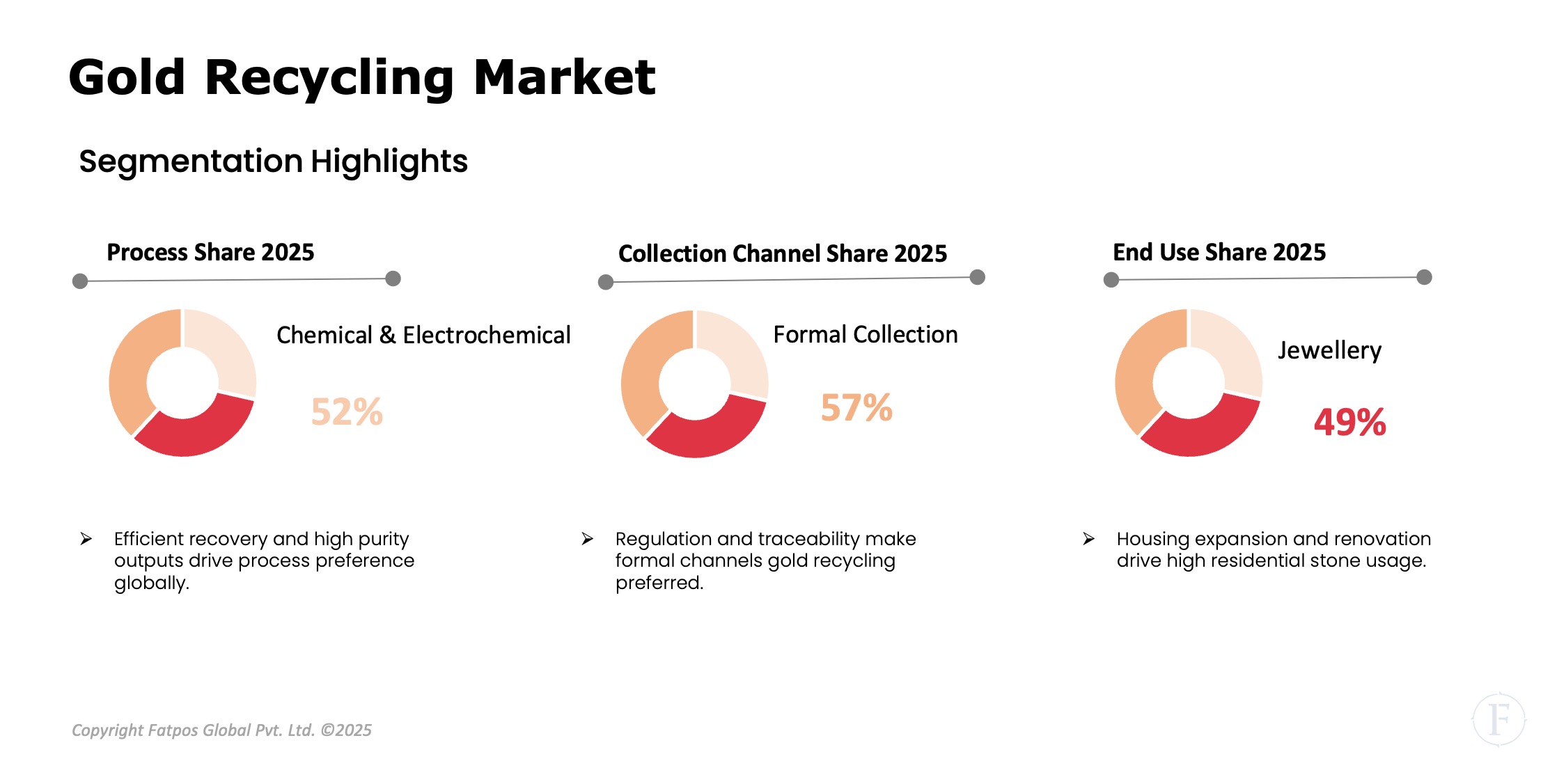
The Gold Recycling Market is segmented by source, process, end use, and region. By source, jewellery scrap holds the largest share due to frequent resale and replacement cycles. Pyrometallurgical processes dominate processing methods because of high recovery efficiency and scalability. By end use, jewellery manufacturing leads demand, supported by continuous global consumption and investment-driven purchases. Electronics recycling is a fast-growing segment, driven by rising e-waste volumes. Regionally, Asia-Pacific accounts for the highest share, supported by cultural affinity toward gold, expanding middle-class populations, and robust recycling ecosystems.
Report Key Elements
|
ATTRIBUTES |
DETAILS |
|
Study Period |
2019–2035 |
|
Base Year |
2024 |
|
Forecast Period |
2025–2035 |
|
Market Size by 2035 |
USD 39.6 Billion |
|
Market CAGR |
6.7% |
|
By Source |
Jewellery, Industrial Scrap, Electronic Waste, Dental Waste, Others |
|
By Process |
Chemical & Electrochemical, Fire Assay, Hydromet & Pyromet, Others |
|
By End Use |
Jewellery, Industrial, Investment, Dental |
|
By Collection Channel |
Formal Collection, Informal Collection |
|
By Region |
North America, Europe, Asia-Pacific, Latin America, MEA |
|
Gold Recycling Market: Key Players |
Umicore, Asahi Holdings, Inc., Metallo Group, Sims Metal Management, EnviroGold Global Limited |
Global Gold Recycling Industry Instances
- Jewellery recyclers expanded trade-in programs boosting gold recovery
- E-waste processors increased precious metals extraction from electronics
- Governments launched recycling incentives to enhance metals circularity
- Refiners adopted chemical/electrochemical processes for higher purity output
Analyst Review
As per our Gold Recycling Market analysis, the market will grow steadily through 2035 supported by sustainability priorities, rising gold prices, and increasing electronic waste. While regulatory and infrastructure challenges exist, improvements in refining technology, formal collection systems, and circular economy policies will strengthen industry resilience and global adoption.
Frequently Asked Questions (FAQ):
Gold recycling involves recovering gold from discarded products, refining it, and reintroducing it into supply chains for jewellery, industrial, or investment use.
Market growth is driven by rising gold prices, sustainability initiatives, increasing e-waste generation, and growing adoption of circular economy practices globally.
Jewellery scrap dominates the market due to high gold content, frequent replacement cycles, and large volumes of discarded gold ornaments.
Chemical and electrochemical processes dominate due to high recovery efficiency, scalability, cost effectiveness, and ability to achieve high-purity gold.
Asia-Pacific leads the market due to large jewellery consumption, strong recycling infrastructure, cultural gold ownership, and active secondary gold trade.
 Select License Type


.png)


