


Vector Control Market Research, 3034
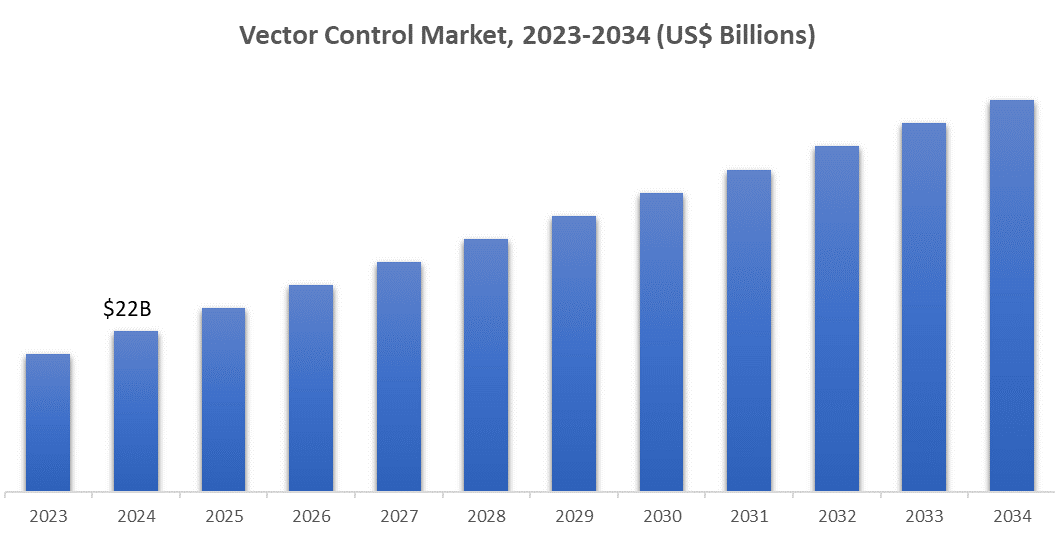
The vector control market is anticipated to grow at a CAGR of 6.4% in the forecast period (2024-2034), with the market size valued at US$ 20.7 billion in 2023 and projected to reach US$ 40.9 billion by 2034.
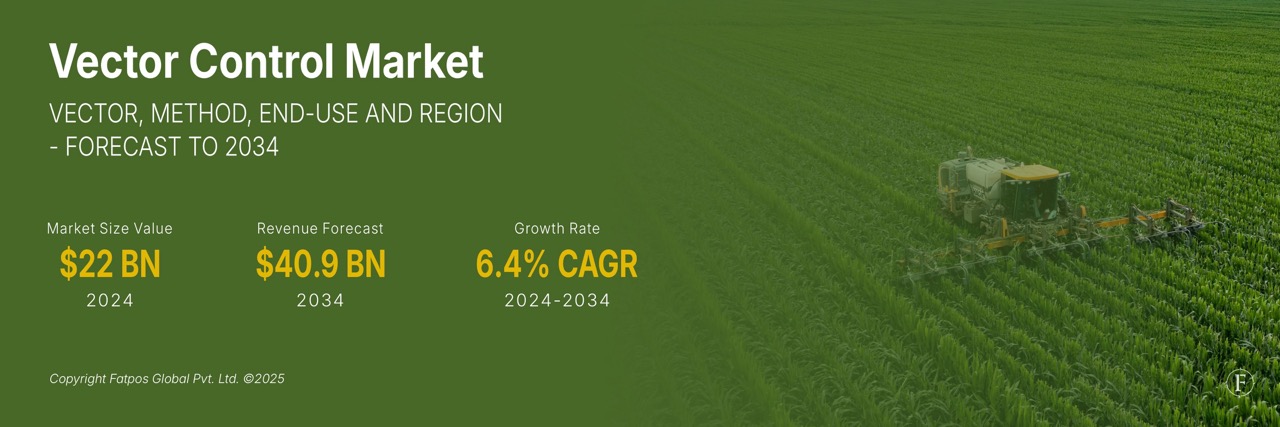
Vector control involves methodically regulating and reducing organisms, such as insects (e.g., mosquitoes, flies) and rodents (e.g., rats, mice), that carry diseases affecting humans or livestock. It comprises various approaches, including chemical agents such as pesticides, biological methods such as bacteria or GMOs, and physical strategies like traps and barriers.
Vector control is vital for public health efforts, particularly in combating malaria, dengue, and Zika, as it reduces vector populations and deters disease transmission. It also includes safeguarding crops and livestock in farming practices. The discipline combines cutting-edge technologies with environmentally friendly methods to achieve a balance between effectiveness and sustainability, tackling challenges in urban and rural areas across residential, commercial, and industrial domains.
Market Highlights:
The market is expanding due to the rising incidence of vector-borne illnesses such as malaria, dengue, and Lyme disease fuels the demands for efficient vector control methods. Urban expansion and rising population numbers have intensified vector reproduction, particularly in regions with high population density. Governments and public health agencies are significantly funding eradication initiatives to reduce disease outbreaks.
Furthermore, technological developments have made it possible to create environmentally friendly and biologically focused solutions, including genetically engineered mosquitoes and safe insecticides. Increasing awareness regarding hygiene and pest management in both commercial and residential areas also aids in market expansion. Future growth will be driven by the demand for eco-friendly practices and combined vector management systems, especially in regions that are at risk from climate change.
Market Segmentation:
Insects dominate the market due to the increasing prevalence of diseases transmitted by them
The market is bifurcated based on the Vector into Insects, Rodents, and Others. Insects, particularly mosquitoes, have a vital role in spreading diseases like malaria, dengue, Zika virus, and chikungunya. Mosquitoes are the main focus of widespread public health initiatives and commercial pest management activities.
The presence of various control techniques, such as insecticides, biological controls, and physical barriers such as nets, enhances this segment even more. Other insect carriers, like flies and cockroaches, add to the demand in urban and residential areas, especially in regions vulnerable to hygiene-related diseases.
Chemical-based vector control methods will likely dominate the market, driven by their established efficacy and proven track record
The market is segmented based on the Method into Chemical, Biological, and Physical & Mechanical. Chemical approaches lead the market because of their proven efficiency, simplicity of application, and extensive utilization in both residential and public health areas.
Insecticides, rodenticides, and fumigants offer rapid and precise methods for controlling vector populations, especially in urban and industrial settings. They are the favored option for extensive campaigns, like mosquito control initiatives, propelled by ongoing improvements in environmentally safe and less harmful formulations.

Market Dynamics:
Growth Drivers
Rising Incidence of Vector-Borne Diseases to Provide Significant Growth Opportunity
The constant growth in vector-borne diseases such as malaria, dengue, Zika virus, and Lyme disease significantly fuels the growth of the market. Climate change and swift urban growth have increased vector habitats, worsening outbreaks.
Growing public health issues and the financial impact of these illnesses have elevated the need for efficient vector management strategies, such as widespread insecticide applications and novel biological control methods. The focus on early intervention and vector elimination has encouraged government agencies and private entities to invest in sustainable management approaches.
Government Initiatives and Public Health Campaigns to Propel Market Growth
Governments around the globe are instituting focused vector control initiatives to tackle public health emergencies. Efforts such as mosquito elimination campaigns, providing insect-repellent nets, and city pest control programs enhance market expansion.
Collaborations between health organizations and businesses promote innovation, including genetically engineered vectors and sustainable control methods. These initiatives have a significant effect in developing areas where vector-borne illnesses are common, promoting sustained market growth and the uptake of integrated solutions.
Restraints
Environmental Concerns and Stringent Regulations May Impede Growth
The environmental impacts of chemical pesticides are a major limitation on the market. These products frequently damage non-target species, including pollinators and aquatic organisms, disrupting ecosystems. Remaining toxicity in soil and water presents lasting dangers to biodiversity and human well-being, resulting in greater inspection by regulatory bodies. Authorities and agencies have enacted strict laws to restrict or prohibit the use of specific chemical pesticides, emphasizing environmentally friendly substitutes.
Adhering to these regulations increases expenses for producers and restricts access to certain highly effective solutions, especially in developing areas with limited access to advanced technologies. This generates a demand for sustainable vector management techniques, like biological and integrated strategies, although these typically incur higher expenses and necessitate more intricate execution.
Recent Developments
- BASF has received a WHO PQ listing for Interceptor G2, a long-lasting insecticide-treated mosquito net designed to combat resistant mosquitoes, bolstering the fight against malaria.
- Rentokil Initial has inaugurated its first Pest Control Innovation Centre in North America, located in Dallas, Texas. This hub will facilitate research and development, innovation testing, technician training, and advancements in public health.
- Bayer aims to introduce ten innovative products over the next decade, featuring third- and fourth-generation insect protection traits. The company has also collaborated with AlphaBio Control to launch the first biological insecticide, slated for release in 2028.
- Syngenta Biologicals has partnered with Provivi to develop novel pheromone solutions targeting devastating pests in key Asian crops, specifically the Yellow Stem Borer and Fall Armyworm.
- FMC Corporation has announced a research agreement with AgroSpheres, a biotechnology firm pioneering sustainable crop protection and health solutions.
Key Players:
- BASF SE
- Rentokil Initial plc
- Bayer AG
- Syngenta AG
- FMC Corporation
- Terminix Global Holdings, Inc.
- Sumitomo Chemical Co., Ltd.
- Rollins, Inc.
- Clarke Mosquito Control
- Adama Agricultural Solutions Ltd.
- Ecolab Inc.
- Bell Laboratories, Inc.
- MGK
- Univar Solutions
- SC Johnson Professional
- Other Prominent Players (Company Overview, Business Strategy, Key Product Offerings, Financial Performance, Key Performance Indicators, Risk Analysis, Recent Development, Regional Presence, SWOT Analysis)
Regional Analysis
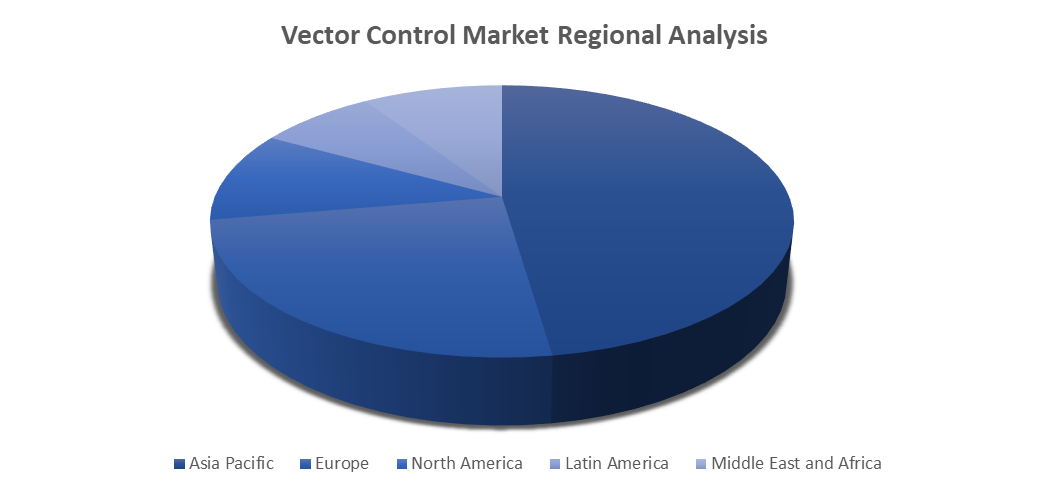
The global vector control market is divided by regional analysis into five key areas: North America, Latin America, Europe, Asia Pacific, and the Middle East and Africa.
North America generally dominates the market because of robust public health programs, rigorous regulatory standards, and high consumer awareness. The region has been known for making significant investments in advanced vector control methods such as genetically altered mosquitoes and eco-friendly pest management strategies. The demand from both residential and commercial sectors, combined with proactive efforts to address West Nile Virus and Lyme disease, propels growth. The existence of major market players such as BASF SE and Bayer AG further reinforces North America's supremacy.
The Asia-Pacific region exhibits considerable growth potential owing to the widespread occurrence of vector-borne illnesses such as dengue and malaria. Nonetheless, restricted awareness and infrastructural issues hinder the overall extensive adoption.
Europe has an established market, propelled by strict regulations and a need for eco-friendly alternatives.
Latin America and the Middle East & Africa trail in market share, mainly because of economic limitations and an absence of cohesive vector management systems, although public health initiatives are slowly enhancing the situation.
Market is further segmented by region into:
- North America Market Size, Share, Trends, Opportunities, Y-o-Y Growth, CAGR – United States and Canada
- Latin America Market Size, Share, Trends, Opportunities, Y-o-Y Growth, CAGR – Mexico, Argentina, Brazil, and Rest of Latin America
- Europe Market Size, Share, Trends, Opportunities, Y-o-Y Growth, CAGR – United Kingdom, France, Germany, Italy, Spain, Belgium, Hungary, Luxembourg, Netherlands, Poland, NORDIC, Russia, Turkey, and Rest of Europe
- Asia Pacific Market Size, Share, Trends, Opportunities, Y-o-Y Growth, CAGR – India, China, South Korea, Japan, Malaysia, Indonesia, New Zealand, Australia, and Rest of APAC
- Middle East and Africa Market Size, Share, Trends, Opportunities, Y-o-Y Growth, CAGR – North Africa, Israel, GCC, South Africa, and Rest of MENA
Market Scope and Segments:
|
ATTRIBUTE |
DETAILS |
|
Study Period |
2018-2034 |
|
Base Year |
2023 |
|
Forecast Period |
2024-2034 |
|
Historical Period |
2019-2022 |
|
Growth Rate |
CAGR of 6.4% from 2024-2034 |
|
Unit |
Value (US$ Billion) |
|
Segmentation |
Main Segments List |
|
By Vector |
|
|
By Method |
|
|
By End User |
|
|
By Region |
|
Frequently Asked Questions (FAQ):
The global vector control market size was valued at US$ 20.7 billion in 2023 and is projected to reach the value of US$ 40.9 billion in 2034, exhibiting a CAGR of 6.4% during the forecast period.
The market refers to the industry focused on preventing and controlling the spread of diseases transmitted by vectors such as mosquitoes, ticks, and rodents. It encompasses products and services like insecticides, repellents, and trapping systems.
The Insects and Chemical Method segment accounted for the largest market share.
Key players in the vector control market include BASF SE, Bayer AG, Syngenta AG, FMC Corporation, Rentokil Initial plc, Terminix Global Holdings, Inc., Sumitomo Chemical Co., Ltd., Rollins, Inc., Clarke Mosquito Control, Adama Agricultural Solutions Ltd., Ecolab Inc., Bell Laboratories, Inc., MGK, Univar Solutions, SC Johnson Professional and Other Prominent Players.
The market is driven by factors such as increasing vector-borne diseases, growing urbanization, rising awareness about public health, and advancements in technology and product innovations.
 Select License Type


.png)


