


Switchgear Market Research, 2034
Forecasts indicate that the global switchgear market will significantly increase, with a projected CAGR of 6% between 2024 and 2034. The market size is estimated to grow from US$ 98.8 billion in 2023 to US$ 187.2 billion by 2034.
Switchgear refers to a group of electrical tools that are utilized to manage, safeguard, and separate electrical machinery within power systems. It includes items like circuit breakers, switches, fuses, and relays that aid in controlling and overseeing the electricity flow. Switchgear is crucial in guaranteeing the safety and dependability of electrical systems and averting equipment harm caused by overloads, short circuits, and other malfunctions.
It also allows for the maintenance and repair of electrical circuits by facilitating the secure disconnection of sections of the system. Switchgear is an essential component in today's electrical infrastructure, assisting in efficient power distribution and grid stability in various environments such as residential, commercial, industrial, and power plant settings.
Market Highlights
The market is influenced by rising global electricity demand, especially in fast-urbanizing and industrializing areas. As countries focus on expanding their power infrastructure, the demand for dependable and effective electrical distribution systems increases. The advancement of switchgear is needed to incorporate wind and solar energy sources into the grid as they expand.
Furthermore, substantial investments in intelligent grid technology and the upgrading of outdated power infrastructure are increasing the need. The global shift towards clean energy, greater electrification in various sectors, and the demand for improved grid stability and safety in more complex electrical networks will drive future expansion.
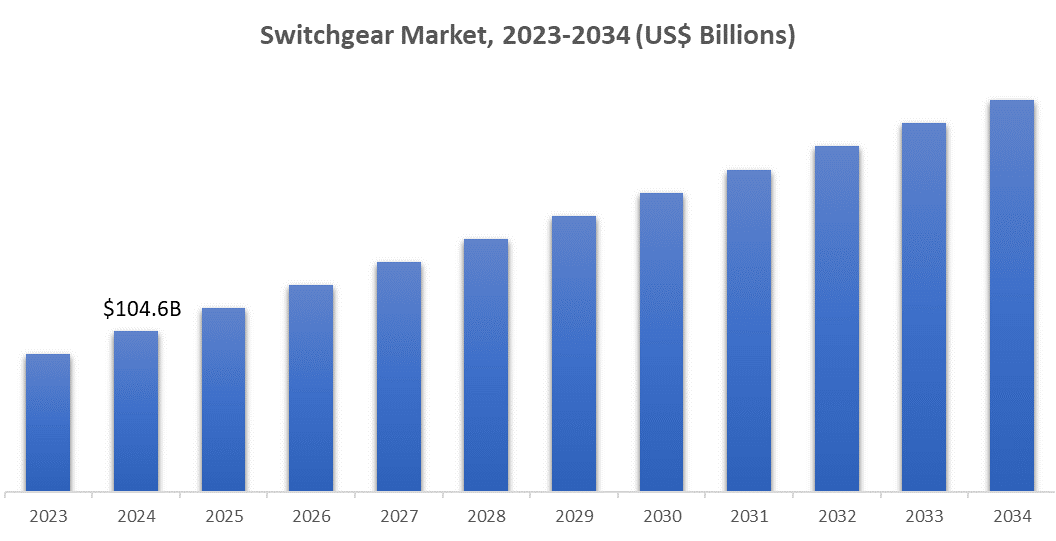
Source: Fatpos Global
Market Segmentation
Gas-insulated switchgear holds a dominant position owing to its compact design and enhanced performance
The market is categorized based on Insulation into Air Insulated, Gas Insulated, Vacuum Insulated, and Others. Gas-insulated switchgear (GIS) has emerged as the leading insulation technology in the switchgear industry owing to its smaller size, enhanced reliability, and better performance. By using high-pressure insulating gases such as SF6, GIS provides greater insulation strength per unit volume, allowing for more compact designs and lower land requirements, making it well-suited for urban environments.
The enclosed construction reduces the need for maintenance and prevents external contamination, resulting in better reliability and safety. This also lowers the risk of arc faults and reduces any form of electromagnetic interference. GIS also boosts system responsiveness and efficiency by allowing for quicker switching times and increased current carrying capacity. Its ability to be used in power generation, transmission, and industrial applications, along with its seamless integration into smart grids, cements its status as the top choice in contemporary electrical systems.
Low voltage switchgear maintains market dominance due to its widespread use, cost efficiency, and established industry standards
The market is categorized based on Voltage into Low Voltage, Medium Voltage, and High Voltage. Low-voltage switchgear dominates the market due to its wide range of uses, affordability, and advanced technology. In residential, commercial, and industrial environments, it plays a crucial role by managing and safeguarding electrical circuits, operating machinery, and providing lighting. Lower costs of manufacturing and installation result in low-voltage switchgear being more cost-effective, with its well-established technology guaranteeing reliability and compatibility.
Strict laws and regulations in several countries continue to increase the demand for electrical installations, guaranteeing safety and consistency. Furthermore, the increasing demand for intelligent grids and home automation has resulted in the merging of low-voltage switchgear with smart devices, allowing for efficient and smart management of electrical systems, and further establishing its leading position in the market.

Market Dynamics
Growth Drivers
Modernization and Replacement of Aging Power Infrastructure to Drive Market Growth
Upgrading and replacing old power infrastructure are important factors driving growth in the market. Numerous current electrical grids and power systems, especially in developed regions, are outdated and becoming more susceptible to faults, inefficiencies, and safety hazards. Consequently, utilities and governments are making significant investments to improve these systems to increase reliability, efficiency, and resilience.
Upgrades require modern switchgear that includes digital monitoring, automated controls, and enhanced safety mechanisms. Adhering to strict safety and environmental regulations speeds up the implementation of new switchgear solutions. This infrastructure modernization wave helps meet increasing energy needs and readies grids for upcoming obstacles, fuelling continuous market expansion.
Growth in Renewable Energy Installations Requiring Advanced Grid Infrastructure to Propel Market Growth
The rapid expansion of renewable energy sources, such as wind and solar power, is creating a strong demand for upgraded grid infrastructure, such as modern switchgear. Advanced grid management is needed to ensure stable and reliable power distribution due to the decentralized and intermittent nature of renewable energy sources.
Sophisticated switchgear solutions are crucial for incorporating these renewable energy sources into the grid, providing functions such as live monitoring, identifying faults, and swift switching to manage the changing power levels.
Additionally, the increasing focus on cleaner energy and global carbon reduction goals is speeding up the funding of renewable projects, thereby increasing the demand for efficient and flexible switchgear systems. This pattern is anticipated to drive market expansion as grids adapt to handle a growing proportion of renewable energy sources.
Restraints
Complex Regulatory Standards and Compliance Requirements May Obstruct Market Growth
The switchgear industry faces significant challenges in market growth due to the presence of complex regulatory standards and compliance requirements. The strict rules for switchgear design, installation, and operation may vary by region, frequently requiring manufacturers to customize their products to adhere to particular regional regulations. This results in higher investment expenses and delayed launch of new products.
Furthermore, ongoing adjustments to rules, especially those concerning environmental and safety impacts, require companies to constantly adjust and follow them, increasing their operational responsibilities. Smaller manufacturers may find it challenging to navigate complex regulatory landscapes, which could hinder their market access. In general, these restraints on compliance may impede market growth by slowing down innovation, raising expenses, and creating barriers to entry.
Recent Developments
- In 2023, ABB launched its new eco-efficient gas-insulated switchgear (GIS) called PrimeGear™ ZX0, designed for reducing greenhouse gas emissions. The company announced a strategic partnership with Hitachi Energy in 2024 to develop digital solutions for power systems, enhancing their switchgear offerings with advanced monitoring and control capabilities.
- Siemens AG introduced the Sensgear™ technology in 2023, integrating IoT solutions with switchgear for real-time monitoring and diagnostics. In 2024, Siemens formed a joint venture with a leading renewable energy company to develop advanced switchgear systems tailored for offshore wind farms.
- In 2023, Schneider Electric SE launched a new series of medium-voltage switchgear, the Premset, featuring solid insulation to enhance safety and reliability. In 2024, Schneider Electric acquired a smaller firm specializing in digital switchgear technology to expand its portfolio in the smart grid sector.
- In 2023, GE launched a digital substation solution, integrating advanced switchgear with digital sensors and control systems for enhanced grid reliability. In 2024, the company merged its grid solutions business with a major utility company to strengthen its market presence in high-voltage switchgear.
- In 2023, Eaton Corporation introduced the Power Defense circuit breakers, enhancing its low-voltage switchgear portfolio with advanced protection and diagnostics features.
Key Players
- ABB Ltd.
- Siemens AG
- Schneider Electric SE
- General Electric Company
- Eaton Corporation
- Mitsubishi Electric Corporation
- Toshiba Corporation
- Hitachi, Ltd.
- Hyosung Corporation
- CG Power and Industrial Solutions Limited
- Fuji Electric Co., Ltd.
- Hyundai Electric & Energy Systems Co., Ltd.
- Larsen & Toubro Limited
- Powell Industries, Inc.
- Lucy Electric
- Other Prominent Players (Company Overview, Business Strategy, Key Product Offerings, Financial Performance, Key Performance Indicators, Risk Analysis, Recent Development, Regional Presence, SWOT Analysis)
Regional Analysis
The global switchgear market is segmented based on regional analysis into five major regions: North America, Latin America, Europe, Asia Pacific and the Middle East and Africa.
Asia Pacific region holds a dominant market share as a direct result of fast-paced industrialization, urbanization, and substantial investments in infrastructure growth. China and India's increasing demand for switchgear is fueled by the modernization of their power infrastructure and the growth of their energy industries. The market's growth is driven by the region's strong collective focus on expanding electricity access and incorporating renewable energy sources.
Furthermore, Asia-Pacific's extensive manufacturing capacity and competitive pricing play a significant role in its dominance of the global market.
North America and Europe also have important roles in the market, influenced by upgrades in infrastructure and strict safety regulations. North America enjoys the benefits of cutting-edge technology and significant funding for smart grid solutions. Europe prioritizes enhancing grid infrastructure and incorporating renewable energy, with regulatory frameworks that encourage sustainability.
Latin America and the Middle East & Africa are emerging markets, with rising investments in power infrastructure and initiatives to enhance electricity access and dependability. Nevertheless, they are currently falling behind Asia-Pacific in total market share.
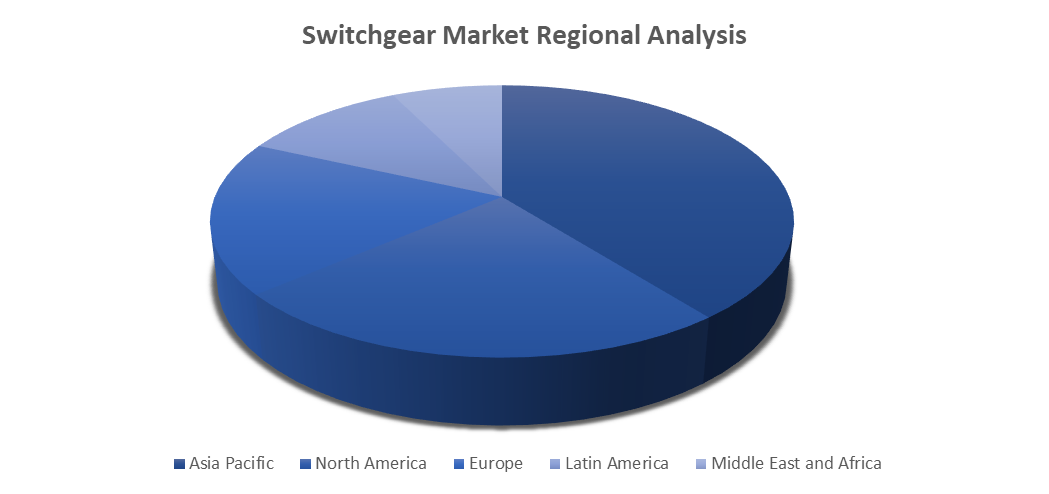
Market is further segmented by region into:
- North America Market Size, Share, Trends, Opportunities, Y-o-Y Growth, CAGR – United States and Canada
- Latin America Market Size, Share, Trends, Opportunities, Y-o-Y Growth, CAGR – Mexico, Argentina, Brazil, and Rest of Latin America
- Europe Market Size, Share, Trends, Opportunities, Y-o-Y Growth, CAGR – United Kingdom, France, Germany, Italy, Spain, Belgium, Hungary, Luxembourg, Netherlands, Poland, NORDIC, Russia, Turkey, and Rest of Europe
- Asia Pacific Market Size, Share, Trends, Opportunities, Y-o-Y Growth, CAGR – India, China, South Korea, Japan, Malaysia, Indonesia, New Zealand, Australia, and Rest of APAC
- Middle East and Africa Market Size, Share, Trends, Opportunities, Y-o-Y Growth, CAGR – North Africa, Israel, GCC, South Africa, and Rest of MENA
Market Scope and Segments
|
ATTRIBUTE |
DETAILS |
|
Study Period |
2018-2034 |
|
Base Year |
2023 |
|
Forecast Period |
2024-2034 |
|
Historical Period |
2019-2022 |
|
Growth Rate |
CAGR of 6.0% from 2024-2034 |
|
Unit |
Value (US$ Billion) |
|
Segmentation |
Main Segments List |
|
By Voltage |
|
|
By Insulation |
|
|
By Installation |
|
|
By Current |
|
|
By End Use |
|
|
By Region |
|
Frequently Asked Questions (FAQ):
The global switchgear market size was valued at US$ 98.8 billion in 2023 and is projected to reach US$ 187.2 billion in 2034, exhibiting a CAGR of 6.0% during the forecast period.
The market involves equipment used to control, protect, and isolate electrical circuits and devices. It includes components like circuit breakers, switches, and fuses, essential for managing power distribution, ensuring system reliability, and enhancing safety.
The Gas Insulated and Low Voltage segment accounted for the largest market share.
Key players in the Global Switchgear Market include ABB Ltd., Siemens AG, Schneider Electric SE, General Electric Company, Eaton Corporation, Mitsubishi Electric Corporation, Toshiba Corporation, Hitachi, Ltd., Hyosung Corporation, CG Power and Industrial Solutions Limited, Fuji Electric Co., Ltd., Hyundai Electric & Energy Systems Co., Ltd., Larsen & Toubro Limited, Powell Industries, Inc., Lucy Electric and Other Prominent Players.
Factors driving the market include increasing electricity demand, infrastructure modernization, growth in renewable energy installations, and advancements in smart grid technologies.
 Select License Type


.png)


