


Smart TV Stick Market Research 2035
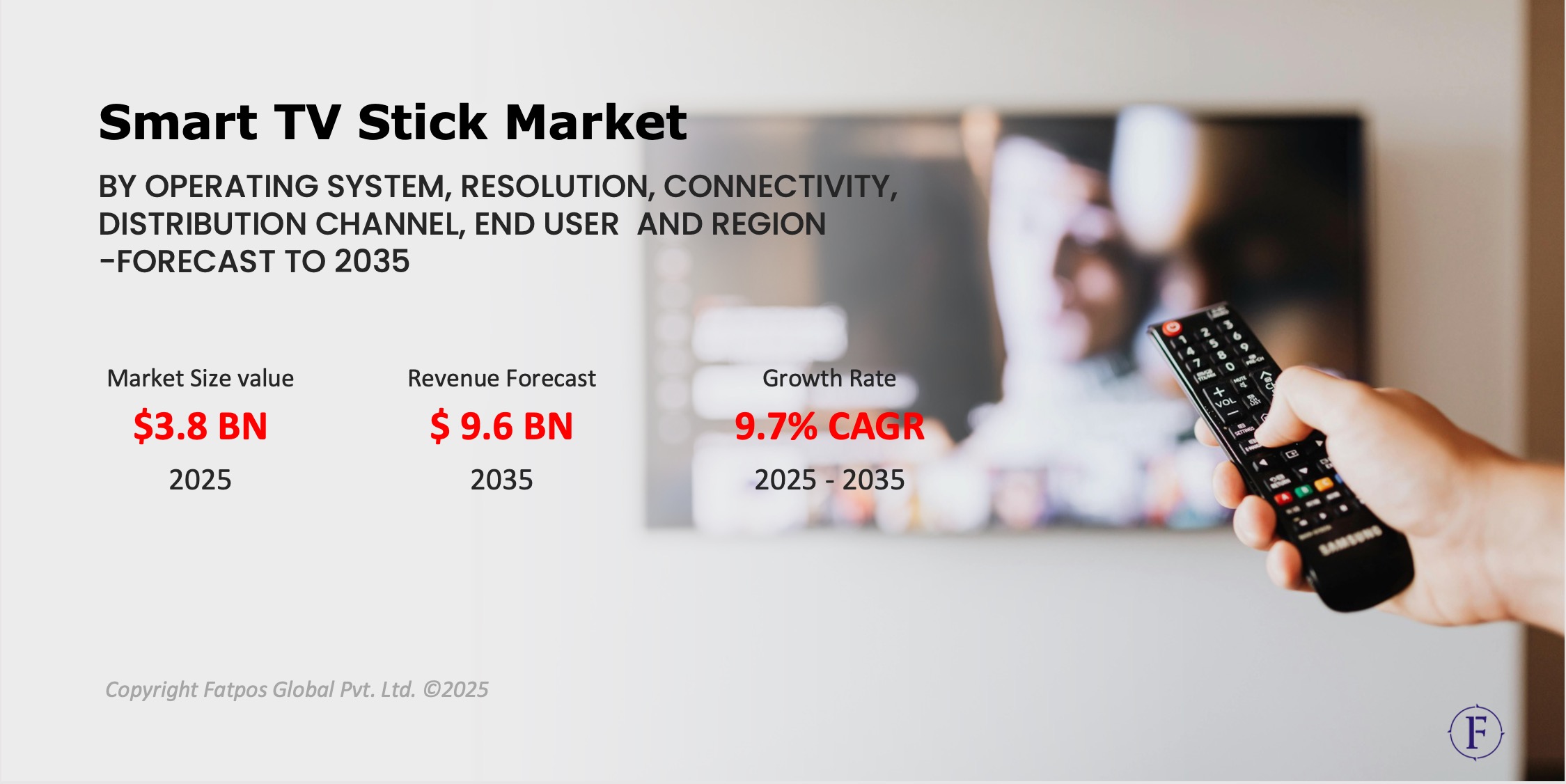
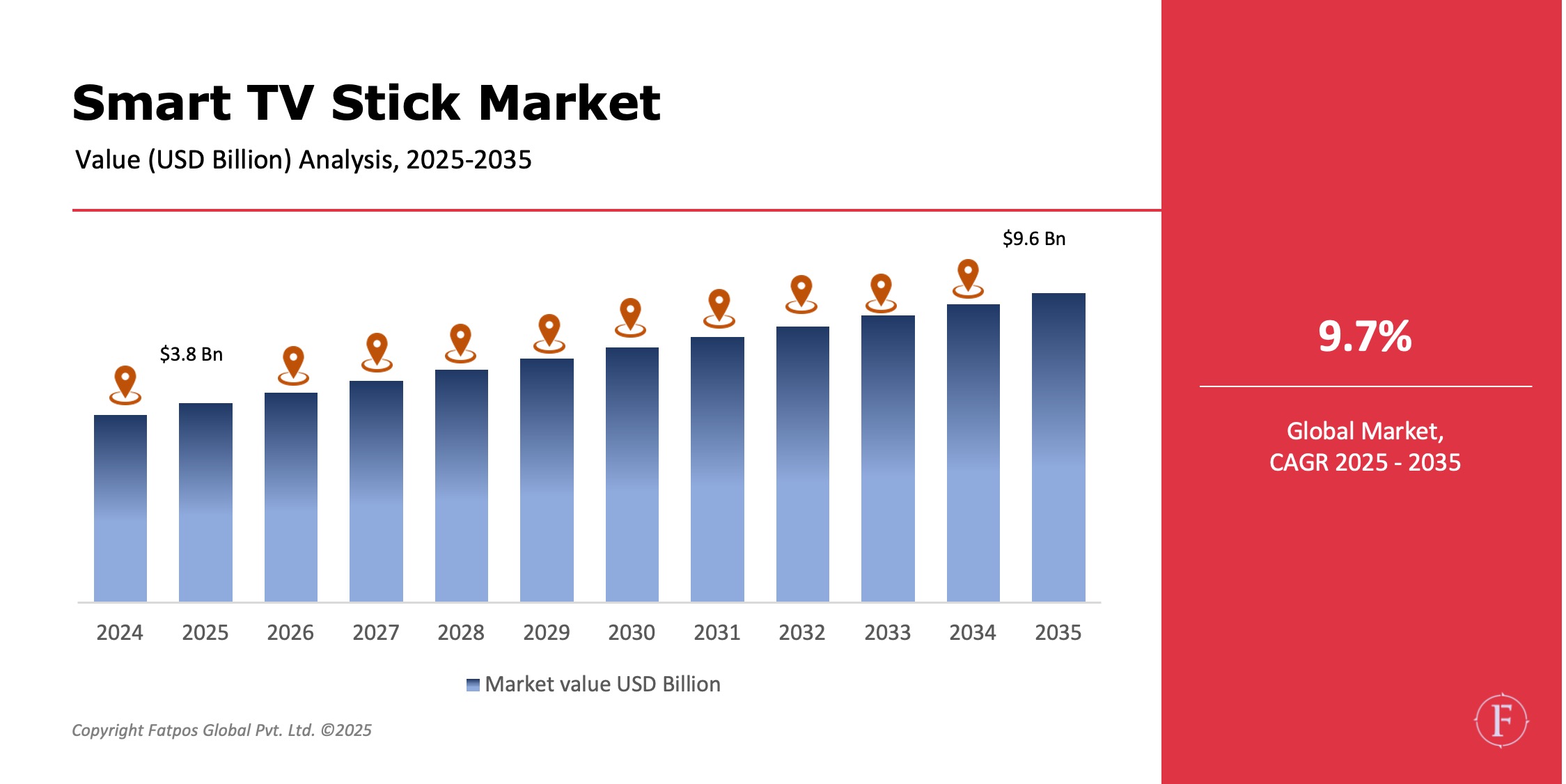
The Smart TV Stick Market Size was valued at USD 3.8 billion in 2025 and is projected to reach USD 9.6 billion by 2035, registering a CAGR of 9.7% during the forecast period. Market growth is driven by increasing demand for affordable streaming devices, rising penetration of high-speed internet, growing adoption of OTT platforms, and expanding smart home ecosystems.
Smart TV sticks are compact streaming devices that plug directly into televisions via HDMI ports, enabling access to internet-based content, applications, and smart features. As consumers increasingly shift from traditional cable television to on-demand streaming, smart TV sticks offer a cost-effective and convenient solution to transform standard TVs into smart entertainment hubs.
Product Overview
Smart TV sticks play a crucial role in modern digital entertainment by enabling seamless access to streaming platforms such as Netflix, Amazon Prime Video, Disney+, and YouTube. These devices integrate operating systems, wireless connectivity, and application ecosystems into a compact, portable form factor.
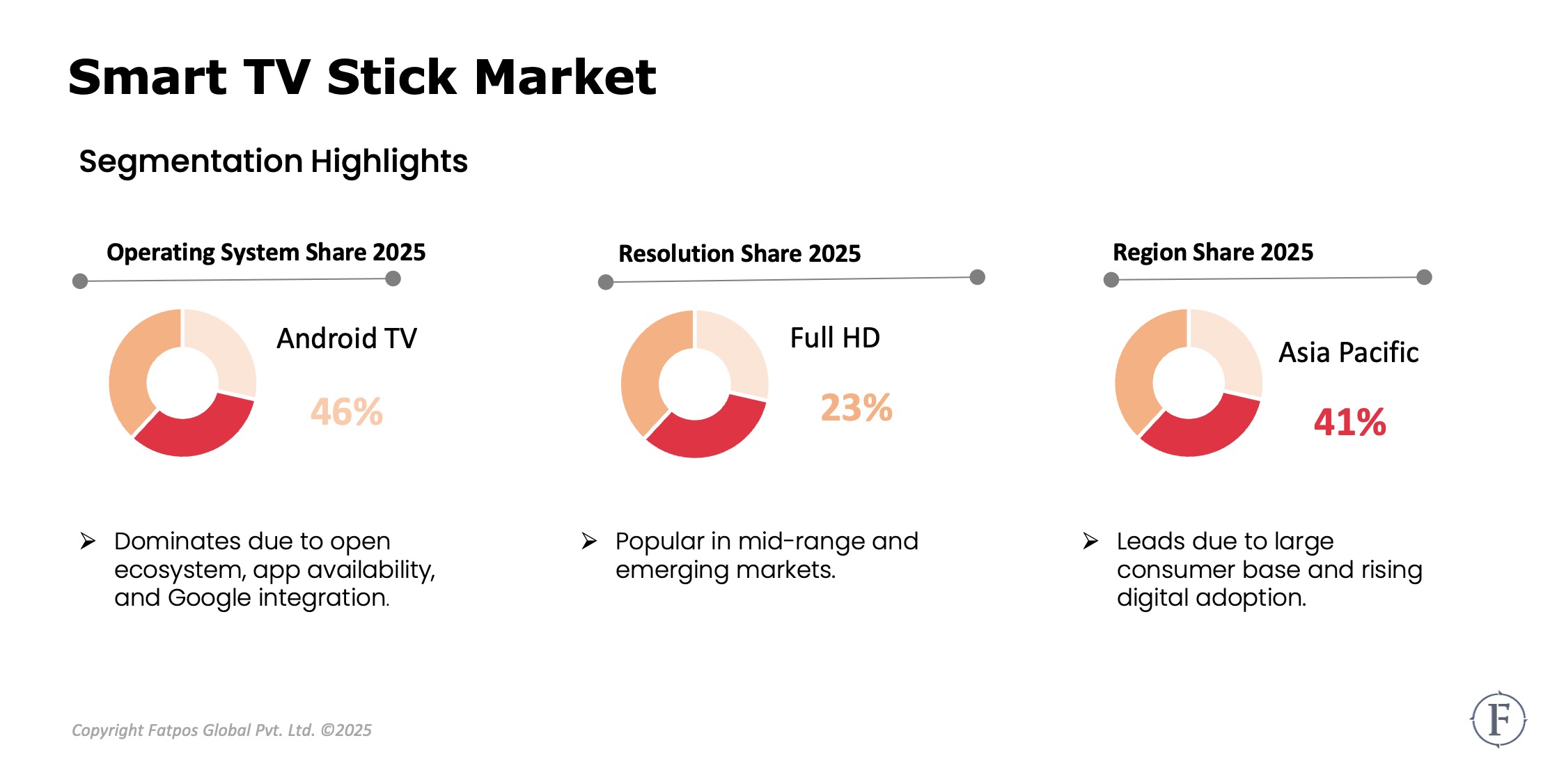
By operating system, Android TV-based sticks dominate due to flexibility, app availability, and integration with Google services. Fire OS and Roku OS also hold significant market share, offering user-friendly interfaces and strong ecosystem integration. Resolution capabilities have evolved rapidly, with 4K streaming becoming the industry standard and emerging adoption of 8K-enabled devices in premium segments.
Connectivity features such as Wi-Fi and Bluetooth enable smooth streaming, voice control, and device pairing. Additionally, smart TV sticks are increasingly integrated with voice assistants such as Alexa and Google Assistant, enhancing user experience and convenience.
Key Takeaways :
- The Smart TV Stick Market is expected to grow at 9.7% CAGR through 2035.
- 4K streaming devices dominate the market share.
- OTT platform growth is a primary demand driver.
- Residential users account for the largest consumption segment.
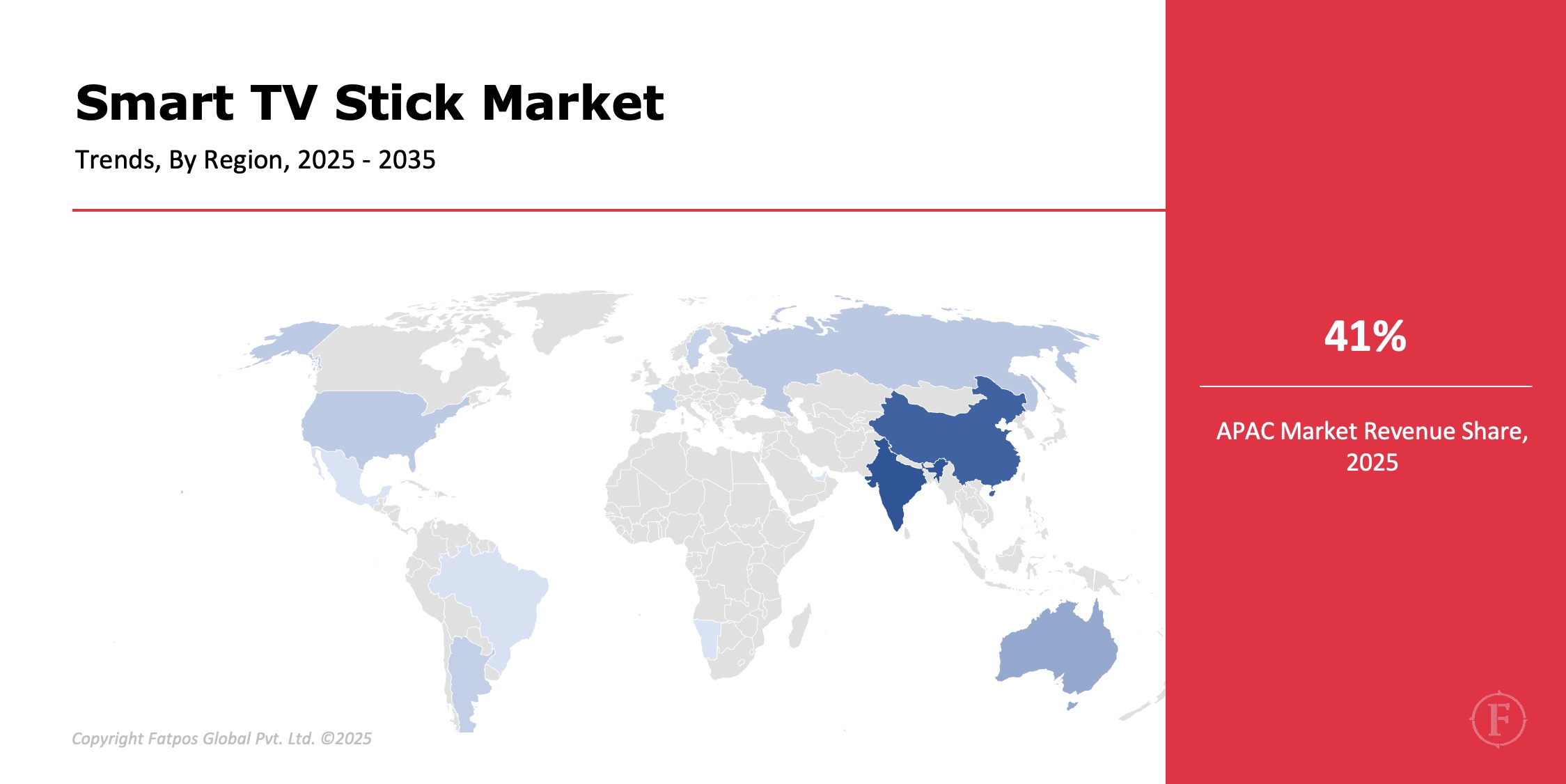
- Asia-Pacific leads global demand and production.
- Voice-enabled and AI-powered features are key competitive differentiators.
Market Dynamics
Drivers
The rapid expansion of OTT platforms and streaming services is a major driver of the smart tv stick market. Consumers are increasingly shifting from traditional cable TV to subscription-based and ad-supported streaming platforms, driving demand for affordable and flexible streaming devices.
Growing internet penetration and improvements in broadband infrastructure have significantly enhanced streaming quality and accessibility. High-speed internet enables seamless HD and 4K streaming, encouraging adoption of smart TV sticks across both developed and emerging markets. Rising consumer preference for portable and cost-effective entertainment solutions further supports market growth. Compared to smart TVs, smart TV sticks offer similar functionalities at a lower price point, making them accessible to a wider audience.
Restrictions
Despite strong growth, the smart tv stick market faces certain restraints. Market saturation in developed regions, where smart TVs are already widely adopted, limits incremental demand for external streaming devices. Compatibility issues with older televisions and variations in operating systems can create user challenges. Additionally, intense competition among manufacturers leads to pricing pressure, impacting profit margins.
Dependence on internet connectivity also acts as a limitation, particularly in regions with unstable or low-speed networks, affecting streaming performance and user experience.
Opportunities
Significant opportunities exist in emerging markets where smart TV penetration remains low but internet adoption is rapidly increasing. Affordable smart TV sticks provide an entry point for digital entertainment, especially in countries across Asia, Africa, and Latin America.
Integration with smart home ecosystems presents additional growth potential. Smart TV sticks can act as control hubs for connected devices, enabling voice commands, home automation, and IoT integration. Advancements in AI, personalized content recommendations, and voice recognition technologies create opportunities for enhanced user experiences. Manufacturers focusing on software innovation and ecosystem integration are likely to gain competitive advantages.
Challenges
The Smart TV Stick Market faces challenges related to rapid technological evolution and short product lifecycles. Continuous innovation is required to meet consumer expectations for performance, resolution, and features.
Cybersecurity and data privacy concerns are increasing as devices become more connected. Ensuring secure data handling and protecting user information are critical for maintaining consumer trust. Intense competition from integrated smart TVs and alternative streaming devices also poses challenges. Companies must differentiate through pricing, features, and ecosystem integration to sustain market growth.
Smart TV Stick Market Trends
The Smart TV Stick Market is increasingly evolving toward enhanced streaming capabilities and more personalized viewing experiences. Features such as AI-based content recommendations, voice-enabled navigation, and seamless multi-device connectivity are becoming standard across devices, contributing significantly to the overall Smart TV stick market share.
Demand for 4K and HDR streaming continues to rise, while 8K functionality is gradually gaining traction in premium segments, further accelerating Smart TV stick market growth. Advancements in cloud streaming and edge computing are improving content delivery efficiency and minimizing latency. Sustainability is also emerging as a key focus area, with manufacturers emphasizing energy-efficient designs, eco-friendly materials, and reduced packaging. Furthermore, collaborations between streaming platforms and device manufacturers are strengthening bundled offerings and expanding market reach.
Key Players in the Smart TV Stick Industry
- com, Inc.
- Google LLC
- Roku, Inc.
- Apple Inc.
- Xiaomi Corporation
- Samsung Electronics Co., Ltd.
- LG Electronics
- Huawei Technologies Co., Ltd.
- Realme
- OnePlus Technology Co., Ltd.
Regional & Country Analysis
Asia-Pacific dominates the smart TV stick market due to rapid digitalization, expanding internet infrastructure, and high demand for affordable entertainment solutions in countries such as China, India, and Southeast Asia.
North America represents a mature market with high adoption of streaming devices and strong presence of key players. Europe shows steady growth driven by increasing OTT subscriptions and smart home adoption.
Latin America is experiencing moderate growth supported by improving connectivity and rising consumer awareness. The Middle East & Africa region presents emerging opportunities due to expanding digital infrastructure and increasing demand for cost-effective entertainment solutions.
Segmentation Highlights
By operating system, Android TV-based devices hold the largest market share due to flexibility and app ecosystem, aligning with the overall Smart TV stick market forecast. By resolution, 4K streaming dominates, while HD and Full HD remain relevant in price-sensitive markets.
By distribution channel, online sales channels are growing rapidly due to convenience and competitive pricing, while offline retail remains important for product demonstrations and customer engagement.
Residential users account for the majority of demand, while commercial applications such as hospitality and corporate environments are gaining traction.
Report Key Elements
|
ATTRIBUTES |
DETAILS |
|
Study Period |
2019–2035 |
|
Base Year |
2024 |
|
Forecast Period |
2025–2035 |
|
Market Size by 2035 |
USD 9.6 Billion |
|
Market CAGR |
9.7% |
|
By Operating System |
Android TV, Fire OS, Roku OS, Others |
|
By Resolution |
HD, Full HD, 4K, 8K
|
|
By Connectivity |
Wi-Fi, Bluetooth |
|
By Distribution Channel |
Online, offline
|
|
By End User
|
Residential, Commercial |
|
By Region |
NA, Europe, APAC, LATAM, MEA |
|
Smart TV Stick Market: Key Players |
Amazon, Google, Roku, Apple, Xiaomi |
Global Smart TV Stick Industry Instances
- Streaming device manufacturers launched 4K-enabled smart TV sticks with voice assistants.
- OTT platforms partnered with device manufacturers to bundle subscription services.
- Companies introduced AI-based recommendation engines for personalized viewing experiences.
- Smart home integration enabled control of IoT devices through streaming platforms.
Analyst Review
As per our Smart TV Stick Market analysis report, the market is evolving rapidly as digital entertainment consumption continues to shift toward streaming platforms. While competition from smart TVs and pricing pressures persist, innovation in AI, connectivity, and user experience is unlocking significant growth opportunities.
Companies focusing on ecosystem integration, affordability, and advanced features are expected to lead the market expansion through 2035.
Frequently Asked Questions (FAQ):
A smart TV stick is a compact streaming device that connects to a television via HDMI, enabling access to internet-based content, apps, and smart features.
Growth is driven by OTT platform adoption, increasing internet penetration, affordability, and demand for smart entertainment solutions.
4K streaming devices dominate due to superior viewing quality and increasing availability of high-resolution content.
Asia-Pacific leads due to strong demand, digital adoption, and expanding internet infrastructure.
Key challenges include market saturation, pricing pressure, competition from smart TVs, and cybersecurity concerns.
 Select License Type


.png)


