


Consumer Electronics Market Research 2035
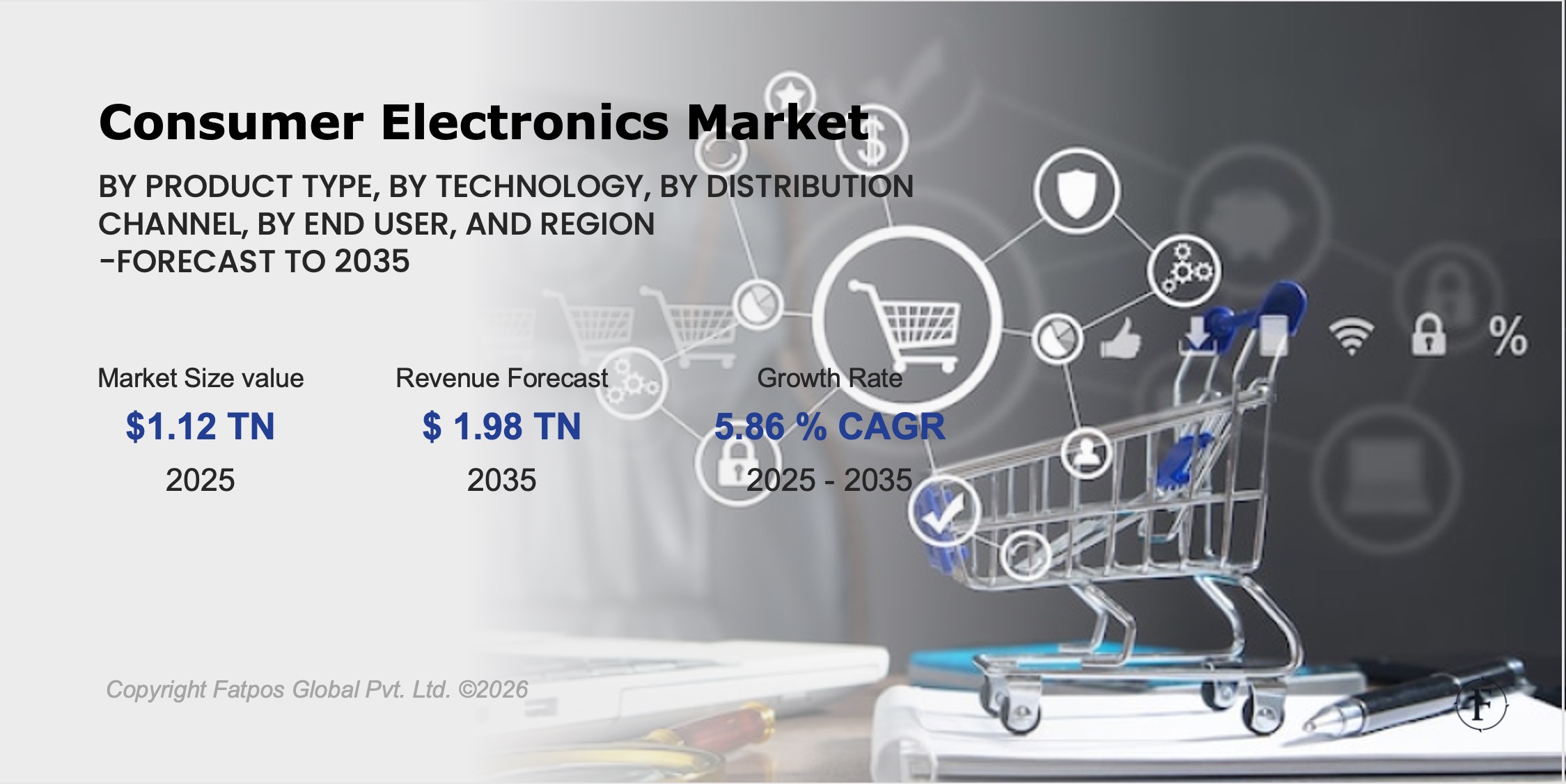
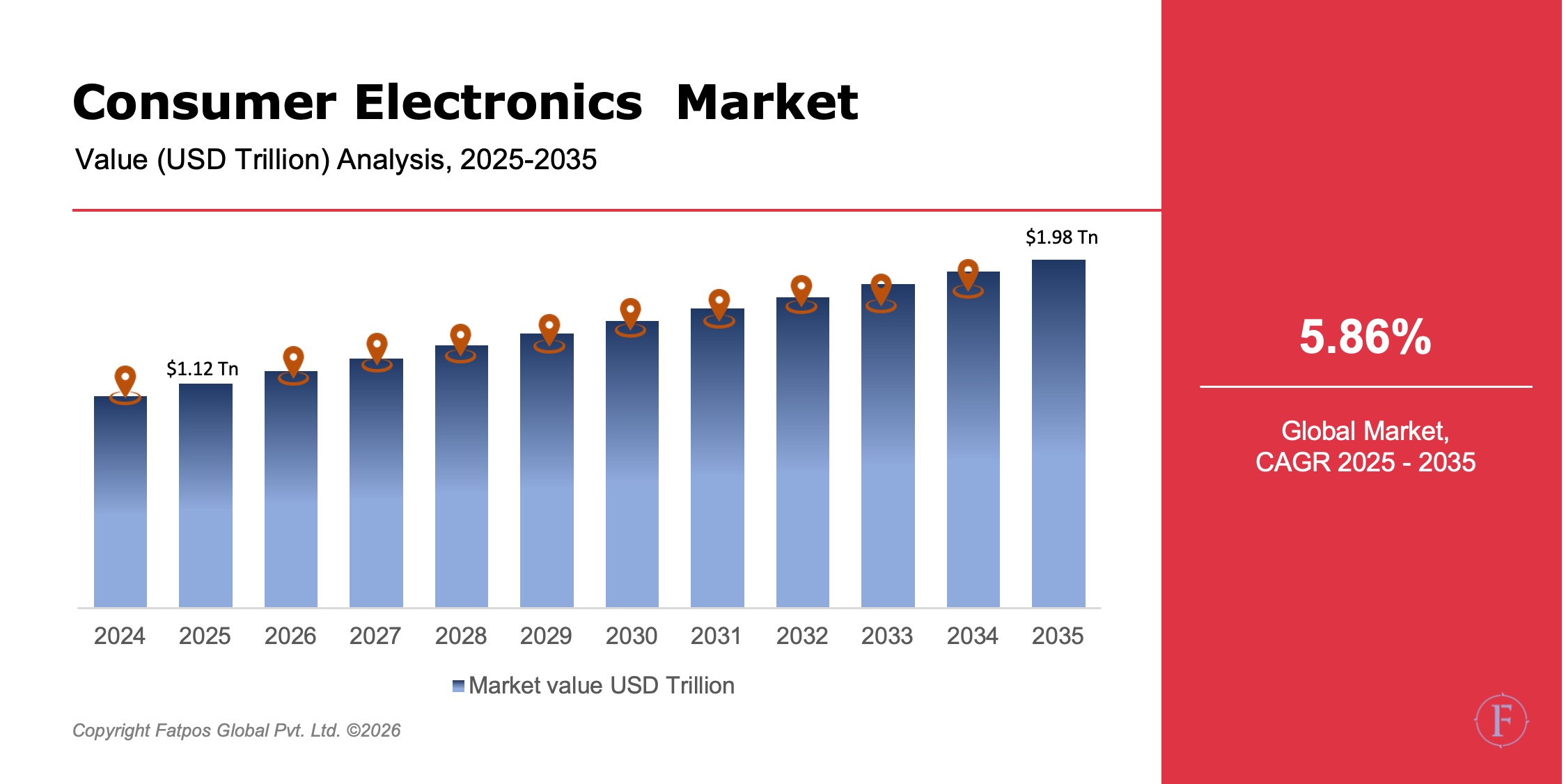
The Consumer Electronics Market Size was valued at USD 1.12 trillion in 2025 and is projected to reach USD 1.98 trillion by 2035, registering a CAGR of 5.86%. Market growth is driven by rising digital lifestyles, increasing adoption of smart and connected devices, rapid urbanization, growing disposable incomes, and continuous innovation in consumer-focused technologies such as artificial intelligence, IoT, and advanced display systems.
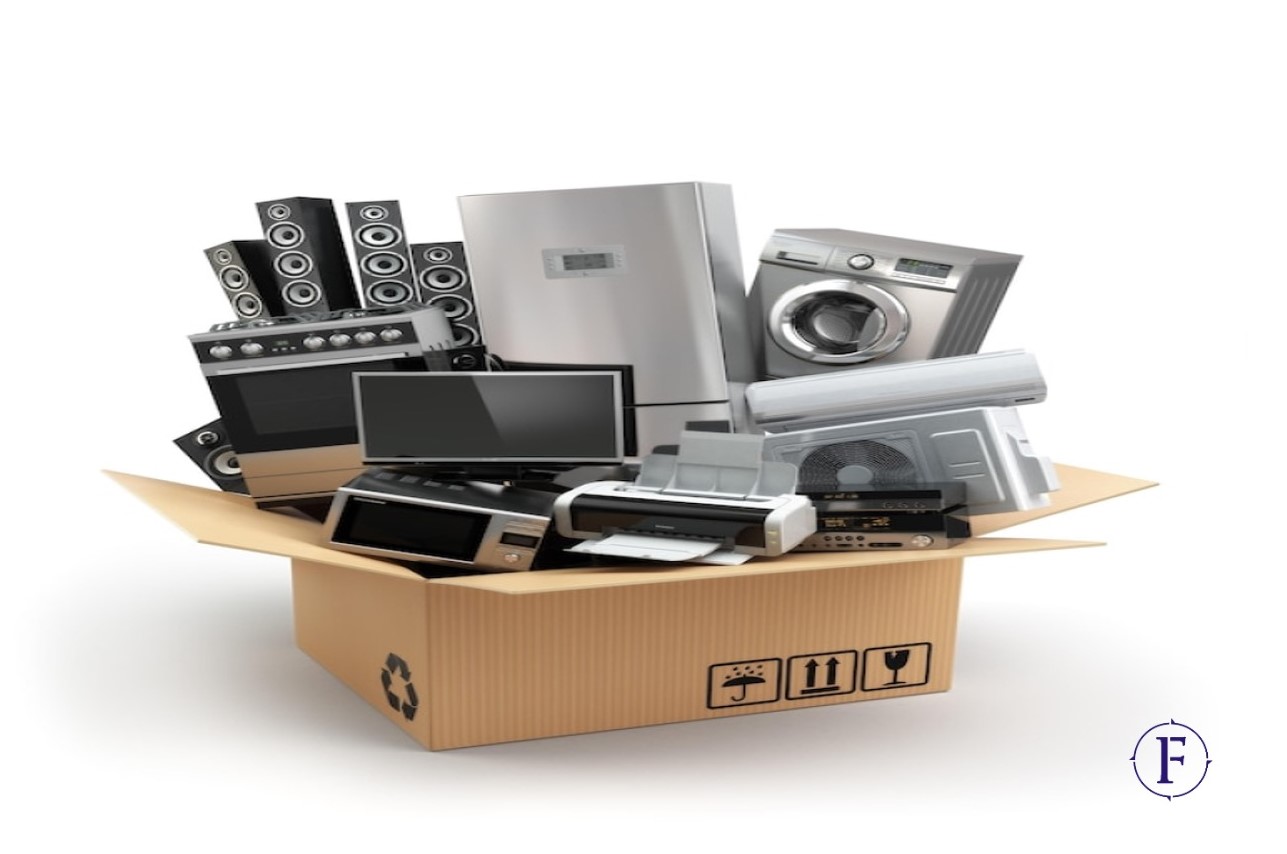
Consumer electronics encompass a broad range of electronic devices designed for everyday personal, household, and entertainment use. As consumers increasingly rely on digital platforms for communication, entertainment, work, and home management, demand for high-performance, connected, and energy-efficient electronic devices continues to expand across both developed and emerging economies.
Product Overview
Consumer electronics deliver essential functionality, convenience, and entertainment, playing a central role in modern digital living. By product type, smartphones remain the most widely used devices, serving as primary communication, entertainment, and productivity tools. Televisions continue to evolve with advancements in display technologies such as OLED, QLED, and 8K resolution, enhancing home entertainment experiences. Audio & video devices, including speakers, sound systems, and streaming accessories, support immersive content consumption.
Cameras and imaging devices cater to both consumer and semi-professional use, while home appliances increasingly integrate smart features for energy efficiency and automation. Wearable devices, including smart watches and fitness trackers, are gaining traction due to growing health awareness, while gaming consoles benefit from rising demand for interactive and immersive entertainment. Across categories, innovation focuses on connectivity, user experience, market forecast and sustainability.
Key Takeaways :
- The Consumer Electronics Market is expected to grow at ~5.86% CAGR through 2035.
- Smartphones remain the largest revenue-generating product category.
- Smart and connected devices dominate new product development.
- Online distribution channels continue to gain market share.
- Asia-Pacific leads global production and consumption.
- Energy efficiency and sustainability are key competitive differentiators.
Market Dynamics
Drivers
Growth in digital lifestyles is a primary driver of the consumer electronics market, as consumers increasingly depend on electronic devices for communication, entertainment, education, and work. Rising adoption of smart homes, connected entertainment systems, and personal devices fuels consistent replacement demand. Expanding middle-class populations and rising disposable incomes in emerging economies further support market growth, as highlighted in the positive market forecast for the consumer electronics industry.
Technological advancements, including AI-enabled features, IoT connectivity, and improved processing capabilities, enhance device functionality and user experience. The expansion of e-commerce and omnichannel retailing has also improved product accessibility, enabling manufacturers to reach broader consumer bases.
Restrictions
Despite strong demand, the consumer electronics market faces several restraints. Rapid product replacement cycles and intense competition exert pricing pressure and compress margins. Supply chain disruptions, component shortages, and dependence on semiconductor availability pose operational challenges. Additionally, growing concerns around electronic waste and environmental impact increase regulatory and compliance costs for manufacturers.
Opportunities
The consumer electronics market holds strong opportunities in sustainable, smart technologies. Smart and energy-efficient devices align with global sustainability goals, featuring low-power designs, recyclable materials, and IoT optimization amid stricter regulations and eco-conscious consumers. Wearable health devices—like fitness trackers and biometric smart watches—thrive on post-pandemic health focus, alongside smart home appliances for automation and security, supported by subscriptions. AI integration in gadgets enhances personalization and voice features, driving differentiation. Emerging markets in Asia-Pacific, Africa, and Latin America explode with digital penetration, improved infrastructure, rising incomes, and tech awareness, unlocking massive potential. Success requires R&D, partnerships, and localization.
Challenges
Manufacturers in consumer electronics struggle to balance rapid innovation, cost control, and sustainability imperatives. Short product lifecycles demand heavy, ongoing R&D investments to stay ahead, yet affordability is vital in price-sensitive emerging markets, squeezing margins. Cybersecurity and data privacy risks escalate with IoT-connected devices, vulnerable to breaches that erode consumer trust and invite regulations. Intense rivalry from global giants and regional players forces differentiation via cutting-edge tech, unique branding, and ecosystem integration. Navigating these requires agile supply chains, ethical sourcing, and robust security protocols to ensure competitiveness.
Consumer Electronic Market Trends
The consumer electronics market size rapidly shifts toward smart, connected, and AI-powered devices, redefining user experiences. Voice assistants like Alexa and Google Assistant, alongside automation features, integrate seamlessly across smartphones, TVs, appliances, and wearables. Personalized interfaces use AI to tailor content, recommendations, and controls, boosting engagement. Sustainability drives design: manufacturers adopt energy-efficient components, modular recyclable materials, and minimal packaging to cut e-waste and meet regulations like EU's RoHS. Distribution evolves with online platforms and direct-to-consumer (D2C) models—think Apple's storefronts or brand apps. These enable real-time customer data for targeted marketing, loyalty programs, and faster feedback loops. This convergence fosters innovation but demands robust cybersecurity and supply chain adaptability.
Key Players in the Consumer Electronic Market Industry
- Samsung Electronics Co., Ltd.
- Apple Inc.
- Sony Corporation
- LG Electronics
- Panasonic Corporation
- Xiaomi Corporation
- Huawei Technologies Co., Ltd.
- Lenovo Group Limited
- HP Inc.
- Dell Technologies
Regional & Country Analysis
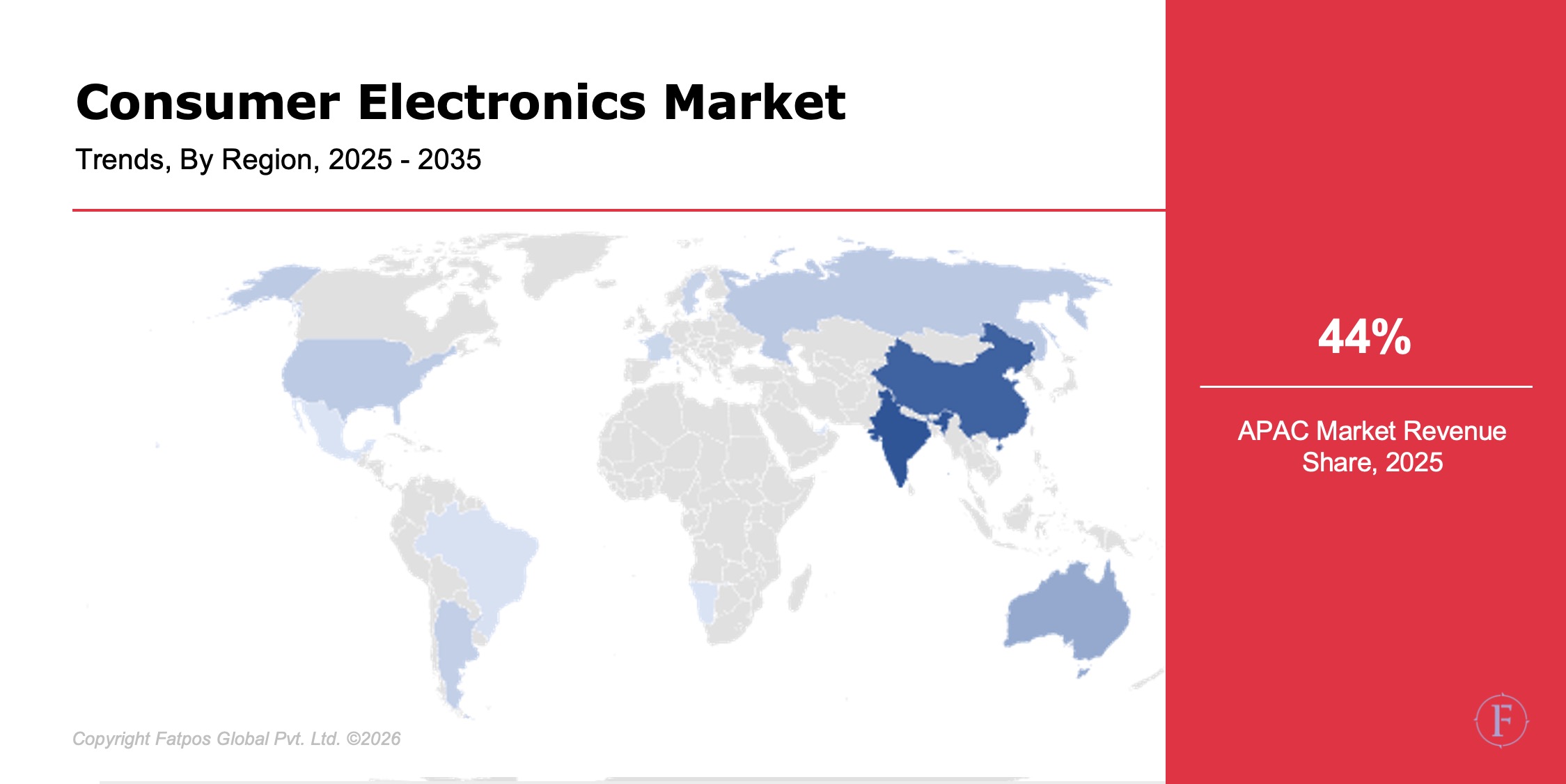
Asia-Pacific dominates the consumer electronics market due to large-scale manufacturing capabilities, strong domestic demand, and rapid urbanization in countries such as China, India, Japan, and South Korea driving significant market growth. North America shows steady growth driven by high adoption of premium devices, replacement demand, and technological innovation. Europe maintains a mature market with strong emphasis on energy efficiency and sustainability regulations. Latin America experiences moderate growth supported by improving connectivity and urban development, while Middle East & Africa present emerging opportunities through expanding digital infrastructure and rising consumer awareness.
Segmentation Highlights
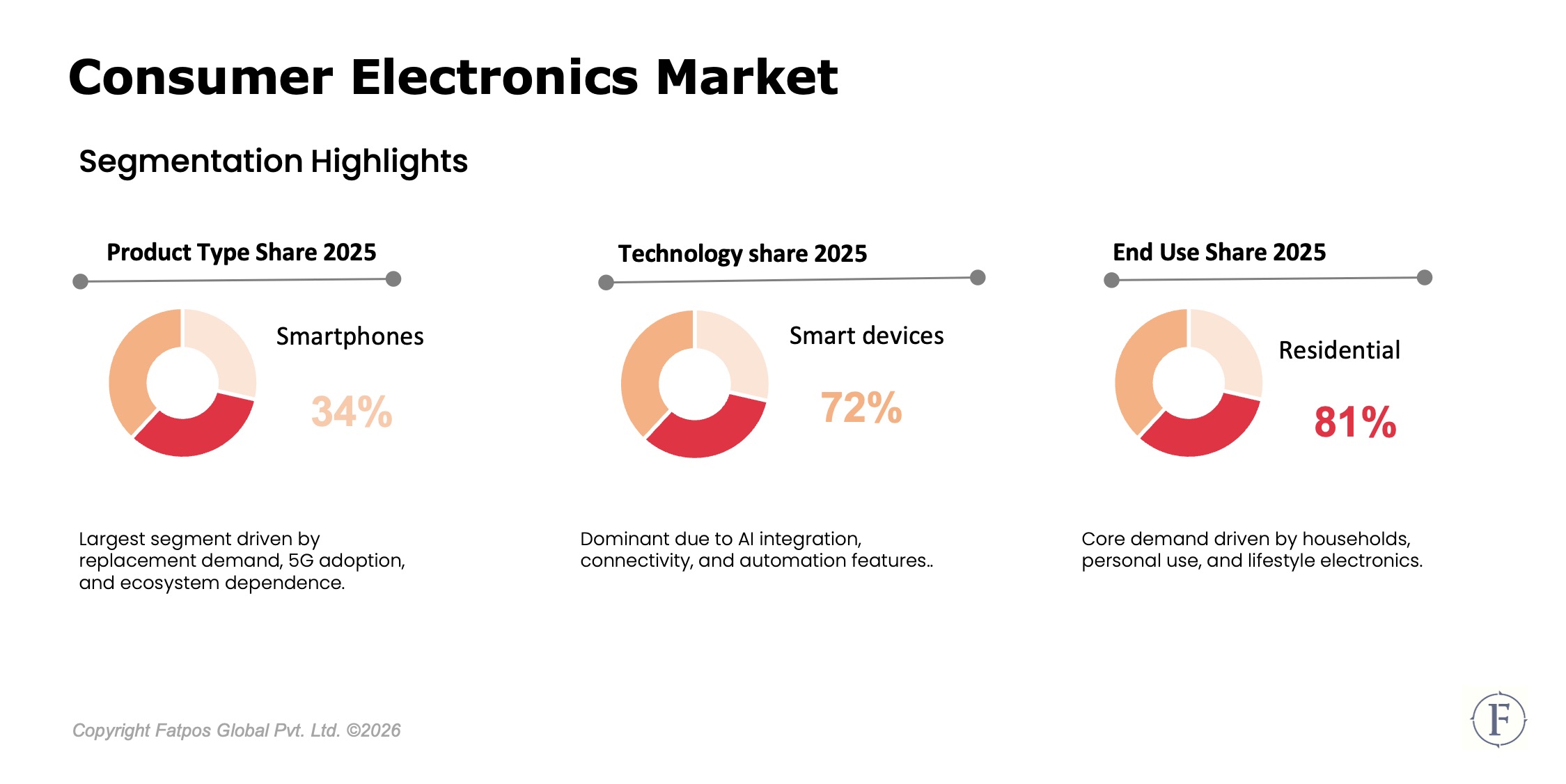
By product type, smartphones lead market share, followed by televisions and home appliances. By technology, smart devices account for the majority of demand due to enhanced functionality and connectivity. Online distribution channels are expanding rapidly, while offline retail remains relevant for experiential purchases. Residential end users dominate consumption, with commercial demand growing steadily across offices, hospitality, and institutional settings.
Report Key Elements
|
ATTRIBUTES |
DETAILS |
|
Study Period |
2019–2035 |
|
Base Year |
2024 |
|
Forecast Period |
2025–2035 |
|
Market Size by 2035 |
USD 1.98 Trillion |
|
Market CAGR |
5.86% |
| By Product Type | Smartphones, Televisions, Audio & Video Devices, Cameras, Home Appliances, Wearables, Gaming Consoles, Others |
|
By Technology |
Smart Devices, Conventional Devices |
|
By Distribution Channel |
Online, offline |
|
By End User |
Residential, Commercial, Industrial |
|
By Region |
NA, Europe, APAC, LATAM, MEA |
|
Consumer Electronics Market: Key Players |
Samsung Electronics, Apple Inc., Sony Corporation, LG Electronics, Panasonic Corporation |
Global Consumer Electronics Industry Instances
- Smartphone manufacturers in the global consumer electronics industry launched AI-powered devices with enhanced processing capabilities.
- Home appliance companies introduced energy-efficient and IoT-enabled products.
- Wearable device brands expanded health monitoring features in line with evolving consumer market trends.
- OEM partnerships strengthened direct-to-consumer sales channels.
Analyst Review
As per our Consumer Electronics Market analysis report, the market continues to evolve steadily as digital adoption, connectivity, and smart living concepts gain traction. While pricing pressure, supply chain challenges, and sustainability requirements persist, innovation in AI, IoT, and energy-efficient technologies is unlocking new growth opportunities and increasing market share. Companies investing in smart ecosystems, sustainable design, and emerging markets are expected to lead industry expansion through 2035
Frequently Asked Questions (FAQ):
Consumer electronics are electronic devices designed for everyday personal, household, and entertainment use, including smartphones, televisions, appliances, wearables, and gaming systems.
Growth is driven by digital lifestyles, smart device adoption, rising disposable incomes, technological innovation, and expanding e-commerce channels.
Smartphones dominate the market due to widespread adoption and continuous innovation.
Asia-Pacific leads due to large-scale manufacturing and strong consumer demand.
Key challenges include rapid product lifecycles, pricing pressure, supply chain disruptions, and sustainability compliance.
 Select License Type


.png)


