


Smart Retail Market Research 2035
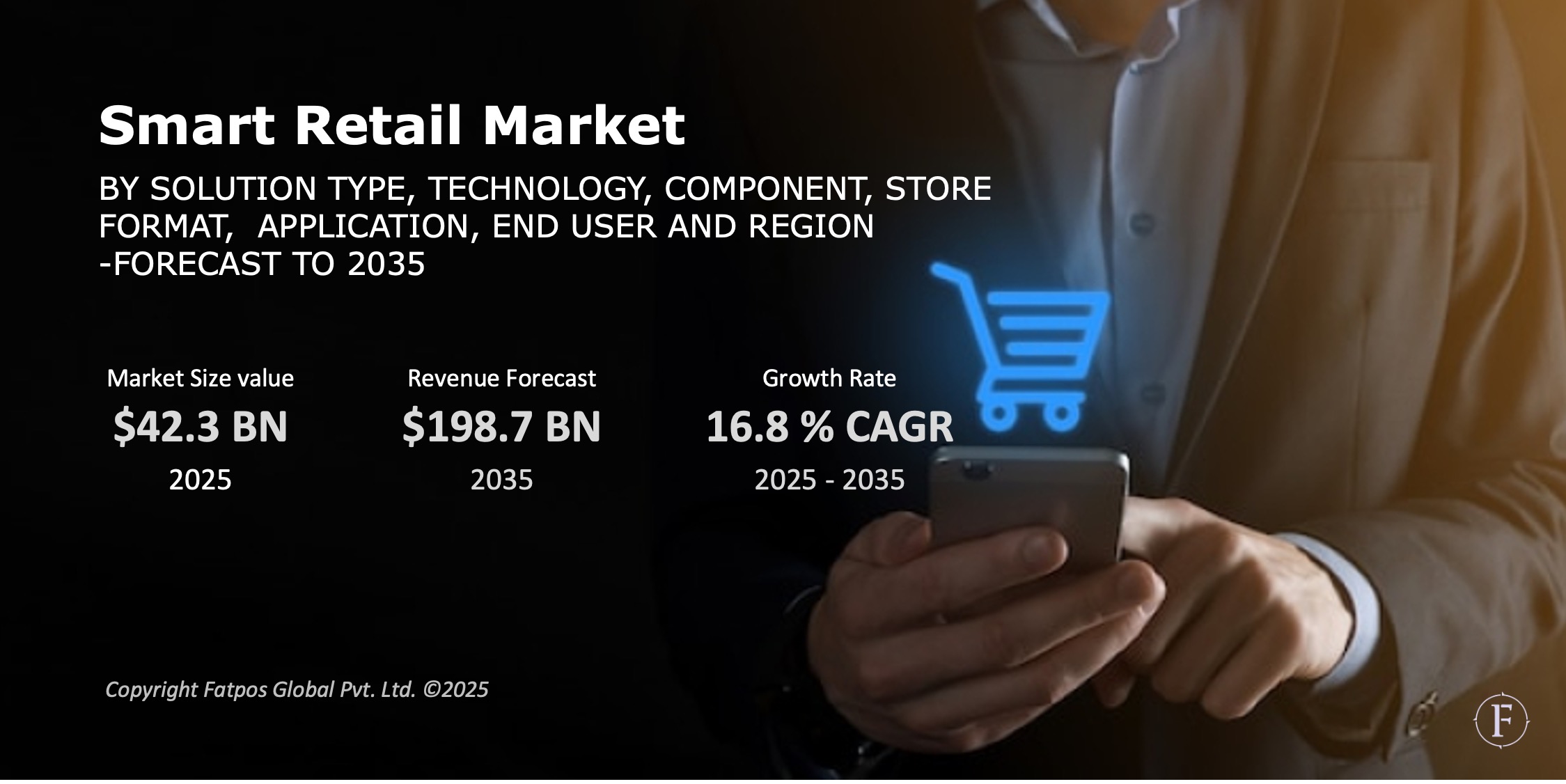
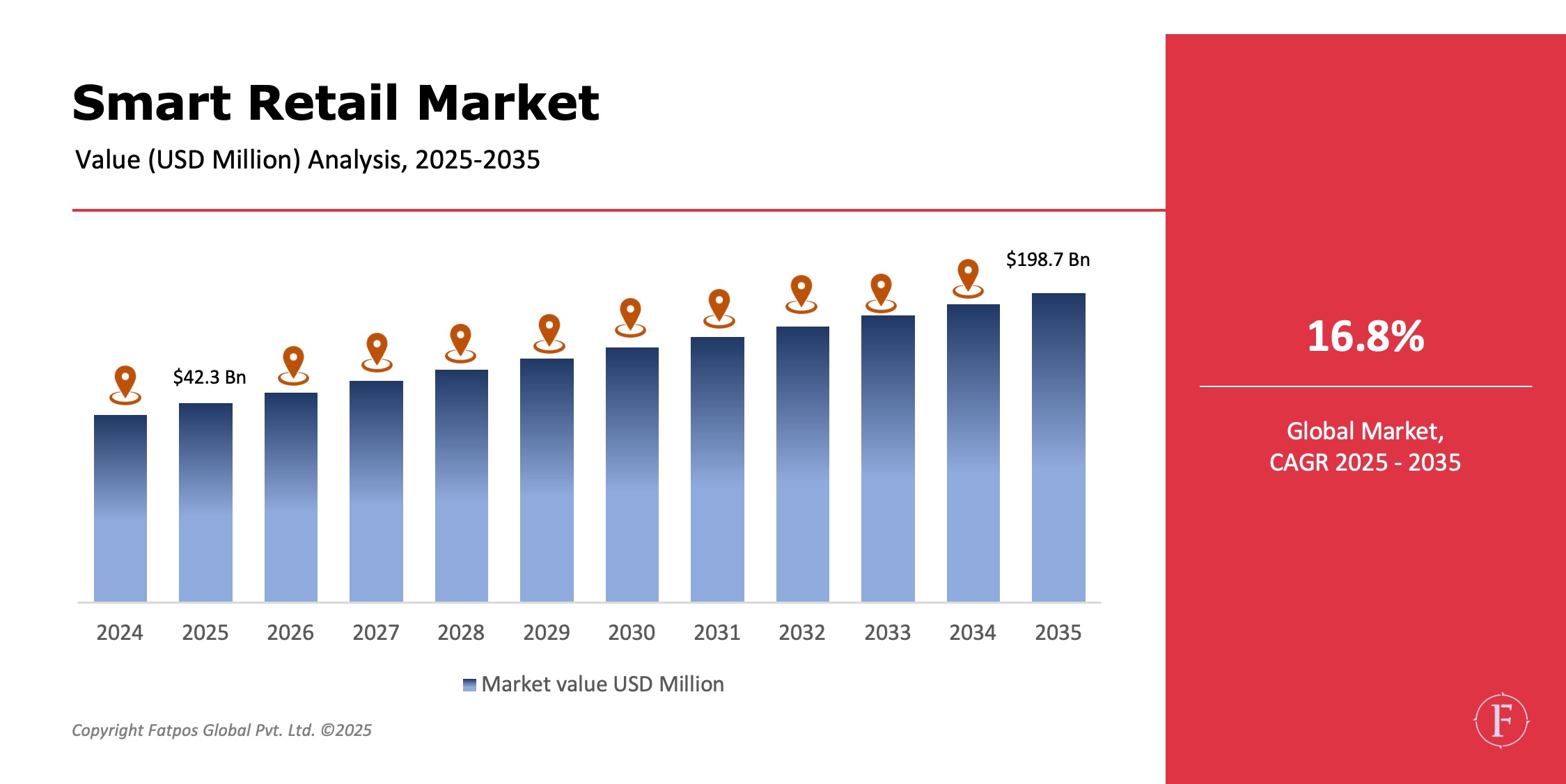
The Smart Retail Market Size was USD 42.3 billion in 2025 and is projected to reach USD 198.7 billion by 2035, registering a CAGR of 16.8%. It is propelled by automation, IoT-enabled systems, real-time analytics, cashierless checkout, digital shelves, RFID tracking, and AI-driven personalization. Retailers deploy smart shelves, ESLs, robots, digital signage, and computer-vision analytics to optimize inventory, pricing, and merchandising. These technologies cut checkout time, automate restocking, reduce theft, support omnichannel strategies, and enhance promotional effectiveness, creating sustainable, data-driven, frictionless shopping environments.
Product Overview
Smart retail solutions use IoT, AI analytics, cloud, computer vision, and RFID to turn traditional stores into digitally optimized environments. They automate inventory control, pricing, merchandising, and predictive stock management while enabling personalized customer engagement. Core tools include smart shelves and ESLs, smart carts and self-checkout, AI cameras, AR/VR mirrors, robots, RFID/IoT sensors, and cloud-based omnichannel analytics, all accelerated by AI–IoT–5G convergence.
Key Takeaways:
- Market expected to grow at a strong 16.8% CAGR during 2025–2035.
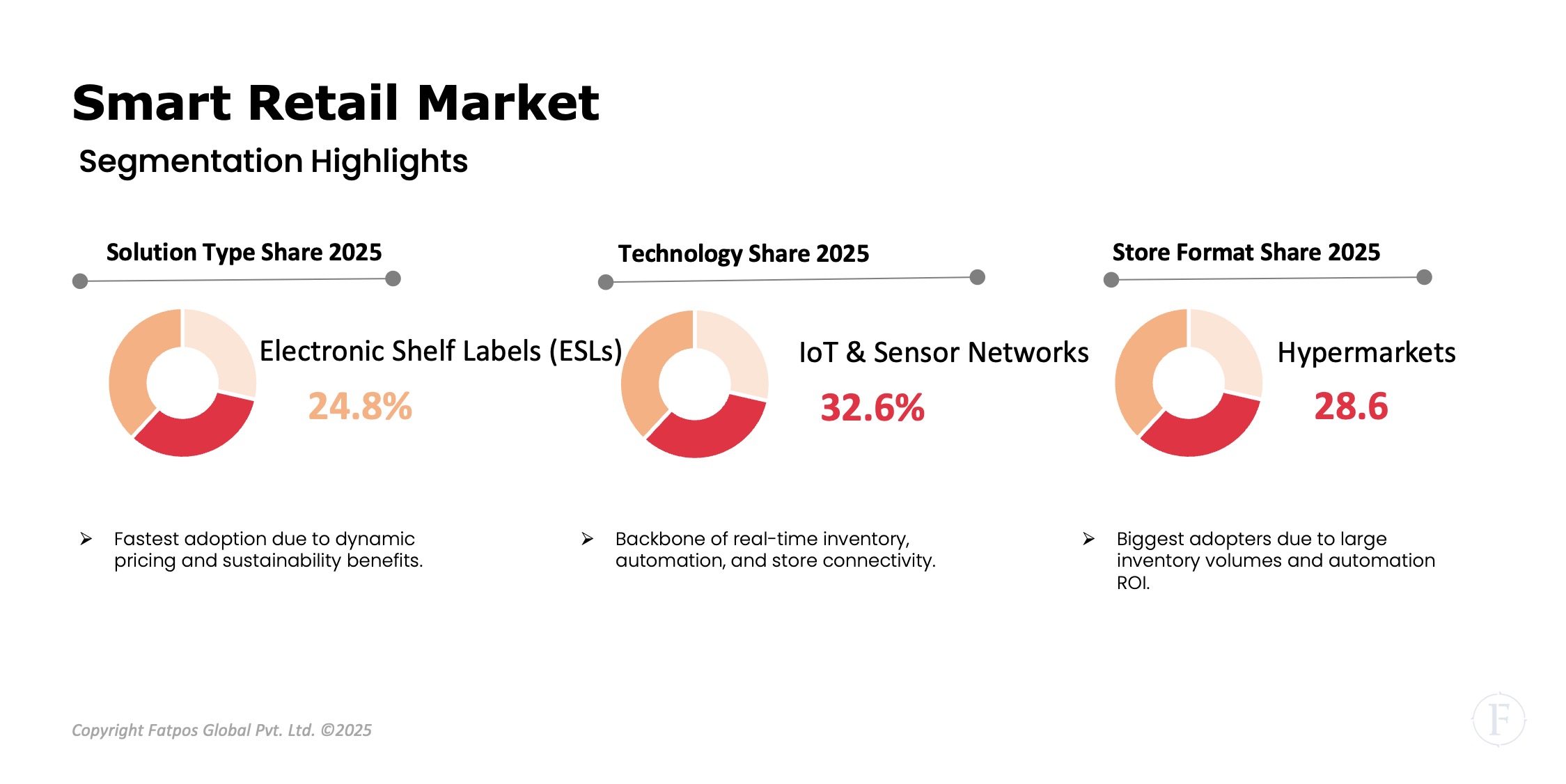
- IoT sensors, Computer Vision, and AI analytics constitute the largest technology categories.
- Smart Shelving, ESLs, Digital Signage, and Self-Checkout are the most widely adopted retail automation solutions.
- Hypermarkets, supermarkets, and convenience stores are major adopters due to high foot traffic and inventory complexity.
- Labor challenges, rising operational costs, and consumer demand for fast checkout accelerate smart retail penetration.
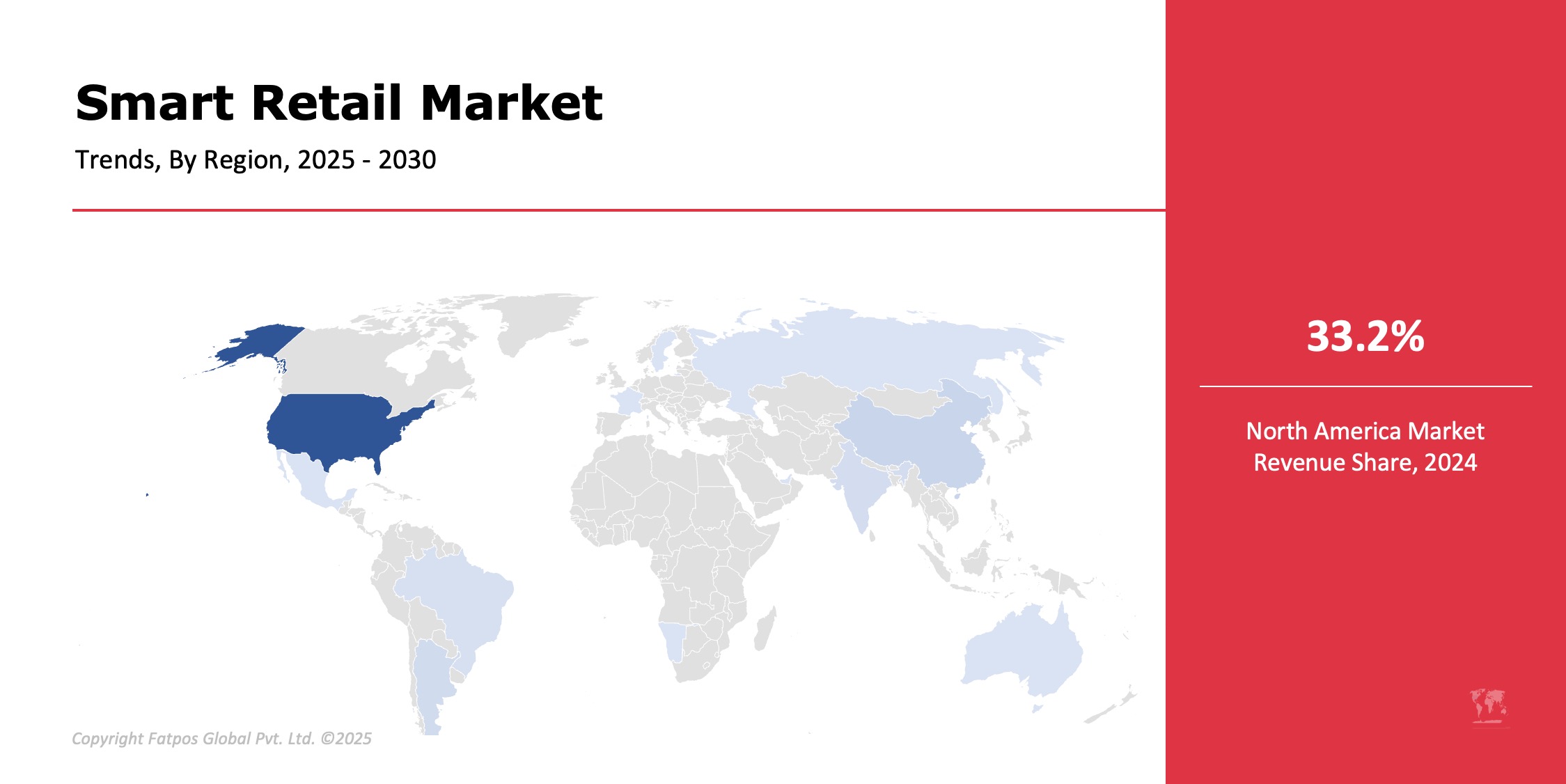
- Asia-Pacific emerges as the fastest-growing region, while North America dominates early adoption.
Market Dynamics
Drivers
Smart retail market growth is driven by demand for frictionless checkout amid queues and labor shortages, real-time inventory visibility, and AI-powered personalization. Smart shelf analytics cut manual work, while sustainability pushes digital pricing. Omnichannel strategies require tightly integrated online–offline data flows. Citations are unavailable because external reference access is currently restricted.
Restraints
Smart retail adoption faces several restraints. High capital expenditure for robotics, AI cameras, and IoT networks limits rollouts, especially for smaller retailers. Data privacy concerns around computer vision and footfall analytics create regulatory and consumer pushback. Integration with legacy POS/ERP is complex and costly, further discouraging investment in low-margin, highly cost-sensitive retail segments.
Opportunities
Smart retail opportunities center on experience, efficiency, and new revenue streams. Growth is driven by cashierless grab-and-go stores, AI-based workforce optimization, and predictive scheduling. AR/VR trial rooms enhance fashion and cosmetics shopping, while AI-powered retail media networks monetize shopper data. Developing markets accelerate smart retail adoption as modern trade formats expand.
Challenges
Smart retail rollouts face technical and human challenges. Interoperability issues between multiple vendors’ hardware and software make end‑to‑end integration complex. Scalability across multi-country chains is difficult, especially with growing cybersecurity risks in dense IoT environments. Low‑skilled workforce resistance to automation further slows adoption and requires investment in change management and training.
Smart Retail Market Trends
Smart retail is rapidly evolving, driven by ESLs and smart shelving for dynamic pricing, AI video analytics replacing traditional CCTV, and digital twins for simulating store layouts. Robots now handle shelf scanning, restocking, and order picking, while smart vending and micro-fulfillment support urban retail. New RaaS subscription models and 5G-enabled, low-latency stores further accelerate intelligent, data-driven retail experiences.
Key Players in the Smart Retail Market Industry
- Microsoft
- Google Cloud
- IBM
- Toshiba Global Commerce Solutions
- NCR Corporation
- SES-imagotag
- Trax Retail
- Zebra Technologies
- Fujitsu
- Honeywell
- Diebold Nixdorf
- Cisco Systems
- Intel Corporation
- Panasonic Connect
- SAP SE
- RetailNext
Regional & Country Analysis
North America
North America leads due to early AI automation adoption, strong retail giants, and high labor costs that encourage self-checkout, smart shelves, and computer-vision loss prevention. Europe focuses on sustainability, pricing transparency, and ESL- plus RFID-based dynamic pricing across large hypermarket chains.
Asia-Pacific is the fastest-growing market, propelled by aggressive retail modernization, digital infrastructure, and leadership in cashierless stores and robotics, especially in China, Japan, and South Korea. Latin America and MEA grow through rising mobile payments, supermarket modernization, and video analytics for security, though infrastructure gaps slow deployment but support strong long-term potential.
Segmentation Highlights
The Smart Retail Market spans a broad solution ecosystem, including smart POS systems, electronic shelf labels (ESLs), smart shelves, AI-powered cameras, smart carts, self-checkout systems, inventory robots, digital signage, IoT sensors, and advanced retail analytics platforms. These solutions leverage technologies such as IoT, artificial intelligence and machine learning, computer vision, RFID, big data analytics, cloud and edge computing, AR/VR, and 5G connectivity. Deployment models include cloud, on-premise, and hybrid architectures. Key applications cover smart checkout, inventory optimization, customer experience enhancement, store automation, supply chain visibility, loss prevention, and dynamic pricing, serving diverse store formats and retail verticals globally.
Report Key Elements
|
ATTRIBUTES |
DETAILS |
|
Study Period |
2019–2035 |
|
Base Year |
2024 |
|
Smart Retail Market Forecast Period |
2025–2035 |
|
Smart Retail Market Size by 2035 |
USD 198.7 billion |
|
Market CAGR |
16.8% |
|
By Solution Type |
Smart POS, ESLs, Smart Shelves, AI Cameras, Smart Carts, Self-Checkout Systems, Smart Mirrors, Inventory Robots, Digital Signage, IoT Sensors, Retail Analytics Platforms. |
|
By Technology |
IoT, AI/ML, Computer Vision, RFID, Big Data Analytics, Cloud, Edge Computing, AR/VR, 5G. |
|
By Component |
Hardware, Software, Services (Managed, Professional, Integration Services). |
|
By Store Format |
Hypermarkets, Supermarkets, Convenience Stores, Department Stores, Specialty Stores, Malls, Franchise Stores. |
|
By Deployment |
Cloud, On-Premise, Hybrid. |
|
By Application |
Smart Checkout, Inventory Optimization, Customer Experience, Store Automation, Supply Chain Visibility, Loss Prevention, Pricing & Promotion Management. |
|
By End User |
Retail Chains, Grocery & FMCG, Apparel & Footwear Retail, Consumer Electronics Stores, Fuel Retailers, Pharmacies, QSR & Restaurants. |
|
By Region |
NA, Europe, APAC, LATAM, MEA |
|
Key Market Players |
Amazon Web Services (AWS), Microsoft, Google Cloud, and IBM, SES‑imagotag, Trax Retail, and Zebra Technologies |
Smart Retail Industry Instances
- Global hypermarket chain deployed 10,000+ ESLs for dynamic pricing across 35 stores.
- Fashion retailer implemented AI-based virtual try-ons, increasing conversion rates.
- Convenience store robots achieved 92% shelf-scanning accuracy.
- Mall operators adopted AI foot traffic heatmaps, optimizing store placement and rent pricing.
- QSR chain introduced smart self-ordering kiosks, reducing customer wait time by 40%.
Analyst Review
As per our Smart Retail Market Analysis report, the market demonstrates strong adoption potential as retailers pursue automation to reduce labor costs, optimize inventory, and elevate customer experience. IoT, AI, and computer vision form the backbone of this transformation. Although cost barriers and interoperability challenges persist, the shift toward frictionless shopping, real-time analytics, and automated store operations ensures sustained long-term growth.
Frequently Asked Questions (FAQ):
The market is projected to reach USD 198.7 billion by 2035, growing at a 16.8% CAGR.
IoT, RFID, AI-driven analytics, and computer vision are the leading technologies.
Smart shelves, electronic shelf labels, self-checkout systems, and digital signage.
North America currently leads, while Asia-Pacific grows the fastest.
High cost of deployment, data privacy concerns, and complex integration requirements.
 Select License Type


.png)


