


Golf Tees Market Research 2035
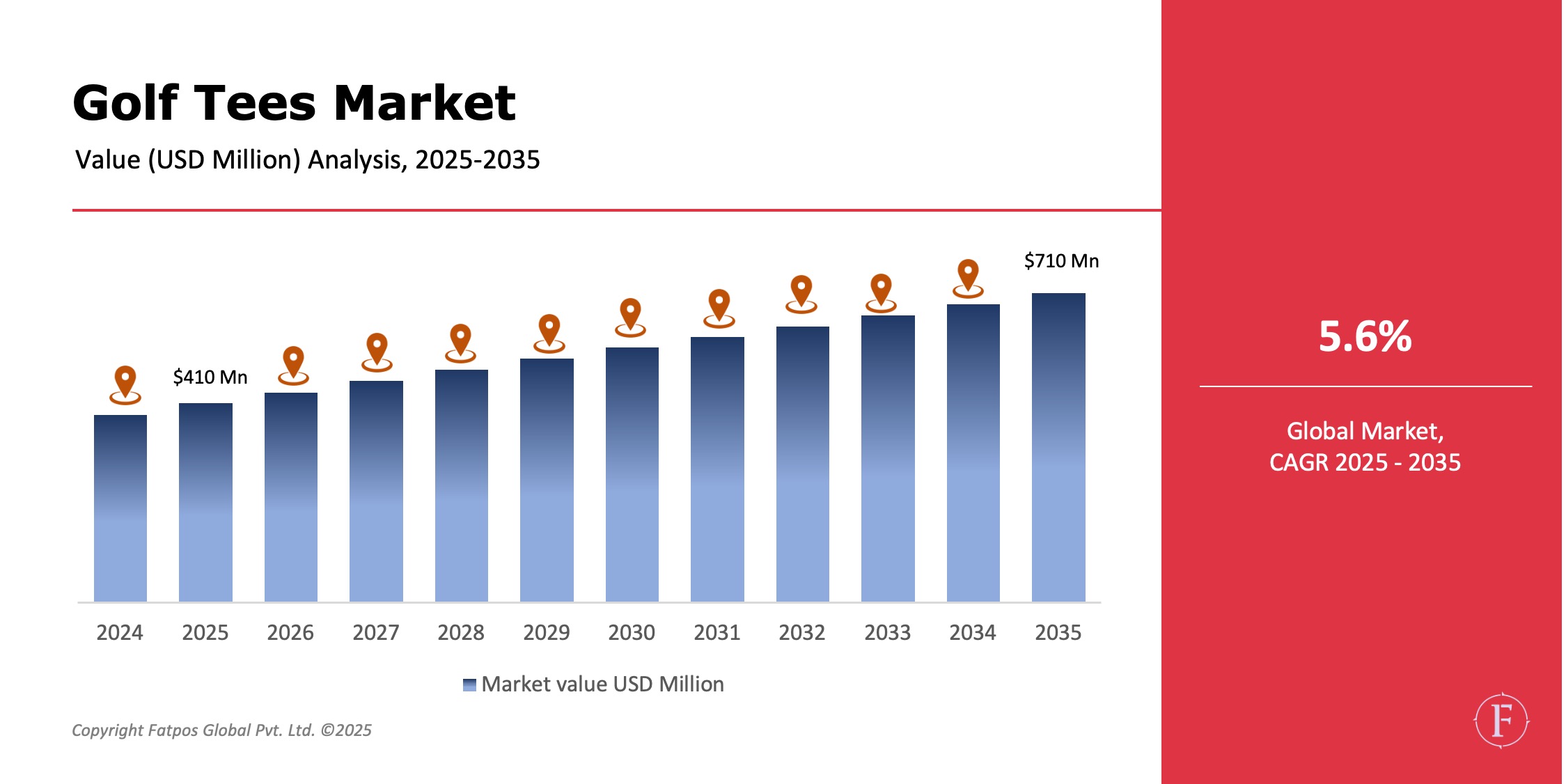
The Golf Tees Market was valued at approximately USD 410 million in 2025 and is projected to reach USD 710 million by 2035, registering a CAGR of 5.6% during the forecast period. Market growth is supported by the steady expansion of the global golf industry, increasing participation in recreational golf, and rising demand for performance-enhancing and eco-friendly golf accessories.

Golf tees are essential accessories used to elevate the golf ball during tee shots, contributing to shot accuracy and consistency. While tees are low-cost consumables, their repeated replacement and growing customization trends make them a consistent revenue generator within the golf equipment ecosystem. Sustainability concerns and product innovation are reshaping market dynamics.
Product Overview
Golf tees are small pegs, traditionally made of wood, used to support a golf ball for the first stroke of each hole. Over time, materials have diversified to include plastic, rubber, composite, and biodegradable materials. Modern tees are designed to improve aerodynamics, reduce friction, and enhance driving distance.
Manufacturers offer tees in various lengths to accommodate different clubs and player preferences. Biodegradable and eco-friendly tees are gaining popularity as golf courses and players focus on environmental responsibility. Custom-branded tees are also widely used in tournaments, corporate events, and promotional activities, contributing to market growth.
Key Takeaways:
- Golf Tees Market expected to grow at 5.6% CAGR through 2035
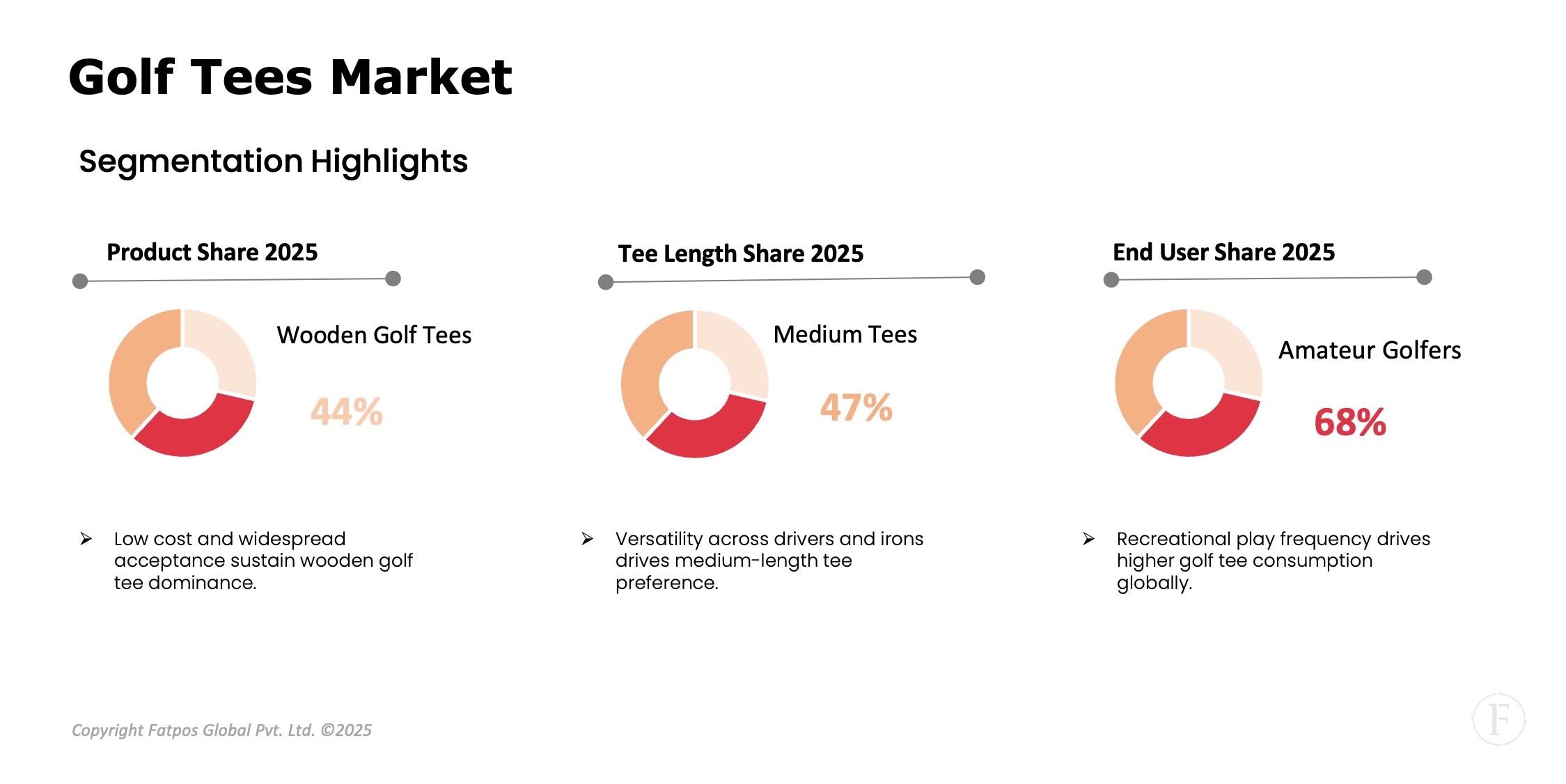
- Wooden golf tees remain the most widely used product type
- Medium-length tees dominate due to versatility across clubs
- Amateur golfers represent the largest end-user segment
- Specialty sports stores remain the leading distribution channel
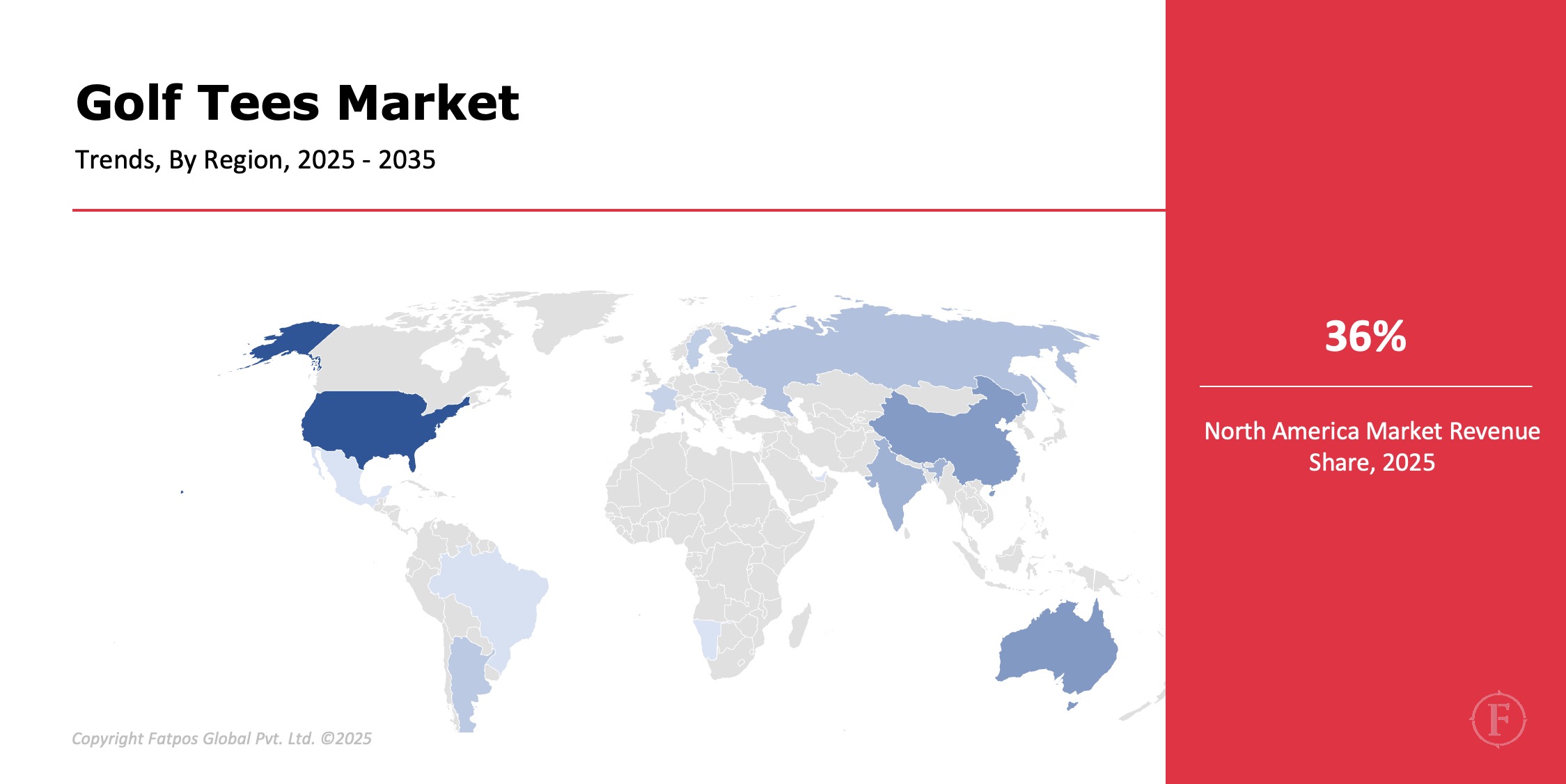
- North America leads global market share
Market Dynamics
Drivers
The Golf Tees Market is driven by increasing participation in golf as a recreational and lifestyle sport. Rising disposable income, golf tourism, and growing popularity of golf among younger demographics support steady demand. The consumable nature of golf tees ensures recurring purchases, especially among amateur golfers.
Innovation in tee design aimed at improving shot performance and durability further stimulates demand. Growing adoption of biodegradable golf tees due to environmental concerns and regulations at golf courses also acts as a significant driver. Promotional use of custom golf tees in tournaments and corporate events contributes to consistent market expansion.
Restraints
Despite steady demand, the golf tees market faces restraints due to the availability of low-cost substitutes and minimal product differentiation in traditional wooden tees. Price sensitivity among amateur golfers limits premium product adoption. Reusable tee designs reduce replacement frequency, potentially impacting sales volume.
Environmental concerns regarding plastic tees and littering on golf courses have led to restrictions in certain regions. Additionally, the relatively low price point of golf tees limits revenue growth potential compared to other golf equipment categories, restraining overall market value expansion.
Opportunities
The market presents opportunities through the development of biodegradable and compostable golf tees made from bamboo, corn starch, and recycled materials. Increasing environmental awareness among golf clubs and players supports adoption of sustainable alternatives.
Customization and branding opportunities in golf tees offer growth potential through tournaments, sponsorships, and corporate gifting. Expansion of e-commerce platforms enables manufacturers to reach a broader consumer base. Emerging golf markets in Asia-Pacific and Latin America present untapped growth opportunities as golf participation increases in these regions.
Challenges
The Golf Tees Market faces challenges related to intense price competition, limited product differentiation, and environmental regulations. Low entry barriers result in numerous small manufacturers competing primarily on price. Ensuring durability while maintaining biodegradability remains a technical challenge for eco-friendly tees. Fluctuations in raw material prices, particularly wood and biodegradable polymers, affect manufacturing costs.
Additionally, reusable tee designs reduce repeat purchase frequency. Managing waste concerns and compliance with golf course sustainability standards adds operational complexity for manufacturers operating across regions.
Golf Tees Market Trends
The market is witnessing increased adoption of biodegradable and bamboo-based golf tees. Performance-focused designs that reduce ball spin and improve driving distance are gaining popularity among amateur and professional golfers. Custom-printed tees for branding and promotional use continue to grow.
Online retail sales are expanding rapidly, driven by convenience and wider product availability. Manufacturers are focusing on packaging innovation, offering bulk packs and recyclable materials. Growing emphasis on sustainability and eco-certification is shaping product development strategies across the market.
Key Players in the Global Golf Tees Industry
- PrideSports
- Greenkeepers Golf
- Zero Friction
- Martini Golf Tees
- Brush-T
- Callaway Golf
- TaylorMade Golf
- Champ Golf
- Dixon Golf
- EcoTees
Regional & Country Analysis
North America dominates the Golf Tees Market due to high golf participation rates, a large number of golf courses, and strong consumer spending on golf accessories in the United States and Canada.
Europe follows, supported by a mature golf culture and strong participation in countries such as the UK, Germany, and Sweden. Asia-Pacific is the fastest-growing region, driven by rising golf popularity in Japan, South Korea, China, and Australia. Golf tourism and new course developments support demand. Latin America and the Middle East & Africa show gradual growth, supported by expanding luxury tourism and resort-based golf developments..
Segmentation Highlights
Wooden golf tees remain the dominant product type due to affordability and ease of use. Medium-length tees lead tee length segmentation owing to versatility. Amateur golfers represent the largest end-user group driven by recreational play. Specialty sports stores maintain leadership in distribution due to golfer preference for in-store purchases. North America remains the leading region supported by strong golf infrastructure.
Report Key Elements
|
ATTRIBUTES |
DETAILS |
|
Study Period |
2019–2035 |
|
Base Year |
2024 |
|
Forecast Period |
2025–2035 |
|
Market Size by 2035 |
USD 710 Million |
|
Market CAGR |
5.6% |
|
By Product Type |
Wooden, Plastic, Biodegradable, Others |
|
By Tee Length |
Short, Medium, Long |
|
By End User |
Professional, Amateur |
|
By Distribution Channel |
Online, Sports Stores, Pro Shops |
|
By Region |
North America, Europe, Asia-Pacific, Latin America, MEA |
|
Golf Tees Market: Key Players |
Munich Re, Swiss Re, Allianz SE, AXA Group, Zurich Insurance Group |
Global Golf Tees Industry Instances
- Golf courses adopted biodegradable tees to reduce environmental impact
- Brands launched performance-enhancing low-friction tee designs
- E-commerce platforms expanded bulk golf tee offerings
- Tournaments used custom-branded tees for promotions
Analyst Review
As per our Golf Tees Market analysis, the market will witness sustained growth through 2035 driven by rising golf participation and sustainability trends. While product commoditization limits rapid expansion, innovation in eco-friendly materials, customization, and online distribution will continue to support long-term market stability.
Frequently Asked Questions (FAQ):
Golf tees are used to elevate the golf ball above the ground, allowing a clean, powerful first stroke on each hole.
Market growth is driven by increasing golf participation, recurring consumable demand, rising disposable incomes, and growing adoption of eco-friendly tees.
Wooden golf tees dominate due to low cost, biodegradability, easy availability, and long-standing acceptance among golfers.
Amateur golfers form the largest end-user segment because of their higher population, frequent play, and regular replacement needs.
North America leads the market due to high golf participation rates, strong sports culture, and extensive golf course infrastructure.
 Select License Type


.png)


