


Luxury Furniture Market Research 2035
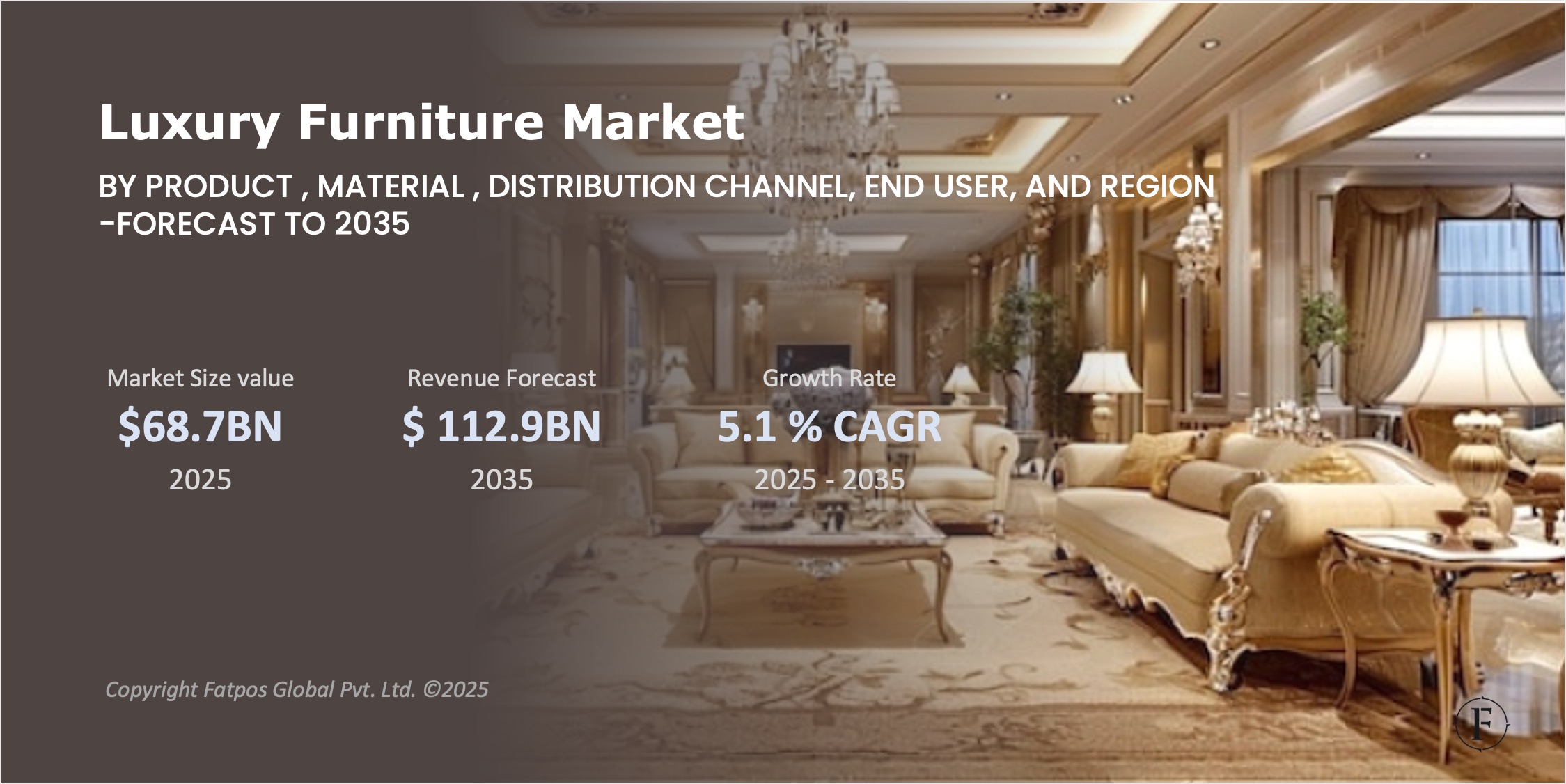
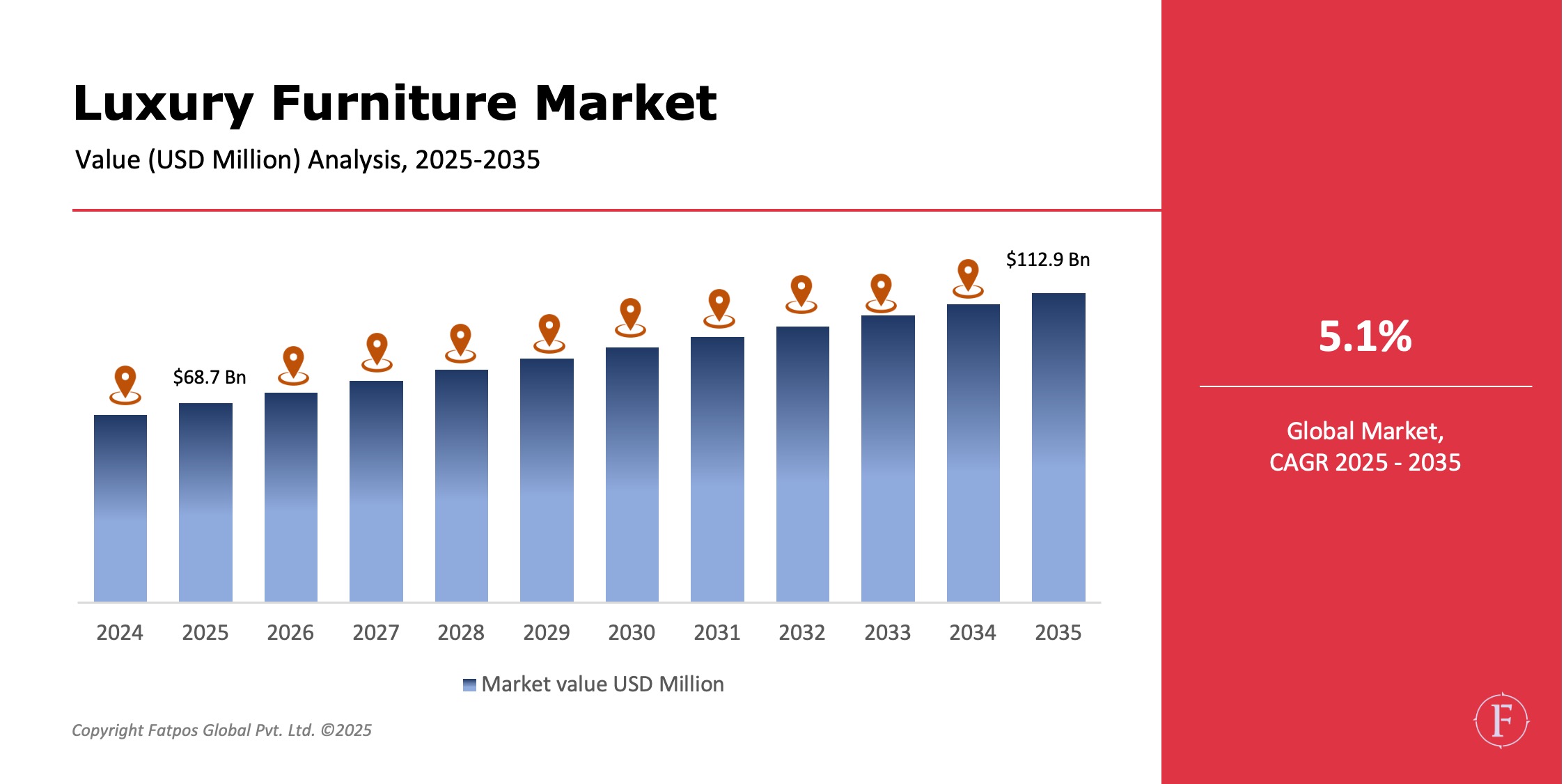
The Luxury Furniture Market Size was USD 68.4 billion in 2025 and is projected to reach USD 112.9 billion by 2035, registering a CAGR of 5.1% , Rising global wealth and HNWIs fuel demand for premium, bespoke décor amid urbanization and hospitality growth.
Superior craftsmanship, premium materials, exclusive designs, and brand heritage define luxury pieces, captivating affluent buyers. Focus on aesthetics and lifestyle elevates investments in residential luxury homes, boutique hotels, and corporate offices, sustaining robust expansion.
Product Overview
Luxury furniture features high-end seating, tables, storage, beds, outdoor pieces, and bespoke décor. It excels in design via signature brands and artisanal craft; premium materials like teak/mahogany woods, brass metals, fine leathers/fabrics; customization with personalized finishes/exclusives; and heritage from renowned houses.
Key categories: seating (sofas, armchairs); tables (dining, coffee); storage (cabinets, wardrobes); beds/mattresses (upholstered); outdoor patio sets; others (accents). These elements cater to affluent tastes, blending functionality, luxury, and exclusivity.
Key Takeaways :
- The Luxury Furniture Market is projected to grow at approximately 5.1% CAGR through 2035.
- Seating furniture accounts for the largest market share due to high volume and strong demand in residential and hospitality segments.
- Wood and leather materials dominate owing to perceived quality and durability.
- E-commerce channels are rapidly gaining share due to digital discovery and customization tools.
- Asia-Pacific and North America are key growth regions, supported by rising income and premium housing developments.
Market Dynamics
Drivers
Rising global affluent population and disposable incomes propel luxury furniture demand among HNWIs. Luxury residential construction and refurbishments expand, prioritizing premium interiors. Also, upscale hospitality and commercial real estate projects multiply, seeking bespoke designs. Consumers favor personalized furniture for unique aesthetics. In addition to this, digital tools like AR visualization enhance online sales, bridging virtual-physical experiences.
Restrictions
High product pricing restricts luxury furniture to affluent segments, sidelining mid-market buyers. Supply chain disruptions hinder premium material sourcing like exotic woods and leathers. Environmental concerns over unsustainable wood and materials spur regulations and scrutiny.
Opportunities
Luxury furniture sees e-commerce expansion via digital catalogs and AR/VR showrooms, easing visualization for global buyers. Vertical integration streamlines design, manufacturing, and distribution, bolstering premium branding.
Eco-luxury designs gain traction using sustainable materials like reclaimed wood and vegan leathers. Collaborations with luxury real estate and hospitality create curated interiors, enhancing experiential appeal.
Challenges
Luxury furniture brands face pressures in preserving heritage amid innovation for younger buyers seeking modern twists on classics. Balancing bespoke customization with scalable production strains resources, risking quality or delays. Additionally, global logistics for bulky, premium items grapple with high shipping costs, customs, and fragility, amplified by disruptions.
Luxury Furniture Market Trends
Luxury furniture trends fuse modern minimalism—clean lines, neutral palettes—with classic opulent finishes like gold leaf or velvet for versatile, timeless elegance that suits contemporary homes. Smart, connected pieces embedded wireless charging pads in tables, IoT lighting in chairs, and voice-activated recliners, catering to tech-forward affluent lifestyles while maintaining discreet sophistication.
Sustainability gains prominence through certified ethically sourced woods (FSC teak), recycled metals, and non-toxic eco-finishes, appealing to eco-aware HNWIs without sacrificing luxury. Experiential retail immerses via flagship showrooms with interactive displays, personalized design studios, and on-site consulting for holistic interiors.
Digital AR apps let buyers visualize pieces in real spaces via smartphones, revolutionizing e-commerce by cutting returns and boosting confidence in high-stakes purchases.
Key Players in the Global Luxury Furniture Industry
- Roche Bobois
- Natuzzi
- Herman Miller
- Flexform
- Minotti
- Fendi Casa
- Ethan Allen
- B&B Italy
- Ralph Lauren Home
- Kartell
- Poliform
- Dedon
- BoConcept (Premium lines)
- Visionnaire Interiors
- Missoni Home
Regional & Country level: Luxury Furniture Market Analysis
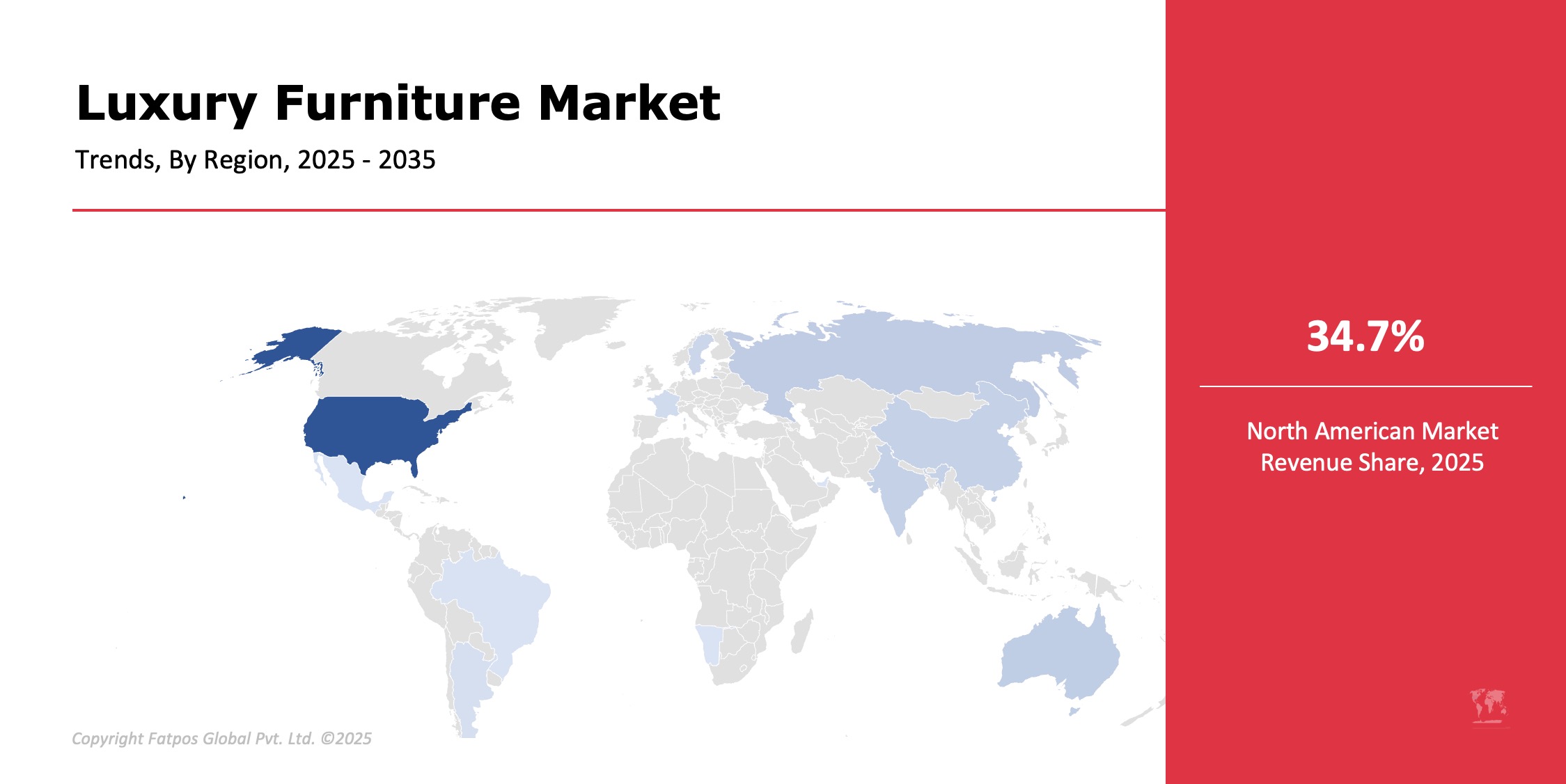
North America dominates luxury furniture with high premium interior spending, boutique designers, retailers, and bespoke services. Europe thrives as heritage brand home, with artisanal workshops fueling Western demand amid design culture and luxury trends. Asia-Pacific grows fastest, driven by rising HNWIs, urban housing, and hospitality in China, India, Japan, Southeast Asia. Latin America sees moderate gains from urban affluents and hotel investments favoring custom imports. Middle East & Africa adopt strongly in Gulf states and African cities via high-end real estate.
Segmentation Highlights
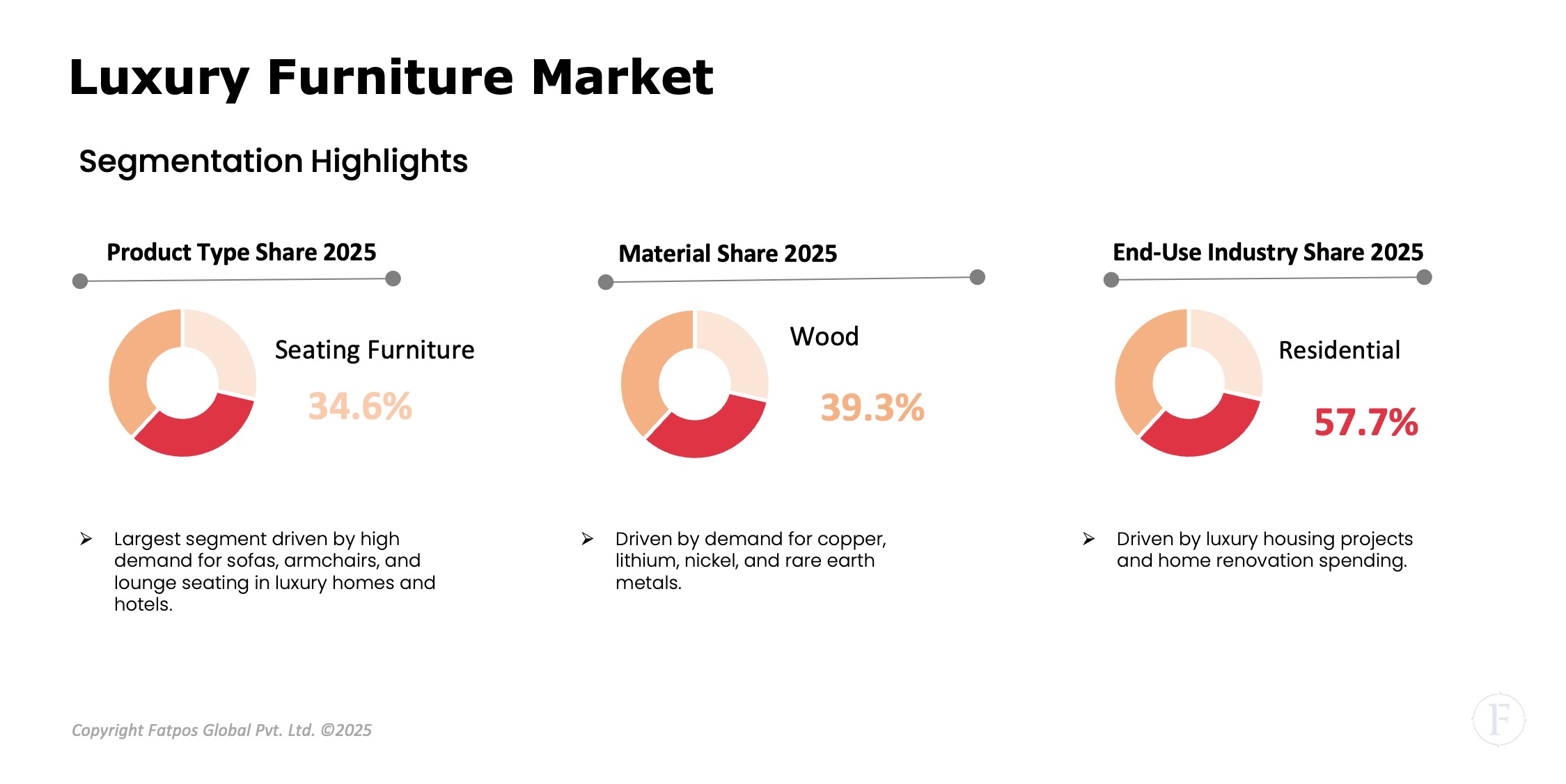
By product type, seating furniture leads with high utility and aesthetic appeal in sofas and chairs for living spaces. By material, wood and leather prevail, prized for quality, durability, and opulent feel in premium designs.
Distribution channels see offline showrooms and luxury retail holding majority share for tactile experiences, though online sales emerge via e-commerce and AR tools. By end use, residential premium homes dominate demand; hospitality—luxury hotels/resorts—grows robustly with upscale interiors. These segments highlight a blend of tradition and digital evolution.
Report Key Elements
|
ATTRIBUTES |
DETAILS |
|
Study Period |
2019–2035 |
|
Base Year |
2024 |
|
Luxury Furniture Market Forecast Period |
2025–2035 |
|
Luxury Furniture Market Size by 2035 |
USD 112.9 Bn |
|
Market CAGR |
5.1% |
| Product Type | Seating Furniture, Tables, Storage Furniture, Beds & Mattresses, Outdoor Furniture, Others |
|
By Material |
Wood, Metal, Leather, Fabric, Composite |
|
By Distribution Channel |
Offline: Specialty Stores, Luxury Retailers, Brand Showrooms; Online: E-Commerce |
|
By End User |
Residential, Commercial: Hotels/Resorts, Corporate Offices, High-End Retail, Others) |
|
By Region |
NA, Europe, APAC, LATAM, MEA |
|
Key Market Players |
Roche Bobois, Natuzzi, Herman Miller, Flexform |
Global Luxury Furniture Industry Instances
- A leading luxury hotel chain remodeled premium suites with bespoke seating and woodwork from high-end Italian designers.
- North American luxury retailer expanded AR visualize-in-room tools to boost online luxury furniture sales by over 30%.
- European design house partnered with global real-estate developers for curated interior lines in luxury condominiums.
- Asia-Pacific furniture brand introduced eco-luxury lines featuring sustainable exotic woods with traceable sourcing.
Analyst Review
As per our Luxury Furniture Market analysis report, market is poised for sustained growth driven by premium residential build-outs, expanding luxury hospitality and commercial spaces, and rising global affluence. While traditional offline showrooms remain crucial, digital and experiential retail models are reshaping customer engagement and purchase journeys. Firms investing in brand heritage, digital tools, customization, and sustainable premium materials are expected to gain competitive advantage. Economic cyclical sensitivity and raw material supply chain risks remain key considerations for long-term strategic planning.
Frequently Asked Questions (FAQ):
Premium furniture characterized by superior craftsmanship, bespoke designs, high-quality materials, and strong brand value.
Seating furniture leads due to high demand in residential and hospitality interiors.
Asia-Pacific (fastest growth) and North America (largest market).
Digital showrooms and AR tools are expanding sales beyond traditional retail, especially for affluent consumers.
Wood and leather dominate for luxury aesthetics and durability.
 Select License Type


.png)


