


Beauty Devices Market Research 2035
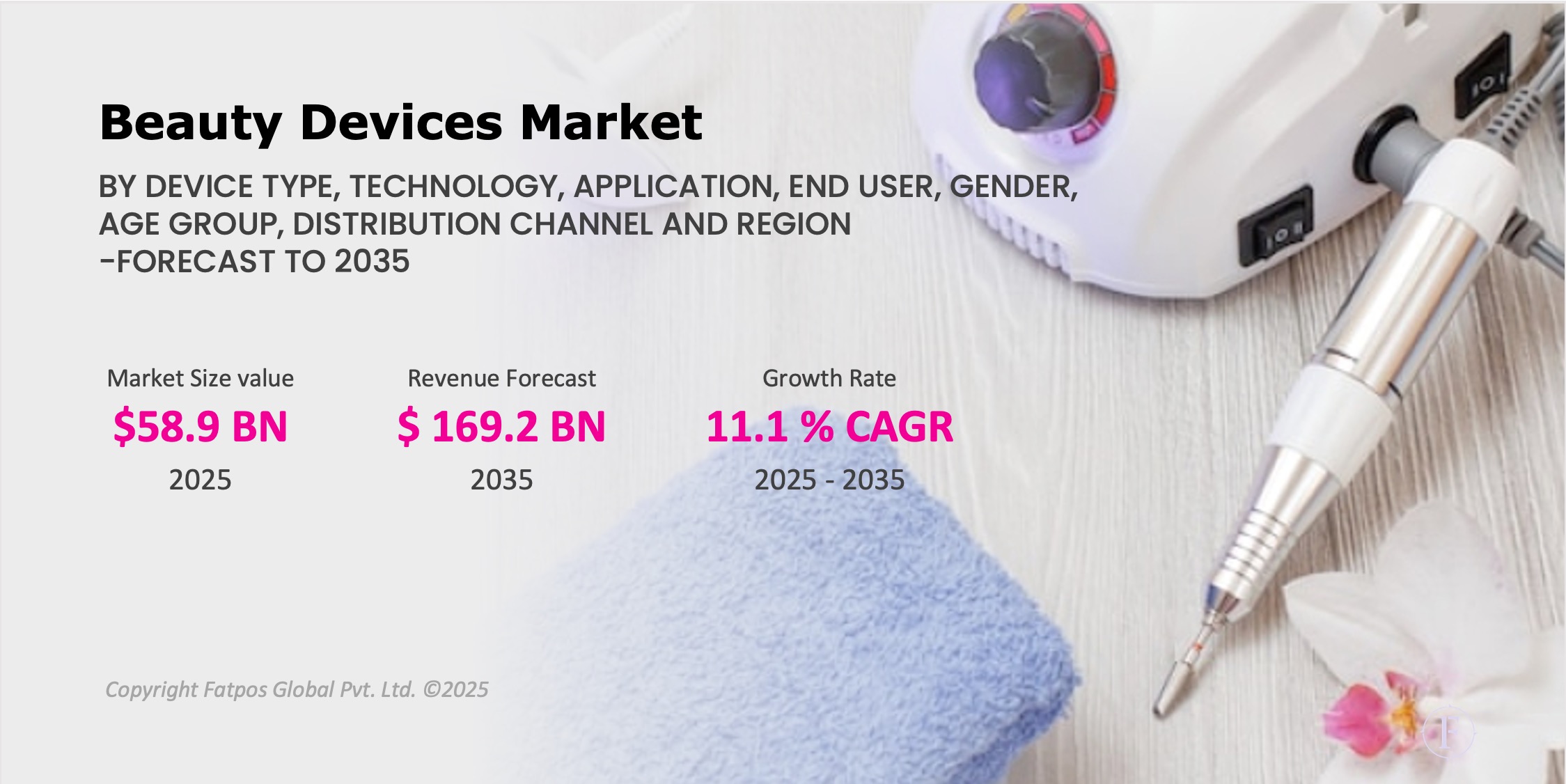
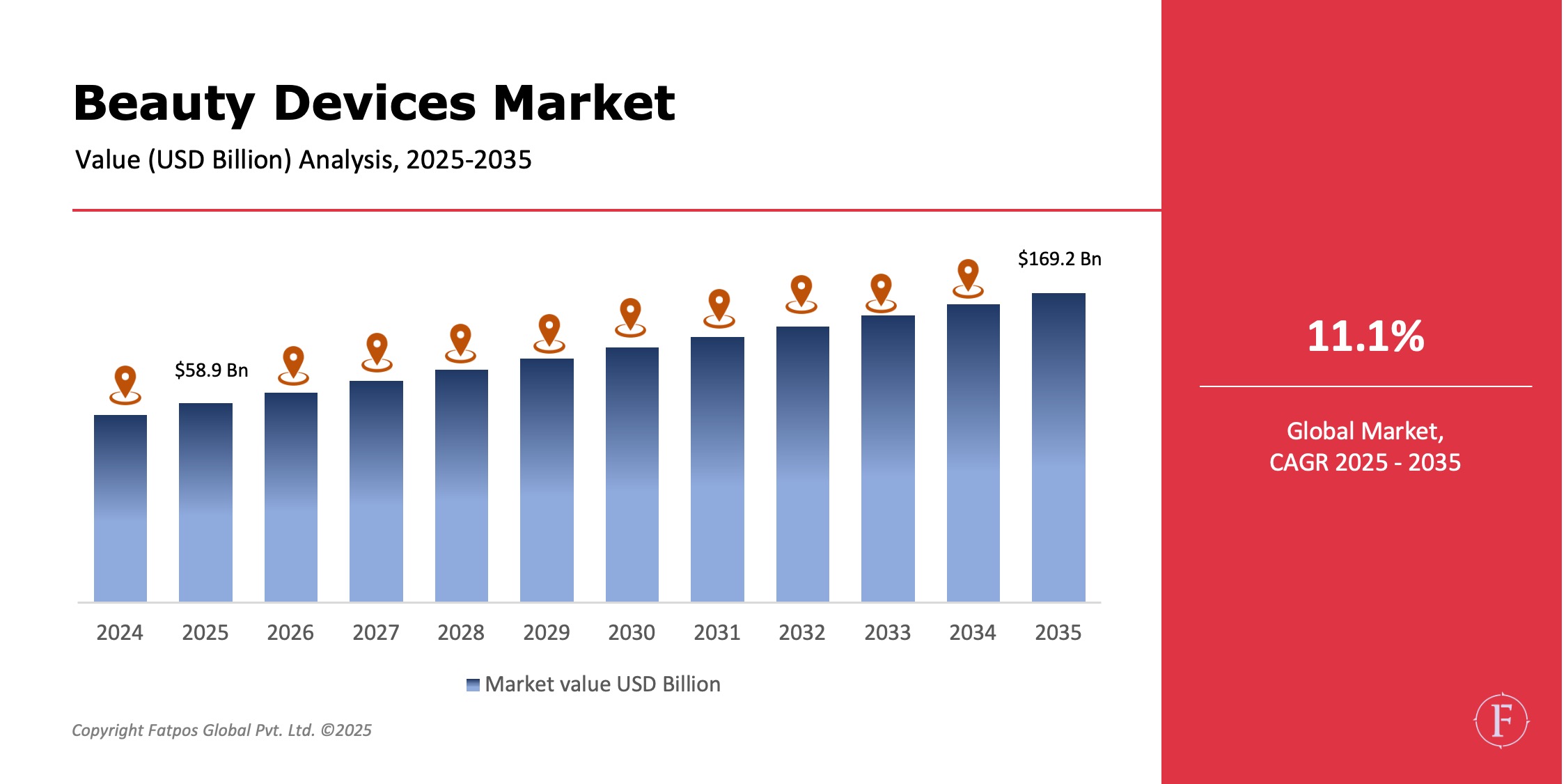
The Beauty Devices Market was valued at USD 58.9 billion in 2025 and is projected to reach USD 169.2 billion by 2035, registering a CAGR of 11.1% during the forecast period. Market growth is supported by increasing consumer focus on personal grooming and appearance, rising demand for non-invasive aesthetic treatments, growing penetration of at-home beauty devices, and continuous innovation across skincare, haircare, and body-contouring technologies.
The beauty devices industry forms a critical component of the global personal care and aesthetics ecosystem by enabling technology-driven cosmetic treatments, expanding treatment accessibility beyond clinical settings, and supporting both professional and consumer-led beauty routines across developed and emerging markets.
Product Overview
Beauty devices comprise electrically powered or technology-enabled equipment designed to enhance physical appearance, improve skin and hair health, and address aesthetic concerns. These devices are deployed across professional environments such as dermatology clinics, aesthetic centers, salons, and spas, as well as for personal home use. By device type, the market includes hair removal devices, skin rejuvenation systems, acne treatment devices, cleansing devices, anti-cellulite equipment, and body-contouring devices.
By technology, beauty devices utilize laser and light-based systems, radiofrequency, ultrasound, microcurrent, and mechanical technologies to deliver targeted aesthetic outcomes. Applications span hair care, skin care, anti-aging, acne treatment, body shaping, and pigmentation correction. Professional-grade devices emphasize precision, higher energy output, and regulatory compliance, while home-use devices prioritize safety, convenience, and affordability.
Key Takeaways :
- The Beauty Devices Market is projected to grow at approximately 11.1% CAGR through 2035.
- Skin rejuvenation and hair removal devices represent the largest revenue-generating segments.
- Laser & light-based technologies dominate technology adoption.
- Home-use beauty devices are witnessing faster growth than professional devices.
- Asia-Pacific is the fastest-growing regional market.
- Digital integration and device miniaturization are key industry trends.
Market Dynamics
Drivers
Rising consumer awareness regarding personal appearance, grooming, and skin health is a primary driver of the beauty devices market. Increasing acceptance of aesthetic procedures across broader demographics, including younger consumers and male users, has expanded the addressable market. Demand for non-invasive and minimally invasive cosmetic treatments continues to rise due to reduced recovery time, lower procedural risk, and improving treatment outcomes.
Technological advancements in laser, radiofrequency, ultrasound, and microcurrent devices have improved safety, efficacy, and usability, supporting adoption across professional and home-use segments. Expansion of dermatology clinics, medical spas, and aesthetic service providers further supports sustained market growth.
Restrictions
High acquisition and maintenance costs associated with advanced professional beauty devices limit adoption among small clinics and independent salons, particularly in price-sensitive regions. For consumers, premium pricing of certain home-use devices restricts penetration beyond urban and higher-income segments.
Regulatory requirements related to device safety, clinical validation, and certification vary across regions, increasing compliance complexity and time-to-market for manufacturers. Concerns related to misuse of home-use devices and inconsistent treatment outcomes may also impact consumer confidence.
Opportunities
Growing demand for at-home beauty and wellness solutions presents significant opportunities for market participants. Consumers increasingly prefer convenient, private, and cost-effective alternatives to professional treatments, driving demand for compact and multifunctional devices.
Emerging economies across Asia-Pacific, Latin America, and the Middle East offer strong growth potential due to rising disposable incomes, urbanization, and increasing beauty awareness. Integration of digital capabilities such as app connectivity, AI-based skin analysis, and personalized treatment settings enhances product differentiation and user engagement.
Challenges
Ensuring consistent treatment performance across different skin tones, hair types, and age groups remains a technical challenge for manufacturers. Balancing device performance, safety standards, and affordability requires sustained investment in research and development.
The presence of counterfeit and low-quality beauty devices, particularly through online marketplaces, poses challenges related to consumer safety and brand credibility. Rapid innovation cycles and frequent product launches also increase competitive pressure and shorten product life cycles.
Beauty Devices Market Trends
The beauty devices market is evolving in response to shifting consumer preferences, technological advancement, and distribution channel expansion. Demand for non-invasive, pain-free aesthetic solutions continues to rise, supporting adoption of laser, light-based, and radiofrequency technologies. Growth in at-home beauty devices has accelerated due to compact designs, improved safety mechanisms, and wider online availability.
Digitalization is becoming increasingly prominent, with smart sensors, app-enabled customization, and data-driven treatment recommendations improving user experience. Sustainability considerations, including energy-efficient devices and longer product life cycles, are gradually influencing product design. Asia-Pacific remains a focal point for innovation and adoption due to strong beauty culture and high consumer engagement.
Key Players in the Global Beauty Devices Industry
- L’Oréal Group
- Philips N.V.
- Panasonic Corporation
- Nu Skin Enterprises
- Procter & Gamble
- Home Skinovations
- Cynosure
- Lumenis
- Tria Beauty
- FOREO
- Johnson & Johnson
Regional & Country Analysis
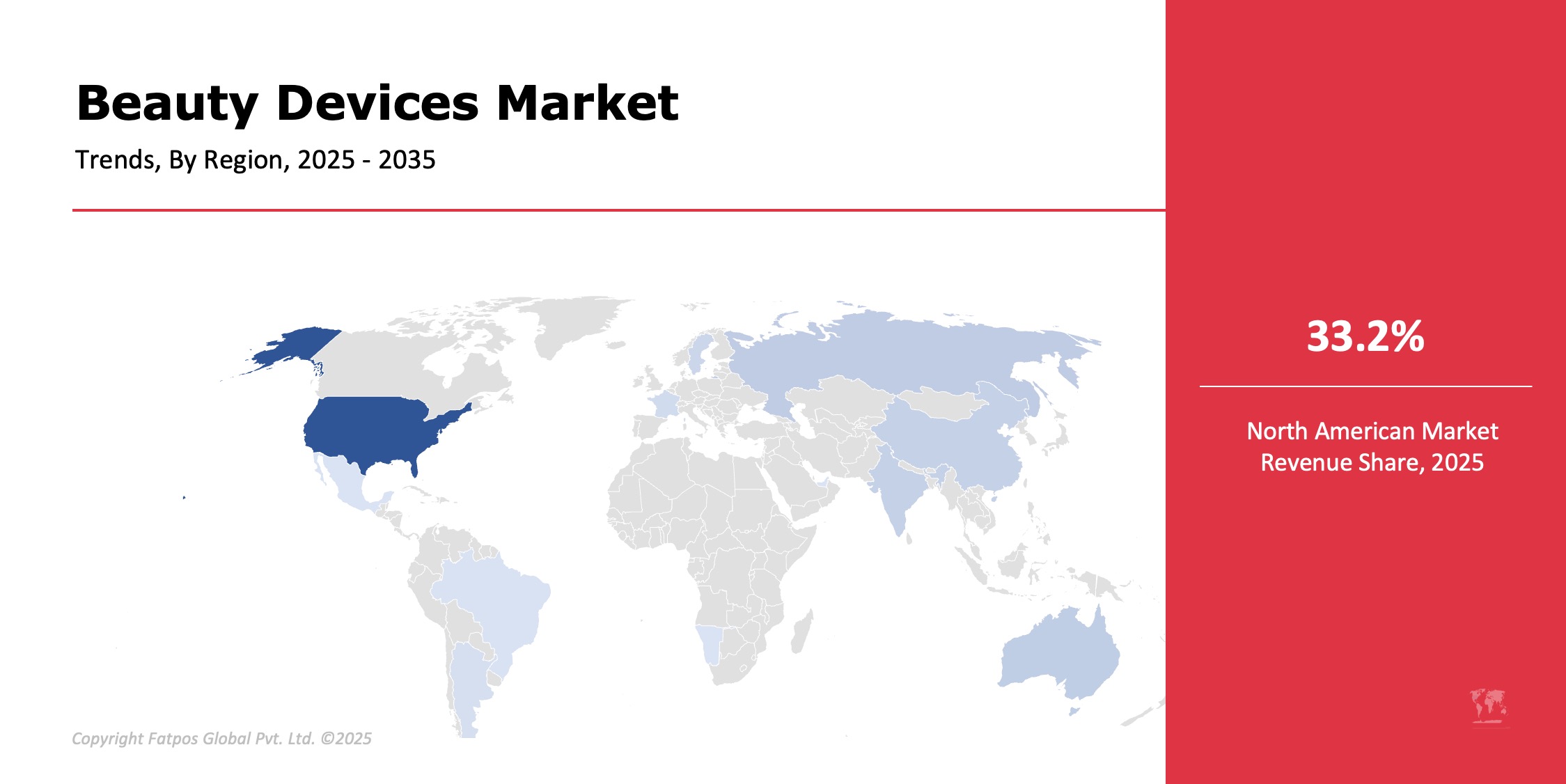
North America accounts for a significant share of the global beauty devices market, supported by high consumer spending on personal care, widespread acceptance of aesthetic procedures, and strong presence of dermatology clinics and medical spas. Europe follows, driven by established beauty and cosmetics industries, technological innovation, and growing preference for non-invasive treatments.
Asia-Pacific represents the fastest-growing disposable region, supported by rising incomes, expanding middle-class populations, and strong beauty consciousness in countries such as China, Japan, South Korea, and India. Latin America demonstrates steady growth driven by urbanization and increasing beauty awareness, while the Middle East & Africa market is supported by premium beauty service demand and aesthetic tourism.
Segmentation Highlights
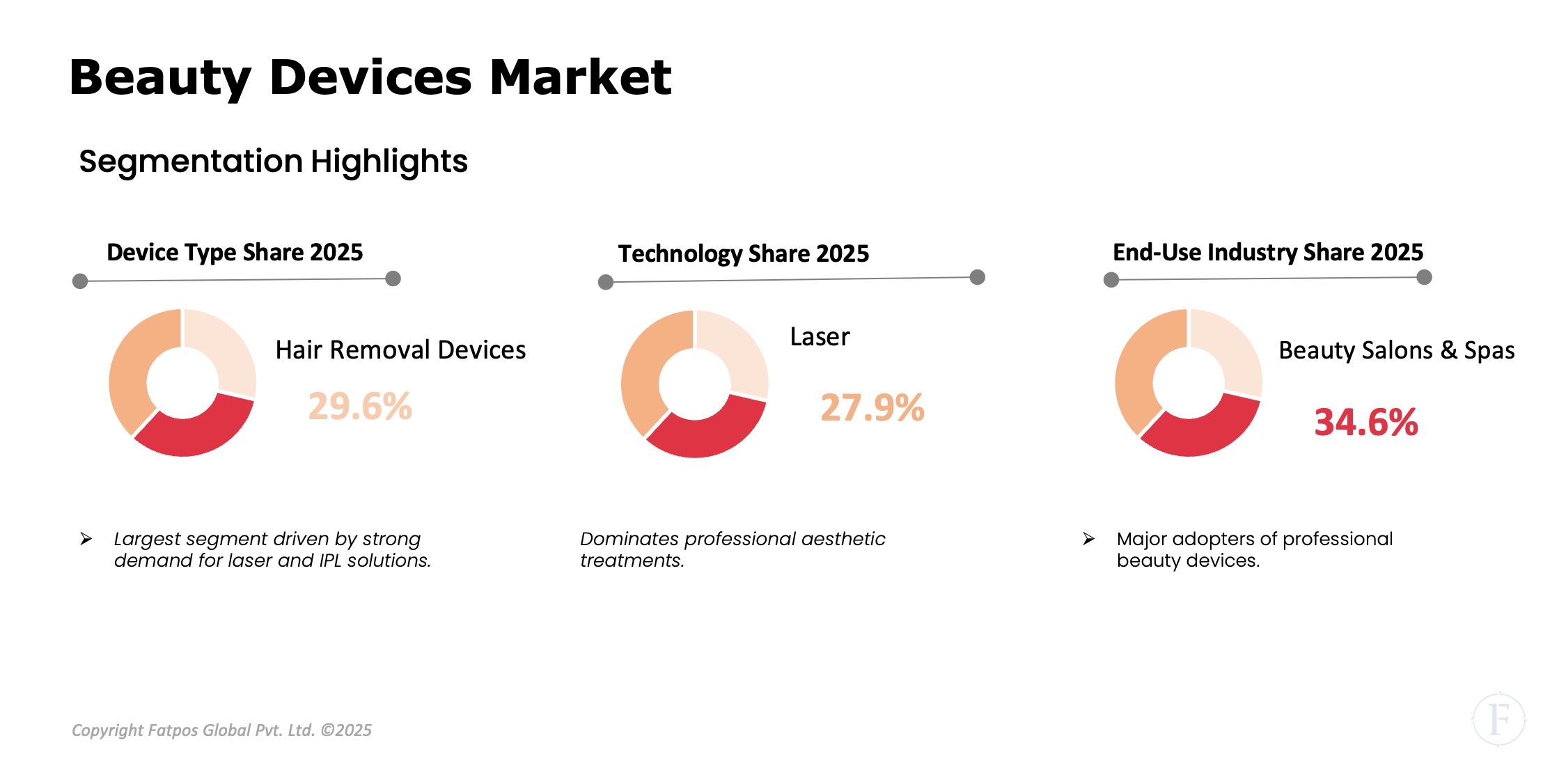
By device type, skin rejuvenation devices hold the largest market share, driven by strong demand for anti-aging and skin enhancement treatments. Hair removal devices follow closely across both professional and home-use segments. Body contouring and anti-cellulite devices are gaining traction with increasing focus on body aesthetics.
By technology, laser and light-based devices dominate due to high efficacy and wide clinical adoption, followed by radiofrequency and ultrasound technologies. By end user, professional clinics and medical spas account for the majority of revenue, while the home-use segment is expanding at a faster pace. Female consumers represent the largest user base, although adoption among male consumers is steadily increasing .
Report Key Elements
|
ATTRIBUTES |
DETAILS |
|
Study Period |
2019–2035 |
|
Base Year |
2024 |
|
Forecast Period |
2025–2035 |
|
Market Size by 2035 |
USD 169.2 billion |
|
Market CAGR |
11.1% |
|
By Device Type |
Hair Removal, Skin Rejuvenation, Acne, Cleansing, Body Contouring |
|
By Technology |
Laser & Light-based, RF, Ultrasound, Microcurrent, Mechanical |
|
By Application |
Hair Care, Skin Care, Anti-aging, Body Shaping, Acne |
|
By End User |
Clinics, Medical Spas, Salons, Home Use |
|
By Gender |
Male, Female |
|
By Age Group |
Below 18, 18–34, 35–50, Above 50 |
|
By Distribution Channel |
Professional Sales, Online, Specialty Stores |
|
By Region |
North America, Europe, Asia-Pacific, Latin America, MEA |
|
Beauty Devices Market: Key Players |
L'Oréal Group, Philips NV, Panasonic Corporation, Nu Skin Enterprises, Procter & Gamble, Home Skinovations |
Global Beauty Devices Industry Instances
- Manufacturers launched multifunctional and app-enabled beauty devices.
- Clinics expanded adoption of non-invasive aesthetic technologies.
- Online channels accelerated sales of home-use beauty devices.
- Emerging markets recorded increased demand for advanced beauty solutions.
Analyst Review
As per our Beauty Devices Market Analysis, the beauty devices market is expected to experience robust growth through 2035, driven by increasing aesthetic awareness, technological innovation, and expanding home-use adoption. While regulatory and pricing challenges persist, continued product innovation and expansion into emerging markets are expected to support long-term market development.
Frequently Asked Questions (FAQ):
Beauty devices are technology-enabled tools used for cosmetic and aesthetic treatments.
Rising beauty awareness, demand for non-invasive treatments, and product innovation.
Skin rejuvenation devices.
Asia-Pacific.
Strong growth supported by technology adoption and expanding consumer base.
 Select License Type


.png)


