


Protective Clothing Market Research 2035
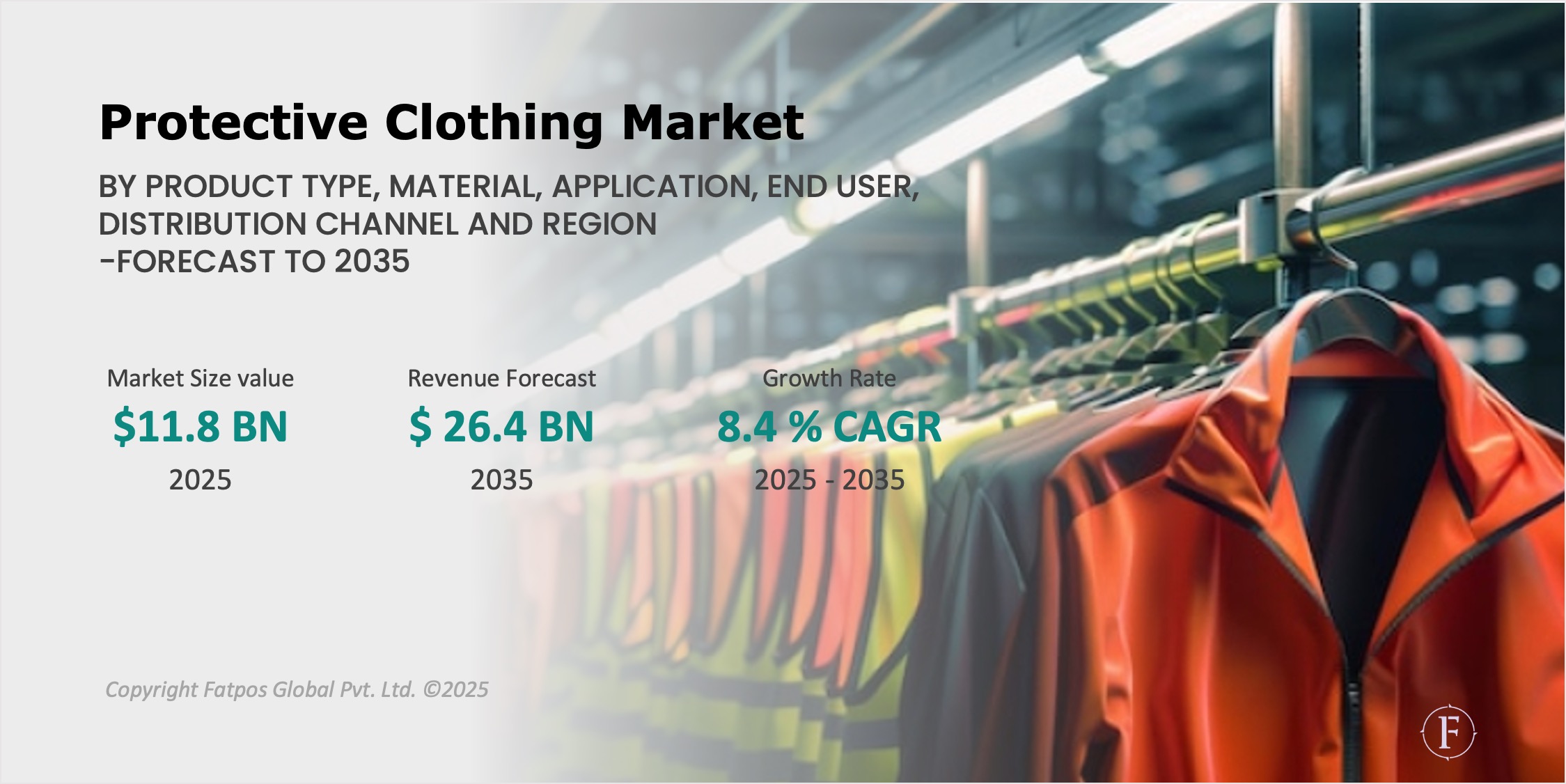
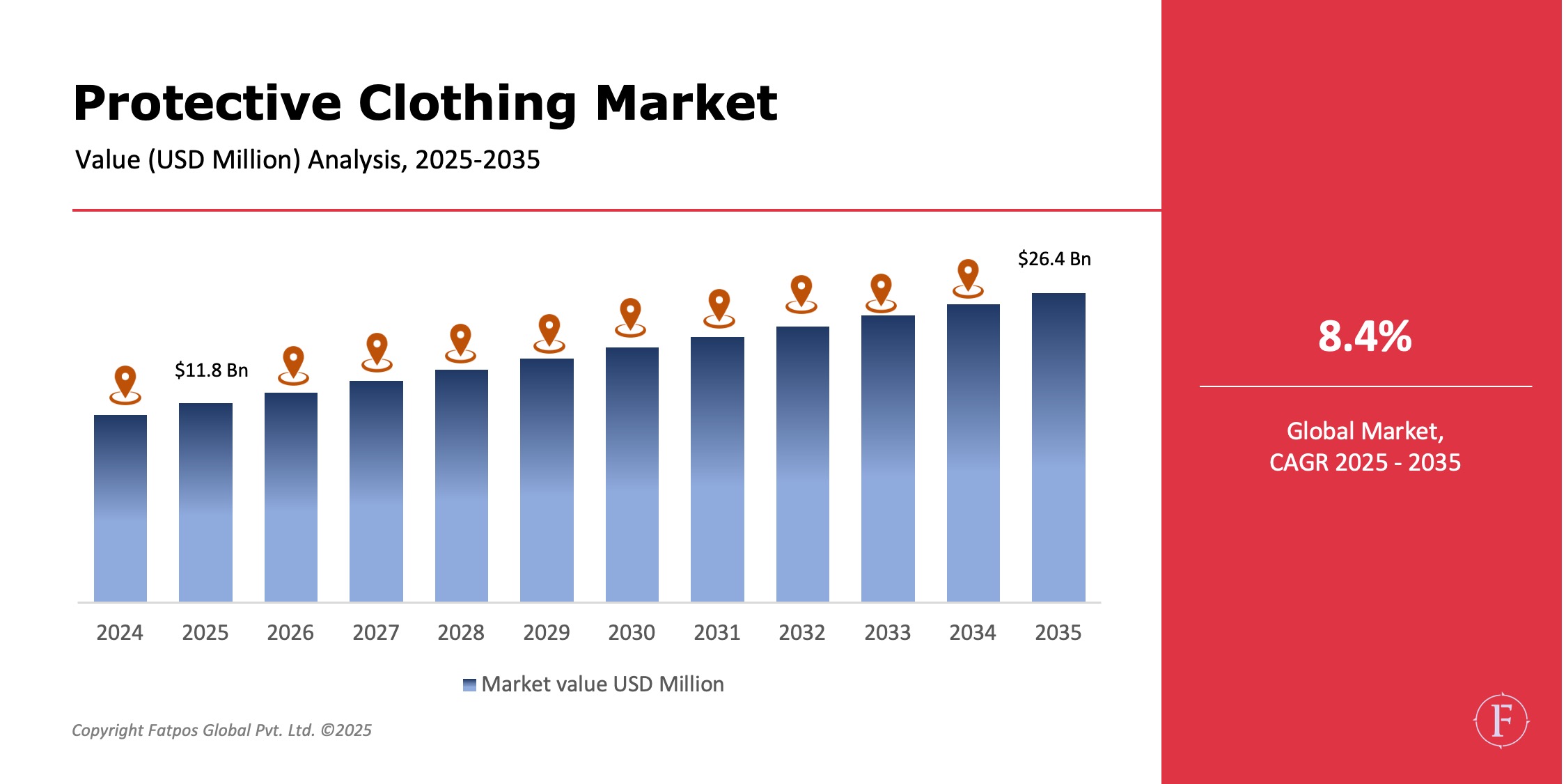
The Protective Clothing Market Size was valued at USD 11.8 billion in 2025 and is projected to reach USD 26.4 billion by 2035, registering a CAGR of 8.4% during the forecast period. Market growth is driven by rising workplace safety regulations, increasing industrialization, expansion of hazardous manufacturing activities, growing awareness of employee health protection, and stringent compliance mandates across high-risk industries.
The protective clothing industry plays a vital role in safeguarding workers from physical, chemical, biological, thermal, and mechanical hazards, significantly reducing workplace injuries, fatalities, and occupational health risks across industrial and public safety sectors.
Product Overview
Protective clothing refers to specialized apparel designed to shield workers from workplace hazards that could cause injury, illness, or fatality. These garments include coveralls, suits, jackets, gloves, aprons, and full-body protective systems engineered for specific risk environments. Based on product type, the market includes chemical protective clothing for hazardous material handling, heat and flame-resistant apparel for high-temperature environments, mechanical protective clothing for impact and abrasion resistance, and biological protective wear for infection control.
By material type, protective clothing is manufactured using advanced fibers such as aramid for high heat resistance, polyolefin for lightweight chemical protection, cotton fiber for comfort and breathability, and laminated polyesters for multi-hazard environments. These solutions are widely adopted across manufacturing plants, oil & gas operations, construction sites, healthcare facilities, emergency response units, and defense applications to ensure regulatory compliance and workforce safety.
Key Takeaways :
- The Protective Clothing Market is expected to grow at ~8.4% CAGR through 2035.
- Chemical and heat-resistant clothing account for the largest market share.
- Stringent occupational safety regulations are a key growth driver.
- Asia-Pacific is the fastest-growing regional market.
- Manufacturing and oil & gas sectors dominate end-user demand.
- Innovation in lightweight, durable, and sustainable materials is reshaping product development.
Market Dynamics
Drivers
The growing enforcement of occupational health and safety regulations by governments and international agencies is a primary driver for the protective clothing market. Regulatory frameworks such as OSHA standards, EU PPE regulations, and ISO certifications mandate the use of certified protective clothing across hazardous industries. Rapid industrialization, particularly in emerging economies, increases worker exposure to chemical, thermal, and mechanical risks, further accelerating demand.
Expansion of the oil & gas, chemical processing, construction, and manufacturing sectors intensifies the need for high-performance protective gear to minimize workplace incidents. Additionally, rising awareness among employers regarding liability reduction, productivity improvement, and workforce well-being supports sustained investment in advanced protective clothing solutions.
Restrictions
High costs associated with advanced protective clothing, especially garments made from aramid fibers and multi-layer composite materials, present a significant restraint for small and medium enterprises. Price sensitivity in developing markets often leads to adoption of low-quality or uncertified protective wear, limiting market penetration of premium products.
Comfort issues such as heat stress, reduced mobility, and limited breathability in heavy protective garments can discourage consistent usage among workers, impacting compliance. Additionally, frequent replacement cycles due to wear and contamination increase total cost of ownership, posing challenges for cost-conscious industries.
Opportunities
Technological advancements in material science present significant opportunities for the protective clothing market. Development of lightweight, breathable, and high-durability fabrics enhances wearer comfort while maintaining high protection levels. Smart protective clothing integrated with sensors for temperature, gas detection, and physiological monitoring is gaining traction, particularly in defense and firefighting applications.
Growing focus on sustainable and recyclable materials creates opportunities for eco-friendly protective apparel. Expanding healthcare infrastructure, increasing pandemic preparedness, and rising adoption of biological protective clothing in medical and pharmaceutical sectors further strengthen growth prospects. Emerging economies in Asia-Pacific, Latin America, and the Middle East offer untapped potential due to expanding industrial bases and improving safety awareness.
Challenges
Ensuring consistent compliance with protective clothing usage remains a major challenge, as worker discomfort and operational constraints often lead to improper use. Balancing protection, comfort, durability, and cost requires continuous innovation and testing, increasing R&D expenditure for manufacturers.
Counterfeit and substandard protective clothing in price-sensitive markets undermine safety standards and brand credibility. Additionally, meeting diverse regulatory requirements across regions complicates product certification and global distribution strategies, posing operational challenges for market participants.
Protective Clothing Market Trends
The protective clothing market is witnessing significant transformation driven by innovation, regulation, and sustainability priorities. Increasing adoption of lightweight and ergonomic designs improves wearer comfort and compliance, particularly in hot and physically demanding environments. Multi-hazard protective clothing capable of providing chemical, thermal, and mechanical protection in a single garment is gaining popularity among industrial users.
Sustainability is emerging as a key trend, with manufacturers focusing on recyclable materials, longer garment life cycles, and reduced environmental impact during production. Integration of smart textiles and wearable technology enables real-time monitoring of worker safety conditions, enhancing risk management and emergency response. Asia-Pacific continues to attract investments in local manufacturing facilities to meet rising regional demand and reduce supply chain dependency.
Key Players in the Global Protective Clothing Industry
- DuPont
- 3M Company
- Honeywell International Inc.
- Ansell Limited
- Lakeland Industries
- Kimberly-Clark Corporation
- Alpha Pro Tech Ltd.
- Uvex Group
- Delta Plus Group
- Sioen Industries
- L. Gore & Associates
Regional & Country Analysis
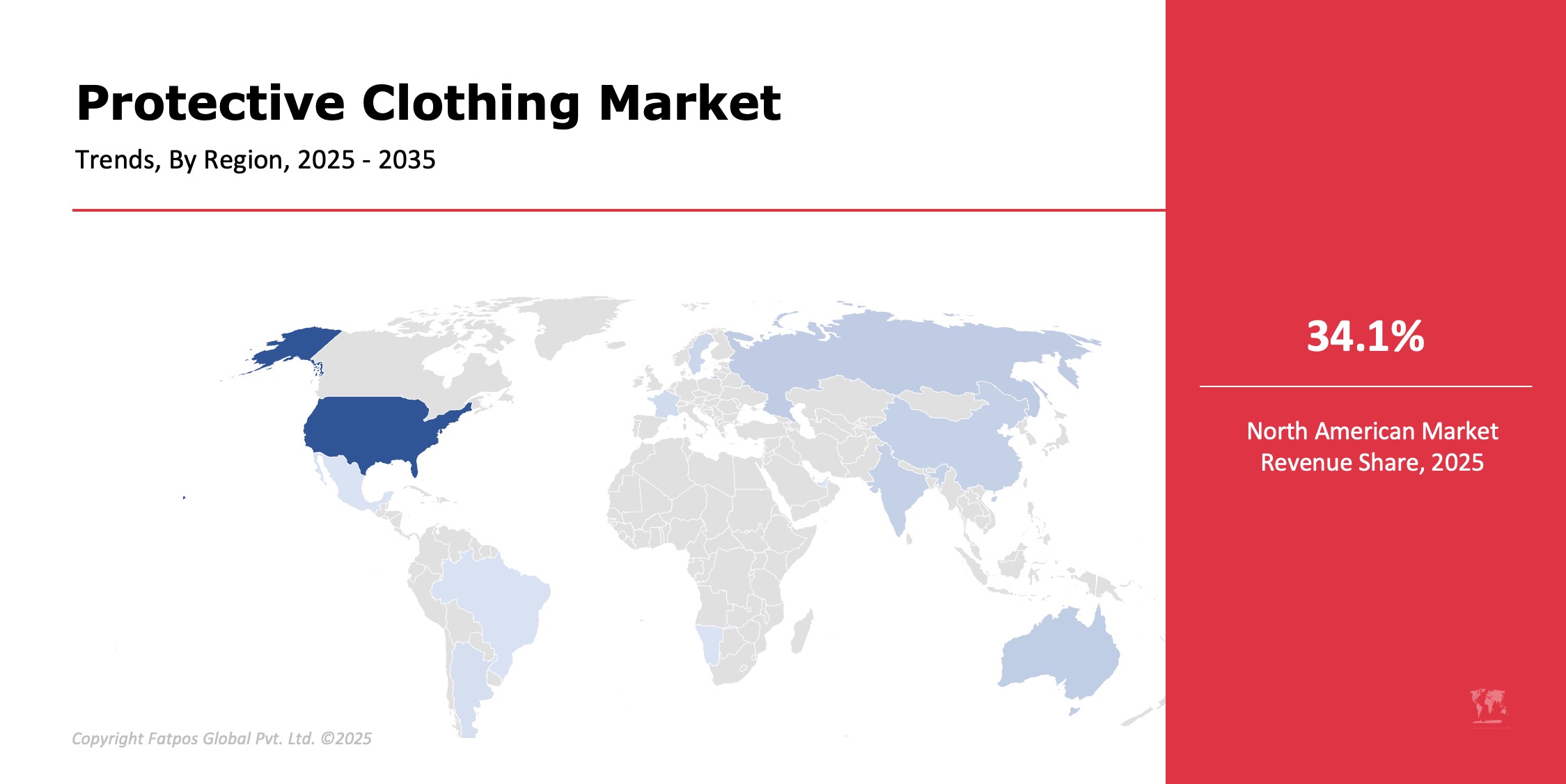
North America dominates the global protective clothing market due to strict safety regulations, high adoption of advanced PPE, and strong presence of manufacturing and oil & gas industries in the US and Canada. Europe follows closely, supported by stringent EU safety directives, robust industrial activity, and growing emphasis on sustainable protective solutions.
Asia-Pacific is the fastest-growing region, driven by rapid industrialization in China, India, and Southeast Asia, increasing workforce size, and improving regulatory enforcement. Latin America shows steady growth through expansion of construction and mining activities in Brazil and Chile. The Middle East & Africa witness rising demand from oil & gas operations, infrastructure development, and defense spending, particularly in Saudi Arabia and the UAE.
Segmentation Highlights
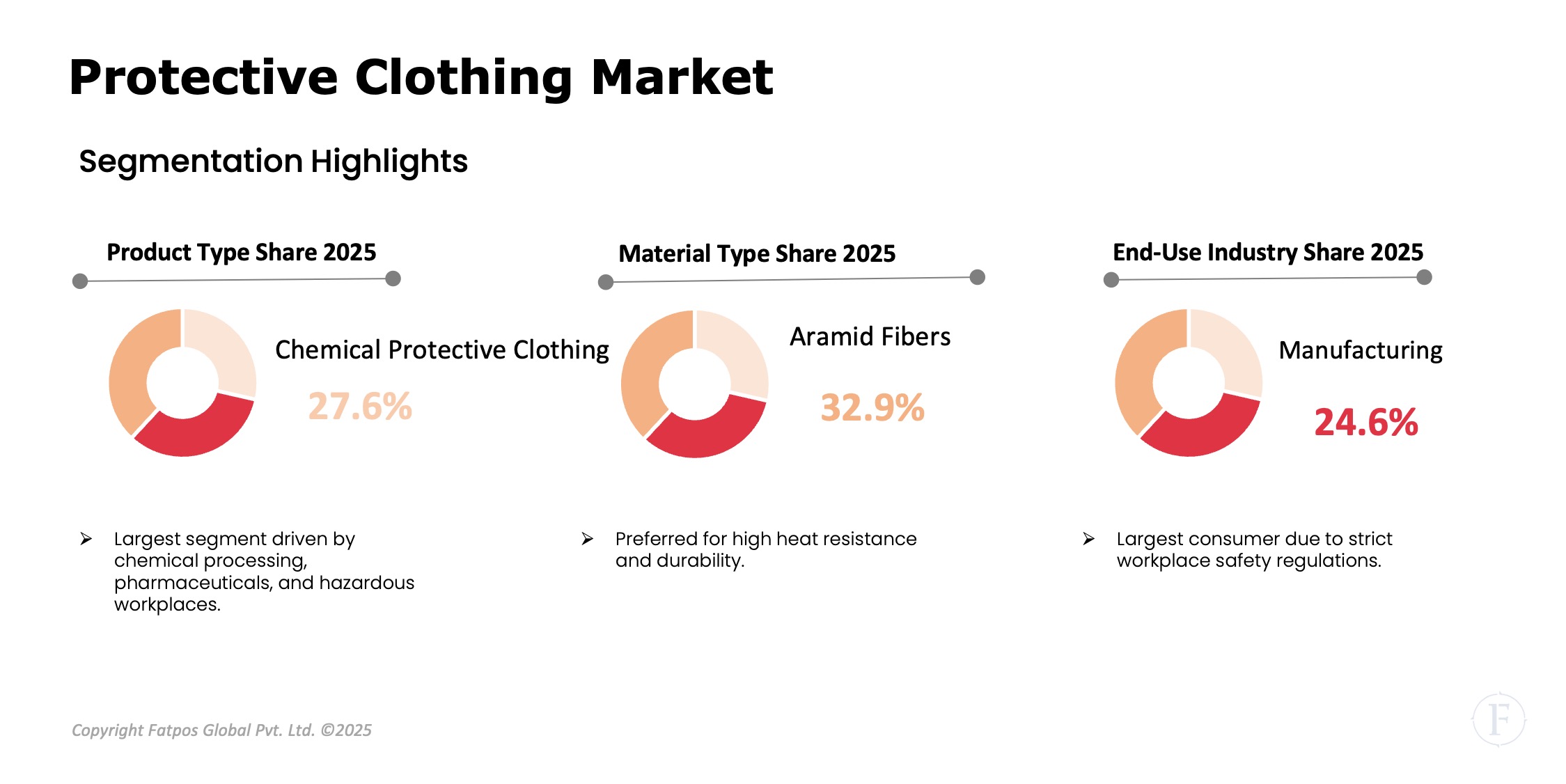
By product type, chemical protective clothing holds the largest market share, accounting for over 35% of demand due to widespread use in chemical processing, oil & gas, and hazardous material handling. Heat and flame-resistant clothing follows at approximately 30%, driven by firefighting, metal processing, and energy sectors.
By end user, manufacturing dominates with nearly 40% market share, followed by oil & gas and construction industries. Healthcare and biological protection segments have witnessed accelerated growth post-pandemic. By material type, aramid fibers lead due to superior heat resistance and durability, while polyolefin materials gain traction for lightweight chemical protection.
Report Key Elements
|
ATTRIBUTES |
DETAILS |
|
Study Period |
2019–2035 |
|
Base Year |
2024 |
|
Forecast Period |
2025–2035 |
|
Market Size by 2035 |
USD 26.4 billion |
|
Market CAGR |
8.4% |
|
By Product Type |
Chemical, Heat & Flame Resistant, Mechanical, Biological |
|
By Material |
Aramid, Polyolefin, Cotton Fiber, Laminated Polyesters |
|
By End User |
Manufacturing, Oil & Gas, Construction, Healthcare, Defense |
|
By Region |
NA, Europe, APAC, LATAM, MEA |
|
Protective Clothing Market: Key Players |
DuPont, 3M Company, Honeywell International Inc., Ansell Limited, Lakeland Industries |
Global Protective Clothing Industry Instances
- Manufacturers launched lightweight multi-hazard protective suits.
- Governments tightened workplace safety compliance standards.
- Healthcare systems increased stockpiling of biological protective clothing.
- Industries adopted smart PPE for real-time safety monitoring.
Analyst Review
As per our Protective Clothing Market Analysis, the market is poised for strong growth driven by regulatory enforcement, industrial expansion, and rising awareness of worker safety. While cost and comfort challenges persist, advancements in material technology and smart protective solutions are expected to enhance adoption. Companies investing in innovation, sustainability, and regional manufacturing capabilities are likely to gain a competitive edge through 2035.
Frequently Asked Questions (FAQ):
Specialized apparel designed to protect workers from workplace hazards.
Safety regulations, industrialization, and rising workplace risk awareness.
Chemical and heat-resistant protective clothing.
Asia-Pacific.
Strong growth driven by innovation, regulation, and emerging markets.
 Select License Type


.png)


