


.png)
Cosmetics Market Research 2035
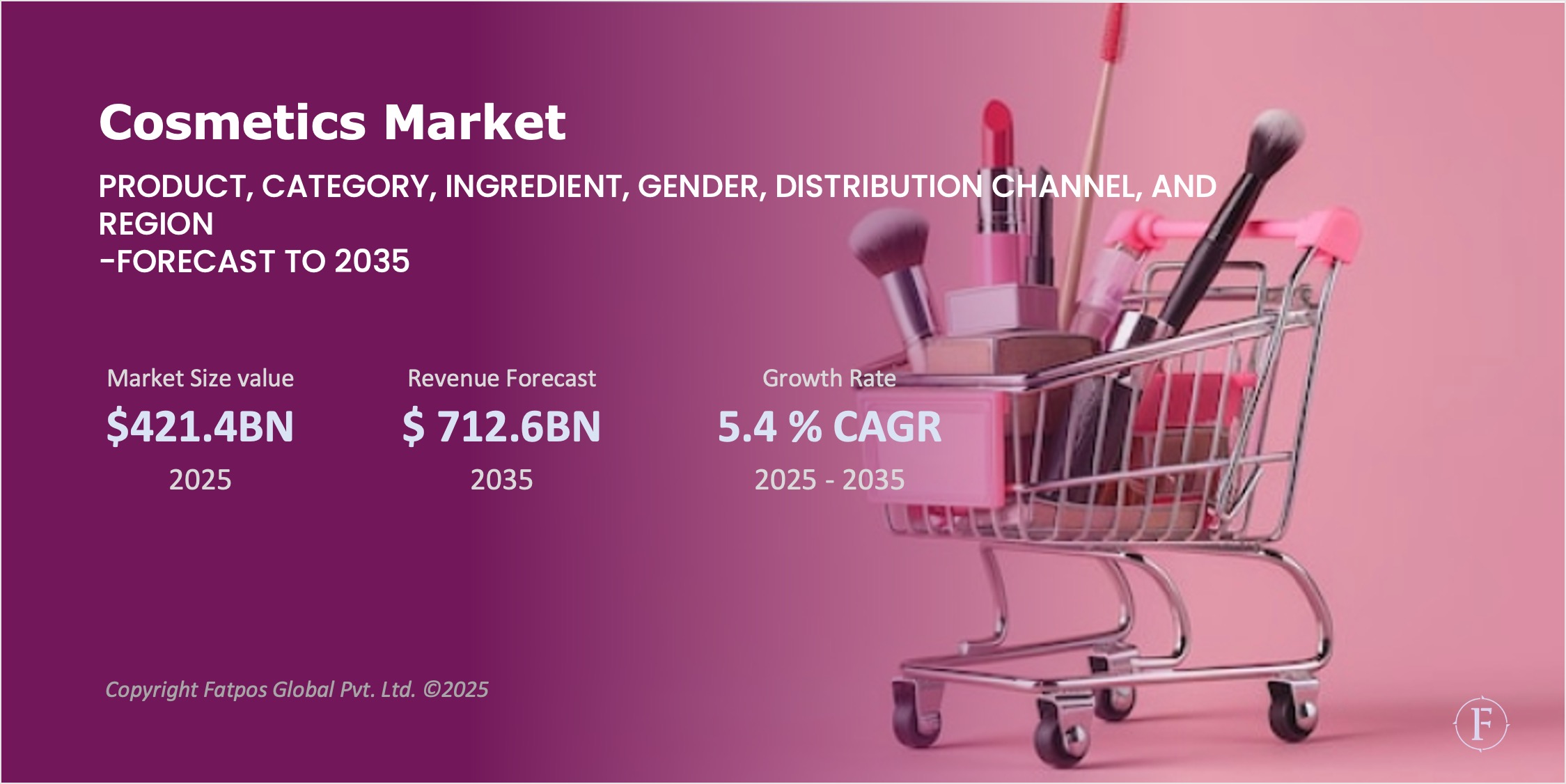
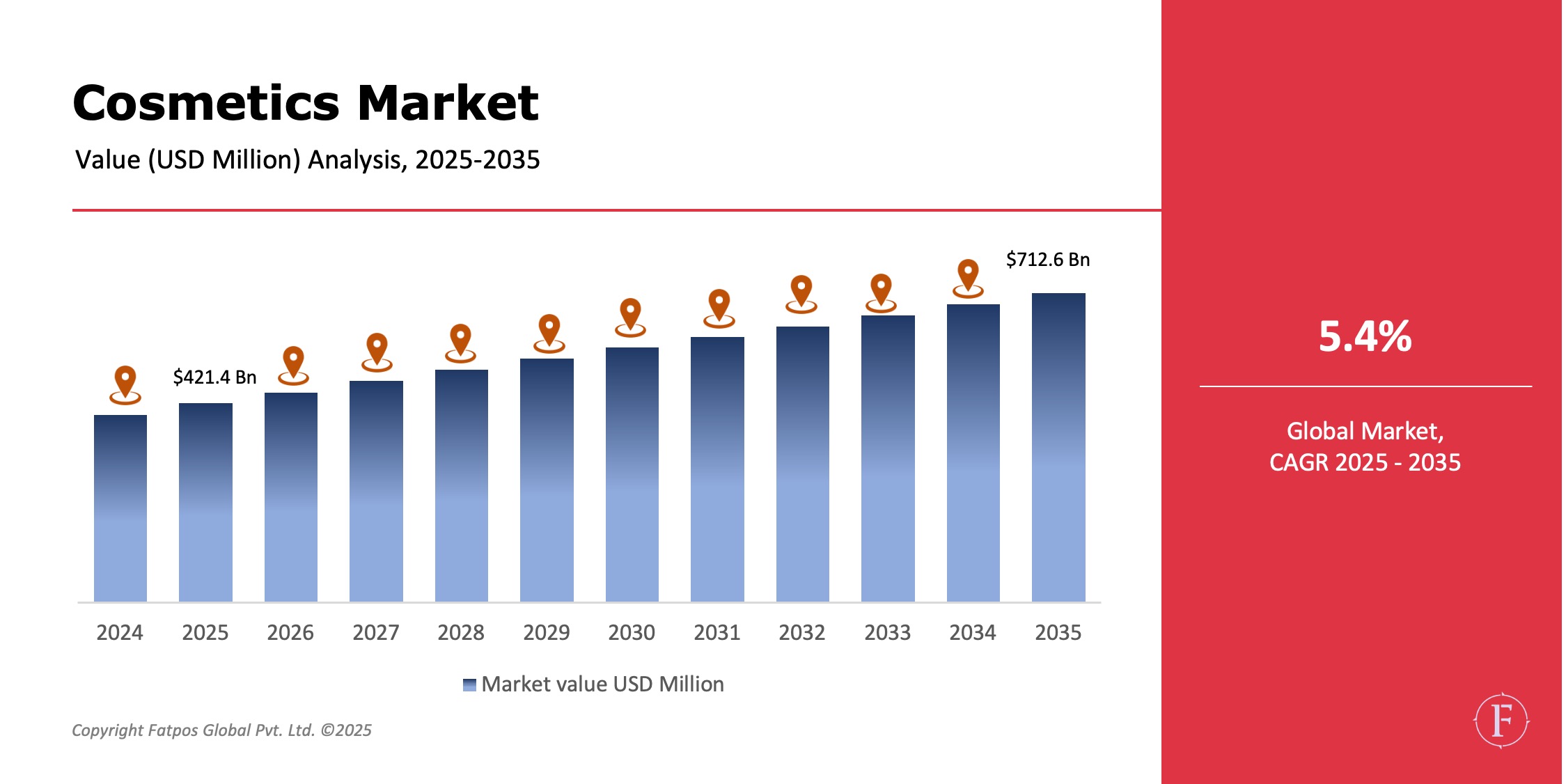
The Cosmetics Market Size was USD 421.4 billion in 2025 and is projected to reach USD 712.6 billion by 2035, registering a CAGR of 5.4%, Market growth is supported by rising beauty consciousness, increasing disposable incomes, rapid urbanization, social media influence, and continuous innovation in formulations, packaging, and branding.
Cosmetics products are integral to daily personal care and lifestyle enhancement, encompassing skincare, haircare, makeup, fragrances, and hygiene products. The industry is experiencing a strong shift toward clean beauty, natural and organic formulations, sustainability, inclusivity, and personalization, reshaping consumer preferences across both mass and premium segments.
Product Overview
The cosmetics market offers diverse beauty and personal care products that enhance appearance, hygiene, and well-being. Skin care dominates with creams, lotions, serums, sunscreens, and anti-aging solutions for protection and rejuvenation. Hair care includes shampoos, conditioners, oils, styling products, and treatments for nutrition and manageability.
Color cosmetics feature foundations, lipsticks, eye makeup, and nail products for expressive looks. Fragrances span perfumes, deodorants, and body sprays for lasting scent. Personal care covers bath/shower essentials, oral hygiene, and deodorants for daily freshness.
By category, mass cosmetics provide affordable, accessible options for broad consumers, while premium/luxury lines highlight high-end quality, innovative formulations, and brand heritage for affluent buyers seeking exclusivity and efficacy.
Key Takeaways :
- The Cosmetics Market is expected to grow at ~5.4% CAGR through 2035.
- Skin care is the largest and fastest-growing product segment.
- Rising demand for natural, organic, and clean-label cosmetics is reshaping product portfolios.
- E-commerce and direct-to-consumer (DTC) channels are rapidly expanding.
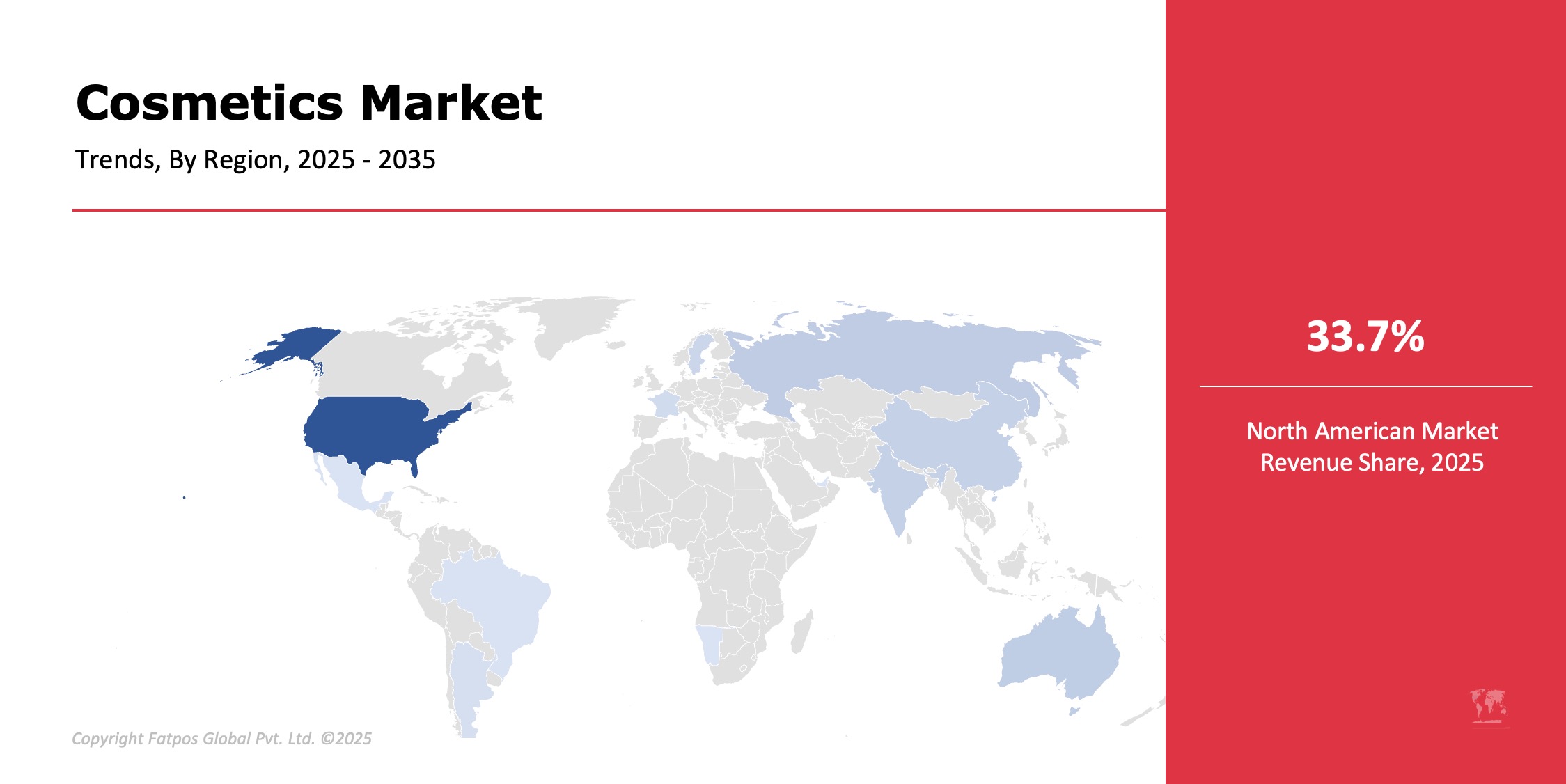
- Asia-Pacific is the fastest-growing region, while North America remains the largest market.
- Male grooming and gender-neutral cosmetics are gaining strong traction.
Market Dynamics
Drivers
Growing awareness of personal grooming, skincare, and wellness propels cosmetics demand as consumers prioritize self-care routines. Social media, beauty influencers, and digital marketing amplify trends, driving viral product adoption among younger demographics.
Rising disposable incomes and urban middle-class expansion enable premium purchases. Innovations in formulations—like clean, vegan actives—packaging sustainability, and dermatologically tested safety build trust.
Organized retail growth and online beauty platforms enhance accessibility, from e-commerce giants to specialized apps, fueling market penetration.
Restrictions
Regulatory scrutiny intensifies on cosmetic ingredients and safety, with bans on parabens, phthalates, and allergens requiring costly reformulations and compliance testing across regions. Intense competition and brand saturation challenge differentiation, as new indie labels vie with giants like L'Oréal, eroding margins through promotions. Price sensitivity in emerging markets limits premium adoption, where consumers favor affordable mass options amid economic volatility.
Opportunities
Clean beauty emerges with vegan, cruelty-free, and organic formulations free of harsh chemicals, appealing to health-conscious consumers seeking transparent labels. Men's grooming and unisex products expand rapidly, offering tailored skincare, beard oils, and multi-use items amid shifting gender norms.
Personalized cosmetics leverage AI skin diagnostics and genetic testing for custom serums and foundations matching individual needs. Sustainable packaging—refillable glass, biodegradable plastics—gains traction, reducing waste while aligning with eco-values. These innovations reflect evolving preferences for ethical, tech-driven, and planet-friendly beauty.
Challenges
Maintaining compliance across diverse regional regulations demands constant adaptation to varying standards on ingredients, labeling, and safety testing, from EU's strict REACH to US FDA rules. Managing supply chains for natural, ethically sourced ingredients faces volatility in organic farming yields, traceability issues, and certification costs amid climate disruptions.
Brand differentiation proves tough in a saturated marketplace, where countless players—from conglomerates to indie startups—compete via similar clean beauty claims, requiring heavy marketing spends on innovation and storytelling.
Cosmetics Market Trends
A strong shift toward natural, organic, and sustainable cosmetics prioritizes clean ingredients and eco-friendly practices, meeting consumer demands for health and planet safety. Dermocosmetics and cosmeceuticals rise with functional benefits like anti-aging actives and barrier repair, blending skincare efficacy with beauty.
Influencer-driven and social-commerce models explode, turning platforms like Instagram into direct sales channels via tutorials and shoppable posts. AI-based skin analysis tools enable hyper-personalized recommendations, from custom foundations to routine tweaks.
Inclusivity, diversity, and gender-neutral branding gain ground, expanding shade ranges and unisex appeal to broader demographics.
Key Players in the Global Cosmetics Industry
- L'Oréal Group
- Estée Lauder Companies
- Unilever
- Procter & Gamble
- Shiseido Company
- Coty Inc.
- Beiersdorf AG
- LVMH (Sephora, Dior, Givenchy)
- Amorepacific Corporation
- Revlon, Inc.
- Oriflame Cosmetics
- Kao Corporation
Regional & Country level: Cosmetic Marekt Analysis
North America commands the largest cosmetics market, propelled by robust consumer spending, premium brand dominance, and widespread embrace of skincare alongside clean beauty innovations. Europe stands as a mature powerhouse, with fervent demand for organic, natural, and dermatologically tested products underpinned by rigorous regulatory standards that ensure quality and safety.
Asia-Pacific emerges as the fastest-growing region, fueled by a burgeoning middle class, K-beauty and J-beauty trends, digital savvy, and heightened grooming consciousness across urban populations. Latin America witnesses steady expansion through urbanization and deeper penetration of global beauty giants into diverse markets.
Middle East & Africa emerges as promising frontiers, driven by youthful demographics, climbing disposable incomes, and a marked shift toward premium fragrances and personal care essentials that align with aspirational lifestyles.
Segmentation Highlights
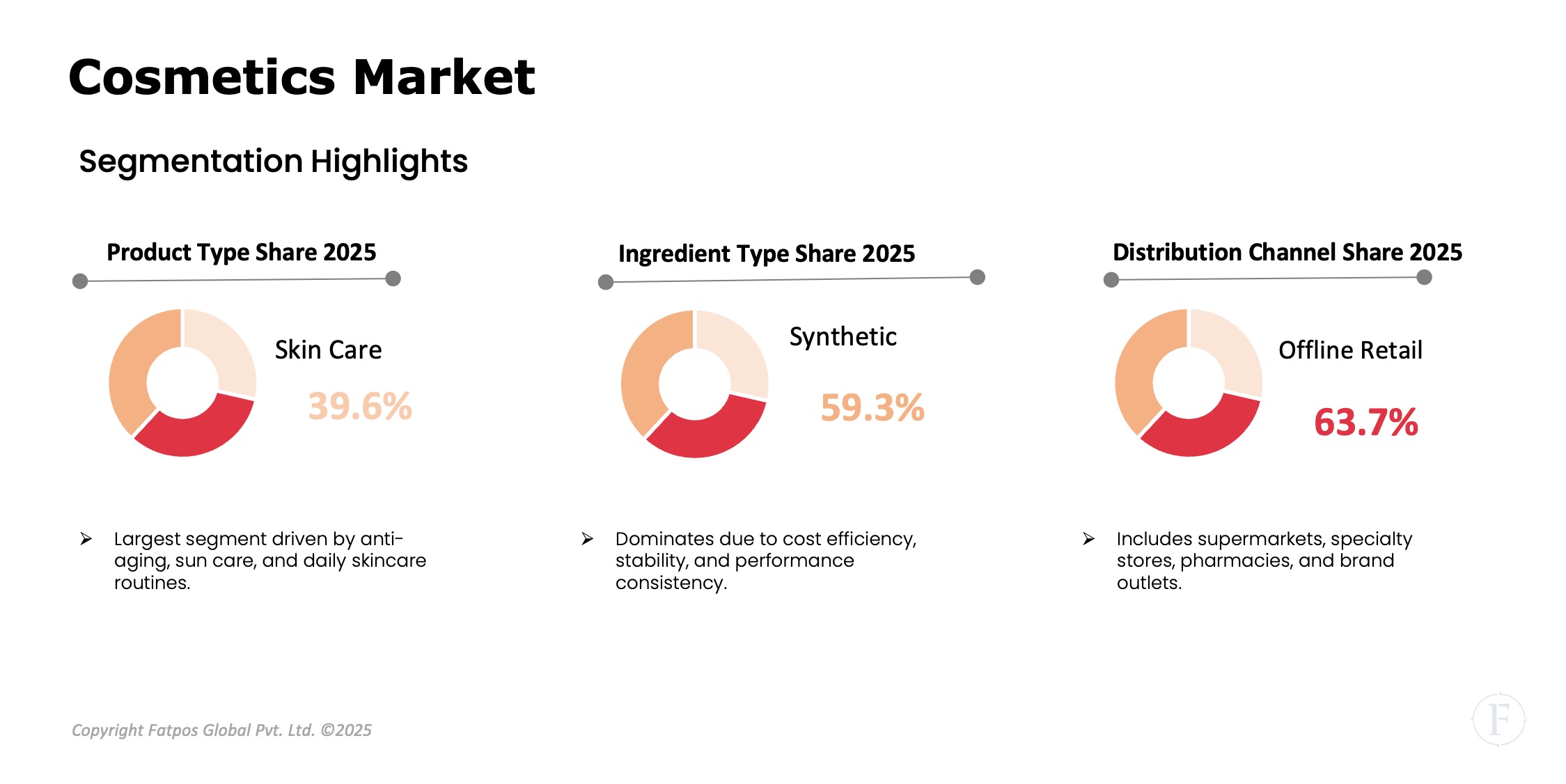
Skin care dominates the cosmetics market by product type, driven by surging anti-aging solutions and holistic wellness trends that prioritize preventive hydration, sun protection, and rejuvenation for youthful radiance. By category, mass cosmetics command volume leadership through affordable, accessible staples reaching broad demographics, yet premium cosmetics accelerate value growth with innovative, high-efficacy formulations appealing to discerning consumers.
Offline retail—department stores, specialty beauty shops—retains dominance in distribution channels, offering tactile trials and expert advice, but online platforms exhibit the fastest expansion via e-commerce convenience, subscriptions, and influencer-led discovery. Women's cosmetics hold the largest share by gender, encompassing vast color and skincare ranges, while men's grooming emerges as the quickest riser, fueled by targeted beard care, simplified regimens, and cultural shifts toward male self-care. These dynamics reflect evolving priorities blending efficacy, accessibility, and personalization across global markets.
Report Key Elements
|
ATTRIBUTES |
DETAILS |
|
Study Period |
2019–2035 |
|
Base Year |
2024 |
|
Cosmetics Market Forecast Period |
2025–2035 |
|
Cosmetics Market Size by 2035 |
USD 712.6 Bn |
|
Market CAGR |
5.4% |
| Product Type | Skin Care, Hair Care, Color Cosmetics/Makeup, Fragrances, Personal Care |
|
By Category |
Mass, Premium/Luxury |
|
By Ingredient Type |
Synthetic, Natural & Organic |
|
By Gender |
Men, Women, Unisex |
|
By Distribution Channel |
Offline: Supermarkets/Hypermarkets, Specialty Stores, Pharmacies; Online/E-commerce |
|
By Region |
NA, Europe, APAC, LATAM, MEA |
|
Key Market Players |
L'Oréal Group, Estée Lauder Companies, Unilever, Procter & Gamble |
Global Cosmetics Industry Instances
- Global brands launched AI-powered personalized skincare solutions.
- Cosmetic companies introduced refillable and recyclable packaging.
- Men's grooming brands expanded premium beard and skincare lines.
- Influencer-led cosmetic brands achieved rapid DTC growth via social commerce..
Analyst Review
As per our Cosmetics Market analysis report, market is continues to evolve rapidly, driven by innovation, sustainability, and digital engagement. Consumer demand is shifting toward transparency, personalization, and ethical sourcing. While competition remains intense, brands that combine scientific innovation, digital marketing, and sustainable practices are well positioned for long-term growth through 2035.
Frequently Asked Questions (FAQ):
Rising beauty awareness, social media influence, innovation, and expanding e-commerce.
Skin care holds the largest market share.
Natural, organic, and clean-label cosmetics.
Asia-Pacific.
Steady growth supported by personalization, sustainability, and digital beauty platforms.
 Select License Type


.png)


