


Coating Resins Market Research 2035
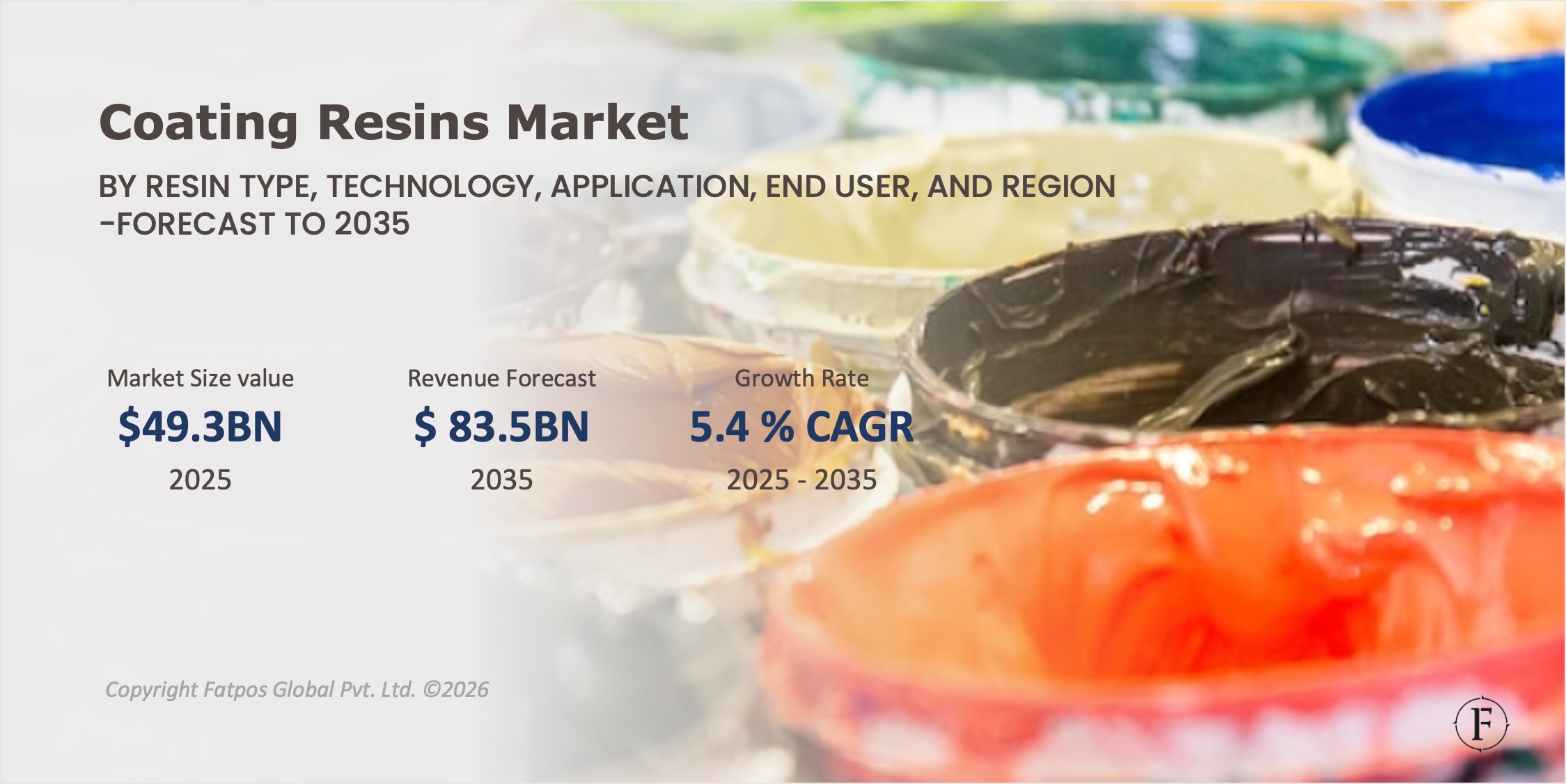
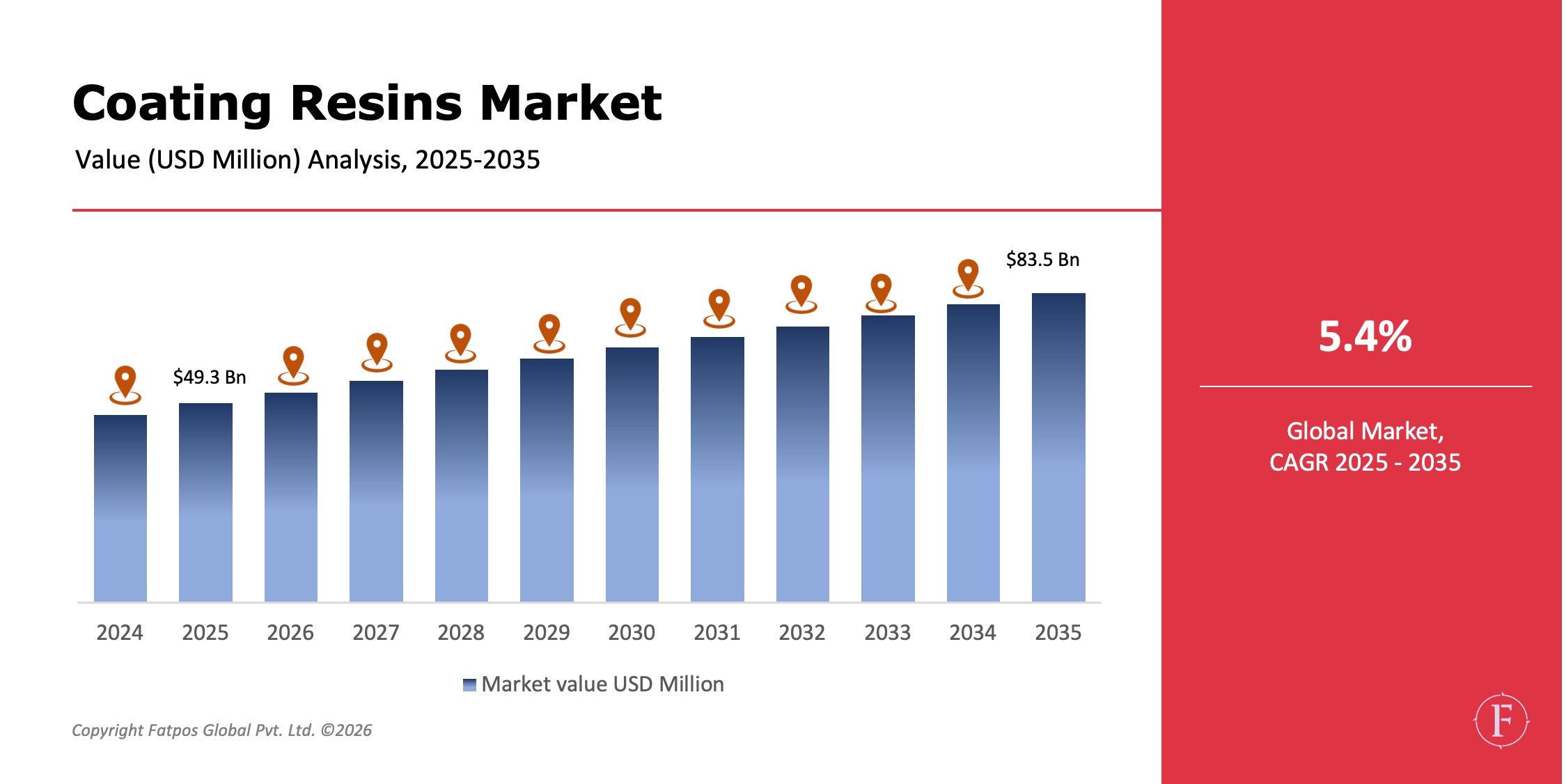
The Coating Resins Market Size was USD 49.3 billion in 2025 and is projected to reach USD 83.5 billion by 2035, registering a CAGR of 5.4%, Market growth is driven by rising construction and infrastructure activities, increasing automotive production, expanding industrial manufacturing, and strong demand for high-performance and environmentally compliant coating systems.
Coating resins serve as the film-forming backbone of coatings, providing adhesion, durability, chemical resistance, and aesthetic performance. Ongoing shifts toward low-VOC, waterborne, powder, and bio-based resins are reshaping product development and regulatory compliance across global markets.
Product Overview
The resins and coatings market segments materials by resin type and technology, each tailored for specific performance needs. Acrylic resins excel in weather resistance and color retention, dominating architectural and automotive coatings for long-lasting outdoor durability. Alkyd resins offer cost-effective gloss and adhesion, widely used in decorative paints, while epoxy resins lead in industrial and protective applications due to superior chemical and corrosion resistance. Polyester resins support powder coatings and automotive uses, polyurethane resins provide abrasion resistance and flexibility for wood, automotive, and industrial finishes, and vinyl resins serve specialty packaging and anti-corrosion roles.
By technology, waterborne coatings grow fastest with low VOC emissions, aligning with environmental regulations. Solvent-borne coatings deliver high performance but decline amid restrictions, powder coatings thrive as zero-VOC, durable options, and high-solids coatings balance reduced solvents with enhanced efficiency. These advancements drive sustainable, high-performance solutions across industries..
Key Takeaways:
- The Coating Resins Market is expected to grow at ~5.4% CAGR through 2035.
- Acrylic and epoxy resins dominate global demand.
- Waterborne and powder coatings are the fastest-growing technologies.
- Construction and automotive industries remain primary demand drivers.
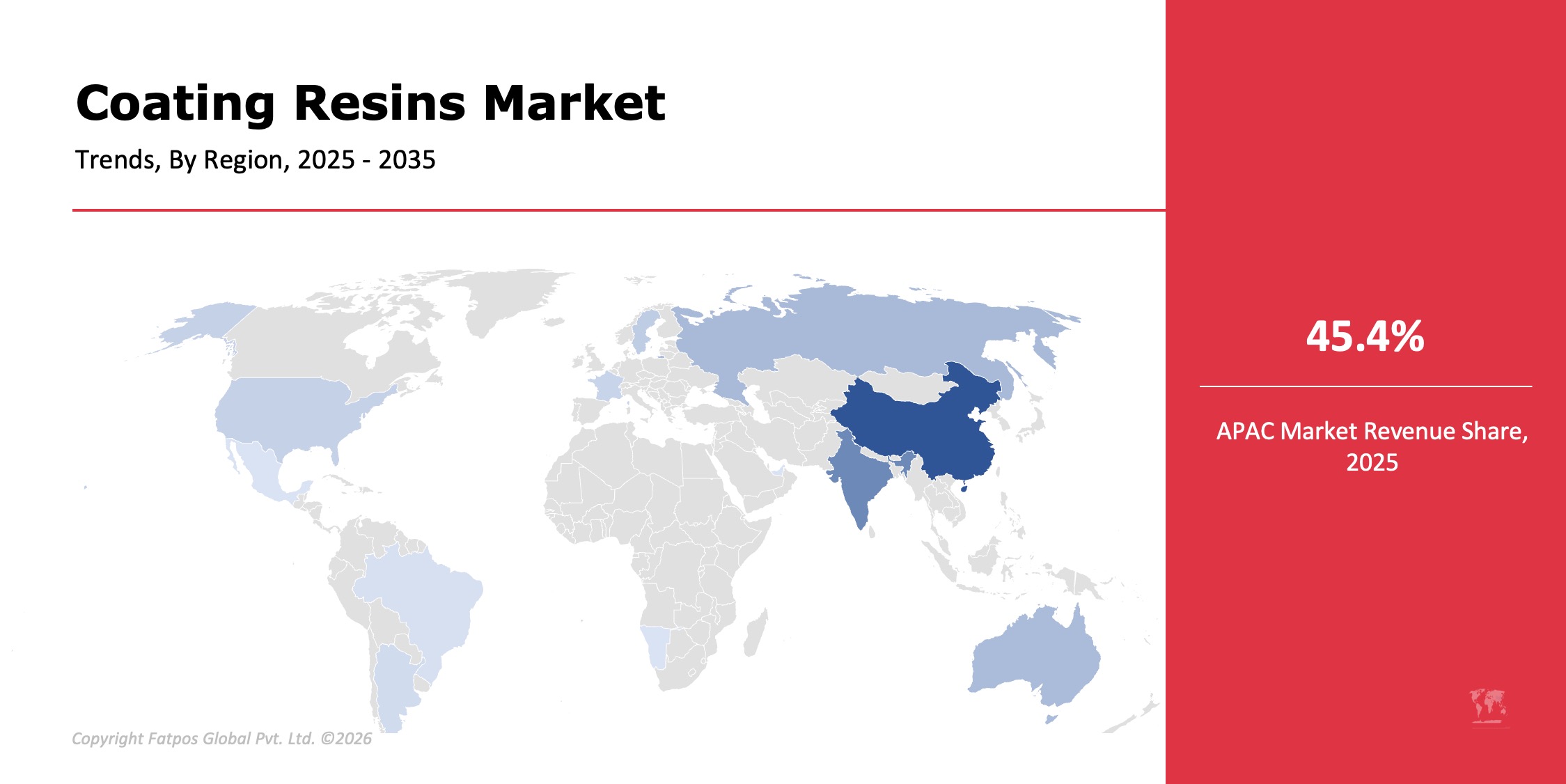
- Asia-Pacific leads global consumption due to rapid urbanization and manufacturing growth.
- Sustainability and regulatory compliance are key innovation drivers.
Market Dynamics
Drivers
Growth in construction, infrastructure, and urban housing projects fuels demand for durable architectural coatings that withstand weather and wear. Rising automotive production accelerates need for lightweight, high-performance paints enhancing fuel efficiency and aesthetics on vehicles.
Increasing demand for corrosion protection bolsters industrial and marine sectors, safeguarding steel structures and ships from harsh environments. Regulatory pressures worldwide push adoption of low-VOC, eco-friendly coatings, reducing emissions and promoting sustainable formulations amid stricter environmental standards.
Restraints
The resins and coatings market grapples with significant challenges. Volatility in raw material prices, primarily derived from petrochemicals like crude oil derivatives, disrupts supply chains and inflates production costs unpredictably. Stringent environmental regulations worldwide restrict solvent-borne coatings due to high VOC emissions, compelling manufacturers to pivot toward compliant alternatives amid compliance expenses.
High R&D costs for advanced and specialty resin formulations—such as bio-based or high-performance hybrids—strain smaller players, slowing innovation and market entry. These hurdles demand strategic sourcing, greener tech investments, and cost-sharing collaborations to sustain growth.
Opportunities
Bio-based and renewable coating resins gain traction, leveraging plant-derived materials to cut petrochemical reliance and boost sustainability in paints and finishes. Rising adoption of powder and waterborne coatings accelerates in emerging markets, driven by zero-VOC benefits, cost efficiency, and regulatory compliance for architectural and industrial uses.
Expansion of high-performance coatings targets infrastructure like bridges and energy sectors such as wind turbines, offering superior durability against corrosion and UV exposure. Technological advancements in resin chemistry, including faster-curing mechanisms and nano-enhanced formulations, enhance application speed, adhesion, and longevity across automotive and marine applications.
Challenges
Developers in resins and coatings face core challenges. Balancing high performance—like durability and adhesion—with sustainability goals and cost efficiency requires innovative, low-impact formulations without premium pricing.
Supply chain disruptions and feedstock shortages, tied to petrochemical volatility, threaten production stability and timely delivery. Meeting diverse regulatory standards across regions demands adaptable, compliant products amid varying VOC limits and eco-rules. Strategic diversification and R&D address these for resilient growth.
Coating Resins Market Trends
Industry trends in resins and coatings signal a transformative shift toward sustainability and performance. The move to low-VOC and zero-VOC resin technologies accelerates, driven by global regulations and consumer demand for healthier, greener paints that minimize air pollution without sacrificing quality.
Powder coatings see increased adoption in automotive and appliance sectors, prized for their durability, efficiency, and absence of solvents, enabling thicker, uniform finishes at lower environmental cost. Growing demand for anti-corrosion and protective coatings bolsters infrastructure, marine, and oil/gas applications, safeguarding assets against harsh conditions.
Innovation flourishes in UV-curable systems for rapid curing and reduced energy use, alongside bio-based resins from renewable sources like soy and lignin, cutting fossil fuel dependency. Major manufacturers pursue strategic capacity expansions and partnerships, such as joint ventures for localized production, to meet rising volumes and secure supply chains amid market growth.
Key Players in the Global Coating Resins Industry
- BASF SE
- Arkema
- Allnex
- DSM (Coating Resins Division)
- Covestro AG
- Dow Inc.
- PPG Industries
- Akzo Nobel N.V.
- Eastman Chemical Company
- Mitsubishi Chemical Group
- Hexion Inc.
- DIC Corporation
Regional & Country level: Coating Resins Market Analysis
North America drives stable growth in the resins and coatings market through robust construction activity, automotive manufacturing, and consistent demand for industrial coatings that bolster product longevity. Europe places a strong emphasis on sustainability, enforcing strict VOC regulations while pioneering advanced coating technologies like waterborne and high-solids systems to meet environmental goals. Asia-Pacific stands as the largest and fastest-growing region, propelled by explosive infrastructure development, automotive sector expansion, and rapid industrialization across China, India, and Southeast Asia, where urbanization fuels massive coating needs. Latin America experiences moderate growth supported by thriving construction and packaging industries, while the Middle East and Africa present emerging opportunities in infrastructure projects, marine applications, and protective coatings tailored for extreme conditions.
Segmentation Highlights
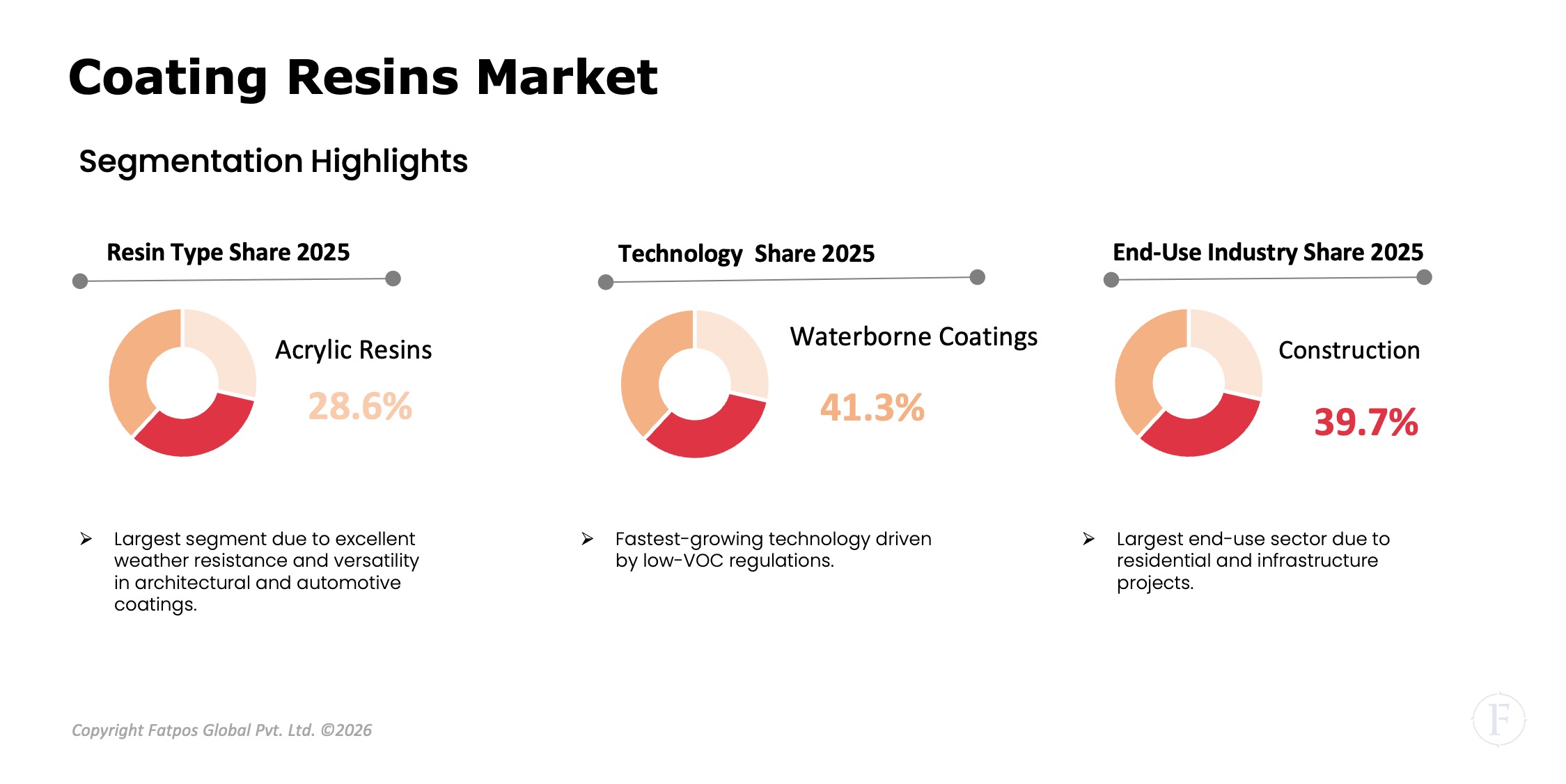
Acrylic and epoxy resins command the largest market shares by resin type in the coatings industry, valued for their versatility, weather resistance, and robust performance across diverse applications. Epoxy excels in corrosion protection and adhesion, while acrylic ensures color retention and durability in harsh environments.
Waterborne and powder coatings exhibit the fastest growth by technology, driven by low-VOC compliance, eco-friendliness, and efficiency in production. Architectural and industrial coatings dominate demand by application, fueled by urbanization and infrastructure needs. Construction and automotive sectors represent the majority of end-use consumption, with paints safeguarding buildings and vehicles against wear, weather, and chemicals..
Report Key Elements
|
ATTRIBUTES |
DETAILS |
|
Study Period |
2019–2035 |
|
Base Year |
2024 |
|
Coating Resins Market Forecast Period |
2025–2035 |
|
Coating Resins Market Size by 2035 |
USD 112.9billion |
|
Market CAGR |
5.1% |
| By Resin Type | Acrylic, Alkyd, Epoxy, Polyester, Polyurethane, Vinyl, Others |
|
By Technology |
Waterborne, Solvent-borne, Powder, High-Solids |
|
By Application |
Architectural, Industrial, Automotive, Wood, Protective & Marine, Packaging, Others |
|
By End User |
Construction, Automotive, Industrial Manufacturing, Consumer Goods, Packaging |
|
By Region |
NA, Europe, APAC, LATAM, MEA |
|
Key Market Players |
BASF SE, Arkema, Allnex, DSM (Coating Resins Division) |
Global Coating Resins Industry Instances
- Construction firms adopted waterborne acrylic coatings to meet green building standards.
- Automotive OEMs expanded use of powder coatings for durability and sustainability.
- Marine operators implemented epoxy-based anti-corrosion coatings.
- Chemical companies invested in bio-based resin development programs.
Analyst Review
As per our Coating Resins Market analysis report, market is positioned for steady growth as global industries prioritize durability, aesthetics, and environmental compliance. Transition toward sustainable resin technologies is reshaping competitive dynamics, with manufacturers investing heavily in R&D, capacity expansion, and low-VOC solutions. Companies focusing on innovation, regional expansion, and eco-friendly resin systems are expected to capture long-term value through 2035.
Frequently Asked Questions (FAQ):
They form the backbone of coatings, providing adhesion, durability, and resistance properties.
Acrylic and epoxy resins.
Construction, automotive demand, and sustainability regulations.
Waterborne and powder coatings.
Asia-Pacific.
 Select License Type


.png)


