


Acrylic Acid Market Research 2035
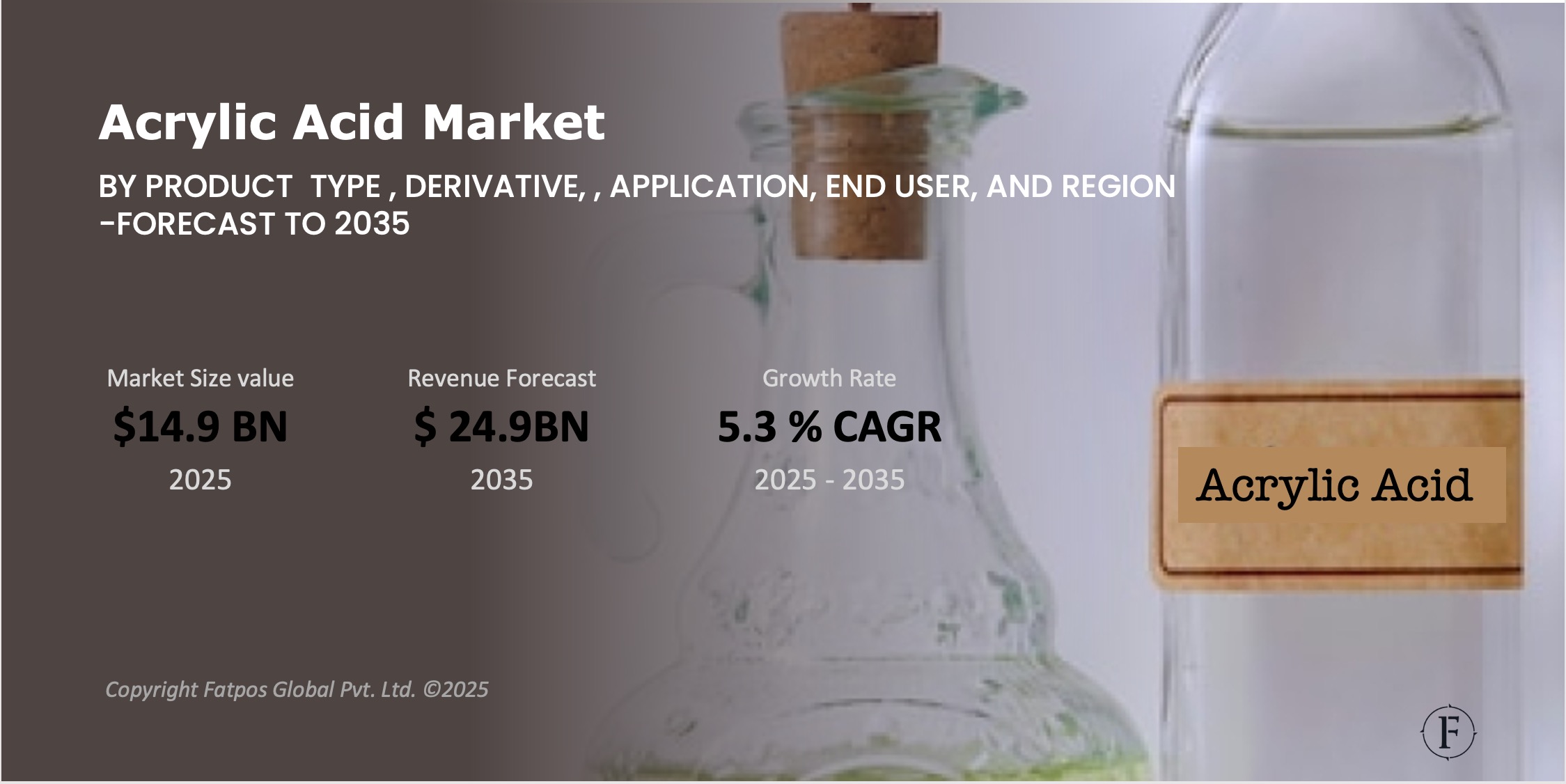
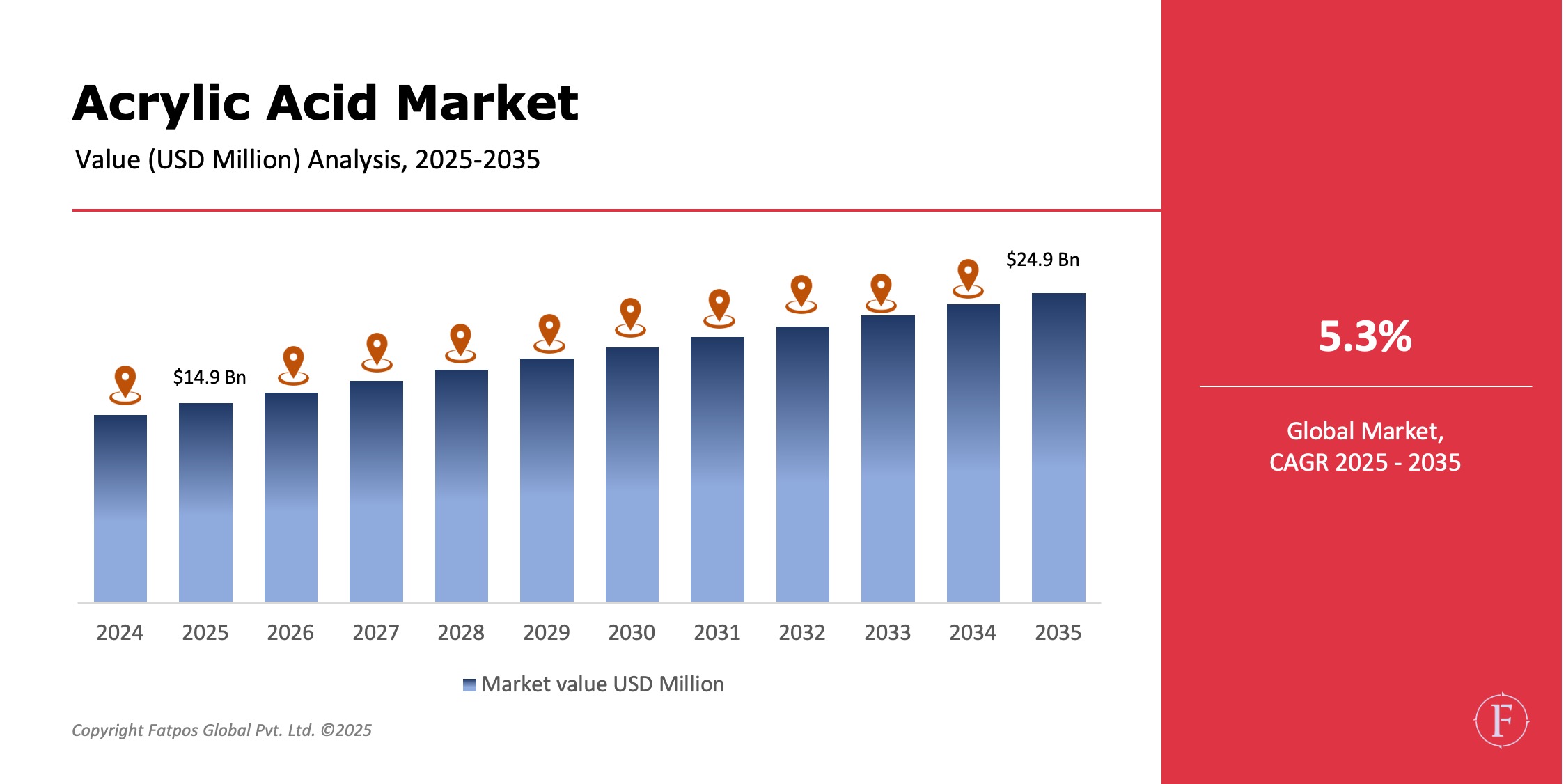
The Acrylic Acid Market Size was USD 14.9 billion in 2025 and is projected to reach USD 24.9 billion by 2035, registering a CAGR of 5.3%. Market growth is driven by rising demand for superabsorbent polymers (SAPs) in hygiene products, increasing usage of acrylic-based paints and coatings, growth in construction and automotive industries, and expanding applications across adhesives, textiles, and water treatment.
Acrylic acid is a key chemical intermediate widely used in polymer production due to its excellent adhesion, flexibility, weather resistance, and chemical stability. Its derivatives play a vital role in everyday consumer products and industrial formulations, making acrylic acid a critical component in the global petrochemical value chain.
Product Overview
Acrylic acid, a vital petrochemical intermediate, is primarily produced through the two-step oxidation of propylene and categorized by purity levels tailored to downstream applications. Glacial Acrylic Acid (GAA), with over 99% purity, serves high-value uses such as superabsorbent polymers (SAPs), adhesives, and coatings due to its exceptional reactivity and low impurities. Ester Grade Acrylic Acid, slightly less pure, acts as the primary feedstock for synthesizing acrylate esters, which are widely employed in paints, coatings, textiles, and adhesives for their durability and flexibility.
Key derivatives drive the acrylic acid market's expansion. Superabsorbent Polymers (SAPs) represent cornerstone, absorbing 30-1000 times their weight in water and dominating applications in baby diapers (about 70% of SAP demand), adult incontinence products, and feminine hygiene amid rising global aging populations. Acrylate esters, accounting for roughly 60% of acrylic acid consumption, fuel architectural paints (40% share), industrial coatings, adhesives, and sealants prized for fast curing and weather resistance. Acrylic polymers function as thickeners and stabilizers in construction chemicals like sealants, water treatment flocculants, and detergents, with a 5% CAGR fueled by eco-friendly formulations. Specialty resins and copolymers further extend uses into electronics and 3D printing. Global demand nears 9 million tons by 2025, led by SAPs at 35% share, propelled by hygiene (3.5% CAGR) and coatings (4% CAGR), alongside a shift toward bio-based propylene for sustainability.
Key Takeaways :
- The Acrylic Acid Market is projected to grow at ~5.3% CAGR through 2035.
- Superabsorbent polymers represent the largest derivative segment.
- Hygiene products remain the dominant application globally.
- Asia-Pacific leads production and consumption due to strong manufacturing base.
- Rising demand for bio-based acrylic acid is emerging as a key trend.
- Construction and coatings industries are major demand drivers.
Market Dynamics
Drivers
Key drivers propelling the acrylic acid market include surging global demand for diapers and hygiene products, driven by population growth and rising hygiene awareness. Parallel growth in construction, infrastructure, and automotive sectors amplifies needs for durable materials. Increasing adoption of acrylic-based adhesives, sealants, and coatings enhances product performance across industries. Expansion in water treatment and industrial cleaning applications underscores acrylic acid's versatility in purification and maintenance solutions. These factors together boost market momentum, with projections indicating sustained volume increases as end-user industries modernize and expand globally.
Restrictions
The acrylic acid market faces notable restraints, primarily volatility in raw material prices, especially propylene, which fluctuates due to geopolitical tensions and supply chain disruptions. Environmental concerns surrounding petrochemical-based production raise sustainability issues, prompting scrutiny over carbon footprints and waste. High capital investment for manufacturing facilities deters new entrants and expansions, requiring substantial upfront costs for advanced technology and compliance. These barriers can hinder profitability and growth, compelling industry players to navigate cost uncertainties and invest in greener alternatives amid tightening regulations.
Opportunities
Opportunities abound with the development of bio-based and renewable acrylic acid, addressing sustainability demands and reducing reliance on fossil fuels. Expanding demand in emerging markets, fueled by rising populations and urbanization, opens vast new consumer bases in Asia, Africa, and Latin America. Technological advancements in polymer processing enhance efficiency and performance, while growth in specialty acrylic derivatives caters to high-performance applications like electronics and medical devices. These trends position the market for innovation-driven expansion, potentially unlocking premium segments and long-term value.
Challenges
Challenges in the acrylic acid market stem from intensifying regulatory pressure on emissions and chemical manufacturing, enforcing stricter environmental standards and compliance costs. Managing supply-demand imbalances during capacity expansions risks overproduction or shortages, affecting pricing stability. Heightened competition from alternative polymers and substitutes, such as bio-polymers or vinyl alternatives, erodes market share. Industry stakeholders must innovate resilient supply chains, adopt cleaner technologies, and differentiate products to mitigate these hurdles and sustain competitiveness in a dynamic landscape.
Acrylic Acid Market Trends
Increasing investments in bio-based acrylic acid production routes reflect a push toward sustainability, with companies scaling fermentation-based methods from renewable feedstocks like sugar or glycerol to replace petrochemical processes, aiming to lower emissions and long-term costs. The shift toward lightweight, durable, and weather-resistant coatings favors acrylics for their UV stability, flexibility, and adhesion in construction and automotive uses, outperforming traditional options amid demands for eco-friendly, high-performance finishes. Rising adoption of high-performance superabsorbent polymers (SAPs) in adult incontinence products caters to aging populations, offering superior absorption, retention, and comfort in disposable hygiene solutions. Expansion of acrylic polymers in water treatment and industrial detergents leverages their dispersing, scale-inhibiting properties for efficient, phosphate-free cleaning. Strategic capacity expansions by major producers like BASF and Arkema ensure supply growth for emerging global demand.
Key Players in the Global Acrylic Acid Industry
- BASF SE
- Arkema
- Dow Inc.
- LG Chem
- Nippon Shokubai
- Mitsubishi Chemical Group
- Evonik Industries AG
- Sasol Limited
- Formosa Plastics Corporation
- Taixing Acrylic Acid
- SIBUR
- Zhejiang Satellite Petrochemical
Regional & Country Analysis
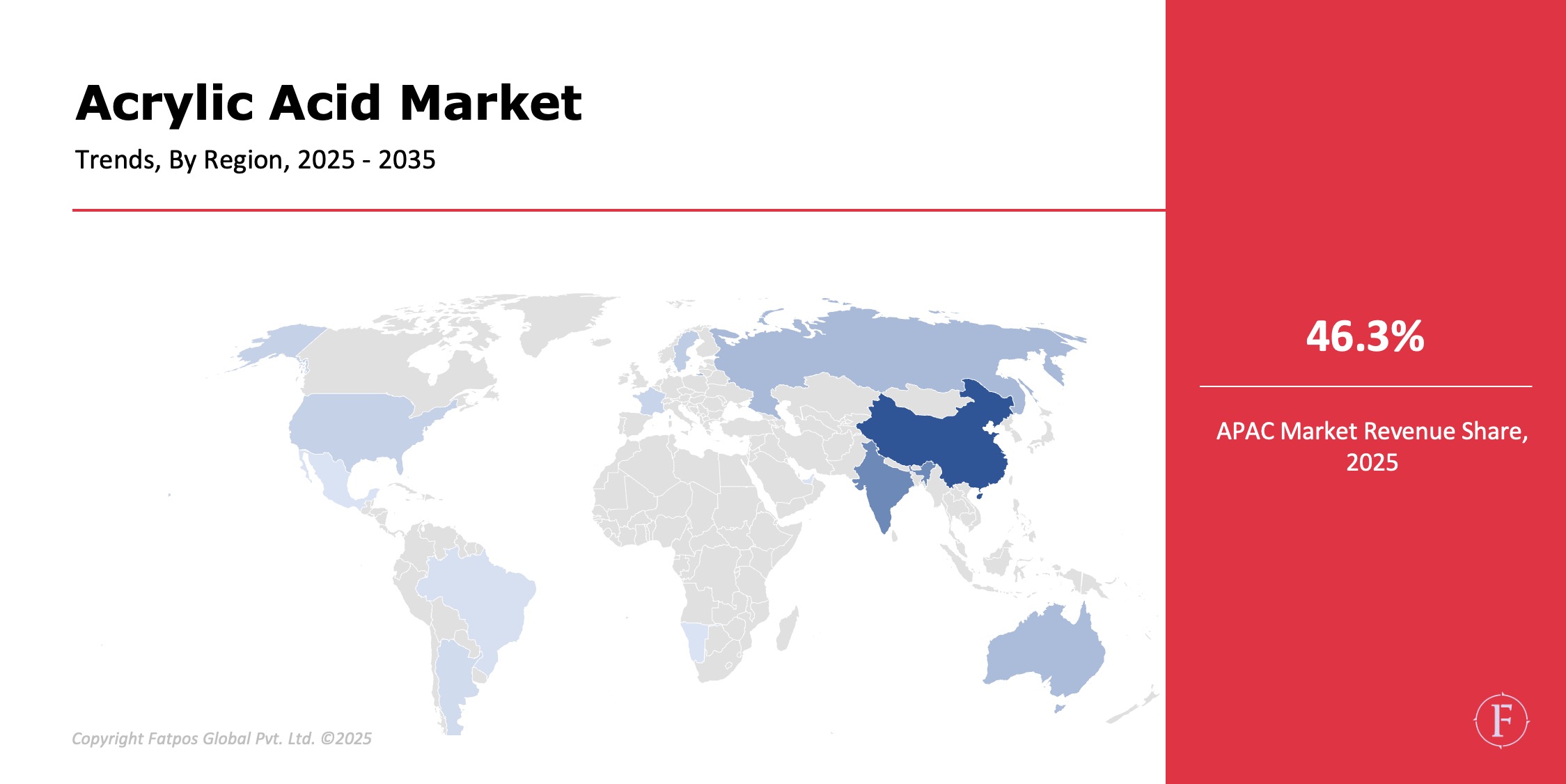
The acrylic acid market exhibits dynamic regional variations. North America leads with demand from hygiene products, construction chemicals, and coatings, supported by advanced infrastructure. Europe focuses on sustainability, regulatory compliance, and specialty applications in eco-friendly coatings and water treatment. Asia-Pacific dominates as the largest, fastest-growing region due to population surges, hygiene consumption, and production hubs in China, Japan, and South Korea for adhesives and infrastructure. Latin America grows moderately from construction and consumer goods. Middle East & Africa emerges with potential in industrial uses, water treatment, and hygiene amid urbanization.
Segmentation Highlights
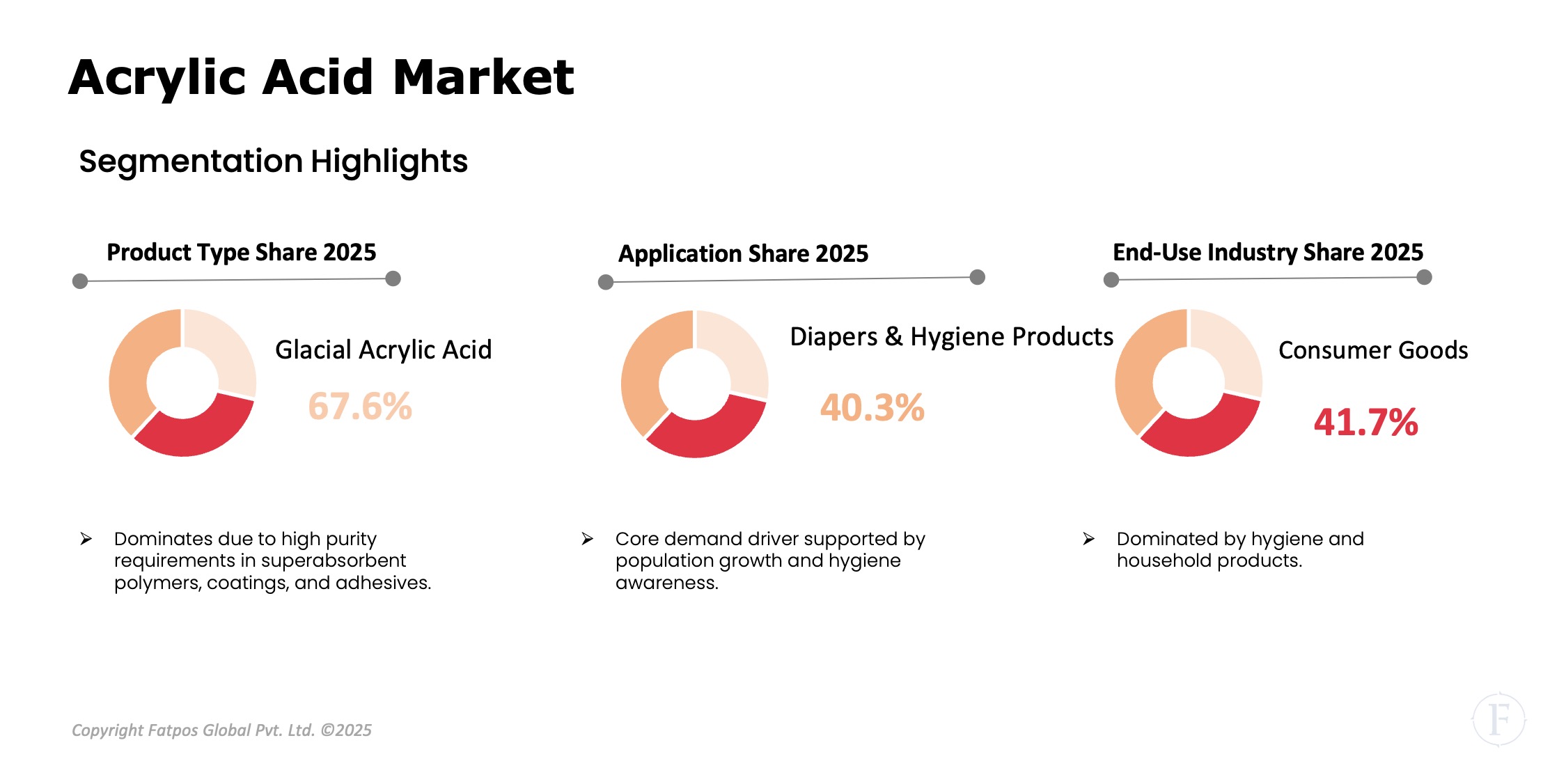
The acrylic acid market segments reveal clear leaders. Glacial acrylic acid dominates product types with its superior purity for critical derivatives like esters and polymers in hygiene and coatings. Superabsorbent polymers (SAPs) hold the largest derivative share, powering diapers and incontinence products through exceptional fluid retention. Hygiene applications lead overall demand, trailed by paints & coatings for durable finishes in construction and autos. Consumer goods and construction end uses consume the most, driven by population growth, urbanization, and infrastructure needs across global regions.
Report Key Elements
|
ATTRIBUTES |
DETAILS |
|
Study Period |
2019–2035 |
|
Base Year |
2024 |
|
Acrylic Acid Market Forecast Period |
2025–2035 |
|
Acrylic Acid Market Size by 2035 |
USD 24.9 billion |
|
Market CAGR |
5.3% |
| By Product Type | Glacial Acrylic Acid, Ester Grade Acrylic Acid |
|
By Derivative |
Acrylate Esters, Superabsorbent Polymers, Acrylic Polymers, Others |
|
By Application |
Diapers & Hygiene Products, Adhesives & Sealants, Paints & Coatings, Textiles, Plastics, Detergents, Water Treatment, Others |
|
By End User |
Consumer Goods, Construction, Automotive, Packaging, Textile, Industrial |
|
By Region |
NA, Europe, APAC, LATAM, MEA |
|
Key Players |
BASF SE, Arkema, Dow Inc., LG Chem, Nippon Shokubai, Mitsubishi Chemical Group, Evonik Industries AG |
Global Acrylic Acid Industry Instances
- Diaper manufacturers expanded SAP capacity to meet rising hygiene demand.
- Chemical companies invested in bio-based acrylic acid pilot plants.
- Construction firms increased use of acrylic-based coatings for durability.
- Water treatment facilities adopted acrylic polymers for improved efficiency.
Analyst Review
As per our Acrylic Acid Market analysis report, the market remains a vital segment of the global chemical industry, supported by steady demand from hygiene, construction, and industrial applications. While feedstock volatility and environmental concerns pose challenges, innovation in bio-based production and specialty derivatives offers strong long-term growth potential. Companies focusing on sustainability, capacity optimization, and high-performance applications are expected to gain competitive advantage through 2035.
Frequently Asked Questions (FAQ):
Primarily used to produce superabsorbent polymers, acrylate esters, and acrylic polymers.
Rising hygiene product demand, construction growth, and industrial applications.
Superabsorbent polymers.
Asia-Pacific.
Steady growth driven by hygiene consumption, coatings demand, and bio-based innovations.
 Select License Type


.png)


