


Soju Market Research, 2034
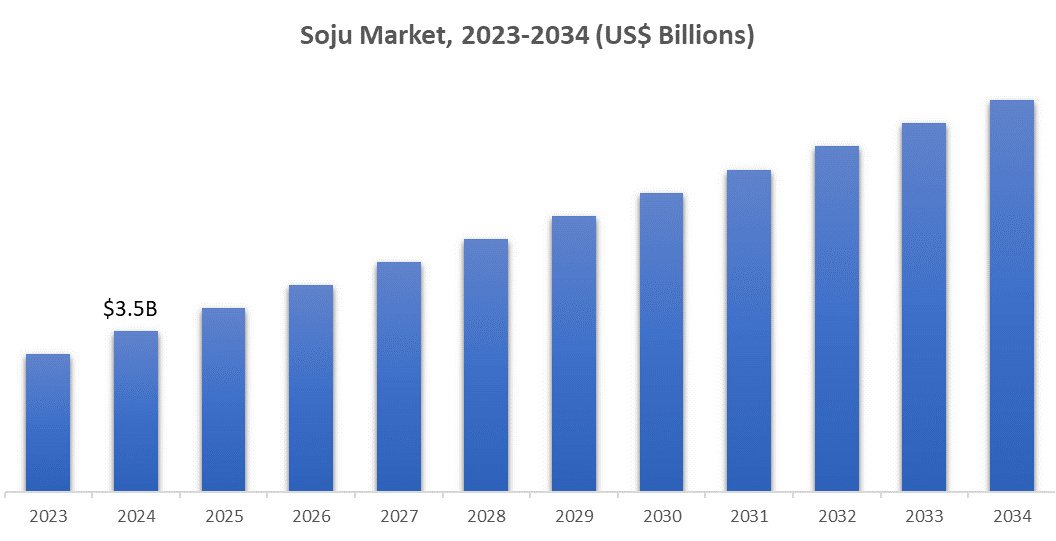
The global soju market is anticipated to grow at a CAGR of 3% in the forecast period (2024-2034), with the market size valued at US$ 3.4 billion in 2023 and projected to reach US$ 4.7 billion by 2034.
Soju is a traditional Korean distilled spirit renowned for its clear appearance and smooth flavour. Typically made from grains such as rice, barley, or wheat, it is also sometimes produced from sweet potatoes or tapioca. Soju generally has an alcohol content ranging from 16% to 25%, though some varieties can be stronger.
It can be consumed neat, with ice, or mixed into cocktails, and is a common part of Korean dining customs, frequently enjoyed with food or at social events. Contemporary options range from fruit-infused choices to premium Soju made with superior ingredients and aging techniques. The increasing global popularity of this beverage is attributed to its distinct flavour and ability to be used in various ways.
Market Highlights
The market growth influenced by the rising disposable incomes and changing drinking habits. The emergence of e-commerce and global distribution systems improves availability, expanding its extent. Continued product innovation, functional and eco-friendly options, strategic marketing, and entering new global markets will help drive future growth. Soju's ability to conform to current consumer preferences guarantees its ongoing importance and growth.
Market Segmentation
Distilled soju’s association with premium brands and strong taste cements its position as a market leader
The market is segmented based on Product Type into Distilled Soju, Diluted Soju, Flavoured Soju, Functional Soju, and Premium Soju. Distilled Soju has become the top competitor in the market owing to its high-quality reputation, production techniques, and flavourful profile. Produced through the fermentation and distillation of rice and other grains, it provides a stronger alcohol content and richer flavours in comparison to watered-down Soju.
This has positioned distilled Soju as a premium product and has enabled brands to increase prices and boost revenue. Its complex tastes attract consumers on a global scale, boosting its ability to be sold overseas. Top brands in this category promote innovation by introducing new flavours and limited-edition products that cater to the ever-changing consumer taste and preferences. Strong brand loyalty further solidifies its position, guaranteeing repeat buying and continuous market domination.
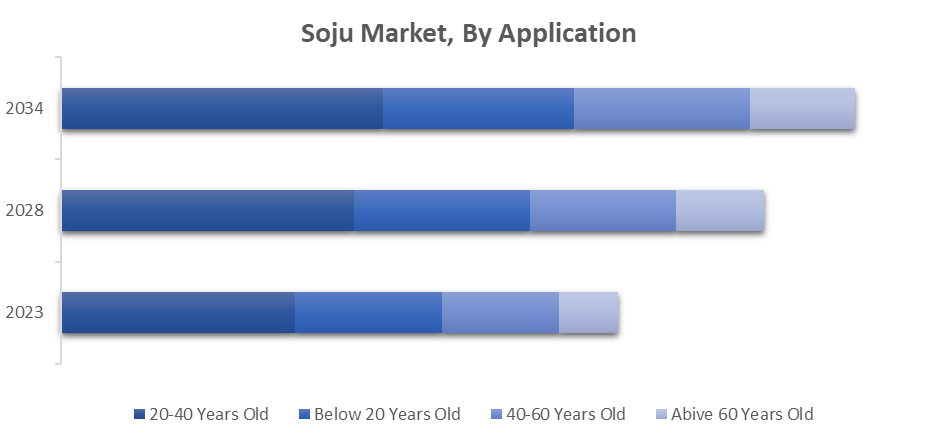
Young adults aged 20-40 dominate soju consumption, driven by cultural trends and evolving lifestyles
The market is categorized based on Application into Below 20 Years Old, 20-40 Years Old, 40-60 Years Old, and Above 60 Years Old. The dominant force behind the popularity of Soju is mainly younger people, specifically those between the ages of 20 and 40. Soju has been popularized as a symbol of Korean identity among this age group due to the significant influence of Korean cultural trends like K-Pop and K-Drama. Social media and influencers continue to enhance its popularity by regularly showcasing Soju in their posts.
The appeal of Soju in nightclubs and social gatherings is in line with the lifestyle of young customers who often visit bars and clubs. Targeted marketing, product innovation, and affordability are also important factors for Soju brands to attract this demographic, as they introduce new flavours and creative packaging. Although Soju is popular among different age ranges, the 20-40 age group stands out as the majority due to these convincing reasons.
Market Dynamics
Growth Drivers
Growing Popularity of Korean Cuisine and Culture to Impel Market Growth
The ever-evolving global interest in Korean culture, especially K-pop, K-Dramas, and Korean food, plays a major role in driving the market. With the rise in popularity of Korean cuisine and dining trends globally, soju, a classic Korean alcoholic drink, has become a popular choice to accompany Korean dishes. Its cultural importance, frequently portrayed in mainstream media, increases its attractiveness to global customers seeking a taste of genuine Korean customs.
The emergence of Hallyu, also known as the Korean Wave, has gone beyond the entertainment industry and is now impacting global food and drink choices. The increasing presence of Korean restaurants and the availability of Soju in international markets, together with cultural momentum, are driving the market's growth and fame.
Rising Disposable Consumer Income to Assist in Driving Growth
The rise in consumers' disposable income globally is a key factor fuelling the expansion of the market. As individuals have more money to spend, they are increasingly interested in purchasing a variety of high-quality alcoholic drinks, such as Soju. This increase in earnings enables customers to discover and enjoy a variety of beverage choices, creating a desire for both conventional and creative Soju products.
Furthermore, higher disposable income allows individuals to visit restaurants, bars, and social events where Soju is commonly enjoyed. The market growth is also driven by consumers who are looking for unique and culturally enriching drinking experiences that match their upgraded lifestyle and ability to spend, allowing them to buy higher-quality, premium Soju versions.
Restraints
Strong Competition from Other Spirits May Create Challenges for Growth Opportunities
The market generally encounters many obstacles owing to the strong competition received from other spirits such as vodka, whiskey, and tequila, which have a solid presence and reputation on a global scale. Soju normally struggles to enter new markets or grow its market share as competing spirits have strong consumer followings and are widely available.
In addition, various spirits receive significant advertising and endorsements from celebrities, which may outshine Soju, particularly in areas with lower Korean cultural influence. Consumers may be drawn to other spirits categories due to their wide range of flavours, high-quality options, and well-known brands, which could hinder the growth of Soju. Soju brands must constantly innovate and distinguish their products to attract and keep consumer attention within the fierce competition.
Recent Developments
- In 2023, HiteJinro introduced a new line of flavored soju, expanding its portfolio to include unique flavors such as lemon and peach. The company has been actively focused on enhancing its global distribution network to increase the presence of its soju products in international markets, focusing on regions like North America and Europe.
- In 2023, Andong introduced a new functional soju variant, which includes added vitamins and minerals. The company later that year entered a joint venture with a Japanese beverage company to explore cross-market opportunities and increase exports to Japan.
- In 2024, Mackiss launched a new line of eco-friendly packaging for its soju products, aimed at reducing environmental impact. The company has been actively investing in advanced distillation technology to improve the quality and consistency of its soju offerings.
- In 2024, Jinro Soju unveiled a new line of flavored soju, including options like mango and blueberry. The company has been actively focused on expanding its online retail presence, focusing on direct-to-consumer sales through e-commerce platforms.
- In 2023, Lotte Liquor Co., Ltd. launched a new diluted soju product, catering to consumers who prefer lower alcohol content. The company successfully acquired a small craft soju brand to diversify its portfolio and appeal to niche markets.
Key Players
- HiteJinro Co., Ltd.
- Andong
- Jinro Soju
- Lotte Liquor Co., Ltd.
- Sool Soju Co., Ltd.
- Mackiss
- Daesun Distilling Co., Ltd.
- Muhak
- CJ CheilJedang Corp.
- Seoul Liquor Co., Ltd.
- Kooksoondang Brewery Co., Ltd.
- Wonju Soju Co., Ltd.
- Mudeungsan Soju Co., Ltd.
- Jeju Soju Inc.
- Hee Joo Soju Co., Ltd.
- Other Prominent Players (Company Overview, Business Strategy, Key Product Offerings, Financial Performance, Key Performance Indicators, Risk Analysis, Recent Development, Regional Presence, SWOT Analysis)
Regional Analysis
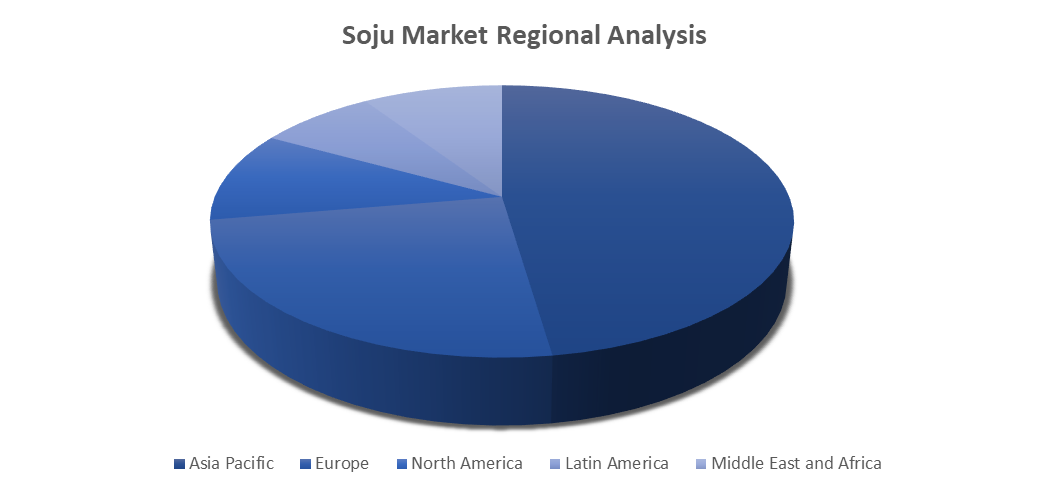
Global Soju Market is segmented based on regional analysis into five major regions: North America, Latin America, Europe, Asia Pacific and the Middle East and Africa.
Asia Pacific, specifically South Korea, leads the Soju industry owing to its strong cultural and historical importance. Soju has a strong connection to Korean culture and is the top choice for alcoholic drinks in South Korea, enjoyed by people of all ages. The region's power is also strengthened by the prominent Soju makers, a wide range of products, and established distribution networks.
The increasing popularity of Korean culture, referred to as the Korean Wave or Hallyu, has led to a rise in the consumption of Soju in other Asian nations, strengthening its market leadership. Moreover, the market in Asia Pacific is fueled by the high population density and rising disposable income, leading to a steady demand and growth.
In regions other than Asia Pacific, like North America, Europe, Latin America, and the Middle East and Africa, the market is slowly growing but still not as strong. The rise in popularity of Korean cuisine and cultural trends, particularly in urban areas with diverse populations, is contributing to the growth of North America. In major European cities known for their diverse food scenes, Soju is becoming increasingly popular.
Latin America, the Middle East, and Africa are developing markets where Soju is not widely available yet, mainly found in specialty stores or Korean eateries. Rising disposable incomes and increasing interest in international and exotic alcoholic beverages are helping fuel growth in these regions, despite facing strong competition from other spirits.
Market is further segmented by region into:
- North America Market Size, Share, Trends, Opportunities, Y-o-Y Growth, CAGR – United States and Canada
- Latin America Market Size, Share, Trends, Opportunities, Y-o-Y Growth, CAGR – Mexico, Argentina, Brazil, and Rest of Latin America
- Europe Market Size, Share, Trends, Opportunities, Y-o-Y Growth, CAGR – United Kingdom, France, Germany, Italy, Spain, Belgium, Hungary, Luxembourg, Netherlands, Poland, NORDIC, Russia, Turkey, and Rest of Europe
- Asia Pacific Market Size, Share, Trends, Opportunities, Y-o-Y Growth, CAGR – India, China, South Korea, Japan, Malaysia, Indonesia, New Zealand, Australia, and Rest of APAC
- Middle East and Africa Market Size, Share, Trends, Opportunities, Y-o-Y Growth, CAGR – North Africa, Israel, GCC, South Africa, and Rest of MENA
Market Scope and Segments
|
ATTRIBUTE |
DETAILS |
|
Study Period |
2018-2034 |
|
Base Year |
2023 |
|
Forecast Period |
2024-2034 |
|
Historical Period |
2019-2022 |
|
Growth Rate |
CAGR of 3% from 2024-2034 |
|
Unit |
Value (US$ Billion) |
|
Segmentation |
Main Segments List |
|
By Product Type |
|
|
By Application |
|
|
By Distribution Channel |
|
|
By Region |
|
Frequently Asked Questions (FAQ):
The global soju market size was valued at US$ 3.4 billion in 2023 and is projected to reach US$ 4.7 billion in 2034, exhibiting a CAGR of 3% during the forecast period.
The Soju market involves the production and sale of a traditional Korean distilled spirit, known for its clear, smooth taste and varying alcohol content. It includes a range of products from traditional to flavored and premium Soju, with growth driven by global interest in Korean culture and expanding distribution channels.
The Distilled Soju and 20-40 years old segment accounted for the largest market share.
Key players in the global soju market include HiteJinro Co., Ltd., Andong, Jinro Soju, Lotte Liquor Co., Ltd., Sool Soju Co., Ltd., Mackiss, Daesun Distilling Co., Ltd., Muhak, CJ CheilJedang Corp., Seoul Liquor Co., Ltd., Kooksoondang Brewery Co., Ltd., Wonju Soju Co., Ltd., Mudeungsan Soju Co., Ltd., Jeju Soju Inc., Hee Joo Soju Co., Ltd. and Other Prominent Players.
The market is driven by rising global interest in Korean culture, expanding product innovation, and increasing disposable incomes.
 Select License Type


.png)


