


Organic Coffee Market Research 2035
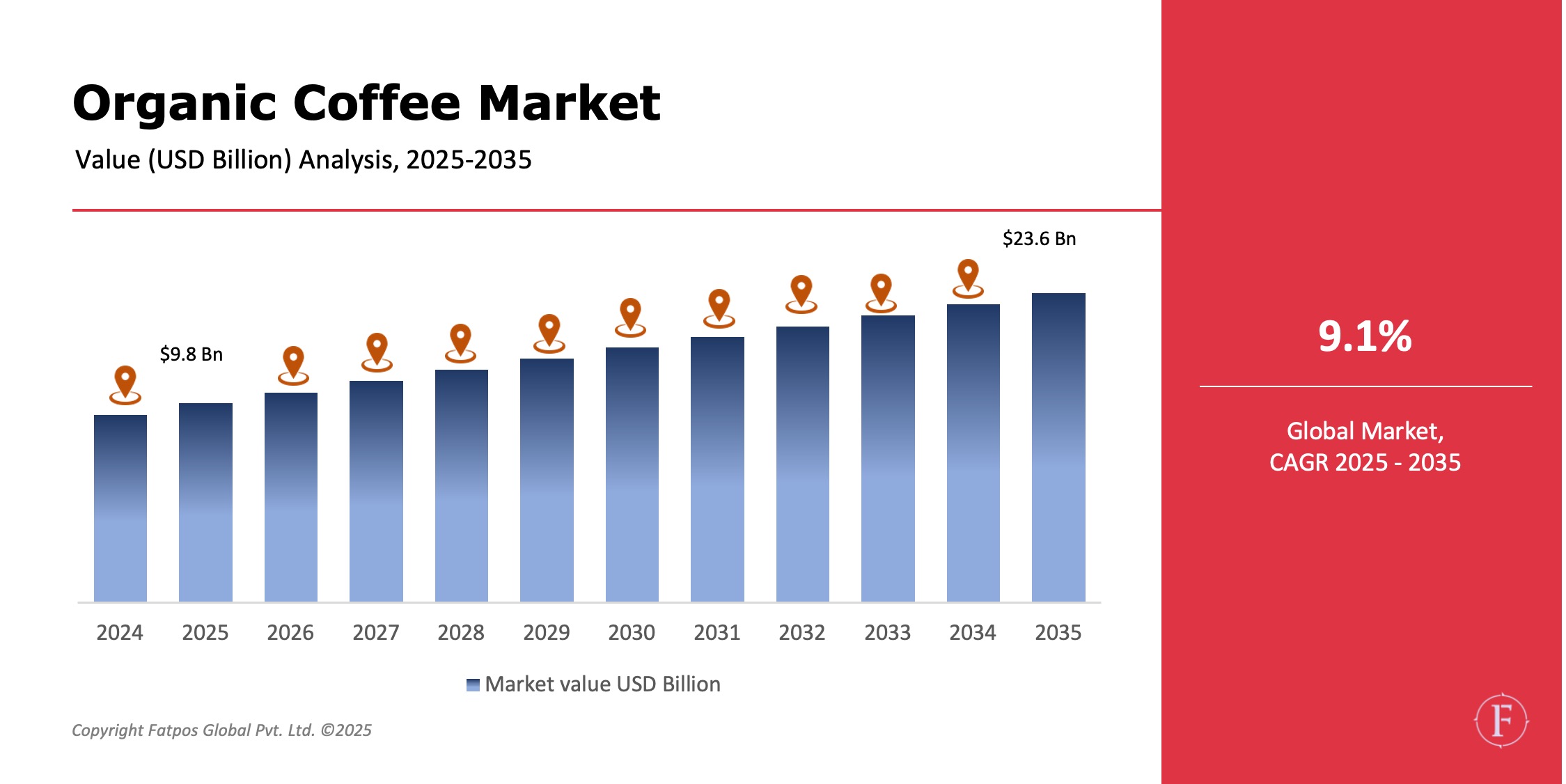
The Organic Coffee Market Size was valued at USD 9.8 billion in 2025 and is projected to reach USD 23.6 billion by 2035, registering a CAGR of 9.1% during the forecast period. Market growth is driven by increasing consumer awareness regarding health and sustainability, rising preference for chemical-free food products, and growing demand for ethically sourced beverages.
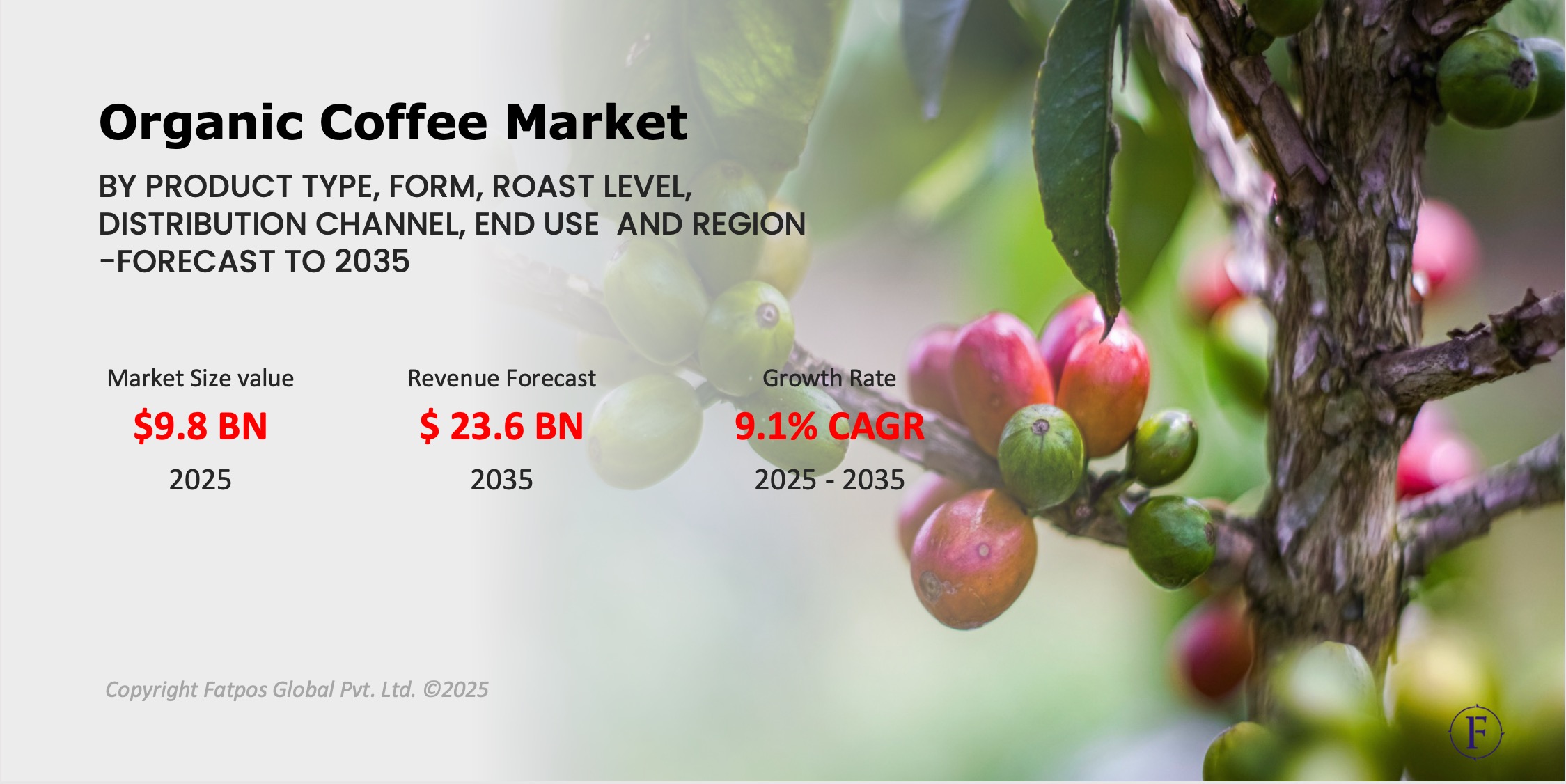
Organic coffee is produced using environmentally friendly farming practices that avoid synthetic fertilizers, pesticides, and genetically modified organisms. These practices promote soil health, biodiversity, and sustainable agriculture. As consumers increasingly prioritize clean-label and eco-conscious products, organic coffee is transitioning from a niche segment to a mainstream premium beverage category.
Product Overview
Organic coffee is grown under certified organic farming standards that emphasize ecological balance and sustainable production. It is widely recognized for its perceived health benefits, environmental sustainability, and ethical sourcing practices.
By product type, Arabica coffee dominates the organic segment due to its superior taste, aroma, and lower acidity. It is widely preferred in specialty coffee markets. Robusta coffee is used in blends and instant coffee products due to its higher caffeine content and cost efficiency. Blends combine both varieties to achieve balanced flavor and affordability.
By form, whole bean coffee is preferred by premium consumers and specialty coffees due to freshness and quality. Ground coffee is widely consumed in households, while instant coffee is gaining popularity due to convenience and longer shelf life.
Key Takeaways :
- The Organic Coffee Market is expected to grow at ~9.1% CAGR through 2035
- Arabica coffee dominates the product segment
- Whole bean coffee drives premium demand
- Online retail is the fastest-growing distribution channel
- Europe and North America lead market consumption
- Sustainability and ethical sourcing are key growth drivers
Market Dynamics
Drivers
The primary driver of the organic coffee market is the increasing consumer preference for healthy and natural products, which significantly contributes to organic coffee market growth. Organic coffee is perceived as free from harmful chemicals, making it attractive to health-conscious consumers.
Growing awareness of environmental sustainability also plays a crucial role. Organic farming practices reduce environmental impact, conserve biodiversity, and promote soil health. Consumers are increasingly willing to pay a premium for products that align with their environmental values. The expansion of specialty coffee culture and coffee chains further supports market growth. Consumers are seeking high-quality, ethically sourced coffee experiences, driving demand for organic and single-origin coffee varieties.
Restrictions
Despite strong growth potential reflected in the organic coffee market forecast, the market faces challenges related to higher production costs and premium pricing. Organic farming yields are generally lower, and certification processes increase operational expenses. Limited availability of certified organic coffee beans and supply chain constraints can impact production and distribution. In price-sensitive markets, consumers may opt for conventional coffee due to cost considerations.
Opportunities
Significant opportunities exist in the development of ready-to-drink (RTD) organic coffee beverages and cold brew products, which cater to changing consumer preferences for convenience.
The growth of e-commerce platforms provides an opportunity for organic coffee brands to reach a wider audience and offer subscription-based services. Emerging markets in Asia-Pacific and Latin America present untapped growth potential. Innovations in sustainable packaging and traceability technologies also enhance brand differentiation and consumer trust.
Challenges
The organic coffee market faces challenges related to climate change, which affects coffee-growing regions and crop yields. Maintaining consistent quality while scaling production remains complex.
Certification requirements and compliance with international standards add complexity for producers. Additionally, competition from conventional premium coffee and alternative beverages poses challenges for market expansion.
Organic Coffee Market Trends
The market is increasingly shifting toward single-origin and specialty organic coffee, enabling consumers to explore distinctive flavors and regional profiles, positively influencing the Organic coffee market share. Preference for light and medium roasts is growing due to their balanced taste and perceived health advantages.
Subscription services and direct-to-consumer platforms are transforming distribution approaches, enhancing customer engagement and convenience. Sustainability efforts, such as eco-friendly packaging and carbon-neutral production, are becoming central to brand differentiation. Additionally, cold brew and ready-to-drink organic coffee variants are gaining traction among younger consumers, encouraging continuous product innovation and diversification.
Key Players in the Organic Coffee Industry
- Nestlé S.A.
- Starbucks Corporation
- JDE Peet’s N.V.
- Lavazza Group
- The Kraft Heinz Company
- Smucker’s
- Illycaffè S.p.A.
- Kicking Horse Coffee
- Death Wish Coffee Company
- Equal Exchange Cooperative
Regional & Country Analysis
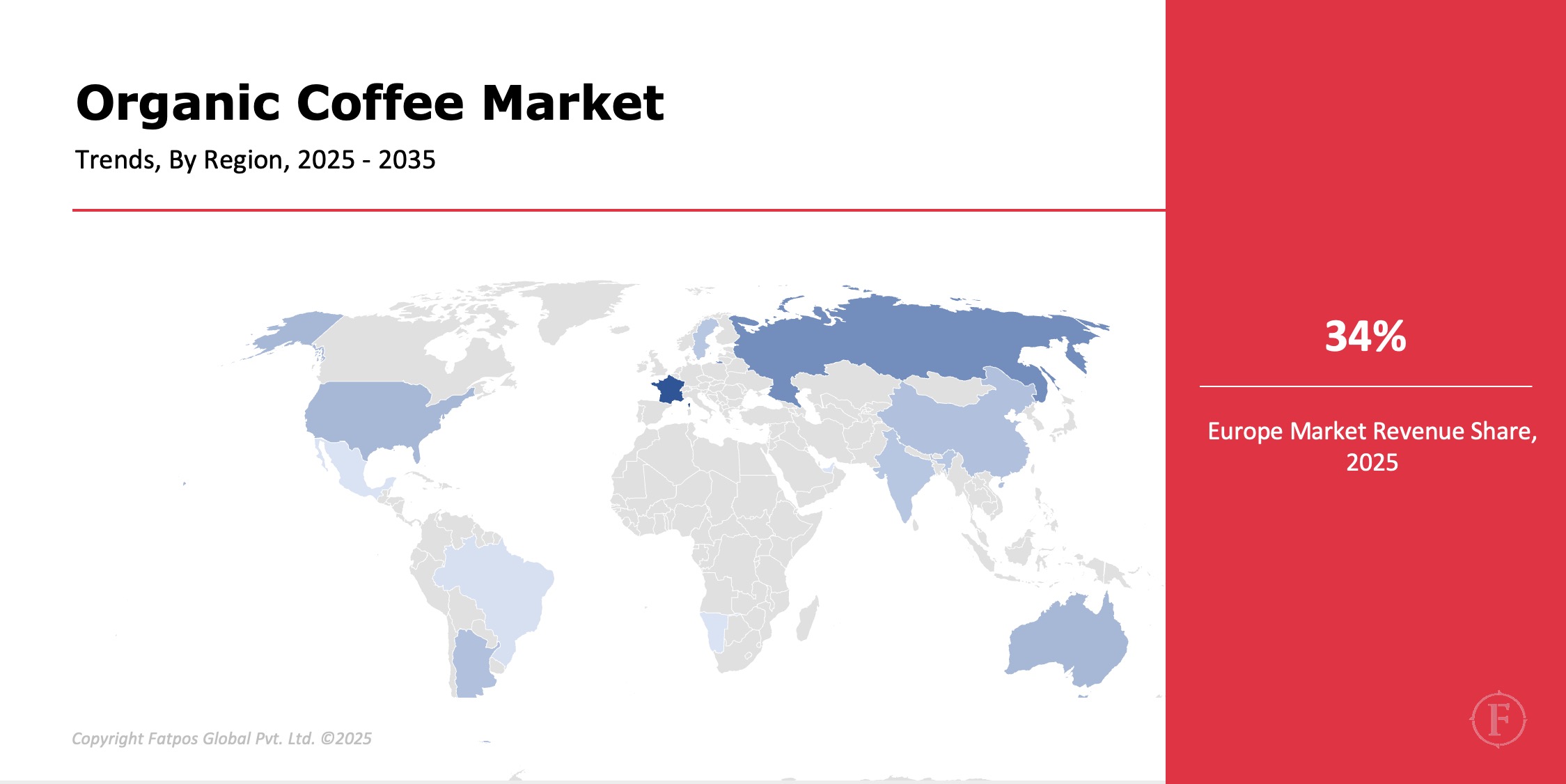
Europe leads the organic coffee market due to strong consumer awareness, established organic food culture, and supportive regulatory frameworks. Countries such as Germany, France, and the Nordic region show high demand for organic products.
North America follows closely, driven by specialty coffee culture and premium consumption trends in the United States and Canada.
Asia-Pacific is the fastest-growing disposable region, supported by rising incomes, urbanization, and expanding café culture in countries such as China, Japan, and South Korea. Latin America serves as both a major production hub and an emerging consumption market, while Middle East & Africa show gradual adoption driven by premium hospitality sectors.
Segmentation Highlights
By product type, Arabica coffee accounts for the largest share due to premium positioning. By form, whole bean and ground coffee dominate consumption, while instant coffee shows steady growth.
Supermarkets and hypermarkets represent the largest distribution channel, while online retail is the fastest-growing segment. Residential consumption dominates, supported by increasing home coffee brewing trends.
Report Key Elements
|
ATTRIBUTES |
DETAILS |
|
Study Period |
2019–2035 |
|
Base Year |
2024 |
|
Forecast Period |
2025–2035 |
|
Market Size by 2035 |
USD 23.6 Billion |
|
Market CAGR |
9.1% |
|
By Product Type |
Arabica, Robusta, Blends |
|
By Form
|
Whole Bean, Ground Coffee, Instant Coffee |
|
By Roast Level |
Light, Medium, Dark
|
|
By Distribution Channel
|
Supermarkets, Specialty Stores, Online, Foodservice |
|
By End User
|
Residential, Commercial |
|
By Region |
NA, Europe, APAC, LATAM, MEA |
|
Organic Coffee Market: Key Players |
Nestlé SA, Starbucks Corporation, JDE Peet's NV, Lavazza Group, The Kraft Heinz Company |
Global Organic Coffee Industry Instances
- Coffee brands launched certified organic and single-origin products
- Retailers expanded private-label organic coffee offerings
- Café chains introduced organic coffee menus
- Producers adopted sustainable farming and traceability practices
Analyst Review
As per our Organic Coffee Market analysis, the market is experiencing strong growth driven by health awareness, sustainability trends, and premiumization. While challenges related to cost and supply persist, increasing consumer demand for ethical and environmentally friendly products is expected to drive long-term growth.
Companies focusing on product innovation, sustainable sourcing, and digital distribution channels are likely to lead the market through 2035.
Frequently Asked Questions (FAQ):
Organic coffee is cultivated without synthetic fertilizers or pesticides, using sustainable farming methods that support environmental health, biodiversity, and produce cleaner, chemical-free coffee beans for consumption.
Market growth is driven by rising health awareness, increasing demand for sustainable and ethically sourced products, and growing consumer preference for premium, clean-label coffee offerings worldwide.
Arabica coffee dominates the market due to its superior taste, aroma, and quality, making it highly preferred in premium and specialty organic coffee segments globally.
Europe leads the organic coffee market due to strong consumer awareness, established organic food culture, and high demand for sustainable and ethically sourced coffee products.
The market is expected to grow steadily, driven by clean-label trends, sustainability initiatives, and increasing demand for specialty and premium organic coffee products across global markets.
 Select License Type


.png)


