


Soft Fruit Market Research 2035
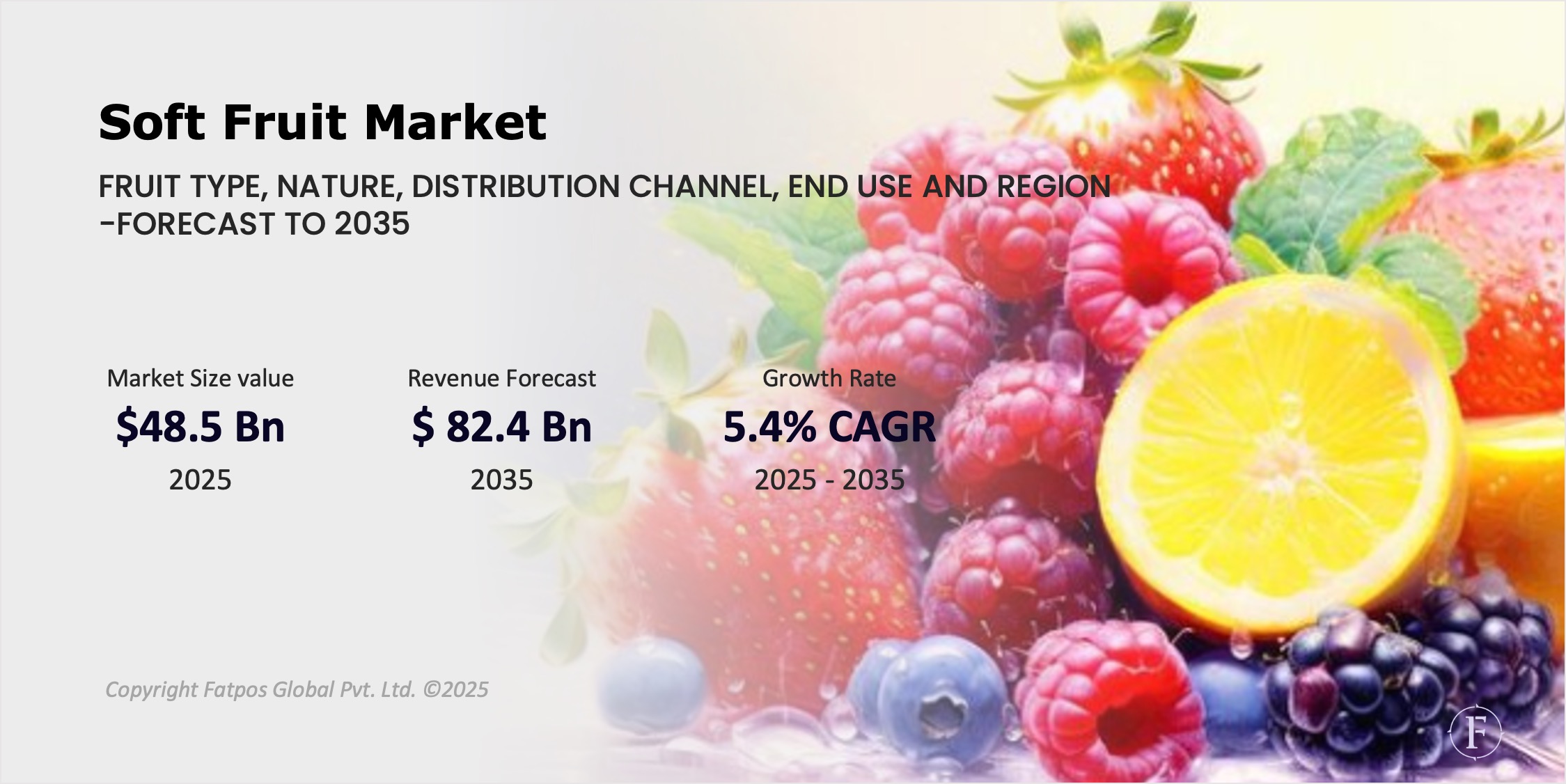
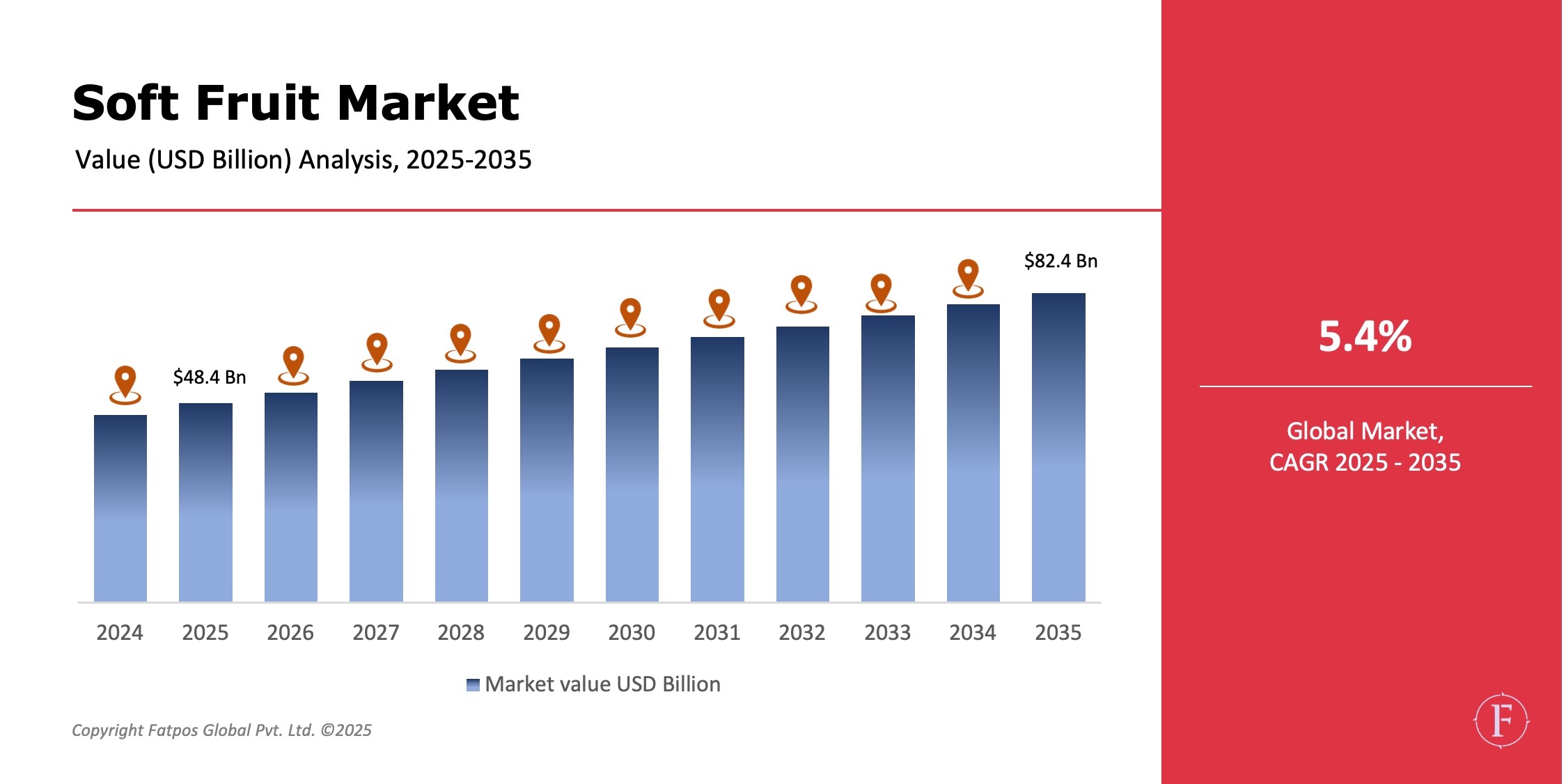
The Soft Fruit Market was valued at approximately USD 48.5 billion in 2025 and is projected to reach USD 82.4 billion by 2035, growing at a CAGR of 5.4% during the forecast period. Market growth is primarily driven by rising consumer preference for healthy, nutrient-rich foods and increasing awareness of the health benefits associated with soft fruits.
Soft fruits, including berries and other delicate fruits, are widely consumed due to their rich antioxidant content, vitamins, and natural sweetness. The growing popularity of plant-based diets, functional foods, and clean-label products is accelerating global demand. Expanding cold chain infrastructure and improved cultivation techniques are further supporting market expansion.
Product Overview
Soft fruits are perishable fruits characterized by delicate skin, high moisture content, and short shelf life. These fruits are commonly consumed fresh but are also extensively used in processed food products such as jams, yogurts, bakery items, smoothies, and beverages.
Advancements in greenhouse farming, controlled environment agriculture, and precision irrigation have improved yield quality and year-round availability. Breeding innovations focused on shelf-life extension and flavor enhancement continue to shape product development. Organic soft fruit production is gaining strong traction due to rising consumer focus on sustainability and chemical-free food.
Key Takeaways:
- Soft Fruit Market to grow at 5.4% CAGR through 2035
- Strawberries remain the most consumed soft fruit globally
- Conventional farming dominates, while organic shows fastest growth
- Fresh consumption is the leading end-use segment
- Supermarkets & hypermarkets lead distribution channels
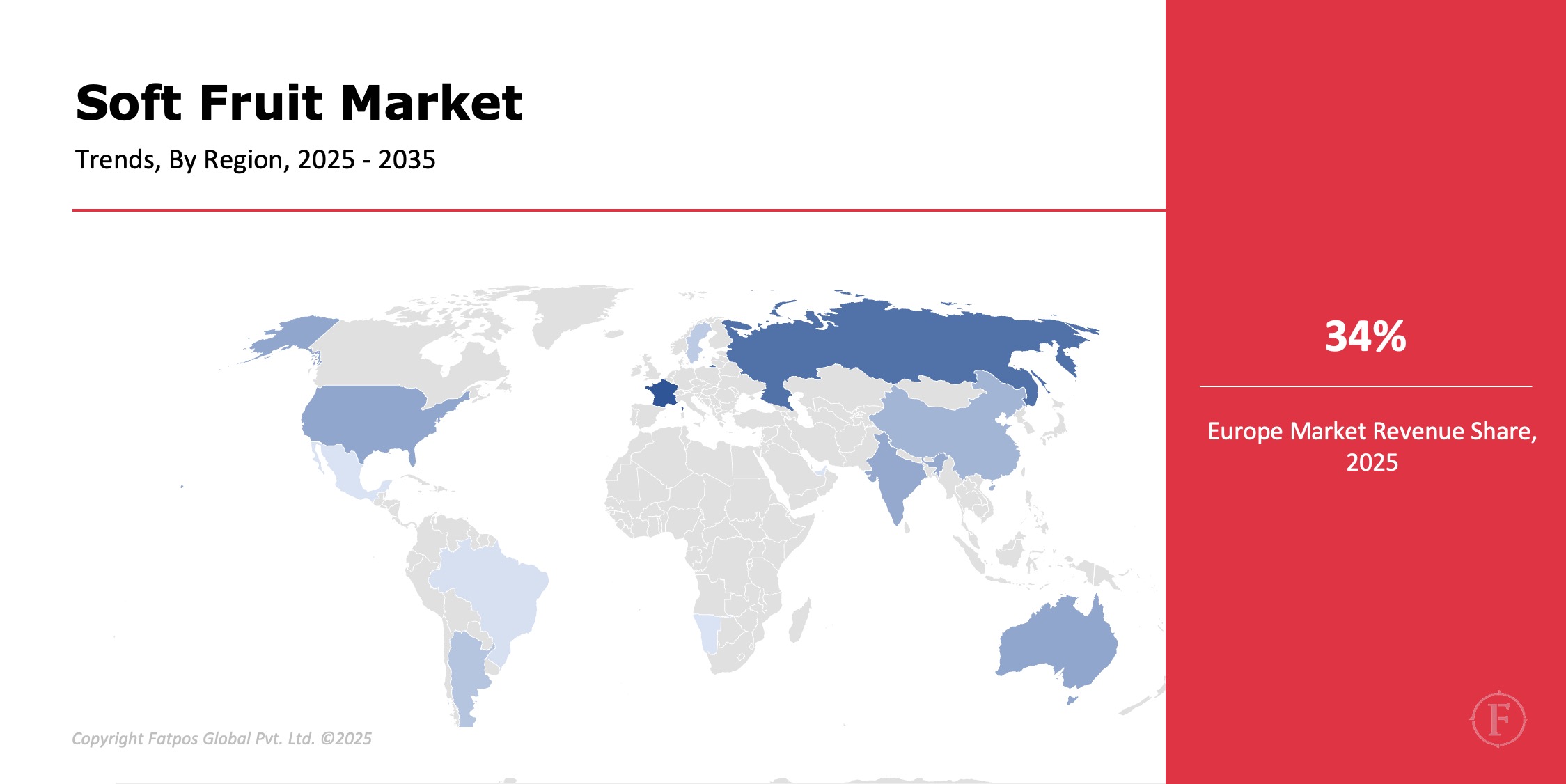
- Europe holds the largest regional market share
Market Dynamics
Drivers
The Soft Fruit Market is driven by increasing health consciousness and rising demand for natural, antioxidant-rich foods. Soft fruits are associated with benefits such as improved heart health, immunity support, and anti-aging properties. Growing urbanization and higher disposable incomes are boosting consumption of premium fresh produce.
Rising popularity of smoothies, functional beverages, and clean-label snacks further drives demand. Technological advancements in cold storage and logistics enable longer shelf life and wider distribution. Additionally, government support for horticulture development and sustainable farming practices supports consistent supply growth..
Restraints
The market faces restraints related to the highly perishable nature of soft fruits, leading to post-harvest losses and supply chain inefficiencies. Price volatility caused by weather conditions, labor shortages, and input costs affects farmer profitability.
Organic soft fruits face higher production costs and yield variability, limiting affordability. Dependence on seasonal production in certain regions restricts year-round availability. Additionally, stringent food safety and quality standards increase compliance costs for growers and distributors.
Opportunities
Significant opportunities exist in expanding organic soft fruit production and value-added processing. Demand for frozen berries, purees, and concentrates is increasing in foodservice and beverage industries. Emerging markets in Asia-Pacific and Latin America present strong growth potential due to rising middle-class populations.
Innovations in vertical farming and protected cultivation offer opportunities for urban and off-season production. E-commerce and direct-to-consumer sales models are creating new distribution avenues. Sustainable packaging and carbon-neutral farming practices further enhance market attractiveness.
Challenges
The Soft Fruit Market faces challenges related to high spoilage rates, climate variability, and labor dependency. Maintaining product freshness throughout the supply chain requires significant cold storage investment. Climate change impacts yield consistency and increases pest pressure.
Labor shortages during harvesting seasons raise operational costs. Price sensitivity among consumers limits premium product adoption in developing regions. Compliance with pesticide residue limits and food safety regulations adds complexity for growers. Managing supply-demand balance while minimizing food waste remains a persistent industry challenge.
Soft Fruit Market Trends
Key trends include rising demand for organic and sustainably grown soft fruits. Frozen and processed soft fruit products are gaining popularity due to convenience and extended shelf life. Controlled environment agriculture and greenhouse cultivation are expanding rapidly.
Digital farming technologies and precision agriculture tools are improving productivity and traceability. Retailers are emphasizing local sourcing and transparent labeling. Online grocery platforms are increasingly promoting fresh berries and ready-to-eat fruit packs.
Key Players in the Global Soft Fruit Industry
- Driscoll’s
- BerryWorld
- Naturipe Farms
- Planasa
- Angus Soft Fruits
- Costa Group
- Hortifrut
- Fall Creek
- Wish Farms
- Berrymex
Regional & Country Analysis
Europe dominates the Soft Fruit Market due to high per capita consumption and strong production in countries such as Spain, the UK, Germany, and Poland. North America follows, supported by advanced farming practices and high demand for fresh and organic berries in the
United States and Canada. Asia-Pacific is the fastest-growing region, driven by rising health awareness, expanding retail infrastructure, and growing imports in China, Japan, and South Korea. Latin America benefits from export-oriented production, particularly in Chile and Mexico. The Middle East & Africa show gradual growth supported by imports and expanding modern retail channels.
Segmentation Highlights
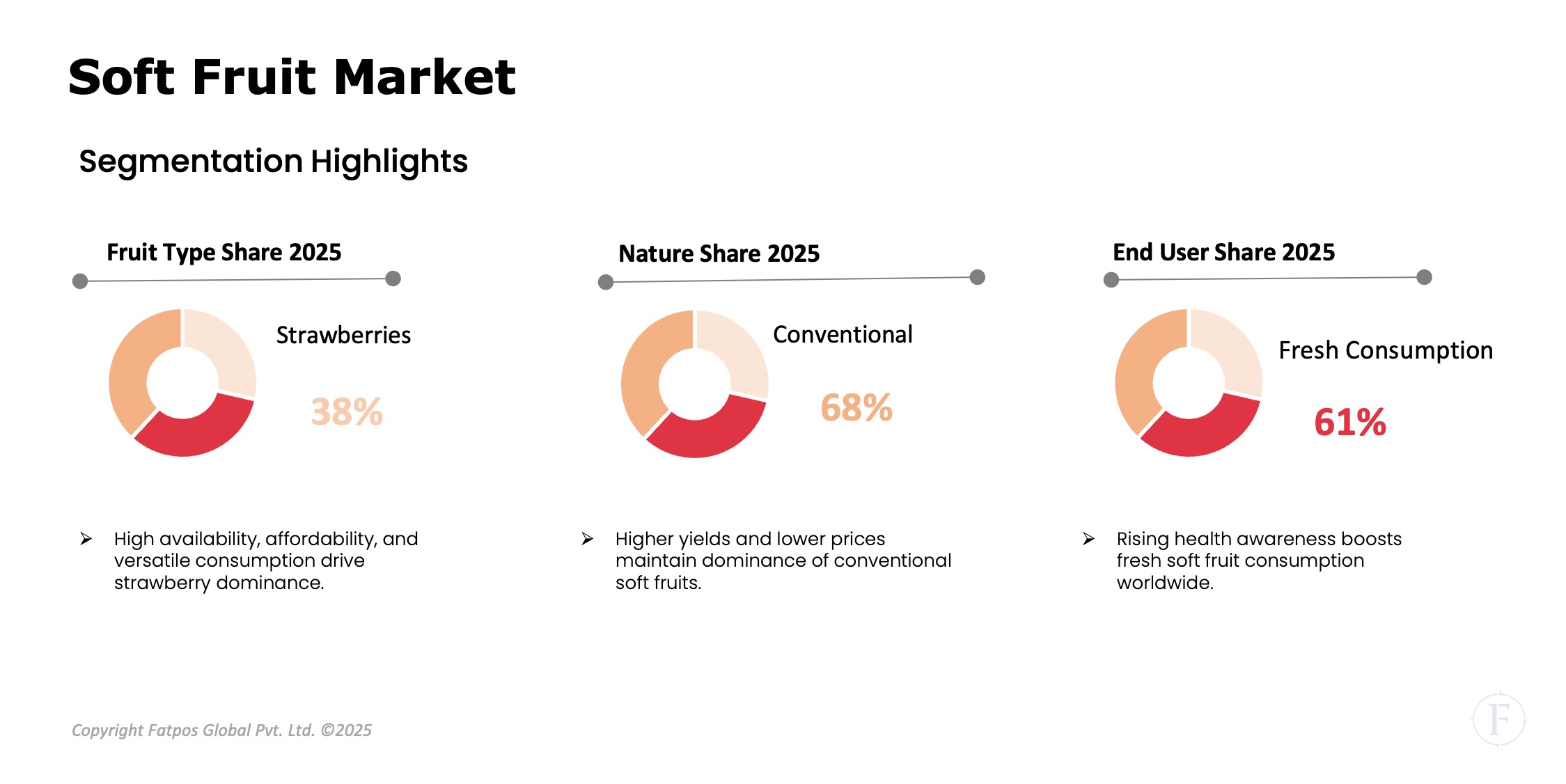
Strawberries dominate fruit type segmentation due to affordability and widespread usage. Conventional soft fruits hold the largest share, while organic grows fastest. Supermarkets remain the primary distribution channel. Fresh consumption leads end-use segmentation. Europe remains the leading regional market.
Report Key Elements
|
ATTRIBUTES |
DETAILS |
|
Study Period |
2019–2035 |
|
Base Year |
2024 |
|
Forecast Period |
2025–2035 |
|
Attributes |
Details |
|
Study Period |
2019–2035 |
|
Base Year |
2024 |
|
Forecast Period |
2025–2035 |
|
Market Size by 2035 |
USD 82.4 Billion |
|
Market CAGR |
5.4% |
|
By Region |
North America, Europe, Asia-Pacific, Latin America, MEA |
|
Soft Fruit Market: Key Players |
Driscoll’s, BerryWorld, Naturipe Farms, Planasa, Angus Soft Fruits |
Global Soft Fruit Industry Instances
- Growers expanded greenhouse and protected cultivation for year-round supply
- Retailers increased organic and locally sourced berry offerings
- Food processors adopted frozen berries for extended shelf life
- Exporters strengthened cold-chain logistics for international trade
Analyst Review
As per our Soft Fruit Market analysis, the market shows steady growth supported by health-driven consumption and agricultural innovation. Organic expansion, cold-chain development, and emerging market demand will shape long-term competitive dynamics globally.
Frequently Asked Questions (FAQ):
Soft fruits are delicate, highly perishable fruits, such as berries, characterized by high moisture content and short shelf life.
Market growth is driven by rising health awareness, demand for antioxidant-rich foods, and increasing preference for fresh, natural diets.
Strawberries dominate the market due to affordability, widespread cultivation, year-round availability, and strong consumer preference globally.
Fresh consumption leads the market as consumers prefer soft fruits for direct eating, snacking, and use in healthy diets.
Europe leads the market due to high per capita consumption, strong domestic production, and established supply chains.
 Select License Type


.png)


