


Poultry health market research, 2034
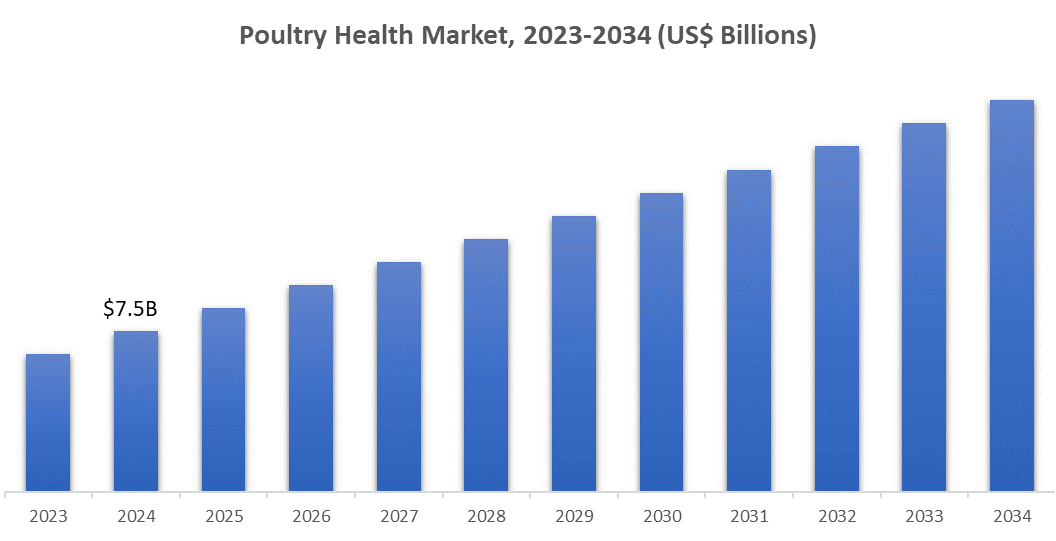
Forecasts indicate that the global poultry health market will witness a significant increase, with a projected CAGR of 8% between 2024 and 2034. The market size is estimated to grow from US$ 7 billion in 2023 to US$ 16.2 billion by 2034.
Poultry health incorporates the general health and disease control of domesticated birds raised for meat, eggs, or other goods. It includes the prevention, detection, and management of illnesses and issues that impact poultry, such as vaccines, antibiotics, parasiticides, and medical additives for feed.
Efficient poultry health management is focused on maintaining the ideal growth, productivity, and well-being of birds through managing infections, preventing outbreaks, and encouraging proper nutrition. It includes different diagnostic techniques like ELISA and PCR tests to identify pathogens and track health conditions. In general, proper poultry health practices are crucial for maintaining a strong and efficient poultry sector, guaranteeing the safety and excellence of poultry goods for customers.
Market Highlights
The ever-rising global demand for poultry meat and eggs has resulted in increased production, requiring improved health management measures. The increase in avian diseases, like avian flu, has increased the demand for more advanced vaccines, diagnostic tools, and treatments. Developments in veterinary medicine, such as molecular diagnostics and precision farming, are enhancing the detection and prevention of diseases.
Furthermore, producers are being encouraged to implement healthier and more sustainable practices due to the increasing consumer interest in antibiotic-free and organic poultry products. With the increase in global populations and a shift towards preferring poultry in diets, the demand for poultry health products is anticipated to grow in the future.
Market Segmentation
Vaccines have become the leading segment due to their disease-prevention capabilities and advancements in vaccine technology
Market is classified based on Product Type into Vaccines, Anti-Infectives, Parasiticides, Medical Feed Additives, and Others. Vaccines are now the leading product in the poultry health sector since they are efficient in preventing diseases and are cost-effective. They provide a preventive strategy that reduces the chance of outbreaks and related financial damages and are frequently a more affordable option compared to treatment.
Regulatory compliance is also a major factor contributing to the demand, as several countries require vaccinations as a part of their biosecurity protocols. Developments in vaccine technology, such as creating recombinant and subunit vaccines, have improved effectiveness and safety. Furthermore, vaccines can meet the constant demand from consumers for poultry products that are safe and healthy. Government financial support and incentives significantly boost the adoption of vaccines, strengthening their position over other products such as anti-infectives and parasiticides.
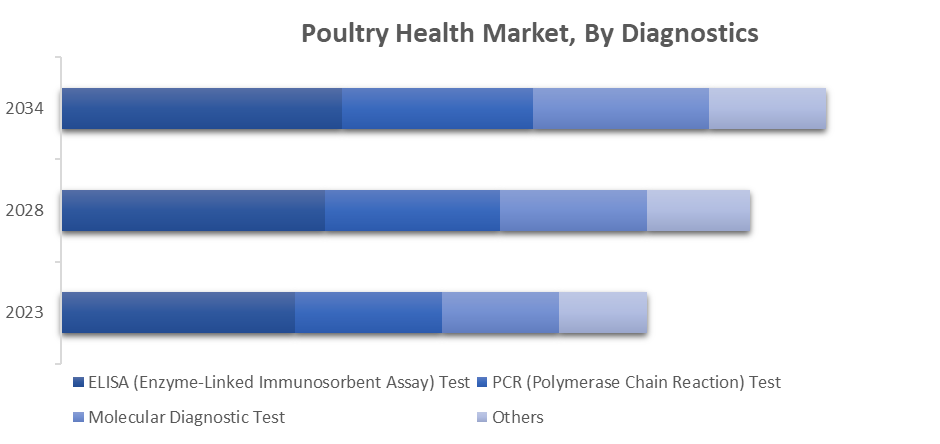
PCR (Polymerase Chain Reaction) dominates the market due to its versatility and emerging disease-detection capabilities
Market is classified based on Diagnostics into ELISA (Enzyme-Linked Immunosorbent Assay) Test, PCR (Polymerase Chain Reaction) Test, Molecular Diagnostic Test, and Others. PCR (Polymerase Chain Reaction) has emerged as the leading diagnostic sector in the poultry health industry due to its superior sensitivity and specificity, allowing accurate identification of even minimal pathogen quantities.
This enables the early identification of diseases and prompt intervention, which can reduce the transmission of infections. PCR is crucial for managing poultry health due to its ability to detect various pathogens such as viruses, bacteria, and parasites. The quick results, combined with improvements in automation and standardization, increase efficiency and reduce errors. Moreover, PCR plays a vital role in identifying new diseases and mutations, being widely accepted by regulatory bodies, further solidifying its market position.
Market Dynamics
Growth Drivers
Growing Demand for Poultry Products to Propel Market Growth and Development
Increasing global demand for poultry products is a significant factor in driving the poultry health industry. With the rapidly growing global population, there is also a rise in the demand for cost-effective and reliable sources of protein, and poultry is among the most easily available choices. The inexpensive production of poultry in comparison to other meats results in its widespread consumption in various diets, especially in underdeveloped regions where it serves as a key nutritional component.
The growing need for products requires producers to keep healthy flocks, creating the demand for efficient health management solutions. As a result, the demand for vaccines, diagnostics, and other poultry health products is increasing to prevent disease outbreaks, ensure food safety, and maintain production levels, leading to market expansion.
Advancements in Veterinary Healthcare to Prove Beneficial for the market
Technological advancements in veterinary care are greatly enhancing the poultry health industry. Developments in diagnostic technology such as PCR and ELISA have improved the preciseness and efficiency of identifying diseases in poultry, resulting in prompt intervention and improved health management. Furthermore, the advancement of new vaccines, such as recombinant and subunit vaccines, has improved the safety and effectiveness of preventing diseases, reducing the demand for antibiotics and meeting consumer preference for antibiotic-free poultry products.
The efficiency of veterinary practices has been improved by automation and standardization, which also helps to minimize human error and maintain consistent health management for large groups of animals. These developments are not just facilitating poultry health but also fuelling the expansion of the sector.
Restraints
Lack of Access in Developing Regions Can Hinder Market Expansion
In developing regions, the limited availability of advanced veterinary healthcare and products acts as a major restraint for the market. Infrastructure challenges, such as insufficient transportation and limited veterinary services, are obstacles in many areas, affecting the distribution and availability of vital health products such as vaccines and diagnostics.
Moreover, small-scale poultry farmers may be incapable of affording expensive advanced veterinary treatments due to limited financial resources, leading to challenges in implementing all-inclusive health management practices. This lack of access can result in increased vulnerability to disease outbreaks, reduced productivity, and low-quality poultry products. The lack of equal healthcare access impacts both domestic poultry sectors and hinders the overall expansion of the global poultry health industry.
Recent Developments
- In 2023-24, Zoetis launched a new vaccine for avian influenza, targeting multiple strains to enhance poultry immunity. The company also acquired a smaller poultry health company, strengthening its market position and gaining access to new technologies.
- In 2023-24, Merck & Co., Inc., launched a new sub-segment of its existing poultry health product line, targeting a specific area of need within the market. The company has also partnered with another company to develop and commercialize a new poultry health technology, combining their expertise and resources.
- In 2023-24, Ceva Santé Animale introduced a novel poultry health product with advanced features, providing a competitive advantage in the market. The company has been focusing on expanding its presence in emerging markets and investing in research and development to address specific poultry health challenges in these regions.
- In 2023-24, Boehringer Ingelheim launched a new sub-segment of its poultry health product line, catering to a specific customer segment or geographic region. The company also acquired a smaller poultry health company, expanding its product portfolio and geographic reach.
- In 2023-24, Elanco Animal Health introduced a new poultry health product with innovative features, addressing a specific unmet need in the market.
Key Players
- Zoetis Inc.
- Merck & Co., Inc.
- Ceva Santé Animale
- Boehringer Ingelheim
- Elanco Animal Health
- Phibro Animal Health Corporation
- Bayer AG
- Vetoquinol S.A.
- Virbac
- Intas Pharmaceuticals Ltd.
- Dechra Pharmaceuticals PLC
- IDEXX Laboratories, Inc.
- Hester Biosciences Limited
- HIPRA
- Bimeda Holdings PLC
- Other Prominent Players (Company Overview, Business Strategy, Key Product Offerings, Financial Performance, Key Performance Indicators, Risk Analysis, Recent Development, Regional Presence, SWOT Analysis)
Regional Analysis
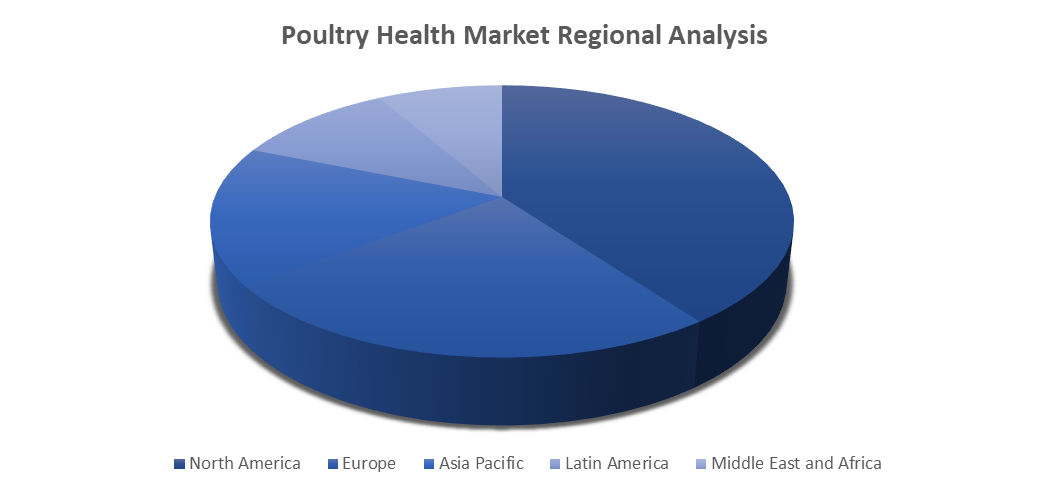
The Global poultry health market is segmented based on regional analysis into five major regions: North America, Latin America, Europe, Asia Pacific, and the Middle East and Africa.
North America holds the leading position in the market due to its advanced veterinary healthcare system, significant funding for research, and strict biosecurity measures. The market is further stimulated by the region's extensive poultry production, which is driven by a strong demand for poultry meat and eggs. Furthermore, the participation of key players in the industry and a strong supply chain guarantees the broad availability of cutting-edge health products like vaccines and diagnostics, leading to market leadership.
On the other end, Europe places significant emphasis on animal welfare and strict regulations, leading to a growing demand for innovative poultry healthcare solutions.
Asia-Pacific region is experiencing fast growth from rising poultry consumption and advancements in veterinary services, whereas Latin America and the Middle East and Africa are encountering difficulties with limited veterinary care access, but offer potential for market growth as infrastructure develops.
Market is further segmented by region into:
- North America Market Size, Share, Trends, Opportunities, Y-o-Y Growth, CAGR – United States and Canada
- Latin America Market Size, Share, Trends, Opportunities, Y-o-Y Growth, CAGR – Mexico, Argentina, Brazil, and Rest of Latin America
- Europe Market Size, Share, Trends, Opportunities, Y-o-Y Growth, CAGR – United Kingdom, France, Germany, Italy, Spain, Belgium, Hungary, Luxembourg, Netherlands, Poland, NORDIC, Russia, Turkey, and Rest of Europe
- Asia Pacific Market Size, Share, Trends, Opportunities, Y-o-Y Growth, CAGR – India, China, South Korea, Japan, Malaysia, Indonesia, New Zealand, Australia, and Rest of APAC
- Middle East and Africa Market Size, Share, Trends, Opportunities, Y-o-Y Growth, CAGR – North Africa, Israel, GCC, South Africa, and Rest of MENA
Market Scope and Segments
|
ATTRIBUTE |
DETAILS |
|
Study Period |
2018-2034 |
|
Base Year |
2023 |
|
Forecast Period |
2024-2034 |
|
Historical Period |
2019-2022 |
|
Growth Rate |
CAGR of 8% from 2024-2034 |
|
Unit |
Value (US$ Billion) |
|
Segmentation |
Main Segments List |
|
By Product |
|
|
By Diagnostics |
|
|
By Application |
|
|
By Region |
|
Frequently Asked Questions (FAQ):
The global poultry health market size was valued at US$ 7 billion in 2023 and is projected to reach the value of US$ 16.2 billion in 2034, exhibiting a CAGR of 8% during the forecast period.
The market includes products and services that focus on preventing, diagnosing, and treating diseases in poultry. This comprises vaccines, diagnostics, anti-infectives, and feed additives, necessary for upholding poultry health, guaranteeing food safety, and meeting the worldwide need for poultry meat and eggs.
The Vaccines and PCR (Polymerase Chain Reaction) Test segment accounted for the largest market share.
Key players in the global poultry health market include Zoetis Inc., Merck & Co., Inc., Ceva Santé Animale, Boehringer Ingelheim, Elanco Animal Health, Phibro Animal Health Corporation, Bayer AG, Vetoquinol S.A., Virbac, Intas Pharmaceuticals Ltd., Dechra Pharmaceuticals PLC, IDEXX Laboratories, Inc., Hester Biosciences Limited, HIPRA, Bimeda Holdings PLC and Other Prominent Players.
The market is being driven by factors such as the growing global population, increasing demand for poultry products, advancements in poultry farming technology, rising awareness of animal health, and government support for the poultry industry.
 Select License Type


.png)


