


Poultry Eggs Market Research, 2034
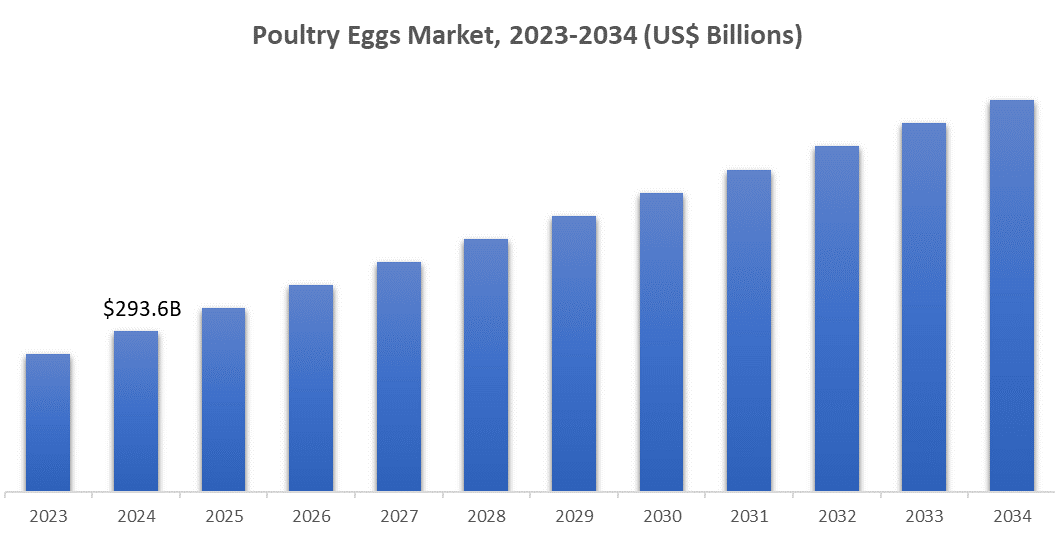
The global poultry eggs market is expected to grow at a CAGR of 3.5% during the forecast period (2024-2034). The market size was valued at US$ 283.9 billion in 2023 and is projected to reach US$ 413.7 billion by 2034.
Poultry eggs are a common food eaten globally, valued for their nutrition and ability to be used in various recipes. They provide a valuable source of high-quality protein, vital vitamins, and minerals, making them a favoured dietary option in many cultures. Eggs are typically categorized into several categories depending on how they are produced, such as conventional, organic, free-range, and specialty types like omega-3 enriched or cage-free.
Shell eggs can be consumed as they are or turned into liquid eggs and egg powder for use in food service and processing. These products are commonly used in these industries. Increasing consumer interest in protein-rich diets, the rising demand for specialty eggs, and the expansion of the food service industry are driving the global market for poultry eggs.
Market Highlights
The market is driven by various significant factors. The increased demand from consumers is a result of the growing global recognition of the nutritional advantages of eggs, especially their high levels of protein. The shift towards better eating habits and the trend of specialty eggs such as organic and free-range types are also important factors.
Furthermore, the increase in the food service sector and the rise in urbanization have driven up the need for eggs for commercial purposes. In the future, the market is anticipated to experience growth due to advancements in egg production and processing, rising demand in emerging markets, and an increasing emphasis on sustainability and ethical farming practices.
Market Segmentation
Shell Eggs dominate due to their affordability and strong supply chain
Market is segmented based on Product into Shell Eggs, Specialty Eggs, and Processed Egg Products. Shell eggs currently hold a strong position in the market due to several convincing reasons. Consumers prefer shell eggs since they are familiar, versatile, and affordable. For centuries, they have been a fundamental part of diets and are incorporated into many different cooking methods, proving to be a reliable and versatile option.
Moreover, regular shell eggs are priced lower in comparison to specialty or processed eggs, allowing them to be easily purchased by a wide range of consumers. The prevalence of shell eggs is further strengthened by their wide availability across different distribution channels such as supermarkets, convenience stores, and traditional markets, supported by a robust supply chain. Globally, shell eggs are widely consumed due to their cultural importance and nutritional benefits, establishing them as a top-selling product.
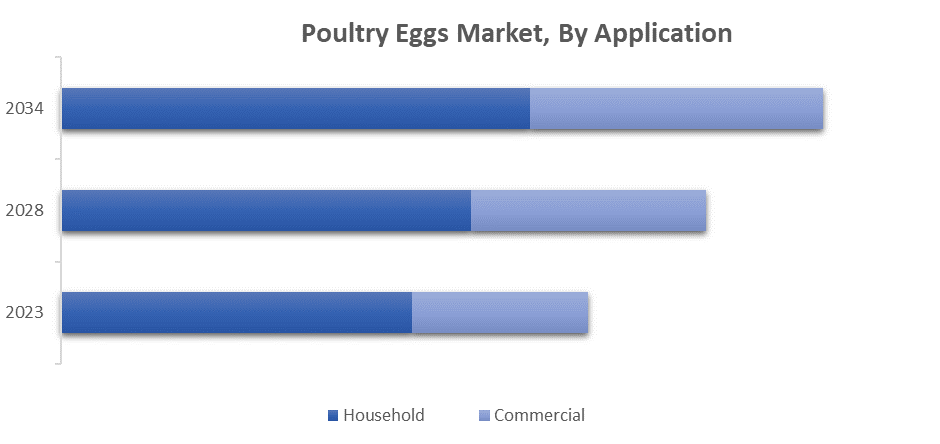
Household application leads the market due to population spurge and rising disposable income
Market is segmented based on Application into Household and Commercial. In today's market, household consumption outperforms commercial use as the main driving force. This dominance is directly attributed to a variety of factors. Eggs act as an essential part of the diet, known for their high level of nutrients such as protein, vitamins, and minerals, which are necessary for a healthy balanced diet. Their flexibility permits them to be cooked in a myriad of ways, accommodating diverse culinary tastes and nutritional requirements.
The rising global population results in an increasing need for protein-rich foods such as eggs. Moreover, increasing levels of disposable income allow a larger number of consumers to purchase these healthy foods. The increase in health and wellness trends leads to higher household egg consumption, with more individuals recognizing their nutritional advantages, solidifying eggs' importance in everyday meals.
Market Dynamics
Growth Drivers
Increasing Consumer Preferences for Protein-Rich Diets to Propel Market Growth
With more consumers focusing on health and wellness, the popularity of protein-rich diets has increased, making eggs a popular choice for high-quality protein. Eggs are not just inexpensive but also very convenient, which makes them easily available to a wide variety of buyers. They provide a full protein profile, including all necessary amino acids, which is important for muscle recovery, development, and general well-being.
The increasing focus on fitness, weight control, and healthy eating has also increased the need for eggs. Furthermore, eggs are adaptable and simple to add to different dishes, establishing them as a staple in many households. The expectation is for this pattern to persist as knowledge about the advantages of protein-heavy diets grows.
Rising Awareness of Speciality and Organic Eggs to Accelerate Demand
Increasing consumer interest in specialty and organic eggs is fueled by a need for products that provide extra health advantages and are in line with ethical farming methods. Special types of eggs, like Omega-3 enhanced or free-range, are seen as better choices, leading to their increased popularity.
Organic eggs are preferred by consumers who prioritize natural and sustainable food sources, as they are produced without synthetic pesticides or fertilizers. Moral factors, such as animal welfare, are also important in this trend, with customers willing to pay extra for eggs that are produced humanely, i.e., without harming animals. As the understanding of these factors expands, there is anticipation for a rising demand for specialty and organic eggs, which will transform the market.
Restraints
Price Fluctuations in Feed and Production Costs to Restrict Growth Opportunities
Fluctuations in feed and production costs significantly constrain the market due to its high sensitivity. The costs of feeding, specifically for corn and soybeans, represent a significant amount of the total expenses for production. Fluctuations in the prices of these raw materials have a direct impact on the expenses of egg production. Weather conditions, global demand, and geopolitical events have the potential to increase feed prices, resulting in higher expenses for chicken farmers.
In addition, increasing energy prices, wages, and transportation costs also add to the total production expenses. When costs increase, producers are usually faced with tough choices, they can either accept the increased expenses, resulting in reduced profits, or transfer the costs to consumers, possibly reducing demand. This instability causes doubt in the market, impacting egg producers' ability to plan and invest for the long term.
Recent Developments
- In 2023, Cal-Maine Foods, Inc. acquired a significant stake in River Valley Egg Farm, increasing its production capacity and presence in the Midwest U.S. The company launched a new line of cage-free eggs under its Egg-Land’s Best brand, demonstrating its commitment to sustainable and humane farming practices.
- In 2023, Rose Acre Farms entered into a joint venture with a technology firm to develop advanced egg production systems that enhance efficiency and reduce environmental impact. The company introduced a new product line of organic eggs, capitalizing on the growing consumer demand for organic and non-GMO products.
- During 2023-24, Michael Foods expanded its offerings with a new liquid egg white product aimed at the fitness and health-conscious market. The company also acquired a specialty egg producer, further diversifying its portfolio of value-added egg products.
- In 2023-24, Hillandale Farms invested in the expansion of its processing facilities to increase production capacity and meet rising demand for specialty eggs. The company also initiated a large-scale solar energy project to power its operations, demonstrating its commitment to sustainability and reducing its carbon footprint.
- In 2024, Trillium Farm Holdings, LLC introduced a new line of enriched eggs, focusing on enhanced nutritional profiles such as Omega-3 enriched eggs. The company invested in water conservation technologies at its farms to align with its sustainability goals.
Key Players
- Cal-Maine Foods, Inc.
- Rose Acre Farms
- Michael Foods, Inc.
- Hillandale Farms
- Daybreak Foods, Inc.
- Noble Foods Ltd.
- Trillium Farm Holdings, LLC
- Rembrandt Enterprises, Inc.
- Midwest Poultry Services, L.P.
- Herbruck's Poultry Ranch, Inc.
- Versova Holdings LLP
- Ewe Free Range Eggs
- Eggland's Best, LLC
- Granja Mantiqueira
- BRF S.A.
- Other Prominent Players (Company Overview, Business Strategy, Key Product Offerings, Financial Performance, Key Performance Indicators, Risk Analysis, Recent Development, Regional Presence, SWOT Analysis)
Regional Analysis
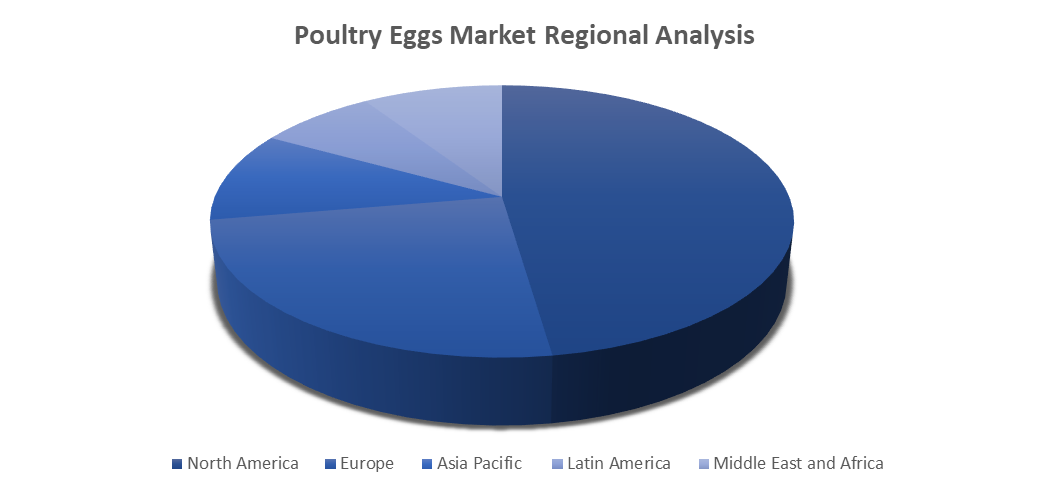
The global poultry eggs market is segmented based on regional analysis into five major regions: North America, Latin America, Europe, Asia Pacific and the Middle East and Africa.
North America leads the poultry eggs industry due to its high consumption rates, advanced production technologies, and strong demand for both regular and specialty eggs. Specifically, the United States is a significant participant, boasting a strong egg sector backed by extensive production sites and effective distribution channels. Increased consumer interest in protein-rich diets and increased awareness of specialty and organic eggs are boosting demand even more. Moreover, the area is advantaged by a strong regulatory system that guarantees the safety and quality of food, helping to maintain the market's prevalence.
Europe and Asia-Pacific are important markets on the opposite side. Europe is well-known for its strict animal welfare regulations and increasing desire for organic and free-range eggs. The high consumption of eggs is driven by the large population in the Asia-Pacific region, with China and India leading the way.
Latin America and the Middle East & Africa are experiencing increasing demand as well, but they are not as dominant as North America and Europe, mainly due to economic limitations and different degrees of market growth.
Market is further segmented by region into:
- North America Market Size, Share, Trends, Opportunities, Y-o-Y Growth, CAGR – United States and Canada
- Latin America Market Size, Share, Trends, Opportunities, Y-o-Y Growth, CAGR – Mexico, Argentina, Brazil, and Rest of Latin America
- Europe Market Size, Share, Trends, Opportunities, Y-o-Y Growth, CAGR – United Kingdom, France, Germany, Italy, Spain, Belgium, Hungary, Luxembourg, Netherlands, Poland, NORDIC, Russia, Turkey, and Rest of Europe
- Asia Pacific Market Size, Share, Trends, Opportunities, Y-o-Y Growth, CAGR – India, China, South Korea, Japan, Malaysia, Indonesia, New Zealand, Australia, and Rest of APAC
- Middle East and Africa Market Size, Share, Trends, Opportunities, Y-o-Y Growth, CAGR – North Africa, Israel, GCC, South Africa, and Rest of MENA
Market Scope and Segments:
|
ATTRIBUTE |
DETAILS |
|
Study Period |
2018-2034 |
|
Base Year |
2023 |
|
Forecast Period |
2024-2034 |
|
Historical Period |
2019-2022 |
|
Growth Rate |
CAGR of 3.5% from 2024-2034 |
|
Unit |
Value (US$ Billion) |
|
Segmentation |
Main Segments List |
|
By Product |
|
|
By Application |
|
|
By Distribution Channel |
|
|
By Region |
|
Frequently Asked Questions (FAQ):
The global poultry eggs market size was valued at US$ 283.9 billion in 2023 and is projected to reach the value of US$ 413.7 billion in 2034, exhibiting a CAGR of 3.5% during the forecast period.
The market encompasses the production, processing, distribution, and sale of eggs from chickens. It includes various egg types (shell, specialty, processed), consumed by households and businesses, and distributed through supermarkets, specialty stores, online, and other channels.
The Shell Eggs and Industrial Robots segment accounted for the largest market share.
Key players in the global poultry eggs market include Cal-Maine Foods, Inc., Rose Acre Farms, Michael Foods, Inc., Hillandale Farms, Daybreak Foods, Inc., Noble Foods Ltd., Trillium Farm Holdings, LLC, Rembrandt Enterprises, Inc., Midwest Poultry Services, L.P., Herbruck's Poultry Ranch, Inc., Versova Holdings LLP, St. Ewe Free Range Eggs, Eggland's Best, LLC, Granja Mantiqueira, BRF S.A. and Other Prominent Players.
Rising population, increasing disposable income, growing health consciousness, and expanding foodservice industry drive the market.
 Select License Type


.png)


