


Matcha Market Research, 2034
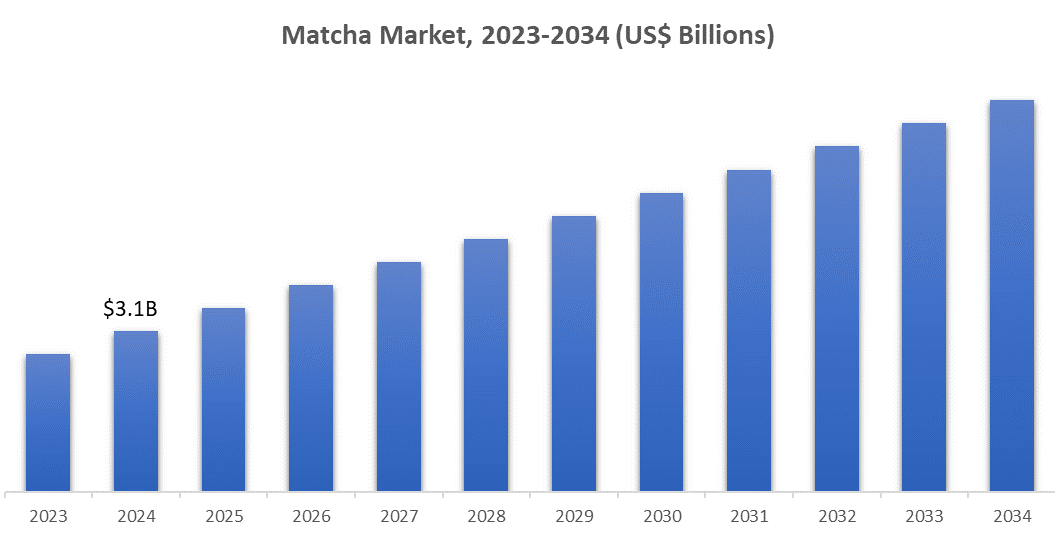
The global matcha market is expected to achieve a 10.2% compound annual growth rate (CAGR) during the forecast period of 2024-2034. The market size was US$ 2.8 billion in 2023 and is projected to reach US$ 8.2 billion by 2034.
Matcha is a high-quality powdered substance produced from green tea leaves grown and harvested in Japan under the shade for 3-4 weeks. The leaves are collected, dehydrated, and turned into a bright green powder, including natural antioxidants and nutrients. Historically utilized in Japanese tea rituals, matcha is well-regarded for its comforting properties and capacity to help in improving focus and calmness, commonly used by monks during meditation.
It helps in improving metabolism, assists liver and brain function, and reduces inflammation. Besides from the usual tea options, matcha has gained popularity in the Western world and can be found in lattes, desserts, and other drinks. Organic matcha products with low caffeine content and less sugar or additives are easily available in supermarkets, hypermarkets, and online stores, appealing to health-conscious shoppers.
Market Highlights:
The market growth influenced due to ever-increasing consumer knowledge of its health benefits, such as its high antioxidant levels, metabolism-improving qualities, and calming impacts. The ever-rising demand for healthy and natural products has made matcha a favourable option, especially among consumers who prioritize their health.
Its ability to be used in a wide range of food and drinks, such as lattes, smoothies, and desserts, has made it a more popular option. Additionally, the ever-increasing demand for organic and healthier products is propelling the market forward. The ease of online shopping and the development of new matcha products are expected to continue and accelerate the growth of the market, establishing matcha as a popular option on a global scale.
Source: Fatpos Global
Market Segmentation:
Ceremonial grade matcha's higher quality and purity have established its dominance in the market
The Market is segmented based on Grade into Ceremonial, Classic, and Culinary. Ceremonial grade matcha is the most dominant market, mainly because of its exceptional quality and cultural importance. It is prepared using the initial growth of spring foliage, guaranteeing fine quality and clarity. This type of matcha is well-regarded for its bright green colour, deep umami taste, and gentle sweetness, presenting a delicate, earthy scent enjoyed by tea lovers.
In traditional Japanese tea ceremonies, ceremonial matcha is commonly used, highlighting the importance of quality and aesthetics. The connection it has with mindfulness and peacefulness enhances its reputation even more. The higher price point is justified by the excellent quality, drawing in discerning customers who appreciate tradition and sensory experiences, establishing it as the top choice among different matcha grades.
Pan-fried matcha holds the dominant market position owing to simple production and overall market perception
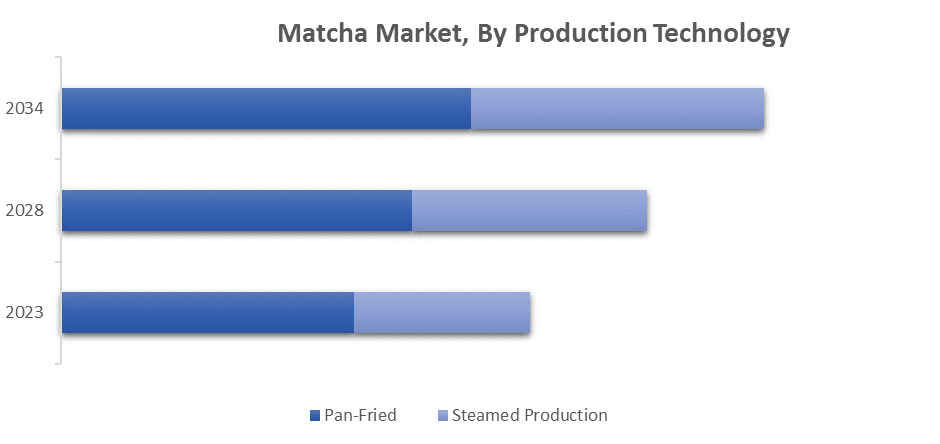
The Market is bifurcated based on the Production Technology into pan-fried and steamed production. Generally, pan-fried matcha dominates the market owing to its traditional production process and perceived high quality. Having its roots in Japan for many centuries, pan-frying is a method with a strong historical value connected to traditional tea ceremonies. This production technique is associated with cultural heritage, increasing its attractiveness.
Pan-fried matcha is well-known for its exceptional flavour, frequently renowned as sweeter, more indulgent, and more intricate than its steamed version, with a smoother consistency favoured by many customers. It is commonly seen as a high-end product, which compliments its elevated price in the market. Numerous high-quality matcha companies prioritize pan-fried matcha, strengthening its position as the top choice. Although steaming matcha is beneficial, the traditional pan-fried method is preferred by the market.
Source: Fatpos Global
Market Dynamics:
Growth Drivers
Rising Health Awareness Drives the Overall Demand in the Market
Growing awareness about healthy lifestyles is a major factor contributing to the demand in the market. As consumers become self-aware regarding their health, they are actively vying for products that provide substantial health benefits. Matcha is valued for its ability to increase metabolism, improve liver function, and enhance mental clarity directly attributed to its rich content of antioxidants, specifically EGCG (epigallocatechin gallate), known for its benefits.
The increasing demand for natural and organic foods has boosted the popularity of matcha, which is often promoted as a pure, organic superfood. Furthermore, the increasing popularity of wellness and nutrition trends such as detox diets and mindfulness activities complement matcha's soothing effects and health advantages, making it a highly preferred choice for health-conscious individuals.
Innovations in Matcha Products to Drive Strong Market Expansion
Advancements in products containing matcha are driving significant growth in the market. In addition to regular tea, matcha is being used more in various products like snacks, desserts, cosmetics, and personal care items. These recent options cater to various consumer tastes and broaden matcha's popularity beyond its usual applications.
For example, matcha is used in chocolates, energy bars, and skincare products to take advantage of its health benefits and well-known branding. Companies can explore various formats with matcha's flexibility, appealing to current fans and attracting new customers. The ongoing development of new products plays a crucial role in driving market expansion by creating new opportunities for consumption and expanding the customer base.
Restraints
High Production Costs May Hinder Growth Opportunities
The market penetration of matcha is greatly affected by the high costs of production. The manual labour required for harvesting, steaming, grinding, and sifting makes matcha production a labour-intensive process that is hard to mechanize. Every phase requires a significant amount of time and results in relatively low yields, subsequently driving up expenses.
Specialized machinery and strict quality checks also result in increased costs. These factors lead to higher retail prices, restricting market entry, especially for consumers concerned about price. Producers can mitigate this issue by investing in automation, improving production efficiency, creating value-added products, and educating consumers about matcha's unique benefits to support the higher price.
Recent Developments
- In 2023, ITO EN expanded its product line by introducing a new range of matcha-infused beverages aimed at younger consumers. This included ready-to-drink matcha lattes and matcha energy drinks, targeting the growing demand for functional beverages. The company has been actively focusing on sustainability by investing in eco-friendly packaging and expanding its organic matcha offerings.
- In 2024, Aiya Co. Ltd. invested in the UK-based matcha green tea company OMGTea. This partnership is designed to enhance the distribution and availability of premium organic matcha products across Europe. The company has also expanded its product line with the introduction of matcha-based supplements, which are gaining popularity among health-conscious consumers looking for natural energy and antioxidant boosts.
- In early 2024, DoMatcha introduced a new form of ceremonial-grade matcha powder aimed at professional chefs and high-end restaurants, catering to the rising trend of culinary matcha. The company has significantly boosted its online presence, using e-commerce platforms to reach a wider range of consumers.
- Unilever, under its Pure Leaf brand in partnership with PepsiCo, introduced a new line of organic matcha tea bags in 2023, expanding its portfolio to cater to both premium and mainstream markets.
- In 2023, AOI Tea Company entered into a joint venture with a U.S.-based health food company to create matcha-infused snacks, capitalizing on the growing demand for healthy, matcha-based food products.
Key Players:
- ITO EN, Ltd.
- Aiya Co. Ltd.
- DoMatcha
- The Unilever Group (Pure Leaf)
- AOI Tea Company
- Matcha Maiden
- Encha
- Midori Spring Ltd.
- Encha Organic Matcha
- Jade Leaf Matcha
- Matcha Source
- Ippodo Tea Co.
- Marukyu Koyamaen
- Kissa Tea GmbH
- The Republic of Tea
- Other Prominent Players (Company Overview, Business Strategy, Key Product Offerings, Financial Performance, Key Performance Indicators, Risk Analysis, Recent Development, Regional Presence, SWOT Analysis)
Regional Analysis
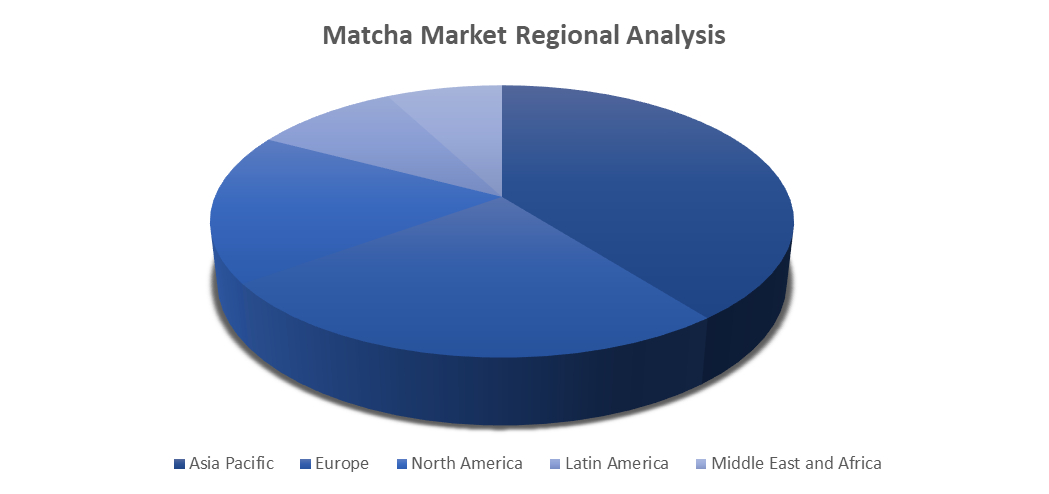
The global matcha market is bifurcated based on regional analysis into five major regions: North America, Latin America, Europe, Asia Pacific, and the Middle East and Africa.
Asia-Pacific region leads the market owing to its cultural importance and extensive tradition of consuming matcha. Japan is well known for its traditional matcha production and consumption, with the popularity of matcha spreading to other countries in the region like South Korea and China. The region gains advantages from existing production facilities, a long-standing tradition of tea drinking, and extensive knowledge in growing and processing matcha, all of which help maintain its leading position in the market.
At the same time, both North America and Europe are developing markets showing more interest in matcha due to the rising health and wellness trends.
North America is witnessing an increase in consumer interest in high-quality and unique drinks, while Europe is also undergoing a similar shift towards natural and organic items.
Latin America, the Middle East, and Africa all have relatively smaller markets for matcha. In Latin America, matcha remains a specialized product with restricted widespread production.
Source: Fatpos Global
Impact of Covid-19 on the Market
Covid-19 pandemic had a multifaceted impact on the market which resulted in both positive and negative outcomes. Increased knowledge about health and a focus on strengthening immunity has led to a rise in demand for matcha, which is praised for its antioxidant properties. This trend was especially prominent in health-conscious regions such as North America and Europe. However, the pandemic disrupted supply chains, resulting in raw material shortages that raised production expenses. Moreover, the temporary closure of restaurants and cafes, which serve as important channels for distributing matcha-based beverages, also impeded market growth. Despite these difficulties, there was a slightly positive outcome as customers shifted towards consuming products at home and looked for high-quality health items, maintaining market interest in matcha.
Market is further segmented by region into:
- North America Market Size, Share, Trends, Opportunities, Y-o-Y Growth, CAGR – United States and Canada
- Latin America Market Size, Share, Trends, Opportunities, Y-o-Y Growth, CAGR – Mexico, Argentina, Brazil, and Rest of Latin America
- Europe Market Size, Share, Trends, Opportunities, Y-o-Y Growth, CAGR – United Kingdom, France, Germany, Italy, Spain, Belgium, Hungary, Luxembourg, Netherlands, Poland, NORDIC, Russia, Turkey, and Rest of Europe
- Asia Pacific Market Size, Share, Trends, Opportunities, Y-o-Y Growth, CAGR – India, China, South Korea, Japan, Malaysia, Indonesia, New Zealand, Australia, and Rest of APAC
- Middle East and Africa Market Size, Share, Trends, Opportunities, Y-o-Y Growth, CAGR – North Africa, Israel, GCC, South Africa, and Rest of MENA
Market Scope and Segments:
|
ATTRIBUTE |
DETAILS |
|
Study Period |
2018-2034 |
|
Base Year |
2023 |
|
Forecast Period |
2024-2034 |
|
Historical Period |
2019-2022 |
|
Growth Rate |
CAGR of 10.2% from 2024-2034 |
|
Unit |
Value (US$ Billion) |
|
Segmentation |
Main Segments List |
|
By Grade |
|
|
By Production Technology |
|
|
By Nature |
|
|
By Application |
|
|
By Distribution Channel |
|
|
By Region |
|
Frequently Asked Questions (FAQ):
The global matcha market size was valued at US$ 2.8 billion in 2023 and is projected to reach the value of US$ 8.2 billion in 2034, exhibiting a CAGR of 10.2% during the forecast period.
The market refers to the global industry involved in the production, distribution, and consumption of matcha, a finely ground green tea powder known for its vibrant colour, rich flavour, and potential health benefits. Matcha is prized for its high concentration of antioxidants and is used in various applications, including beverages, food, and personal care products.
The Ceremonial segment and Pan-Fried segment accounted for the largest market share.
Key players in the global Matcha Market include ITO EN, Ltd., Aiya Co. Ltd., DoMatcha, The Unilever Group (Pure Leaf), AOI Tea Company, Matcha Maiden, Encha, Midori Spring Ltd., Encha Organic Matcha, Jade Leaf Matcha, Matcha Source, Ippodo Tea Co., Marukyu Koyamaen, Kissa Tea GmbH, The Republic of Tea and Other Prominent Players.
Growing health consciousness, rising disposable income, and expanding global market are key factors driving the market.
 Select License Type


.png)


