



Hydronic Radiator Market Research, 2034
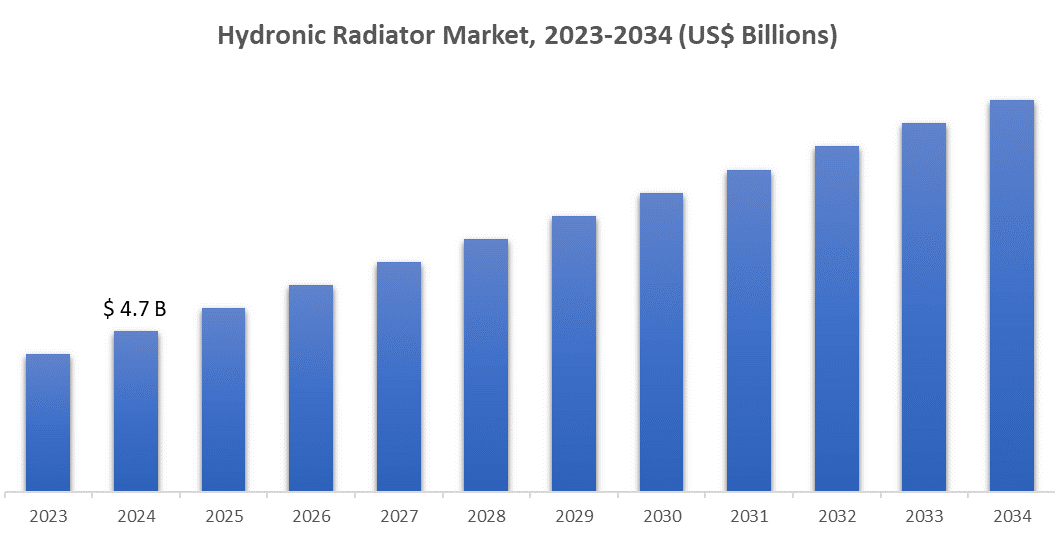
The global hydronic radiator market is expected to grow at a CAGR of 4.7% in the forecast period (2024-2034), with the market size valued at US$ 4.5 billion in 2023 and projected to reach US$ 7.4 billion by 2034.
Hydronic Radiators are devices that function as heating equipment, using hot water to warm indoor spaces. These radiators are crucial components of heating systems, where water transfers heat from sources such as boilers or heat pumps through a piping system. There are various types of hydronic radiators, including panel, fan coil, column, convector, and others, allowing water to pass through their system and release heat into the surrounding air.
These radiators are typically made from materials like aluminium and steel, serving as excellent heat insulators. Hydronic Radiators provide a cost-effective heating system, widely used in residential, commercial, and industrial settings. Apart from heating, hydronic radiators offer several advantages. They deliver steady and comfortable warmth throughout spaces, improving indoor air quality and comfort. Furthermore, their energy efficiency and flexible design options make them an ideal choice for a variety of applications.
Market Highlights
The market is driven by increasing demand for efficient heating systems in colder regions like Europe and North America. Advancements in radiators, such as Panel, Fan Coil, Baseboard, Column, Convector, and others, are enabling a wide range of consumers to adopt these technologies due to their sustainability, cost-effectiveness, and energy efficiency, leading to savings in unnecessary expenses.
Additionally, the development of technologies such as smart controls, integrated sensors, noise reduction technologies, and low-pressure systems in these radiation devices will create opportunities for ongoing expansion and improvement.
Market Segmentation
Panel radiators to dominate the market due to their adaptability and efficient use of limited space
The market based on Radiator Type is segmented into Panel, Fan Coil, Baseboard, Column, Convector and Others. Panel radiators, often known as central heating radiators, are the market leader. This is due to their space-saving capabilities, which make them highly adaptable for installation in a variety of contexts, including residential and commercial locations. Panel radiators provide quick response times and efficient thermostat functioning, which improves user convenience and comfort.
Furthermore, their cheap maintenance costs contribute to their desirability. The flexible, flat-panel design allows them to be placed on walls, taking up little space and elegantly blending into interior aesthetics. Panel radiators are popular among consumers looking for effective heating solutions that do not compromise space or functionality due to their versatility and ease of installation. As a result, panel radiators continue to dominate the market, driving innovation and expansion in the heating sector.
Increased Residential Demand will work as an essential growth factor for the radiator market
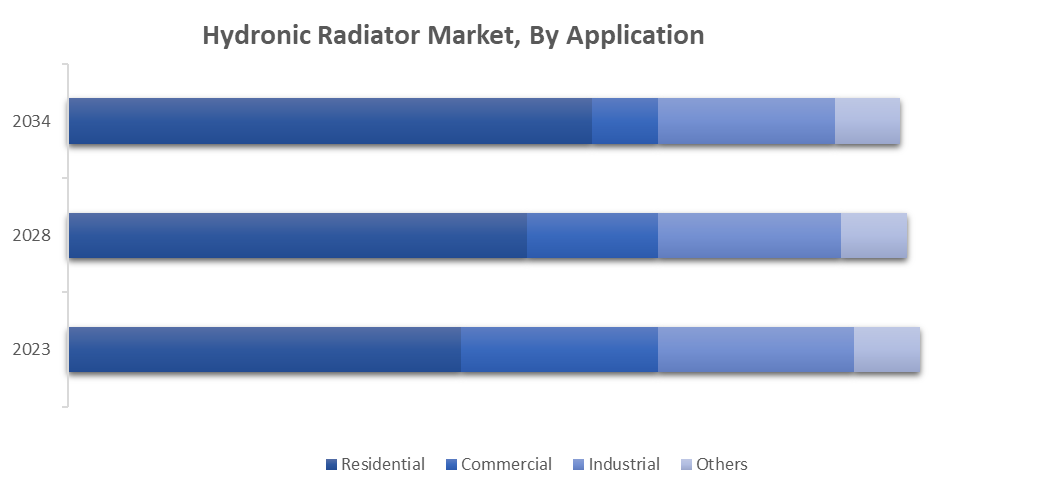
The market based on Application is segmented into Residential, Industrial and Commercial and Others. The residential sector emerges as the largest user of hydronic radiators due to their efficiency and energy-efficient heating solutions that meet individual requirements. The total number of residential houses, outnumbering commercial settings, is a major driver of demand in the residential sector.
Furthermore, the increased emphasis on cost-effectiveness and energy efficiency has boosted the popularity of hydronic radiators among people seeking dependable heating solutions. As a result, the residential sector continues to drive significant growth in the market, demonstrating an increased desire for efficient and sustainable heating solutions in domestic settings.
Market Dynamics
Growth Drivers
Growing Focus on Energy Efficiency and Increasing Urbanisation will drive market growth
Governments and consumers worldwide are increasing up attempts to minimize greenhouse gas emissions and carbon footprints. Hydronic radiators provide more efficient heating systems than previous methods, removing the need for fans to circulate heat. Their slow heat transfer requires less energy, resulting in lower energy expenditures.
Furthermore, with increased urbanization and the construction of high-rise structures and modern homes, there is a growing demand for hydronic radiator systems. These systems ensure a uniform distribution of heat throughout the building. These trends are expected to fuel future market expansion in the market, as the emphasis on energy efficiency and sustainability continues to affect consumer preferences and regulatory frameworks worldwide.
Technological advancements in the market is improving market structure
Technological development and advancements are playing a key role in driving the growth of market. Manufacturers are focusing on developing new heat transfer materials that will help transfer heat efficiently while consuming less energy. Smart controls and enhanced connectivity are helping customers by allowing them to program heating schedules and adjust temperatures accordingly through mobile applications.
Low pressure and noise reduction technologies are making hydronic radiators a more attractive option for users. Manufacturers, focusing on research and development, are integrating these technologies into their products to gain a competitive advantage and drive market growth for the Hydronic Market as a whole.
Restraints
Competition from Other Heating Technology may disturb market growth
Hydronic Radiator Heating faces strong competition from alternative heating technologies such as electric radiators, heat pumps, and underfloor heating, all competing for a significant share of the market. Each of these technologies is distinct from hydronic heating in terms of functionality, making them appealing to different consumers depending on their individual needs and preferences.
However, one significant disadvantage of hydronic heating systems is their reliance on a consistent water supply, making them vulnerable in areas prone to water shortages. This weakness creates growing potential for alternate heating technologies that rely less on water availability. Despite these problems, hydronic radiator heating remains popular due to its efficient and equal heat distribution, especially in big spaces and high-rise buildings. As the market develops and consumers value energy efficiency and sustainability, the competition.
Recent Developments
- In 2023, Viessmann Group acquired The Crown Group (India), a leading manufacturer of boilers and radiators. The company has focused on providing services related to hydronic radiators as part of a complete, integrated heating system with boilers, controls, and potentially solar thermal integration for enhanced efficiency.
- In 2023, Bosch Thermotechology partnered with Google Nest for developing smart home solutions for hydronic heating system. They are actively looking for eco-friendly materials or energy-efficient designs for their hydronic radiators
- In 2023, Purmo partnered with ArrowXL, a major UK delivery company, to facilitate easier delivery of designer hydronic radiators to homes across the country. They are focusing on releasing a new line of hydronic radiator products.
- In 2023, Danfoss introduced its Danfoss Eco thermostatic radiator valve which comes in with Bluetooth connectivity. Danfoss has been focusing on developing solutions for integrating hydronic radiators into district heating systems, catering to large-scale applications.
- In 2023, Myson focused its development on a new range of low-profile panel radiators with shifting focus on new design and aesthetics.
Key Players
- Viessmann Group
- Bosch Thermotechnology
- Purmo Group
- Danfoss
- Runtal North America
- Myson
- Stelrad Radiator Group
- De'Longhi
- Hunt Heating
- Kermi GmbH
- Jaga
- Emmeti Group
- Zehnder Group
- REINA Design
- Honeywell International Inc.
- Other Prominent Players (Company Overview, Business Strategy, Key Product Offerings, Financial Performance, Key Performance Indicators, Risk Analysis, Recent Development, Regional Presence, SWOT Analysis)
Regional Analysis
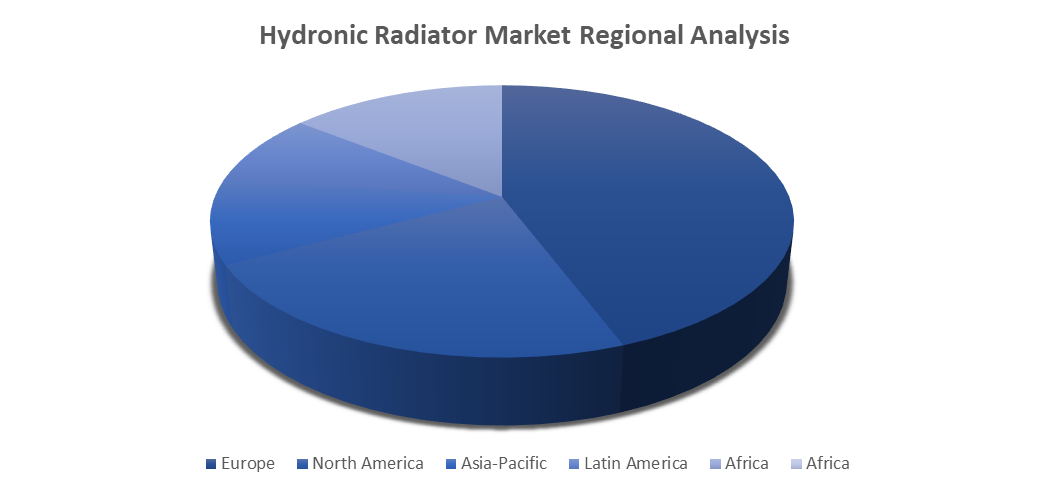
The global hydronic radiator market is segmented based on regional analysis into five major regions: North America, Latin America, Europe, Asia Pacific and the Middle East and Africa.
The European Region dominates the market; the major reason being the colder climates that majority of the European Countries such, as the U.K, Ireland, Germany, Finland face. Hydronic radiators often emerge as a reliable source of heating interiors for buildings in this region. Having a well-established industry also helps the region, with nearly every product being widely and easily available in the market.
The North American market is expected to grow significantly due to increased demand for the heating systems in predominately colder regions such as Chicago, New York, Seattle, Toronto, Vancouver and others. Large disposable incomes and the increased of operations of various companies like Runtal and Honeywell, which specialize in hydronic radiators, are also reasons for such strong growth in the region.
Market is further segmented by region into:
- North America Market Size, Share, Trends, Opportunities, Y-o-Y Growth, CAGR – United States and Canada
- Latin America Market Size, Share, Trends, Opportunities, Y-o-Y Growth, CAGR – Mexico, Argentina, Brazil, and Rest of Latin America
- Europe Market Size, Share, Trends, Opportunities, Y-o-Y Growth, CAGR – United Kingdom, France, Germany, Italy, Spain, Belgium, Hungary, Luxembourg, Netherlands, Poland, NORDIC, Russia, Turkey, and Rest of Europe
- Asia Pacific Market Size, Share, Trends, Opportunities, Y-o-Y Growth, CAGR – India, China, South Korea, Japan, Malaysia, Indonesia, New Zealand, Australia, and Rest of APAC
- Middle East and Africa Market Size, Share, Trends, Opportunities, Y-o-Y Growth, CAGR – North Africa, Israel, GCC, South Africa, and Rest of MENA
Market Scope and Segments:
|
ATTRIBUTE |
DETAILS |
|
Study Period |
2018-2034 |
|
Base Year |
2023 |
|
Forecast Period |
2024-2034 |
|
Historical Period |
2019-2022 |
|
Growth Rate |
CAGR of 4.7% from 2024-2034 |
|
Unit |
Value (US$ Billion) |
|
Segmentation |
Main Segments List |
|
By Radiator Type |
|
|
By Material |
|
|
By Application |
|
|
By Region |
|
Frequently Asked Questions (FAQ):
The global hydronic radiator market size was valued at US$ 4.5 billion in 2023 and is projected to reach the value of US$ 7.4 billion in 2034, exhibiting a CAGR of 4.7% during the forecast period.
The market includes hydronic radiators which are devices that work as heating equipment, and used to warm indoor spaces. These radiators are a crucial part of the heating system, where water is used to transfer heat from sources like boilers or heat pumps through a piping system.
The Panel Radiator and Residential segment collectively accounted for the largest market share.
The key players in the global hydronic radiator market are Viessmann Group, Bosch Thermotechnology, Zehnder Group, Danfoss, Runtal North America, Myson, Stelrad Radiator Group, De'Longhi, Hunt Heating, Kermi GmbH, Jaga, Emmeti Group, Purmo Group, REINA Design, Honeywell International Inc. and Other Prominent Players.
Increased Demand for cost-effective, efficient heating systems in residential and commercial settings pertaining to colder regions will drive radiator market growth.
 Select License Type


.png)


