


In today's digital age, the healthcare industry is experiencing a significant transformation fueled by technological advancements. One of the most promising developments is the integration of big data analytics into healthcare market research. By harnessing vast amounts of data generated from various sources, including electronic health records (EHRs), wearable devices, social media, and more, healthcare organizations can gain invaluable insights into market trends, patient behaviors, and treatment outcomes. In this blog, we will explore the potential of big data analytics in healthcare market research and its implications for the industry.
Big data analytics refers to the process of examining large and complex datasets to uncover hidden patterns, correlations, and insights. In the context of healthcare, this data encompasses a wide range of information, including patient demographics, medical histories, diagnostic images, genetic sequences, and treatment outcomes. Traditional market research methods often rely on limited datasets and subjective analyses, making it challenging to obtain a comprehensive understanding of the healthcare landscape. However, with big data analytics, researchers can access a wealth of structured and unstructured data to make data-driven decisions.
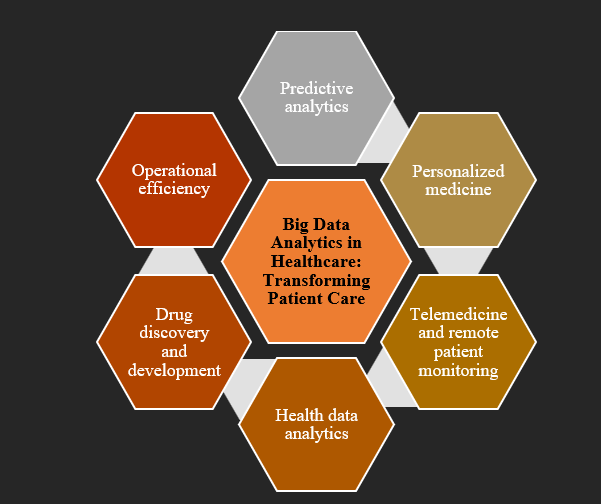
The blog explores the transformative impact of big data analytics in revolutionizing healthcare across various domains. It highlights six compelling use cases:
Predictive Analytics: Utilizing vast patient data to predict disease outcomes and identify high-risk patients, leading to personalized healthcare plans and improved treatment outcomes.
Personalized Medicine: Tailoring medical treatments based on individual genetic profiles and other factors, enabling targeted treatments for complex medical conditions.
Telemedicine and Remote Patient Monitoring: Facilitating remote patient monitoring and virtual consultations, enhancing access to healthcare services and improving patient outcomes.
Health Data Analytics: Analyzing population health data to identify trends and patterns, supporting evidence-based treatment guidelines and disease surveillance efforts.
Drug Discovery and Development: Accelerating drug discovery and development processes by analyzing biological, chemical, and clinical data, leading to faster and more cost-effective drug development.
Operational Efficiency: Optimizing operational efficiency in healthcare organizations by analyzing data from various sources, enhancing resource allocation and patient care delivery.
Big data analytics enables healthcare organizations to segment the market based on various criteria, such as demographics, geographic location, medical conditions, and healthcare preferences. For example, IBM Watson Health utilizes big data analytics to segment the healthcare market and identify opportunities for personalized medicine and targeted interventions. By analyzing vast amounts of data, IBM helps healthcare organizations identify patient populations with specific healthcare needs and develop tailored solutions to improve outcomes.
Predictive analytics leverages historical data to forecast future trends and outcomes. In healthcare market research, predictive modeling can help identify emerging health issues, anticipate changes in patient behavior, and predict the effectiveness of new treatments or interventions. For instance, Optum, a leading healthcare analytics company, uses predictive modeling to forecast healthcare trends and identify areas for intervention. By analyzing data from various sources, including claims data, clinical records, and patient surveys, Optum helps healthcare organizations anticipate future healthcare needs and develop proactive strategies to address them.
Big data analytics can enhance patient engagement by providing insights into patient preferences, behaviors, and satisfaction levels. For example, Cerner Corporation, a global leader in healthcare technology, utilizes big data analytics to improve patient engagement and satisfaction. By analyzing data from EHRs, wearable devices, and patient feedback surveys, Cerner helps healthcare organizations identify opportunities to enhance the patient experience and promote better health outcomes. By tailoring communication strategies and interventions to individual patient needs, Cerner enables healthcare organizations to foster stronger patient relationships and improve patient outcomes.
Evaluating the effectiveness of healthcare interventions is essential for improving patient outcomes and optimizing resource allocation. Big data analytics allows researchers to analyze real-world data to assess the impact of treatments, medications, and healthcare policies on patient health outcomes. For example, Medtronic, a global leader in medical technology, utilizes big data analytics to evaluate the effectiveness of medical devices and therapies. By analyzing data from clinical trials, patient registries, and post-market surveillance, Medtronic helps healthcare organizations assess the real-world performance of their products and make evidence-based decisions to improve patient outcomes.
While big data analytics holds immense potential for healthcare market research, it also presents several challenges and considerations:
Healthcare data is highly sensitive and subject to strict privacy regulations, such as the Health Insurance Portability and Accountability Act (HIPAA). Organizations must ensure that data collection, storage, and analysis comply with regulatory requirements to protect patient privacy and confidentiality.
Big data analytics relies on the availability of high-quality data from diverse sources. However, healthcare data is often fragmented, incomplete, and inconsistent. Organizations must invest in data quality initiatives and robust integration frameworks to ensure the accuracy and reliability of their analyses.
The use of big data analytics in healthcare raises ethical concerns related to consent, transparency, and data ownership. Organizations must establish clear guidelines and protocols for data collection, usage, and sharing to maintain trust and accountability among patients and stakeholders.
Implementing big data analytics requires specialized skills and expertise in data science, statistics, and healthcare domain knowledge. Organizations may need to invest in training programs or collaborate with external partners to build internal capabilities and drive innovation.
Big data analytics has the potential to revolutionize healthcare market research by providing unprecedented insights into patient behaviors, market trends, and treatment outcomes. By leveraging advanced analytics techniques, healthcare organizations can improve patient engagement, optimize resource allocation, and drive innovation in the industry. However, realizing the full potential of big data analytics requires addressing challenges related to data privacy, quality, ethics, and expertise. As the healthcare landscape continues to evolve, organizations must embrace data-driven approaches to stay competitive and deliver value to patients and stakeholders alike.